


Chronic Kidney Disease (CKD): Causes, Symptoms, Stages & Ayurvedic Management
Abstract
Chronic Kidney Disease (CKD) is often described as a silent disease because the kidneys can lose substantial function before obvious symptoms appear. Behind this silence, millions of nephrons may gradually decline, affecting fluid balance, blood pressure, mineral metabolism, and waste removal. Diabetes and hypertension remain major drivers, while glomerular, hereditary, obstructive, and systemic diseases can also contribute. Early detection through eGFR and urine albumin assessment can change the course of care. CKD is not simply a kidney disorder—it is a systemic condition with consequences for cardiovascular, hematological, and metabolic health. When the kidneys whisper, early testing can prevent them from having to shout. Let’s discuss in detail!

Introduction
The kidneys are small organs with a remarkably large responsibility. Every day, they filter the blood, remove metabolic wastes, maintain fluid and electrolyte balance, regulate blood pressure, support red blood cell production, and help maintain healthy bones. Chronic Kidney Disease (CKD) develops when abnormalities in kidney structure or function persist for three months or longer, gradually reducing the kidneys’ ability to perform these essential functions. What makes CKD particularly dangerous is its quiet progression—early kidney damage may produce little or no noticeable symptoms, while significant loss of function can occur silently. Diabetes and hypertension are among the leading causes, but glomerular diseases, recurrent urinary problems, obstruction, hereditary disorders, infections, and systemic diseases can also damage the kidneys. Understanding CKD early is therefore crucial: protecting kidney function today can protect the health of the whole body tomorrow. Recent community-based meta-analyses suggest that the pooled prevalence of chronic kidney disease (CKD) in India is around 13.24%, with overall estimates varying between 8% and 17% depending on the diagnostic criteria used. Age-standardised incidence rate ranges from 226 to 316 per 100,000 population in different states. Prevalence Breakdown by Sex: ~14.80% in men, ~13.51% in women.
Causes of CKD
CKD is not caused by a single factor. Multiple medical conditions can result in persistent kidney injury with a gradual loss of nephron function. To better understand, the causes can be classified into the following subcategories:
- Metabolic etiology: Diabetes mellitus, obesity, and metabolic disorders can increase renal workload and cause progressive damage to the glomeruli and renal blood vessels.
- Vascular etiology: Hypertension and renovascular disease can damage renal blood vessels, reduce kidney perfusion, and progressively impair nephron function.
- Glomerular causes: Glomerulonephritis and nephrotic or nephritic diseases damage the glomeruli, impair filtration, and may cause proteinuria, hematuria, edema, and progressive renal dysfunction.
- Tubulointerstitial etiology: Chronic infections, drug-induced injury, and inflammation or fibrosis of the renal tubules and interstitium can progressively impair kidney function.
- Obstructive etiology: Kidney or bladder stones, enlarged prostate, and other urinary tract obstructions can increase urinary pressure and progressively damage renal tissue.
- Genetic etiology: Polycystic kidney disease and other hereditary nephropathies can progressively affect the glomerular, tubular, or structural function of the kidneys.
- Systemic and autoimmune etiology: SLE, vasculitis, and other systemic inflammatory diseases can cause glomerular and vascular inflammation, leading to progressive kidney damage.
Interestingly, CKD is not a single disease, but rather a final common pathway for many different injuries to the kidney. Regardless of the initial insult, ongoing injury may result in nephron loss and a gradual decline in renal function.
Pathogenesis
The pathogenesis of Chronic Kidney Disease (CKD) begins with persistent kidney injury caused by conditions such as diabetes, hypertension, glomerular disease, infections, obstruction, or hereditary disorders. Continuous injury leads to nephron loss, after which the remaining nephrons compensate by increasing their filtration (hyperfiltration). This increases pressure within the glomeruli and can promote proteinuria and further glomerular damage. Ongoing inflammation, oxidative stress, and tubulointerstitial fibrosis gradually cause additional nephron destruction. As nephron numbers decline, the glomerular filtration rate (GFR) progressively decreases, leading to accumulation of metabolic waste products and disturbances in fluid, electrolyte, acid-base, mineral, and hormonal balance. Without appropriate management, this progressive cycle can eventually result in advanced CKD and kidney failure.
Signs and Symptoms of CKD
CKD is often silent in its early stages. Symptoms usually become noticeable as kidney function progressively declines:
- Fatigue and weakness – commonly due to anemia and accumulation of waste products.
- Swelling (edema) – especially around the feet, ankles, legs, or eyes due to fluid retention.
- Changes in urination – increased or decreased frequency, especially nighttime urination, foamy urine, or blood in urine.
- Loss of appetite and nausea – may occur with increasing accumulation of metabolic waste.
- Itching (pruritus) – more common in advanced CKD.
- Breathlessness – may occur with fluid overload or anemia.
- Headache and difficulty concentrating – can occur in advanced disease.
- Muscle cramps and weakness – may accompany electrolyte and mineral disturbances.
- High blood pressure – both a major cause and consequence of CKD.
- Sleep disturbances – poor sleep, restless legs, or daytime drowsiness may occur.
- Pale or dry skin – particularly with anemia and advanced renal dysfunction.
Diagnosis of Chronic Kidney Disease
CKD is diagnosed by identifying abnormal kidney structure or function that persists for at least 3 months. The evaluation generally includes:
- Serum Creatinine & eGFR: Assess the kidney’s filtering capacity and help determine the CKD stage.
- Urine Albumin-to-Creatinine Ratio (UACR): Detects albumin/protein leakage and helps assess kidney damage.
- Urinalysis: Checks for protein, blood, glucose, casts, and other abnormalities.
- Blood Tests: Electrolytes, urea, potassium, bicarbonate, hemoglobin, calcium, and phosphate help identify complications.
- Blood Pressure: Hypertension is both an important cause and consequence of CKD.
- Ultrasound/Imaging: Evaluates kidney size, structure, cysts, stones, obstruction, and other abnormalities.
- Additional Tests: Depending on the suspected cause, autoimmune tests, infection screening, genetic testing, or kidney biopsy may be required.
A single abnormal creatinine or eGFR does not automatically establish CKD; persistence for ≥3 months or other evidence of chronic kidney damage is essential.
Stages of Chronic Kidney Disease
CKD is primarily staged according to estimated glomerular filtration rate (eGFR). A lower eGFR indicates greater loss of kidney function.
- Stage 1 (G1): eGFR ≥90 – Normal or high kidney function, but evidence of kidney damage is present.
- Stage 2 (G2): eGFR 60–89 – Mildly decreased kidney function with evidence of kidney damage.
- Stage 3a (G3a): eGFR 45–59 – Mild to moderate reduction in kidney function.
- Stage 3b (G3b): eGFR 30–44 – Moderate to severe reduction in kidney function.
- Stage 4 (G4): eGFR 15–29 – Severe reduction in kidney function.
- Stage 5 (G5): eGFR <15 – Kidney failure; kidney replacement therapy may be required depending on the clinical condition.
CKD Classification by Albuminuria
Albuminuria means the presence of excess albumin (a type of protein) in the urine. Healthy kidneys normally prevent significant amounts of albumin from passing into urine. Therefore, increased urinary albumin can indicate damage to the kidney’s filtration barrier (glomeruli). Albuminuria is assessed using the urine albumin-to-creatinine ratio (UACR/ACR) and is divided into three categories:
- A1 – Normal to mildly increased: <30 mg/g — little or no significant albumin leakage.
- A2 – Moderately increased: 30–299 mg/g — increased albumin leakage and greater kidney disease risk.
- A3 – Severely increased: ≥300 mg/g — marked albumin leakage, generally indicating significant kidney damage and higher risk of CKD progression.
eGFR alone does not tell the complete story. CKD risk is also assessed using urine albumin-to-creatinine ratio (UACR), categorized as A1, A2, and A3.
Medications used in CKD
Medication depends on the cause, eGFR, albuminuria, blood pressure, diabetes status, and complications. Common medication groups include:
- ACE inhibitors/ARBs: Reduce blood pressure and albuminuria and help protect kidney function, particularly in albuminuric CKD.
- SGLT2 inhibitors: Such as dapagliflozin or empagliflozin; can slow CKD progression in appropriately selected patients, with or without diabetes.
- Statins: Used to reduce cardiovascular risk in many adults with CKD.
- Diuretics: Such as furosemide, particularly for fluid overload and edema.
- Antidiabetic medicines: Selected according to kidney function and individual requirements.
- Erythropoiesis-stimulating agents (ESAs) and iron: May be used for CKD-associated anemia after appropriate evaluation.
- Potassium-lowering medicines: May be required for persistent hyperkalemia in selected patients.
- Phosphate-lowering therapy and vitamin D-related medicines: Used when CKD-mineral and bone abnormalities develop.
Indications for Dialysis
Dialysis is considered when CKD causes uncontrolled complications despite medical treatment, especially:
- Severe uremic symptoms – confusion, vomiting, pericarditis.
- Refractory hyperkalemia – dangerously high potassium.
- Severe metabolic acidosis not responding to treatment.
- Refractory fluid overload/pulmonary edema.
- Progressive kidney failure with significant symptoms or complications.
- Often considered when eGFR falls around 5–10 mL/min/1.73 m², depending on the clinical condition.
Dialysis is started based on the overall clinical picture, not eGFR alone.
Ayurvedic Insight into CKD
Ayurveda does not describe CKD as one exact disease entity..The imbalance of the three Doshas(Tridosha) is caused by disorders of the urinary system and other systemic diseases. Acharya Sushruta has described the process of formation of urine with an example of a pitcher dipped in water. Similarly, the Doshas enter into Basti (kidneys) from all sides. These doshas decrease the function of the kidneys. Digestion is followed by the kidneys separating and differentiating urine as a metabolic byproduct for elimination. But with diseased kidneys, they do not differentiate and separate the urine properly. This results in the retention of harmful metabolic waste products in the body, which circulate and cause harm systemically. However, its clinical manifestations and progressive nature can be understood through classical Ayurvedic concepts such as :
- Mutravaha Srotas (urinary system): Disturbance in the formation, transport, or elimination of urine can be considered in understanding chronic urinary and renal disorders.
- Kleda Dushti (disturbed fluid metabolism): Abnormal Kleda may be correlated conceptually with fluid retention and edema, although Kleda should not be directly equated with uremic toxins.
- Agni Dushti (impaired metabolism): Disturbed Agni may lead to improper metabolic processing and Ama (metabolic by-products). Ama is an Ayurvedic concept and should not be considered identical to modern uremic waste products.
- Dhatu Kshaya (tissue depletion): Long-standing disease may be associated with depletion of Rasa (nutritional fluid), Rakta (blood), Mamsa (muscle tissue), and Meda (adipose tissue), clinically reflected by weakness, anemia, and nutritional disturbances in advanced disease.
- Ojas and Bala (vitality and physiological strength): Advanced chronic illness may result in reduced strength, poor nutritional status, and diminished overall resilience.
Ayurveda approaches CKD through a holistic management strategy beginning with Nidana Parivarjana(avoidance of causative factors). Bheshaja Chikitsa (medicinal management) aims to improve Jatharagni (primary digestive and metabolic function), prevent Ama formation (improper metabolic products), and maintain the proper functioning of Srotas (body channels). Depending on the patient’s condition, Shamana Chikitsa (palliative therapy) may be considered, while Shodhana Chikitsa (purificatory therapy) should only be undertaken when clinically appropriate. According to Acharya Sushruta, Vrukka (kidneys) are associated with Rakta and Meda Dhatu (blood and adipose tissue). Ayurveda describes the sequential nourishment of Dhatus beginning with Ahara Rasa (nutritional essence of food), which contributes to the formation of successive Dhatus. Therefore, maintaining healthy Jathragni and Dhatvagni (tissue-level metabolism) is considered important for proper tissue nourishment.
Herbal remedies for CKD by Planet Ayurveda
Planet Ayurveda blends the principles of traditional Ayurveda with carefully developed herbal formulations for overall health and well-being. The products contain carefully selected herbs that are renowned in Ayurveda for their specific qualities and time-honored therapeutic uses. The formulas are made using standardized herbal ingredients and adhere to the basic principles of Ayurvedic practice. These formulations are meant to supplement healthy eating and lifestyle habits and offer supportive care for digestion, metabolism, immunity, vitality, and physiological balance. Planet Ayurveda is committed to quality, authenticity, and Ayurvedic knowledge to provide convenient herbal formulations for those who want a holistic way to maintain everyday wellness. Some of the medications are listed below. Let’s discuss!
- Varunadi Vati
- Mutrakrichantak Churna
- Rencure Formula
- Punarnava Mandur
- Chandanadi Vati
Herbal Remedies for Chronic Kidney Disease (CKD)
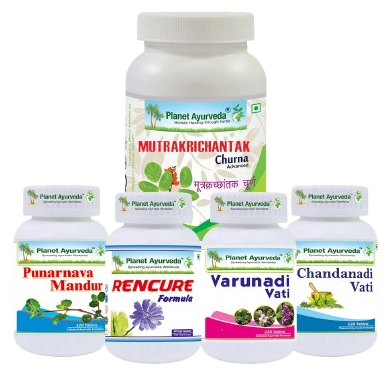

Product Description
1. Varunadi Vati
Planet Ayurveda offers Varunadi Vati, an Ayurvedic herbal formulation containing traditional herbs: Varuna (Crataeva nurvala), Shuddha Guggulu (Commiphora mukul), Punarnava (Boerhaavia diffusa), Gokshura (Tribulus terrestris) etc. It may provide supportive care for urinary symptoms such as changes in urination frequency or quantity and may complement dietary and lifestyle measures in a comprehensive approach to kidney health. Used to support healthy urinary flow and urinary-system function, particularly when urinary discomfort or stone-related urinary problems are present.
Dosage: Take 2 Tablets, thrice daily with warm water after meals.
2. Mutrakrichantak Churna
Mutrakrichantak Churna is an Ayurvedic herbal formulation intended to support healthy urinary function and comfortable urination. The name reflects its traditional association with Mutrakrichra (difficulty or discomfort during urination). It may be incorporated into an individualized Ayurvedic approach when urinary symptoms accompany kidney or urinary-system disorders. The formulation contains Varuna (Crataeva nurvala), which supports healthy urinary tract function and normal urine flow; Kalmegh (Andrographis paniculata), traditionally valued for its Pitta-balancing and supportive metabolic properties; Gokshura (Tribulus terrestris), traditionally valued for its Mutrala (urinary-supportive) properties; Punarnava (Boerhaavia diffusa), traditionally used to support healthy fluid balance and urinary function; and Bhumi Amalaki (Phyllanthus niruri), traditionally included in formulations that support urinary and metabolic health. Traditionally used for Mutrakrichra (difficult or painful urination) and to support comfortable urination and overall urinary tract health.
Dosage: Take 1 teaspoonful twice daily with warm water.
3. Rencure Formula
Rencure formula by Planet Ayurveda is a multi-herbal formulation developed to support healthy kidney and urinary-system function. It contains Punarnava (Boerhaavia diffusa), Varuna (Crataeva nurvala, Kaasni (Cichorium intybus), Gokshura (Tribulus terrestris) etc. These herbs are traditionally valued for supporting normal urinary flow, fluid balance, and overall renal wellness. In the context of CKD, Rencure Formula may be incorporated as supportive Ayurvedic care, particularly when changes in urinary pattern or urinary discomfort are present. Its combination of herbs provides a holistic approach to maintaining urinary-system health and may complement appropriate dietary, lifestyle, and medical measures. However, it should not be considered a substitute for prescribed CKD treatment or dialysis, and its use should be individualized according to kidney function, associated conditions, laboratory findings, and ongoing medications. A multi-herbal formulation intended to support kidney and urinary-system health, with herbs traditionally used for maintaining urinary function and fluid balance.
Dosage: Take 2 Capsules, twice daily with warm water after meals.
4. Punarnava Mandur
Punarnava Mandur by Planet Ayurveda is an Ayurvedic formulation containing Punarnava (Boerhaavia diffusa), Shunti (Zingiber officinale), Pippali (Piper longum), Haritaki (Terminalia chebula), Haridra (Curcuma longa), Vidanga (Embelia ribes), Mandur Bhasma (ferric oxide calx) etc. In the context of Chronic Kidney Disease (CKD), it may be considered as supportive Ayurvedic care, particularly when symptoms such as Shotha (edema), Pandu (pallor/anemia-related weakness), reduced appetite, and impaired digestion are present. Punarnava is traditionally valued for supporting healthy fluid balance, while the digestive herbs help support Agni (digestion and metabolism). Amalaki and Haritaki provide additional supportive properties for overall metabolic and systemic health. Because this formulation contains Mandur Bhasma, its use in CKD should be individualized according to kidney function, hemoglobin, iron status, electrolyte levels, concurrent medicines, and the patient’s overall clinical condition, preferably under qualified medical supervision.
Dosage: Take 2 Tablets, thrice daily with warm water after meals.
5. Chandanadi Vati
Chandanadi Vati is a classical Ayurvedic formulation containing ingredients such as Kababchini (Piper cubeba), Safed Chandan (Santalum album), Gandhabiroja (Pinus longifolia), Amalaki (Emblica officinalis), Gairik (red ochre) etc. In the context of Chronic Kidney Disease (CKD), it may be used as supportive Ayurvedic care when Mutradaha (burning micturition), urinary discomfort, or Pitta-dominant urinary symptoms are present. Its traditionally cooling and soothing properties may help support urinary tract comfort, while ingredients such as Amalaki and Daruharidra provide additional antioxidant and supportive metabolic properties. Chandanadi Vati should be considered an adjunct to appropriate CKD management rather than a replacement for nephrologist-directed treatment, and its use should be individualized according to kidney function, urine output, associated conditions, and concurrent medications.
Dosage: Take 2 Tablets, twice daily with warm water after meals.
Diet and Lifestyle in CKD
- Reduce salt: Limit pickles, papad, packaged foods, fast foods, and excess added salt.
- Moderate protein: Avoid high-protein diets; protein intake should be adjusted according to CKD stage and dialysis status.
- Potassium and phosphorus: Restrict only when blood levels are elevated or advised by the doctor/dietitian.
- Adequate fluids: Maintain appropriate hydration; fluid restriction may be required in edema or reduced urine output.
- Healthy diet: Prefer fresh, minimally processed foods and appropriate portions of fruits and vegetables.
- Exercise regularly: Aim for moderate physical activity as tolerated and maintain a healthy weight.
- Avoid smoking and excessive alcohol.
- Avoid nephrotoxic medicines, especially unnecessary NSAIDs such as ibuprofen and diclofenac.
- Monitor regularly: Check BP, blood glucose, eGFR, urine protein, electrolytes, and other relevant parameters.
- Follow medical advice: Continue prescribed CKD treatment and consult a nephrologist/renal dietitian for individualized dietary planning.
Ayurvedic Herbs Used in CKD
- Punarnava (Boerhaavia diffusa): Contains punarnavine and boeravinones; supports fluid balance, edema management, and urinary function.
- Gokshura (Tribulus terrestris): Rich in steroidal saponins like protodioscin; supports urinary function and healthy urine flow.
- Varuna (Crataeva nurvala): Contains lupeol and friedelin; supports urinary tract health and urine elimination.
- Pashanabheda (Bergenia ligulata): Contains bergenin and gallic acid; supports urinary tract and stone-related concerns.
- Kaasni (Cichorium intybus): Contains chicoric acid and chlorogenic acid; provides antioxidant and metabolic support.
- Bhumi Amalaki (Phyllanthus niruri): Contains phyllanthin and hypophyllanthin; provides antioxidant and metabolic support.
- Amalaki (Phyllanthus emblica): Rich in emblicanin, gallic acid, and ellagic acid; provides antioxidant and general metabolic support.
These herbs may provide supportive care in CKD, particularly for fluid balance, urinary health, and oxidative stress.
Conclusion
Chronic Kidney Disease (CKD) is a progressive condition that can remain silent for a long time, making early detection and timely management essential. Regular monitoring of eGFR, urine albumin, blood pressure, blood glucose, and other relevant parameters helps identify kidney damage and reduce the risk of progression. A balanced kidney-friendly diet, appropriate physical activity, avoidance of nephrotoxic substances, and proper management of diabetes and hypertension are important for maintaining kidney health. Ayurveda can provide individualized supportive care based on Dosha, Agni, Prakriti, and overall clinical condition, but it should complement, not replace, evidence-based nephrological treatment, particularly in advanced CKD.


Dr. Vikram Chauhan
Latest posts by Dr. Vikram Chauhan (see all)
- MCT Oil for Weight Loss: Benefits, Uses & Ayurvedic Approach - October 8, 2026
- Chronic Kidney Disease (CKD): Causes, Symptoms, Stages & Ayurvedic Management - October 8, 2026
- 7 Healthy Ayurvedic Recipes for Weight Loss & Digestion - October 7, 2026
- 7 Early Signs of Liver Cirrhosis & Ayurvedic Management - October 6, 2026
- Jaundice in Adults: Causes, Symptoms & Ayurvedic Care - October 6, 2026