


MCT Oil for Weight Loss: Benefits, Uses & Ayurvedic Approach
Abstract
Maintaining a healthy body weight has become one of the primary health goals across the world. Excess body weight not only affects physical appearance butalso influences metabolism, cardiovascular health, joint function, mobility,energy levels, and overall quality of life. Healthy weight management is therefore focused on improving body composition, enhancing metabolic efficiency, supporting fat utilization, and maintaining long-term wellness rather than simply reducing numbers on a weighing scale. Dietary fats have gained renewed attention because different fats behave differently inside the body.Among these, Medium-Chain Triglyceride (MCT) oil has emerged as a popular nutritional supplement due to its unique digestion and absorption. Unlike long- chain fats, MCTs are rapidly converted into energy, making them an important topic in discussions related to weight management, ketogenic nutrition, sports performance, and metabolic health. Although MCT oil has become increasingly popular among individuals pursuing weight-loss goals, it is only one component of a comprehensive strategy that also includes balanced nutrition, physical activity, adequate sleep, healthy digestion, and proper metabolism. In this article, we shall discuss MCT oil in detail, including its composition,mechanism of action, benefits for weight loss, different types of MCTs,methods of use, safety considerations, and its role in supporting metabolic health. The article also explores the Ayurvedic concept of Sthaulya (obesity)and explains how Ayurveda emphasizes balanced digestion, efficient metabolism, proper fat metabolism, and healthy lifestyle practices for sustainable weight management.
Introduction
Over the past decade, MCT oil has become one of the most widely discussed nutritional supplements in the field of weight management. Athletes, fitness enthusiasts, individuals following ketogenic diets, and people aiming to improve metabolic health increasingly include MCT oil in their daily routines because of its rapid energy-producing properties. Unlike conventional dietary fats, MCT oil follows a unique metabolic pathway. After consumption, it is absorbed quickly through the intestine and transported directly to the liver, where it is readily converted into energy instead of undergoing prolonged storage in adipose tissue.This characteristic has made MCT oil a popular nutritional option among individuals seeking better energy utilization and improved fat metabolism.Despite its popularity, MCT oil should not be viewed as a standalone solution for obesity. Sustainable weight reduction depends on multiple factors, including caloric balance, digestive efficiency, hormonal regulation, physical activity,quality sleep, and healthy lifestyle habits.
What is MCT Oil?
Understanding the Different Types of MCTs
Not all MCTs behave identically. Each mediCT stands for Medium-Chain Triglycerides, a group of fatty acids containing between six and twelve carbon atoms. They occupy an intermediate position between short-chain and long-chain fatty acids. Commercial MCT oil is commonly extracted from coconut oil and, to a lesser extent, palm kernel oil through a purification process that concentrates medium-chain fatty acids.Unlike ordinary cooking oils, MCT oil is almost colorless, odorless, and remains liquid at room temperature. It possesses a neutral taste, making it easy to incorporate into beverages, smoothies, coffee, salad dressings, yogurt, and nutritional preparations. The unique feature of MCT oil lies not in its appearance but in the way the body digests and utilizes it. Because of its shorter carbon-chain length, it bypasses several digestive steps required for long-chain triglycerides and serves as a rapid source of energyum-chain fatty acid possesses distinct metabolic characteristics.
Caproic Acid (C6)
Caproic acid contains six carbon atoms and is metabolized rapidly. It contributes to ketone production but possesses a strong odor and taste, limiting its use in commercial MCT supplements.
Caprylic Acid (C8)
Caprylic acid is considered the most efficient medium-chain triglyceride for rapid energy production. It is quickly absorbed into the bloodstream and transported directly to the liver, where it undergoes beta-oxidation to generat ketone bodies. Many premium MCT oils contain a high concentration of C8 because of its superior ketogenic potential.
Capric Acid (C10)
Capric acid also contributes to ketone formation and sustained energy production. Although its conversion into ketones is slightly slower than C8, it provides prolonged metabolic support and complements the actions of caprylic acid.
Lauric Acid (C12)
Lauric acid is abundant in coconut oil and possesses antimicrobial properties. However, because its metabolism resembles that of long-chain fatty acids more closely than other MCTs, some experts classify it separately rather than considering it a true medium-chain triglyceride.
How Does MCT Oil Work?
The metabolism of MCT oil differs significantly from that of ordinary dietary fats. After ingestion, medium-chain triglycerides require minimal digestion before absorption. Instead of being incorporated into chylomicrons and transported through the lymphatic system, they enter the portal circulation and travel directly to the liver. Inside the liver, these fatty acids undergo rapid beta-oxidation, producing energy and ketone bodies. Ketones serve as an efficient fuel source for various tissues, including skeletal muscles and the brain. This rapid conversion into energy explains why MCT oil has become popular among individuals following ketogenic diets, endurance athletes, and those pursuing healthy weight management. Unlike long-chain fats, which are more readily stored in adipose tissue, medium-chain triglycerides are preferentially utilized as an energy source, contributing to improved metabolic efficiency.
MCT Oil and Weight Loss
The popularity of MCT oil largely stems from its influence on several physiological processes involved in body-weight regulation.
Supports Satiety
One of the major challenges during weight reduction is controlling appetite. MCT oil contributes to greater satiety by influencing hormones associated with fullness, helping individuals remain satisfied between meals and reducing unnecessary snacking.
Encourages Fat Oxidation
Because medium-chain triglycerides are rapidly transported to the liver and converted into energy, they promote greater utilization of fat as a metabolic fuel source.
Supports Thermogenesis
Digestion and metabolism require energy. MCT oil contributes to diet-induced thermogenesis, allowing the body to expend additional energy during nutrient metabolism.
Provides Rapid Energy
Unlike carbohydrates that can produce fluctuations in blood glucose levels, MCT oil supplies a relatively stable source of energy. Individuals often include it in breakfast beverages or pre-workout meals to support physical performance and mental focus.
Supports Ketone Production
Ketones generated from MCT metabolism provide an alternative fuel source during carbohydrate restriction and ketogenic nutrition, supporting sustained energy availability.
Helps Preserve Lean Body Mass
Successful weight management aims to reduce excess fat while maintaining muscle mass. Adequate protein intake, resistance exercise, and appropriate nutrition remain essential, while MCT oil serves as an additional energy source within this broader strategy.
Additional Health Benefits of MCT Oil
Although widely recognized for weight management, MCT oil contributes to several other aspects of health.
Supports Brain Energy
The brain efficiently utilizes ketone bodies during periods of reduced carbohydrate availability, contributing to sustained mental energy.
Supports Physical Performance
Many athletes consume MCT oil before exercise because of its rapid conversion into usable energy.
Supports Digestive Efficiency
Compared with long-chain fats, medium-chain triglycerides require less digestive effort, making them easier to absorb.
Supports Healthy Metabolism
Efficient fat utilization contributes to overall metabolic wellness when combined with a balanced lifestyle.
Complements Ketogenic Nutrition
Individuals following ketogenic diets frequently incorporate MCT oil to facilitate ketone production and nutritional ketosis.
How to Use MCT Oil
MCT oil is extremely versatile and can easily become part of everyday nutrition. It can be added to:
- Smoothies
- Protein shakes
- Coffee
- Tea
- Yogurt
- Salad dressings
- Soups
- Oatmeal
Because rapid introduction of large amounts can produce digestive discomfort,intake should begin with a small quantity and increase gradually according to individual tolerance. MCT oil should not be used for deep frying because excessive heat can reduce its quality.
Possible Side Effects
MCT oil is generally well tolerated when introduced gradually. Some individuals experience temporary digestive symptoms during the initial period,including:
- Loose stools
- Abdominal discomfort
- Nausea
- Bloating
- Stomach cramps
Starting with small quantities and increasing intake gradually improves tolerance in most individuals. People with significant liver disorders should consult a qualified healthcare professional before incorporating concentrated MCT supplements into their routine.
Who Can Benefit from MCT Oil?
MCT oil can be incorporated into nutritional strategies for individuals who aim to:
- Improve metabolic efficiency
- Support healthy body-weight management
- Follow ketogenic nutrition
- Increase dietary energy
- Maintain satiety between meals
- Enhance fat utilization during calorie-controlled diets
Its benefits are greatest when combined with balanced nutrition, regular physical activity, adequate sleep, hydration, and healthy lifestyle practices.
Ayurvedic View and Management of Sthaulya
Ayurveda describes obesity under the condition known as Sthaulya, one of the disorders arising from excessive nourishment (Santarpanottha Vyadhi). The condition develops when the body's metabolic balance is disturbed, leading to excessive accumulation of Meda Dhatu (adipose tissue), impaired digestive fire (Mandagni), aggravation of Kapha Dosha, and obstruction of normal physiological channels (Srotorodha). As digestion weakens, improperly processed nutrients contribute to the formation of Ama (metabolic toxins),which further interferes with healthy metabolism and promotes the deposition of excess fat. Classical Ayurvedic texts explain that excessive intake of heavy,oily, sweet, and calorie-dense foods, lack of physical activity, prolonged sitting, excessive daytime sleep, overeating, and sedentary habits disturb Kapha Dosha and encourage Meda accumulation. Over time, this imbalance affects strength,endurance, mobility, enthusiasm, and overall vitality. The management of Sthaulya focuses on restoring metabolic efficiency rather than simply reducing body weight. The first principle is Nidana Parivarjana, which involves eliminating the dietary and lifestyle factors responsible for the condition.Balanced meals, regular meal timings, mindful eating, and consistent physical activity play a central role in correcting the underlying imbalance. Ayurveda emphasizes strengthening Agni, the digestive and metabolic fire responsible for proper digestion and tissue nourishment. When Agni functions efficiently,nutrients are appropriately transformed, Ama formation decreases, and fatmetabolism improves. Herbs possessing Deepana (enhancing digestive fire),Pachana (digesting Ama), and Lekhana (scraping excessive fat) properties are particularly valuable in the management of obesity. Several Ayurvedic herbs are widely recognized for supporting healthy weight management. Vrikshamla(Garcinia cambogia), Guggul (Commiphora mukul), Chitrak (Plumbago zeylanica), Mustak (Cyperus rotundus) etc supports digestion and assists in balancing Kapha Dosha, while Triphala, composed of Haritaki, Bibhitaki, and Amalaki, promotes digestive efficiency, healthy bowel function, and natural detoxification. Alongside herbal support, Ayurveda encourages regular exercise (Vyayama), yoga, adequate sleep, stress management, and disciplined daily routines (Dinacharya). These practices work together to optimize metabolism, maintain healthy body composition, improve energy utilization, and support long-term wellness rather than temporary weight reduction.
Herbal Remedies by Planet Ayurveda for Weight Loss
Planet Ayurveda is a renowned herbal healthcare company committed to promoting authentic Ayurvedic wellness through pure and standardized herbal formulations. Every product is prepared under the guidance of experienced Ayurvedic experts using carefully selected herbs, classical Ayurvedic principles, and stringent quality standards. The formulations are free from artificial colors, preservatives, synthetic chemicals, and unnecessary additives,ensuring that every ingredient contributes to supporting the body's natural physiological functions. Planet Ayurveda is pleased to present its Weight Management formulations. These herbal formulations work synergistically to improve digestive efficiency, stimulate metabolism, support healthy lipid metabolism, promote fat utilization, and help maintain an ideal body weight naturally.
Product List
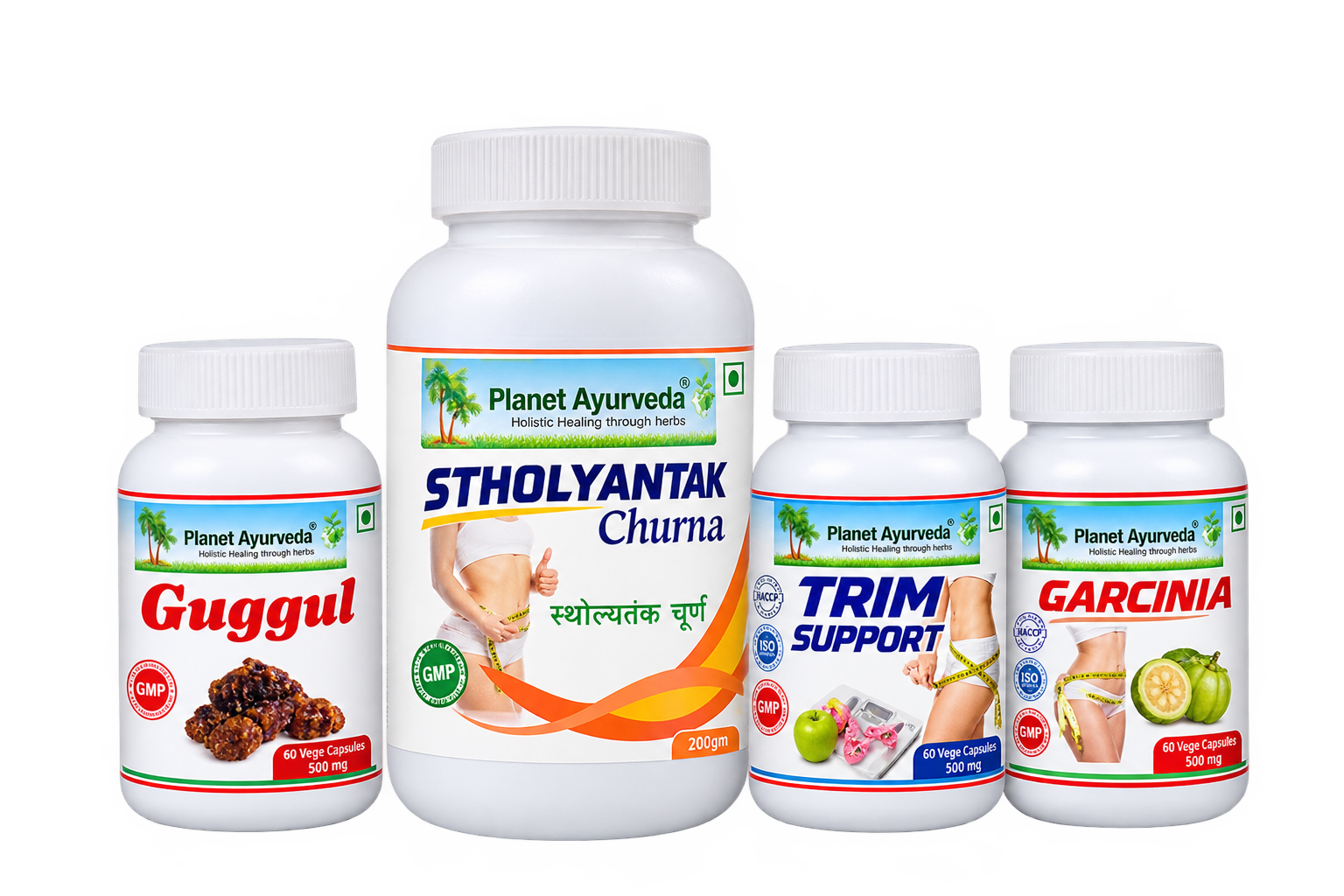
- Trim Support
- Stholyantak Churna
- Garcinia Capsules
- Guggul Capsules
Herbal Remedies for MCT Oil for Weight Loss

Product Description
Trim Support
Planet Ayurveda’s Trim Support is a herbal combination developed to support healthy weight management by improving metabolism, optimizing digestion,encouraging healthy fat utilization, and promoting balanced appetite. The formulation combines herbs that address multiple aspects of obesity rather than focusing on a single mechanism. Ingredients such as Vrikshamla (Garcinia cambogia) is one of Ayurveda's best-known herbs for healthy weight management. The fruit rind contains Hydroxycitric Acid (HCA),a naturally occurring organic acid that supports healthy fat metabolism by helping regulate the conversion of excess carbohydrates into stored fat. It also promotes satiety,making portion control easier and helping individuals maintain healthy eating habits. Triphala is an Ayurvedic combination of Haritaki (Terminalia chebula),Bibhitaki (Terminalia bellirica), and Amalaki (Emblica officinalis) improves digestive efficiency, supports natural detoxification, promotes healthy bowel movements, and enhances nutrient utilization, all of which contribute to healthy weight management. Mustak (Cyperus rotundus) contains sesquiterpenes,flavonoids, and essential oils. It enhances digestive fire (Agni), balances Kapha Dosha, reduces Ama accumulation, and improves metabolic efficiency. The combined action of these herbs promotes healthy metabolism, efficient digestion, balanced appetite, and gradual weight reduction while supporting overall wellness.
Dosage: 2 capsules twice daily after meals with plain water.
Stholyantak Churna
Stholyantak Churna is a herbal formulation that supports healthy weight management by improving digestion, promoting metabolism, and balancing aggravated Kapha Dosha. It contains Haritaki (Terminalia chebula), Bibhitaki (Terminalia bellirica), Amalaki (Emblica officinalis), Kutki (Picrorhiza kurroa),Punarnava (Boerhavia diffusa), Chitrak (Plumbago zeylanica), Jeerak(Cuminum cyminum), Ajwain (Trachyspermum ammi), and other herbs. Kutki contains kutkin and picrosides I and II, which support liver function and fat metabolism. Chitrak contains plumbagin, a naturally occurring bioactive compound that promotes digestion and enhances metabolic activity. It also helps improve digestive fire, which is considered important for healthy weight management in Ayurveda. Punarnava contains boeravinones, alkaloids, and flavonoids, which help maintain healthy fluid balance and support metabolic function. It also helps reduce water retention associated with obesity.Collectively, the herbs in Stholyantak Churna support digestion, enhance metabolism, reduce excess Kapha, and promote a healthy body composition.
Dosage: 1 teaspoon twice daily after meals with lukewarm water.
Garcinia Capsules
Planet Ayurveda's Garcinia Capsules contain standardized extract of Vrikshamla (Garcinia cambogia), one of the most widely recognized Ayurvedic herbs for healthy weight management. The fruit rind contains Hydroxycitric Acid (HCA), which supports healthy fat metabolism by influencing the body's handling of excess carbohydrates. Rather than allowing carbohydrates to be readily converted into stored fat, HCA supports healthier metabolic utilization.Garcinia also promotes satiety, making it easier to maintain appropriate meal portions and avoid unnecessary snacking between meals. In addition to supporting weight management, Garcinia contributes to healthy lipid metabolism and complements regular physical activity and balanced nutrition.Its simple single-herb formulation makes it an excellent addition to a comprehensive weight-management program.
Dosage: 2 capsules twice daily after meals with plain water.
Guggul Capsules
Planet Ayurveda's Guggul Capsules contain pure standardized extract of Shuddha Guggul (Commiphora mukul), one of Ayurveda's most valued herbs for obesity and lipid metabolism. Guggul contains naturally occurring guggulsterones (E and Z isomers), bioactive compounds that support healthy cholesterol metabolism, lipid utilization, and metabolic efficiency. Ayurveda describes Guggul as a Lekhaniya herb because of its ability to help reduce excessive accumulation of Meda Dhatu (adipose tissue) while supporting healthy circulation and tissue metabolism. Apart from promoting healthy weight management, Guggul supports joint comfort in overweight individuals by reducing stress on weight-bearing joints. It also contributes to cardiovascular wellness by supporting healthy lipid metabolism. Its ability to improve metabolic efficiency makes Guggul one of the most important herbs included in Ayurvedic weight-management formulations.
Dosage: 2 capsules twice daily after meals with plain water.
Conclusion
MCT oil has emerged as one of the most widely discussed nutritional supplements for healthy weight management because of its unique metabolism.Unlike conventional dietary fats, medium-chain triglycerides are rapidly absorbed, transported directly to the liver, and efficiently converted into energy. This distinctive pathway supports thermogenesis, fat oxidation, ketone production, appetite regulation, and metabolic efficiency, making MCT oil a valuable component of a comprehensive weight-management strategy. Healthy weight reduction, however, extends far beyond the inclusion of a single dietary supplement. Long-term success depends upon balanced nutrition, regular physical activity, restorative sleep, stress management, healthy digestion, and sustainable lifestyle habits that support the body's natural metabolic processes.Ayurveda approaches obesity as Sthaulya, a condition involving aggravated Kapha Dosha, impaired Agni, accumulation of Ama, and excessive Meda Dhatu. Restoring digestive strength, optimizing metabolism, improving fat utilization, and following disciplined dietary and lifestyle practices form the foundation of Ayurvedic weight management. Planet Ayurveda's above- mentioned formulations offer a comprehensive herbal approach that addresses multiple aspects of healthy weight management. Together, these formulations support digestive efficiency, metabolic activity, healthy lipid metabolism, appetite regulation, liver function, and natural fat utilization while promoting gradual and sustainable weight reduction.


Dr. Vikram Chauhan
Latest posts by Dr. Vikram Chauhan (see all)
- MCT Oil for Weight Loss: Benefits, Uses & Ayurvedic Approach - October 8, 2026
- Chronic Kidney Disease (CKD): Causes, Symptoms, Stages & Ayurvedic Management - October 8, 2026
- 7 Healthy Ayurvedic Recipes for Weight Loss & Digestion - October 7, 2026
- 7 Early Signs of Liver Cirrhosis & Ayurvedic Management - October 6, 2026
- Jaundice in Adults: Causes, Symptoms & Ayurvedic Care - October 6, 2026