


PCOD: Causes, Symptoms, Diagnosis & Ayurvedic Management
ABSTRACT
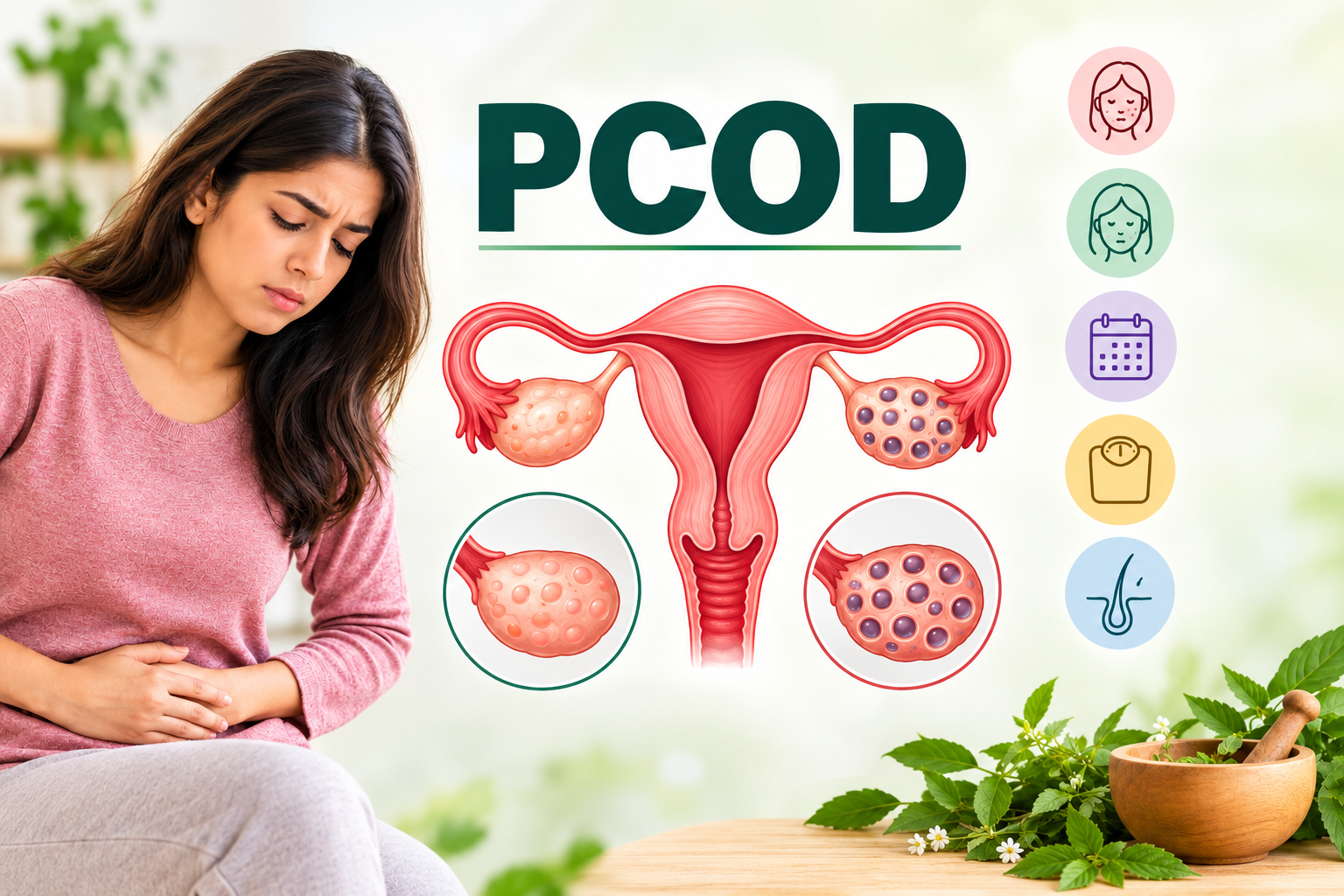
Polycystic Ovarian Disease (PCOD) is a common endocrine and metabolic disorder affecting women of reproductive age It is now called Polycystic Metabolism Disease. It is characterized by disturbances in ovulation, altered ovarian function, hormonal imbalance, and metabolic changes. Menstrual irregularity, acne, unwanted hair growth, weight gain, and difficulty in conception are frequently observed clinical features. The condition is multifactorial, involving insulin resistance, altered androgen activity, dysregulation of the hypothalamic-pituitary-ovarian axis, genetic susceptibility, and lifestyle-related factors. If inadequately managed, PCOD may contribute to infertility and increase the long-term risk of metabolic abnormalities. Let’s discuss !
INTRODUCTION
Polycystic Ovarian Disease (PCOD) is a common reproductive and metabolic disorder that primarily affects women during their reproductive years. It is a complex condition in which normal ovarian activity and hormonal regulation become disturbed, leading to irregular or delayed menstrual cycles, altered follicular development, acne, excessive facial or body hair, scalp hair thinning, and difficulties with conception in some women. The clinical presentation differs widely, and not every woman experiences the same combination of symptoms. Insulin resistance and compensatory increase in insulin levels can influence ovarian androgen production and interfere with normal follicular maturation. Genetic susceptibility, sedentary lifestyle, excess body weight, poor dietary habits, inadequate sleep, and psychological stress may also contribute to its development and progression. PCOD can have implications beyond reproductive health, particularly when metabolic abnormalities persist for a prolonged period. Therefore, proper evaluation should consider menstrual history, clinical features, hormonal status, metabolic parameters, and individual reproductive goals. Early identification and a personalized management approach can help improve
STATISTICS FOR POLYCYSTIC OVARIAN DISEASE
Polycystic ovarian disease (PCOD), also known as polycystic ovary syndrome (PCOS), is a common endocrine and metabolic disorder among women of reproductive age. Its prevalence varies considerably across populations because of differences in diagnostic criteria, age groups, and study methods. Globally, PCOS is estimated to affect approximately 10–13% of women of reproductive age, making it one of the leading causes of menstrual irregularity and anovulatory infertility. In India, available studies indicate a substantial burden, with reported prevalence varying across different regions and populations and pooled estimates of around 11%. The condition is frequently recognized in young and urban women, where sedentary behaviour, unhealthy dietary patterns, excess body weight, and metabolic disturbances may contribute to its increasing detection. PCOD also has important long-term implications because affected women may have a higher risk of insulin resistance, type 2 diabetes, dyslipidemia, infertility, and other metabolic complications. These statistics highlight the need for timely screening, accurate diagnosis, lifestyle assessment, and comprehensive management.
INTERESTING FACTS ABOUT POLYCYSTIC OVARIAN DISEASE
- PCOD is not only an ovarian disorder: It involves reproductive hormones, metabolism, insulin regulation, and overall endocrine health.
- It can occur in women with normal body weight: PCOD is not limited to overweight or obese women; lean women can also develop the condition.
- Irregular periods are not the only sign: Some women may have regular cycles but still show other features such as excess androgens or polycystic ovarian morphology.
- The ovaries do not necessarily contain true cysts: The small structures seen on ultrasound are often immature follicles that have not developed normally.
- Ovulation may be irregular: Disturbed ovulation can make conception difficult, making PCOD a common cause of infertility related to ovulatory dysfunction.
- Insulin resistance can play an important role: Reduced sensitivity to insulin may contribute to increased androgen production and disturbances in menstrual function.
- Excess facial or body hair can occur: Increased androgen activity may cause hirsutism, acne, or scalp hair thinning.
- Symptoms can vary greatly: Two women with PCOD may have completely different symptoms and metabolic profiles.
- PCOD can begin during adolescence: Menstrual irregularity and hormonal changes may become noticeable soon after puberty, although diagnosis in adolescents requires careful assessment.
- Family history matters: Women with a close family history of PCOS may have a higher likelihood of developing the condition.
- Lifestyle influences its expression: Physical inactivity, poor dietary habits, sleep disturbances, and excess weight can worsen metabolic and hormonal abnormalities in susceptible women.
- PCOD has long-term health implications: Beyond fertility, it can be associated with insulin resistance, type 2 diabetes, abnormal lipid levels, and other metabolic concerns.
- PCOD is manageable: Appropriate nutrition, regular physical activity, weight management when appropriate, and individualized medical care can significantly improve symptoms and metabolic health.
Causes of Polycystic Ovarian Disease
PCOD is a multifactorial condition, meaning several factors can contribute to its development rather than one definite cause.
- Insulin resistance: Elevated insulin levels can stimulate excess androgen production and interfere with normal ovarian function.
- Hyperandrogenism: Increased androgen activity can affect follicular growth and prevent regular ovulation.
- Abnormal LH secretion: Altered luteinizing hormone (LH) activity can promote androgen production and disturb the normal ovarian cycle.
- Genetic predisposition: A family history of PCOD may increase an individual’s susceptibility to developing the condition.
- Adipose tissue dysfunction: Excess or metabolically active body fat can influence insulin sensitivity and hormone metabolism.
- Chronic low-grade inflammation: Persistent inflammatory activity may affect metabolic and reproductive pathways involved in PCOD.
- Adrenal androgen excess: Increased production of adrenal androgens may contribute to features of hyperandrogenism in some women.
- Disrupted circadian rhythm: Irregular sleep patterns and disturbances in the body’s biological clock may affect endocrine and metabolic regulation.
- Environmental endocrine disruptors: Exposure to certain chemicals that interfere with hormone signalling is being studied as a possible contributing factor.
- Pubertal hormonal changes: Hormonal fluctuations during adolescence may reveal an underlying tendency toward irregular ovulation and androgen excess.
SIGNS/ SYMPTOMS OF POLYCYSTIC OVARIAN DISEASE
- Irregular menstrual cycles: Periods may occur less frequently than expected, become unpredictable, or sometimes be absent for several months.
- Heavy or prolonged periods: Some women may experience excessive bleeding when menstruation occurs after a prolonged gap.
- Difficulty in ovulation: Irregular or absent ovulation can make conception more difficult.
- Excess facial and body hair: Increased androgen activity may cause coarse hair growth on the face, chin, chest, abdomen, or other areas.
- Acne and oily skin: Hormonal changes may increase sebum production and contribute to persistent or recurrent acne.
- Scalp hair thinning: Increased androgen activity can contribute to thinning of hair, particularly around the crown or frontal scalp.
- Weight gain: Some women may experience increased body weight, particularly around the abdomen, although PCOD can also occur in women with normal weight.
- Darkening of the skin: Areas such as the neck, underarms, and groin may develop darker, thicker skin, particularly when insulin resistance is present.
- Difficulty losing weight: Some women may find weight management more challenging because of metabolic and hormonal disturbances.
- Mood changes: Anxiety, low mood, irritability, and emotional stress may occur alongside PCOD, although these symptoms are not specific to the condition.
- Fatigue: Persistent tiredness may be reported, particularly when metabolic disturbances, poor sleep, or other associated problems are present.
- Fertility problems: Irregular ovulation may reduce the chances of natural conception.
- Pelvic discomfort: Some women may experience pelvic heaviness or discomfort, although this is not a defining feature of PCOD
DIAGNOSIS OF POLYCYSTIC OVARIAN DISEASE
Diagnosis of PCOD is based on clinical history, physical examination, laboratory investigations, and pelvic imaging, while excluding other conditions that may cause similar symptoms
- .Menstrual History-Ask about cycle length, frequency, duration, and regularity.Irregular periods, oligomenorrhea (infrequent periods), or amenorrhea (absence of periods) may indicate ovulatory dysfunction.
- Assessment of Hyperandrogenism-Look for signs such as hirsutism (excess facial/body hair), acne, and female-pattern hair loss.These findings may suggest increased androgen activity.
- Hormonal Investigations-Total and free testosterone are commonly assessed.Androstenedione and DHEAS may be considered when clinically indicated.Other hormones may be tested to exclude alternative causes of menstrual irregularity.
- Pelvic Ultrasound-Ultrasound evaluates ovarian morphology, follicle number, and ovarian volume.A polycystic appearance of the ovaries alone does not confirm PCOS.
- AMH Test-Anti-Mullerian hormone (AMH) may help assess polycystic ovarian morphology in adult women.
- Exclusion of Other Disorders-Conditions such as thyroid dysfunction, hyperprolactinemia, and non-classic congenital adrenal hyperplasia should be excluded when appropriate.
- Metabolic Assessment-Blood pressure, BMI, blood glucose or OGTT, HbA1c, and lipid profile may be assessed to identify associated metabolic abnormalities.
- Diagnostic Criteria-In adults, diagnosis generally requires two of three features after exclusion of other causes:
- Ovulatory dysfunction
- Clinical or biochemical hyperandrogenism
- Polycystic ovarian morphology on ultrasound or appropriate AMH assessment.
MANAGEMENT OF POLYCYSTIC OVARIAN DISEASE
Management of PCOD is individualized according to the patient’s symptoms, reproductive goals, metabolic health, and associated complications. The main objectives are to regulate menstrual cycles, manage hyperandrogenic symptoms, improve metabolic health, and support fertility when required.
- Lifestyle Modification –Lifestyle management is an important part of PCOD care, irrespective of body weight..Encourage a balanced diet, regular physical activity, adequate sleep, and stress management.In women who are overweight or obese, gradual and sustainable weight reduction may improve metabolic and reproductive outcomes.
- Healthy Dietary Pattern-Emphasize vegetables, fruits, whole grains, legumes, adequate protein, and healthy fats.Reduce excessive intake of refined carbohydrates, sugary beverages, highly processed foods, and excess saturated fat.Dietary plans should be individualized according to nutritional needs and preferences.
- Regular Physical Activity-Encourage regular aerobic activity along with resistance or strength training.Exercise can improve insulin sensitivity, cardiovascular health, body composition, and overall well-being.
- Management of Menstrual Irregularity-Menstrual irregularity can be managed according to the patient’s reproductive plans.Combined oral contraceptive pills may be used for cycle regulation and management of hyperandrogenic symptoms when appropriate.Cyclic progesterone or other progestogen therapy may be considered for endometrial protection in selected women who do not require contraception.
- Management of Hirsutism and Acne-Cosmetic methods such as shaving, waxing, threading, or laser hair reduction can help manage unwanted hair.Hormonal treatment may reduce androgen-related symptoms.Anti-androgen medicines such as spironolactone may be considered under medical supervision, with appropriate contraception when pregnancy is possible.
- Management of Insulin Resistance and Metabolic Abnormalities-Metabolic risk should be assessed regularly.Metformin may be considered in selected women, particularly when metabolic abnormalities or impaired glucose regulation are present.Blood glucose, lipid profile, blood pressure, and weight should be monitored periodically.
- Fertility Management-For women wishing to conceive, treatment focuses on restoring or inducing ovulation.Letrozole is generally recommended as the first-line pharmacological treatment for ovulation induction in women with PCOS-related anovulatory infertility when there are no other infertility factors.
- Psychological Well-being-Anxiety, depression, body-image concerns, and reduced quality of life can occur in women with PCOD.Psychological symptoms should be actively assessed and appropriate counselling or professional support should be provided.
There is no single treatment suitable for every woman with PCOD.Management should be selected according to whether the primary concern is irregular menstruation, excess androgen symptoms, metabolic health, weight management, or fertility.
AYURVEDIC INSIGHTS
Polycystic Ovarian Disease (PCOD) does not have a direct one-to-one description , but its clinical features can be understood through concepts such as Artava Kshaya((oligomenorrhea), , Artava Dushti(menstrual and reproductive dysfunctions ), Medo Dushti(disturbed adipose-tissue metabolism ), Agni Dushti ( disturbed digestive fire) and Srotorodha( channel blockage) . The condition may involve predominant vitiation of Kapha and Vata, particularly Apana Vata, with Pitta involvement according to individual symptoms. Excessive intake of Guru (heavy), Madhura (sweet) and Snigdha (unctuous) foods, sedentary habits, irregular lifestyle and impaired digestion may disturb Agni( digestive fire) and contribute to Ama( endotoxins) formation and Medo Dushti( disturbed adipose tissue metabolism). Increased Kapha and Meda (fat) may subsequently produce Srotorodha( channel blockage), affecting the normal function of Apana Vata and Artavavaha Srotas, which may clinically manifest as delayed or irregular menstruation, scanty menstrual flow, anovulation and difficulty in conception. Sushruta’s description of Artava Kshaya provides a useful classical correlation
“यथोचितकालादर्शनमल्पता वा योनिवेदनं च” (Yathochita Kaladarshanam Alpata Va Yonivedanam Cha), describing absence of menstruation at the expected time, reduced menstrual flow and associated pain. The Ayurvedic management perspective therefore focuses on restoring Agni( digestive fire), reducing Ama( endotoxins) and excess Kapha-Meda, improving Srotas( channel ) function, regulating Apana Vata and supporting healthy Artava( ovum) formation.
PATHOGENESIS OF POLYSYSTIC OVARIAN DISEASE
Mithya Ahara-Vihara
(Improper diet and sedentary lifestyle)
↓
Kapha Dosha Prakopa + Agni Dushti( disturbed digestive fire)
↓
Ama Utpatti
(Impaired digestion and formation of endotoxins)
↓
Medo Dhatu Dushti
(Disturbance of fat/adipose tissue metabolism)
↓
Kapha-Meda Vriddhi( increased fat deposition)
↓
Srotorodha
(Functional obstruction of channels)
↓
Apana Vata Avarana
(Disturbed normal movement of Apana Vata)
↓
Artavavaha Srotas Dushti( disturbed function of reproductive system)
↓
Artava Dushti / Artava Kshaya
↓
Beeja Granthi / Granthibhava
(Conceptual correlation with altered ovarian follicular morphology)
↓
Artava Pravritti Vikriti
(Disturbed menstrual function)
↓
Irregular Menstruation + Anovulation + Infertility
MANAGEMENT OF POLYCYSTIC OVARIAN DISEASE IN AYURVEDA
Nidana Parivarjana( avoid causative factors)
↓
Agni Deepana( increased digestive fire) + Ama Pachana( digest the food)
↓
Kapha-Meda Shamana
↓
Srotoshodhana( clears the channel obstruction)
↓
Apana Vata Anulomana
↓
Artavavaha Srotas Support
↓
Artava Regulation
↓
Rasayana( increase the immune system) + Healthy Ahara-Vihara
HERBAL REMEDIES FOR POLYCYSTIC OVARIAN DISEASE BY PLANET AYURVEDA
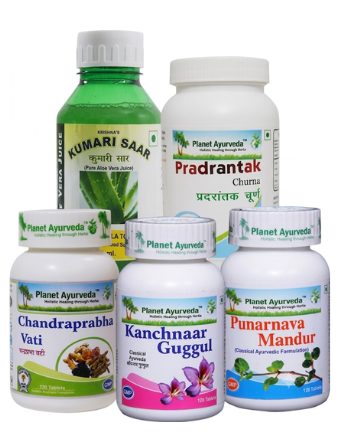
Planet Ayurveda is a well-established Ayurvedic healthcare organization that works to promote the ancient knowledge of Ayurveda through natural remedies and holistic health solutions. The company develops a wide range of herbal formulations using pure, high-quality ingredients and standardized herbal extracts, with a focus on maintaining safety, authenticity, and effectiveness. Following the principles of classical Ayurveda, Planet Ayurveda aims to support overall health by addressing the underlying causes of health concerns and encouraging balance in the body, mind, and emotions. With an emphasis on quality, natural ingredients, and traditional approaches supported by modern research, the organization works toward making Ayurvedic wellness solutions available globally. We will explore various herbal approaches used for the management of Polycystic Ovaries Disease according to Ayurvedic principles. The herbal formulations are-
- Kanchnaar Guggal
- Pradrantak Churna
- Chandraprabha Vati
- Punarnava Mandur
- Kumari Saar
HERBAL REMEDIES FOR ANTI-OVARIAN CYST PACK

PRODUCT DESCRIPTION
1. Kanchanar Guggal
This Ayurvedic formulation may be considered as supportive management in PCOD, particularly when Kapha-Meda Dushti( disturbed fat deposition), Agni Mandya( low digestive fire) and Srotorodha( channel blockage) are prominent. Kanchanar (Bauhinia variegata) is traditionally valued for its Granthi (lump) and Kapha-Meda balancing properties, while Haritaki (Terminalia chebula) and Bibhitaki (Terminalia bellirica) support digestion and metabolic balance. Trikatu, consisting of Shunthi (Zingiber officinale), Maricha (Piper nigrum) and Pippali (Piper longum), promotes Agni( digestive fire) and helps address Ama.(endotoxins) Cinnamon (Cinnamomum verum) is traditionally used to support digestion and metabolism, while Guggulu (Commiphora wightii) is valued for its Lekhana(reducing), Medohara( decrease fat) and Srotoshodhana( clear channel blockage) actions and many more herbs Collectively, these ingredients may support healthy metabolism and reproductive function as part of individualized PCOD management
Dosage-2 tablets twice a day with luke warm water
2. Pradrantak Churna
This Ayurvedic formulation containing Lodhra (Symplocos racemosa), Udumbara (Ficus racemosa), Arjuna (Terminalia arjuna) and many more herbs. used in management of PCOD. Lodhra is for supporting healthy uterine and menstrual function. Udumbara is used to support tissue health and balance Kapha-Pitta. Arjuna has Kapha-Pitta balancing properties and may support general tissue and circulatory health.
Dosage-1 tsp twice a daily with luke warm water
3. Chandraprabha Vati
Chandraprabha Vati is a classical Ayurvedic formulation containing multiple herbs and mineral ingredients, including Vacha (Acorus calamus), Guggulu (Commiphora wightii), and Shilajit (Asphaltum) along with several other ingredients. In the Ayurvedic management of PCOD, it may be considered when Kapha-Meda Dushti, Agni Mandya, Srotorodha and Vata dysfunction are prominent. Vacha is traditionally valued for its Deepana( increased digestive fire) and Kapha-Vata balancing properties, while Guggulu is described as Lekhana( reducing fat), Medohara and Srotoshodhaka. Shilajit is Rasayana (increased immunity) and Balya (increased strength) and may support metabolic and reproductive health.
Dosage– 2 tablets twice a day with luke warm water
4. Punarnava Mundar
Punarnava Mandur is a classical Ayurvedic formulation that may be considered as supportive therapy in PCOD when Agni Dushti, Kapha-Meda accumulation and metabolic disturbances are present. It contains Punarnava (Boerhaavia diffusa), Shunthi (Zingiber officinale), Pippali (Piper longum), Maricha (Piper nigrum), Amalaki (Emblica officinalis), Haritaki (Terminalia chebula), Chavya (Piper chaba) and Haridra (Curcuma longa), along with other herbs and Mandura Bhasma. Its Deepana( increase digestive fire), Pachana( digest food), Lekhana( reduce fat) and Rasayana( increase immunity) properties may support digestion, metabolism and healthy tissue function. Punarnava is traditionally valued for its Mutrala( diuretics) and Shothahara reduces inflammation actions, while Trikatu helps support Agni and Ama Pachana.
Dosage- 2 tablets twice a day.
5. Kumari Saar
It is, prepared from Kumari (Aloe vera), is traditionally used in Ayurveda to support female reproductive and menstrual health. In PCOD, it may be considered as supportive therapy for irregular or delayed menstruation associated with Artava Dushti and Apana Vata dysfunction. Kumari is traditionally described as having properties that support Agni and the normal movement of Apana Vata, thereby helping maintain proper Artava Pravritti (menstrual flow). It may also support healthy functioning of Artavavaha Srotas (female reproductive system).
Dosage- 2 tsp twice a day with water
CONCLUSION
PCOD is a complex reproductive and metabolic condition involving menstrual irregularity, ovulatory dysfunction, hyperandrogenic features and metabolic disturbances. Modern management focuses on healthy weight, balanced nutrition, physical activity, menstrual regulation, metabolic monitoring and fertility care when required. From an Ayurvedic perspective, its manifestations may be understood through Kapha and Vata Dosha involvement, Agni Dushti, Ama, Medo Dhatu Dushti, Srotorodha, Artava Dushti and Apana Vata dysfunction. Management emphasizes Nidana Parivarjana, Agni Deepana, Ama Pachana, Kapha-Meda Shamana, Srotoshodhana and Vatanulomana. Individualized Shamana therapy, selected Shodhana and Rasayana support may complement lifestyle measures for maintaining reproductive and metabolic well-being.


Dr. Vikram Chauhan
Latest posts by Dr. Vikram Chauhan (see all)
- Banyan Tree: Medicinal Benefits, Uses & Importance - October 9, 2026
- PCOS Treatment in Ayurveda: Causes, Symptoms & Management - October 9, 2026
- MIDAS Score for Migraine: Symptoms, Treatment & Ayurveda - October 9, 2026
- Estrogen Detox: Ayurvedic Herbs, Diet & Natural Tips - October 9, 2026
- PCOD: Causes, Symptoms, Diagnosis & Ayurvedic Management - October 9, 2026