


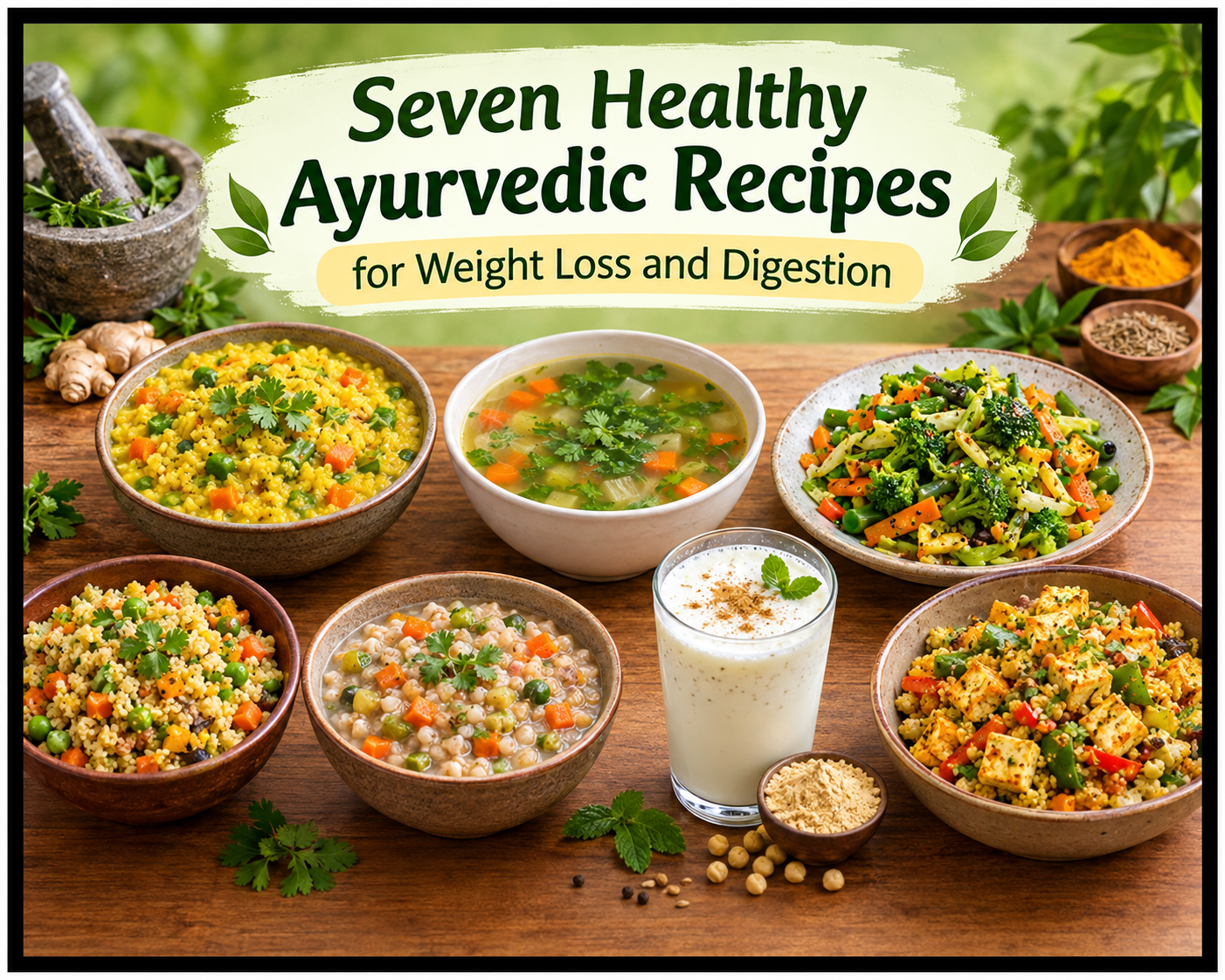
7 Healthy Ayurvedic Recipes for Weight Loss & Digestion
Ayurveda, the traditional system of medicine from India, emphasizes maintaining health through balanced eating habits and lifestyle practices. Ayurvedic approaches to weight management focus on digestion (Agni), nourishing foods, seasonal eating, and individual constitution (Prakriti), rather than calorie restriction alone. Here are seven easy recipes that can be part of a balanced diet to support weight management, digestion, energy, and overall well-being.These recipes feature freshly prepared foods, vegetables, grains, and spices commonly used in Ayurvedic cooking. Individual nutritional needs and food tolerance vary, so choose ingredients and portion sizes that suit your needs.
Ayurvedic Tips for Weight Management
- Eat freshly prepared, balanced meals.
- Limit highly processed and deep-fried foods.
- Follow a regular eating routine and pay attention to hunger and fullness.
- Choose a dinner time and portion size that support comfortable digestion and sleep.
- Maintain a consistent sleep schedule.
- Engage in regular physical activity suited to your ability.
1. Moong Dal Vegetable Khichdi
Ingredients
- Split yellow moong dal – 1/2 cup
- Rice or millet – 1/4 cup
- Bottle gourd, carrot, beans, or other vegetables – 1 cup
- Fresh ginger – to taste
- Turmeric – 1/2 tsp
- Cumin seeds – 1 tsp
- Ghee – 1 tsp
- Optional: mustard seeds – 1/2 tsp and black pepper – 1/4 tsp
Preparation note: Rinse grains and lentils thoroughly. If using millet, follow the soaking instructions for the specific variety.
Cooking time: 25–30 minutes
How to Cook
- Wash the dal and rice or millet thoroughly.
- Heat the ghee and add cumin seeds and ginger.
- Add vegetables, turmeric, dal, grains, and sufficient water.
- Pressure-cook until all ingredients are soft.
- Serve warm, adjusting the consistency and seasoning as desired.
Potential Benefits
- Provides plant-based protein and carbohydrates.
- Vegetables contribute dietary fibre and micronutrients.
- Can be a filling option within a balanced weight-management diet.
Serving Suggestions
Serve for lunch or dinner. Foxtail millet, little millet, or barnyard millet can be used instead of rice according to preference and tolerance.
2. Vegetable Clear Soup
Ingredients
- Bottle gourd, pumpkin, spinach, carrot, or French beans – 1 cup
- Black pepper – 1/4 tsp
- Fresh ginger – 1/2 tsp
- Cumin powder – 1/2 tsp
- Salt – to taste
- Water – as required
Cooking time: 15 minutes
How to Cook
- Wash and chop the vegetables.
- Simmer them in water with ginger and spices until tender.
- Blend or strain if desired, then serve warm.
Potential Benefits
- Contributes to daily fluid intake.
- Provides vegetables and some micronutrients.
- Can be a light starter or part of a balanced meal.
Serving Suggestions
Serve as a starter or alongside a balanced meal. For a more substantial soup, retain the vegetables instead of straining them.
3. Steamed Vegetable Stir-Fry
Ingredients
- Beans, carrots, cabbage, broccoli, or asparagus
- Mustard seeds – 1/2 tsp
- Turmeric – 1/4 tsp
- Cumin seeds – 1/4 tsp
- Salt – to taste
- Lemon juice – a few drops
- Fresh coriander leaves
- Ghee or cooking oil – a small amount
Cooking time: 15–20 minutes
How to Cook
- Steam the vegetables until tender but not mushy.
- Heat a small amount of ghee or oil in a pan.
- Add mustard seeds, cumin, and turmeric.
- Add the steamed vegetables and toss gently.
- Finish with lemon juice and coriander leaves.
Potential Benefits
- Provides fibre and a range of vitamins and minerals.
- Helps add variety to everyday meals.
- Can complement a balanced diet for weight management.
Ayurvedic cooking tip: Adjust the spices and cooking method to your preferences and tolerance. Use seasonal vegetables when available.
4. Millet Vegetable Upma
Ingredients
- Foxtail millet or another suitable millet – 1/2 cup
- Mixed vegetables – 1 cup
- Fresh ginger – 1 tsp
- Mustard seeds – 1/2 tsp
- Curry leaves – a few
- Cooking oil or ghee – a small amount
- Salt and water – as required
Cooking time: 20–25 minutes
How to Cook
- Rinse the millet and drain it. Roast lightly if desired.
- Heat oil or ghee in a pan and add mustard seeds, curry leaves, and ginger.
- Add the vegetables and cook for a few minutes.
- Add millet, water, and salt.
- Cover and cook until the millet is tender and the water is absorbed.
Potential Benefits
- Provides carbohydrates and varying amounts of fibre and minerals.
- Vegetables add fibre and micronutrients.
- Works as a breakfast or lunch option.
Serving Suggestions
Serve warm for breakfast or lunch. Add a suitable protein source, such as curd or legumes, to make the meal more balanced.
5. Barley Vegetable Porridge
Ingredients
- Barley flakes or pearl barley – 1/2 cup
- Ginger powder – a pinch
- Black pepper – a pinch
- Chopped vegetables such as beans, carrots, or broccoli
- Water – as required
- Salt – to taste
Cooking time: 15–20 minutes for flakes; pearl barley may take longer.
How to Cook
- Rinse the barley.
- Simmer in water until soft, following the package instructions.
- Add the vegetables and spices.
- Continue cooking until the vegetables are tender, then serve warm.
Potential Benefits
- Barley contains soluble fibre, including beta-glucan.
- Fibre can help support fullness and healthy digestion.
- Provides a versatile base for a savoury meal.
Serving suggestions: Enjoy for breakfast or lunch. Barley contains gluten and is not suitable for people who must avoid gluten.
6. Buttermilk with Roasted Gram Powder
Ingredients
- Fresh buttermilk – 1 cup
- Roasted chana powder – 1–2 tsp
- Roasted cumin powder – 1/2 tsp
- Dry ginger – a pinch
- Water – as needed
Preparation time: 5 minutes
How to Prepare
- Whisk fresh curd with water to make buttermilk.
- Add roasted chana powder and cumin powder.
- Mix in a pinch of dry ginger and serve fresh.
Potential Benefits
- Provides fluid and some protein.
- Curd-based drinks may contain live cultures when prepared appropriately.
- Can be a refreshing addition to a balanced meal.
Serving suggestions: Serve fresh, preferably with lunch if well tolerated. Choose a suitable lactose-free alternative if needed.
7. Millet and Paneer Light Stir-Fry
Ingredients
- Cooked jowar or foxtail millet – 1/2 cup
- Low-fat paneer – 50 g
- Fresh ginger – 1/2 tsp
- Turmeric – 1/4 tsp
- Mustard seeds – 1/2 tsp
- Chopped capsicum, carrots, beans, or other vegetables
- Ghee or cooking oil – a small amount
- Salt – to taste
Cooking time: Approximately 20 minutes, using already-cooked millet.
How to Cook
- Heat a small amount of ghee or oil in a pan.
- Add mustard seeds, ginger, and turmeric.
- Add the vegetables and cook until tender.
- Add paneer cubes and cooked millet.
- Stir gently over low heat until heated through, then serve.
Potential Benefits
- Paneer provides protein and calcium.
- Millet provides energy and some fibre and minerals.
- Vegetables contribute fibre and micronutrients.
- Can be included in a balanced meal for weight management.
Serving Suggestions
Serve warm for lunch or dinner. Adjust the paneer portion and cooking fat according to your nutritional needs.
Conclusion
These seven recipes offer practical ways to include vegetables, whole grains, legumes, and other nourishing ingredients in everyday meals. Weight management depends on overall dietary patterns, appropriate portions, regular physical activity, sleep, and individual health needs rather than any single detox food or recipe. Choose meals that are enjoyable, balanced, and sustainable for you.


Dr. Vikram Chauhan
Latest posts by Dr. Vikram Chauhan (see all)
- Urinary Tract Infection (UTI): Causes, Symptoms & Ayurvedic Treatment - November 11, 2026
- Rheumatoid Arthritis: Ayurvedic Treatment, Herbs & RA Care - November 10, 2026
- Ketogenic Diet: Benefits, Foods, Weight Loss & Health Risks - November 6, 2026
- Herbal Remedies For Upadacitinib for IBD – Symptoms, Causes & Treatment in Ayurveda - November 5, 2026
- Autoimmune Disorders: Causes, Symptoms & Ayurvedic Management - November 4, 2026