


Jaundice in Adults: Causes, Symptoms & Ayurvedic Care
Abstract
Jaundice is a condition marked by the yellowing of the skin, eyes, and mucous membranes due to elevated bilirubin levels in the blood. While often associated with newborns, jaundice in adults can signal underlying liver, blood, or bile duct disorders. The prevalence of jaundice in adults is less common but clini individuals with pre-existing liver diseases or chronic alcohol use. Incidents of jaundice are on the rise, largely due to a combination of lifestyle factors, viral infections, and drug- induced liver injury. Early recognition and understanding of its causes can help in timely diagnosis and effective treatment.
Introduction
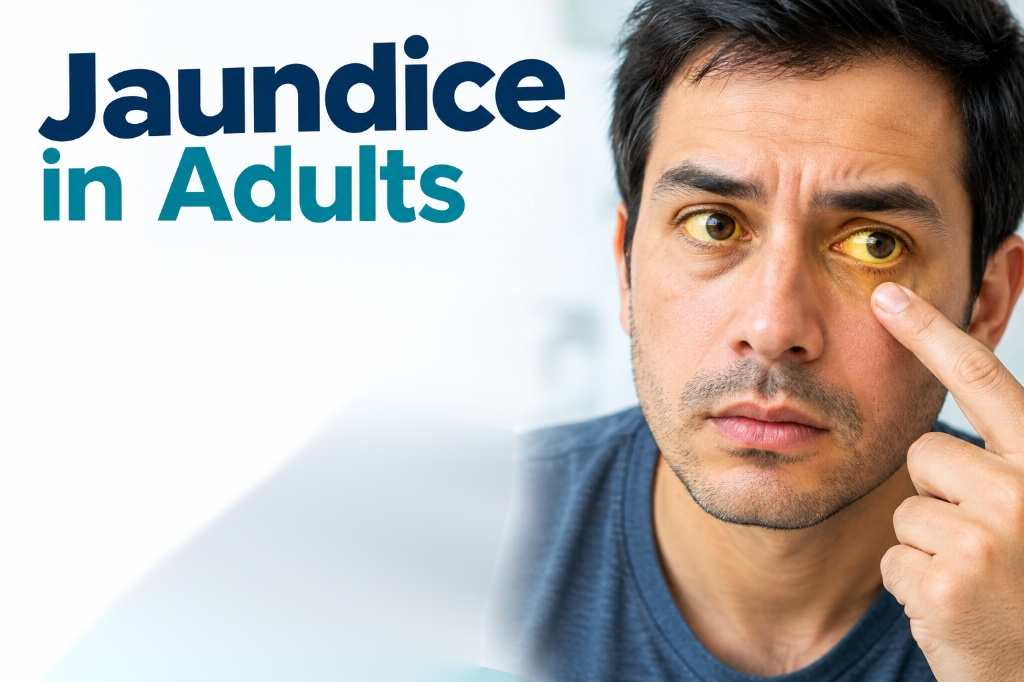
Jaundice is not a disease in itself but a symptom of various health issues. It results from an accumulation of bilirubin, a yellow pigment produced during the breakdown of red blood cells. When the liver cannot effectively process and eliminate bilirubin, it builds up in the blood and tissues, leading to a yellowish discoloration. While it’s often seen in newborns,jaundice in adults can be a warning sign of deeper issues involving the liver, blood,or bile ducts. In adults, jaundice typically indicates a problem with the liver, gallbladder, or pancreas.
Types of Jaundice
Jaundice can be classified into different types based on where the disruption in bilirubin processing occurs before, within, or after the liver:
- Pre-hepatic Jaundice: Caused by excessive breakdown of red blood cells (hemolysis),leading to increased bilirubin production
- Hepatic Jaundice: Occurs due to liver cell damage from infections (like hepatitis),alcohol, or liver diseases that impair bilirubin metabolism.
- Post-hepatic Jaundice: Results from obstruction in the bile ducts (e.g., gallstones,tumors), preventing bilirubin excretion.
Neonatal Jaundice
Neonatal jaundice is a common condition in newborns, caused by elevated bilirubin levels in the blood. It usually appears within the first week after birth due to the immature liver inability to process bilirubin efficiently. Most cases are harmless and resolve on their own,but severe cases may require phototherapy or medical attention.
Causes of Jaundice in Adults
Jaundice in adults typically results from conditions that interfere with the normal metabolism or excretion of bilirubin. These causes are as follows:
Liver Diseases (Hepatic Causes):
Damage to liver cells impairs their ability to process and excrete bilirubin. Common liver-related causes include:
- Hepatitis A, B, and C
- Cirrhosis
- Alcoholic Liver Disease
- Non-Alcoholic Fatty Liver Disease (NAFLD)
Hemolytic Disorders (Pre-Hepatic Causes):
These conditions cause excessive breakdown of red blood cells, leading to elevated levels of unconjugated bilirubin. Examples include:
- Sickle Cell Anemia
- halassemia
- Autoimmune Hemolytic Anemia
Bile Duct Obstruction (Post-Hepatic Causes):
Blockages in the bile ducts prevent bilirubin from being excreted into the intestines,leading to jaundice. Common causes are:
- Gallstones
- Biliary Strictures
- Pancreatic or Bile Duct Cancer
- Cholangitis
Genetic Disorders:
Inherited conditions may impair bilirubin processing:
- Gilbert’s Syndrome
Medications and Toxins:
Certain substances can harm the liver or interfere with bilirubin metabolism:
- Acetaminophen (paracetamol) overdose
- Some antibiotics and anti-tubercular drugs
- Chronic alcohol use
Infections:
Systemic infections that affect the liver or blood cells can trigger jaundice:
- Malaria
- Leptospirosis
- Yellow Fever
Symptoms That Signal Jaundice
Jaundice often reveals itself through visible changes in the skin, eyes, and overall health.Here are the key symptoms to look out for:
- Yellowing of the skin and eyes
- Dark-colored urine
- Pale or clay-colored stools
- Itchy skin (pruritus)
- Fatigue and weakness
- Abdominal pain or discomfort
- Nausea and vomiting
- Loss of appetite
- Fever and chills
- Swelling in the legs or abdomen (ascites)
How Jaundice Develops: Understanding Bilirubin
Bilirubin is formed when red blood cells break down in the spleen. It travels to the liver where it is processed and excreted through bile into the intestines. If any part of this process is disrupted before reaching the liver (pre-hepatic), in the liver (hepatic), or after the liver(post-hepatic), bilirubin builds up in the blood and jaundice develops.
Diagnosis of Jaundice
Diagnosing jaundice in adults involves identifying the underlying cause of elevated bilirubin levels through a combination of clinical evaluation, laboratory tests, and imaging studies
Blood tests
- Liver Function Tests (LFTs): Assesses liver health via ALT, AST, ALP,bilirubin, and albumin.
- Serum Bilirubin Test: Differentiates types of jaundice (conjugated vs.unconjugated).
- Complete Blood Count (CBC): Detects infections or hemolytic anemia.
- Prothrombin Time (PT)/INR: Evaluates blood clotting; prolonged in liver disease.
Imaging tests
- CT scan
- MRI
- MRCP
Liver biopsy, if needed, to evaluate liver tissue for disease
Viral markers to detect hepatitis infection
Ayurvedic Aspect
In Ayurveda, hepatocellular jaundice is known as Kamala, a condition that primarily arises from the disturbance of Pitta Dosha and Rakta Dhatu (blood tissue). It is considered a disease where excess Pitta affects the quality and function of the blood, ultimately impairing liver function.
Pathology of Kamala (Jaundice):
Kamala (Jaundice) is often described as a complication or advanced stage of Pandu Roga (anemia). If someone recovering from Pandu (anemia) continues to consume Pitta-aggravating foods, such as spicy and oily foods, it can cause an overaccumulation of Pitta, progressing into Kamala (Jaundice). Kamala is classified into Shakhashrita Kamala (obstructive jaundice), Koshtashrita Kamala (hepatic jaundice), and Halimaka (chronic jaundice with anemia)
Causes of Kamala (Jaundice):
- Frequent intake of Pitta-provoking foods, such as spicy, oily, sour, and fermented items
- Irregular eating habits and consumption of heavy-to-digest meals
- Neglected care post-recovery from anemia (Pandu)
- Accumulation of metabolic toxins (Ama) due to poor digestion
- Liver dysfunction, leading to disrupted bile metabolism and blood impurity
Symptoms of Kamala (Jaundice):
Kamala presents with distinct signs and symptoms that reflect both internal imbalance and external manifestation:
- Haridra Netra (Yellowing of the eyes)
- Bhekvarno (Agreenish-yellow complexion, resembling that of a frog)
- Hatendriyata (Diminished sensory perception and coordination)
- Daaha (Burning sensation in the body)
- Avipaka (Indigestion and metabolic dysfunction)
- Daurbalya (Generalized weakness)
Management of Jaundice
The primary goal in managing Kamala is to eliminate the excess Pitta and purify the blood. The approach includes Shodhana (detoxification) and Shamana (palliative care) therapies.
Lifestyle Modifications
- Avoid alcohol
- Get adequate rest
- Practice good hygiene
- Avoid toxins (chemicals and certain medications)
- Limit physical exertion
- Reduce stress
Dietary Recommendations
- Eat light, digestible foods
- Drink fluids (water, herbal teas)
- Avoid fatty, fried, spicy foods.
Home Remedies
- Amla Juice (Phyllanthus emblica): Rich in vitamin C, aids liver repair
- Sugarcane Juice (Saccharum officinarum): Alkaline, reduces bilirubin levels
- Aloe Vera Juice (Aloe barbadensis miller): Anti-inflammatory, supports liver health
- Pomegranate Juice (Punica granatum): Antioxidant-rich, promotes liver detox
Shodhana Chikitsa (Detoxification)
- Virechana (therapeutic purgation): the chief treatment used to expel vitiated Pitta and cleanse the liver-blood axis
- Raktamokshana (bloodletting): considered in chronic or stubborn cases involving deep Rakta (Blood) vitiation
Ayurvedic Herbs for Jaundice
In Ayurveda, several herbs help detoxify the liver, reduce bilirubin levels, and support healing, making them effective for managing jaundice.
- Kutki (Picrorhiza kurroa): Liver stimulant and detoxifier
- Bhumiamalaki (Phyllanthus niruri): Effective in viral hepatitis
- Kalmegh (Andrographis paniculata): Anti-inflammatory and hepatoprotective
- Punarnava (Boerhavia diffusa): Diuretic and anti-inflammatory, reduces swelling
- Triphala: Improves digestion and elimination of toxins
- Sharpunkha (Tephrosia villosa): Detoxifies the liver and reduces bilirubin.
- Makoy (Solanum nigrum): Supports liver function and aids detoxification.
Conclusion
Jaundice in adults is a vital clinical sign of deeper systemic or hepatic disturbances. Early diagnosis, combined with effective management and lifestyle changes, can prevent complications. Ayurveda offers a holistic approach not just for symptom relief, but also to enhance liver health and overall vitality. Integrating traditional knowledge with modern diagnostics ensures comprehensive care and recovery.


Dr. Vikram Chauhan
Latest posts by Dr. Vikram Chauhan (see all)
- 7 Early Signs of Liver Cirrhosis & Ayurvedic Management - October 6, 2026
- Jaundice in Adults: Causes, Symptoms & Ayurvedic Care - October 6, 2026
- Liver Detoxification: Ayurvedic Herbs, Diet & Remedies - October 3, 2026
- Fatty Liver: Ayurvedic Management, Diet & Causes - October 1, 2026
- Treatment of Acute Flaccid Myelitis (AFM) in Ayurveda with Herbal Remedies - September 30, 2026