


Acute Flaccid Myelitis (AFM): Symptoms & Treatment
Abstract
Sudden weakness in the arms or legs, especially in children, can be alarming and may indicate a serious neurological condition requiring immediate medical attention. Acute Flaccid Myelitis (AFM) is a rare disorder that affects the spinal cord, leading to rapid muscle weakness and, in severe cases, paralysis. Although uncommon, early recognition and prompt diagnosis are crucial for improving outcomes and preventing long-term complications. From an Ayurvedic perspective, neurological disorders are understood by evaluating the imbalance of Vata dosha (the principle governing the nervous system and movement) along with the involvement of affected tissues. This article provides a comprehensive overview of Acute Flaccid Myelitis, including its facts, statistics, causes, symptoms, diagnosis, immunological mechanisms, Ayurvedic overview, and the role of herbal remedies in supporting holistic health.
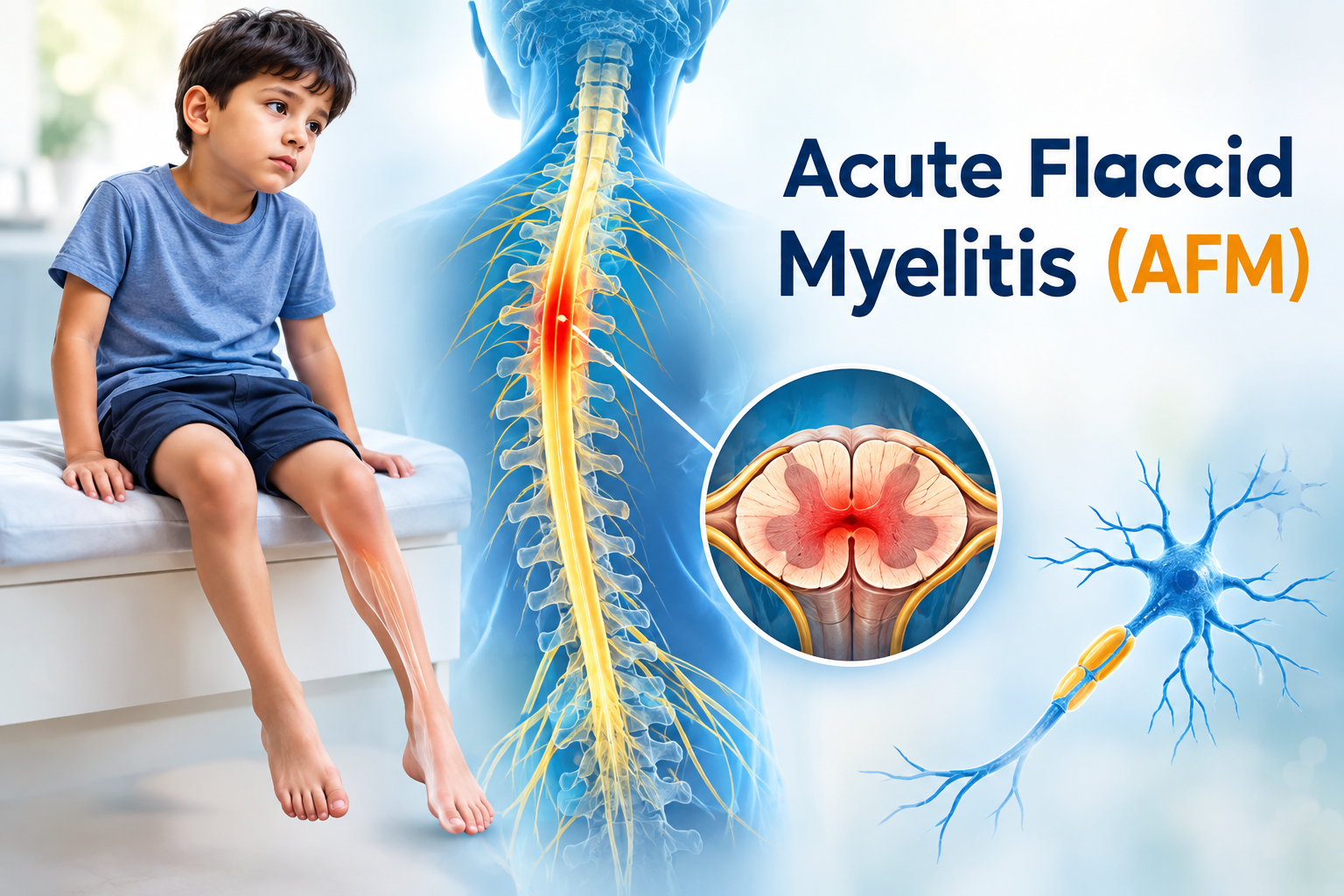
Facts About Acute Flaccid Myelitis (AFM)
- Acute Flaccid Myelitis (AFM) is a rare neurological disorder that primarily affects the gray matter of the spinal cord, leading to sudden muscle weakness and loss of muscle tone.
- The condition mainly affects children, although adults can also develop AFM.
- AFM is not contagious, but certain viral infections associated with it, such as non-polio enteroviruses, can spread from person to person.
- Most cases occur during late summer and early fall, coinciding with increased circulation of enteroviruses.
- Although viruses such as Enterovirus D68 (EV-D68) and Enterovirus A71 (EV-A71) have been strongly associated with AFM, the exact cause is not identified in every patient.
- The disease can progress rapidly within hours to days, making early medical evaluation essential.
- Magnetic Resonance Imaging (MRI) of the spinal cord is the most important imaging test for confirming AFM.
- Some individuals recover completely, while others may experience long-term muscle weakness, paralysis, or neurological disability, requiring prolonged rehabilitation.
- Early diagnosis and supportive treatment, including physical and occupational therapy, play a vital role in improving functional recovery.
- AFM is considered a medical emergency because sudden limb weakness can progress quickly and may affect the muscles involved in breathing in severe cases.
Statistics on Acute Flaccid Myelitis (AFM)
- Acute Flaccid Myelitis (AFM) is an extremely rare neurological disorder, with an estimated incidence of less than 2 cases per million people annually.
- Children account for over 90% of reported cases, with most patients being between 2 and 8 years of age.
- AFM cases tend to occur in seasonal outbreaks, with the highest number reported during late summer and early autumn.
- Since enhanced surveillance began in 2014, several countries have reported periodic increases in AFM cases, particularly during years with widespread enterovirus circulation.
- Enterovirus D68 (EV-D68) has been identified as one of the viruses most commonly linked to AFM outbreaks, although the exact cause remains unknown in some patients.
- Many affected individuals require long-term physical rehabilitation, and a significant proportion continue to experience persistent muscle weakness or neurological impairment after the acute illness.
- Ongoing surveillance and research continue to improve the understanding of AFM, its causes, and long-term outcomes.
Introduction
Acute Flaccid Myelitis (AFM) is a rare but serious neurological disorder that affects the gray matter of the spinal cord, leading to sudden muscle weakness, loss of muscle tone, and reduced reflexes. The condition primarily affects children, although adults can also develop it. AFM often develops after a viral infection, particularly those caused by non-polio enteroviruses, but the exact cause is not always identified. In severe cases, weakness may progress rapidly and involve the muscles responsible for breathing, making it a medical emergency. Early recognition, prompt diagnosis, and supportive medical care are essential for improving recovery and reducing long-term disability. Although there is no specific cure, rehabilitation therapies play an important role in restoring muscle function.
Causes of Acute Flaccid Myelitis (AFM)
The exact cause of Acute Flaccid Myelitis (AFM) is not always known. However, several factors have been associated with its development, including:
- Viral infections, especially Enterovirus D68 (EV-D68) and Enterovirus A71 (EV-A71)
- Other viral infections such as West Nile virus, adenovirus, and flaviviruses
- An abnormal immune response that damages the spinal cord after an infection
- Rarely, environmental or genetic factors may contribute to disease susceptibility
- In many patients, no definite cause can be identified
Symptoms of Acute Flaccid Myelitis (AFM)
The symptoms usually develop suddenly and may worsen rapidly. Common symptoms include:
- Sudden weakness in one or more arms or legs
- Loss of muscle tone (flaccid paralysis)
- Reduced or absent reflexes
- Difficulty moving the face or drooping eyelids
- Difficulty swallowing or slurred speech
- Pain in the neck, back, arms, or legs
- Difficulty breathing due to weakness of respiratory muscles
- Fever or respiratory illness before the onset of neurological symptoms (in many cases)
Differential Diagnosis of Acute Flaccid Myelitis (AFM)
Conditions that may present with symptoms similar to AFM include:
- Guillain-Barre Syndrome (GBS)
- Transverse Myelitis
- Poliomyelitis
- Multiple Sclerosis (MS)
- Spinal Cord Compression
- Acute Disseminated Encephalomyelitis (ADEM)
- Botulism
- Myasthenia Gravis
- Spinal Cord Infarction
- Lyme Neuroborreliosis
Diagnosis of Acute Flaccid Myelitis (AFM)
The diagnosis of Acute Flaccid Myelitis (AFM) is based on a combination of clinical evaluation, neurological examination, and diagnostic tests. Doctors assess the sudden onset of limb weakness, decreased muscle tone, and reduced reflexes, along with any recent history of fever or viral illness. Magnetic Resonance Imaging (MRI) of the spinal cord is the most important test, as it reveals characteristic changes in the gray matter. Cerebrospinal fluid (CSF) analysis helps identify inflammation and may detect viral infections. Electromyography (EMG) and nerve conduction studies (NCS) are performed to evaluate nerve and muscle function. Additional laboratory tests, including viral studies, may be carried out to confirm the diagnosis and rule out other neurological disorders with similar symptoms.
Recent Advances in Acute Flaccid Myelitis (AFM)
- Advanced MRI techniques enable earlier and more accurate detection of spinal cord damage.
- Researchers have established a stronger link between Enterovirus D68 (EV-D68) and the development of AFM.
- Monoclonal antibody therapies and antiviral drugs are currently being investigated as potential treatment options.
- Studies are exploring the role of the immune system to better understand how inflammation contributes to spinal cord injury.
- Scientists are working to identify biomarkers that may help diagnose AFM at an earlier stage.
- Intensive physical and occupational rehabilitation has shown encouraging results in improving muscle strength and functional recovery.
- International surveillance programs are improving the early detection of AFM outbreaks and supporting ongoing research into more effective therapies.
- Current research is focused on developing targeted treatments that can reduce nerve damage and improve long-term neurological outcomes.
Ayurvedic Overview on Acute Flaccid Myelitis (AFM)
Although Acute Flaccid Myelitis (AFM) is not described as a distinct disease entity in the classical Ayurvedic texts, its clinical presentation closely resembles disorders caused by aggravated Vata Dosha, particularly those affecting the Majja Dhatu (nervous tissue) and Snayu (ligaments and nerves). The sudden onset of limb weakness, loss of muscle tone, diminished reflexes, and paralysis can be correlated with conditions such as Pakshaghata, Ekanga Vata, Sarvanga Vata, or Snayugata Vata, depending on the extent of neurological involvement. From an Ayurvedic perspective, vitiated Vata Dosha, often associated with Dhatu Kshaya (tissue depletion) and Avarana (obstruction of Vata), disrupts the normal functioning of the neuromuscular system, resulting in impaired motor activity. Therefore, the Ayurvedic management of AFM focuses on pacifying aggravated Vata, nourishing the nervous system, strengthening muscles and nerves, improving tissue regeneration, and restoring functional mobility through herbal medicines, Panchakarma therapies, appropriate diet, and supportive lifestyle measures.
Herbal Remedies by Planet Ayurveda for Acute Flaccid Myelitis (AFM)
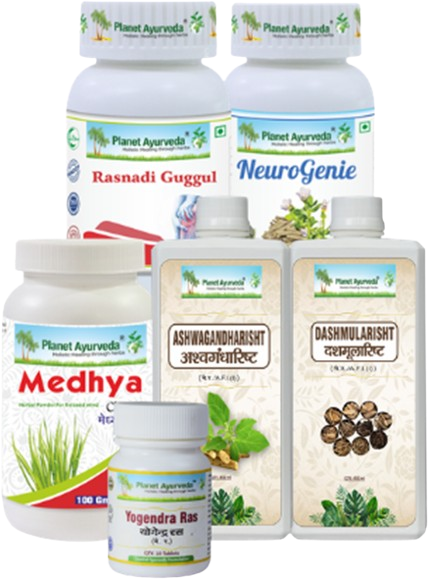
Planet Ayurveda is a GMP-certified Ayurvedic manufacturing company dedicated to promoting authentic and evidence-based Ayurveda through high-quality herbal formulations. The company prepares its products using standardized herbal extracts and classical Ayurvedic principles, without the use of added chemicals, artificial colors, preservatives, fillers, or synthetic additives. Its formulations are designed to support overall health by addressing the root cause of disease and restoring the body’s natural balance. With a strong emphasis on purity, quality, and holistic wellness, Planet Ayurveda offers a wide range of herbal products for various health conditions. Below, we discuss some of the Planet Ayurveda formulations that may provide supportive care in Acute Flaccid Myelitis (AFM).
- Medhya Churna
- Yogendra Ras
- Dashmularisht
- Ashwagandharisht
- Rasnadi Guggul
- Neurogenie Capsules
Herbal Remedies for Acute Flaccid Myelitis (AFM)

Product Description
1. Medhya Churna
Medhya Churna is a polyherbal formulation prepared by Planet Ayurveda containing Vacha (Acorus calamus), Ashwagandha (Withania somnifera), Shwet Jeerak (Cuminum cyminum), Krishna Jeerak (Carum carvi), Sonth (Zingiber officinale), and several other Medhya (brain-supportive) herbs. Collectively, these ingredients possess Medhya (nootropic), Balya (strength-promoting), Vata-Shamaka, Rasayana (rejuvenative), anti-inflammatory, antioxidant, neuroprotective, immunomodulatory, and digestive-enhancing properties. The formulation helps nourish the Majja Dhatu (nervous tissue), strengthen the nervous system, improve neuromuscular coordination, enhance cognitive function, and support healthy nerve conduction. It also helps reduce inflammation, improve digestion and nutrient absorption, promote tissue regeneration, and enhance overall neurological health, making it beneficial as supportive care in conditions such as Acute Flaccid Myelitis (AFM).
Dosage: 1 gm twice daily with ghee.
2. Yogendra Ras
Yogendra Ras is a classical Ayurvedic herbo-mineral formulation prepared with ingredients such as Purified Gold (Swarna Bhasma), Purified Mercury (Parada), Purified Sulphur (Gandhaka), Tin Bhasma (Vanga Bhasma), Iron Bhasma (Lauha Bhasma), other mineral preparations. Collectively, these ingredients possess Rasayana (rejuvenative), Medhya (brain-supportive), Balya (strength-promoting), Vata-Shamaka, neuroprotective, antioxidant, and immunomodulatory properties. The formulation helps nourish the Majja Dhatu (nervous tissue), strengthen the nervous system, improve neuromuscular function, support healthy nerve conduction, enhance muscle strength, and promote tissue regeneration. It also helps improve vitality, supports recovery from neurological weakness, and contributes to overall nervous system health, making it beneficial as supportive Ayurvedic care in Acute Flaccid Myelitis (AFM).
Dosage: 1 tablet once daily with plain water after meals.
3. Dashmularisht
Dashmularishta is a classical Ayurvedic fermented formulation prepared with Dashamoola (the ten medicinal roots), Guduchi (Tinospora cordifolia), Manjistha (Rubia cordifolia), Rasna (Pluchea lanceolata), Punarnava (Boerhavia diffusa), and other herbal ingredients. Collectively, these herbs possess Vata-Shamaka, Balya (strength-promoting), Rasayana (rejuvenative), anti-inflammatory, antioxidant, analgesic, immunomodulatory, and nervine tonic properties. The formulation helps pacify aggravated Vata Dosha, reduce inflammation, strengthen muscles and nerves, improve neuromuscular function, promote tissue repair, and enhance overall vitality. It also supports healthy digestion and metabolism, facilitating better nourishment of the Majja Dhatu (nervous tissue) and aiding recovery in neurological conditions such as Acute Flaccid Myelitis (AFM).
Dosage: 2 tsp twice daily with plain water after meals.
4. Ashwagandharisht
Ashwagandharishta is a classical Ayurvedic fermented formulation prepared with Ashwagandha (Withania somnifera), Manjistha (Rubia cordifolia), Daruharidra (Berberis aristata), and several other medicinal herbs. Collectively, these ingredients possess Balya (strength-promoting), Rasayana (rejuvenative), Vata-Shamaka, adaptogenic, neuroprotective, antioxidant, anti-inflammatory, and immunomodulatory properties. The formulation helps strengthen the nervous system, nourish the Majja Dhatu (nervous tissue) and Mamsa Dhatu (muscle tissue), improve muscle strength and endurance, support healthy nerve function, and promote tissue repair. It also enhances physical vitality, reduces fatigue, improves recovery, and supports overall neuromuscular health, making it beneficial as supportive Ayurvedic care in Acute Flaccid Myelitis (AFM).
Dosage: 2 tsp twice daily with plain water after meals.
5. Rasnadi Guggul
Rasnadi Guggul is a classical Ayurvedic formulation containing Rasna (Pluchea lanceolata), Guggul (Commiphora mukul),Guduchi (Tinospora cordifolia), Eranda Moola (Ricinus communis), and several other medicinal herbs. Collectively, these ingredients possess Vata-Shamaka, anti-inflammatory, analgesic, Balya (strength-promoting), Rasayana (rejuvenative), antioxidant, and immunomodulatory properties. The formulation helps pacify aggravated Vata Dosha, reduce inflammation, strengthen muscles and nerves, improve joint mobility, support healthy nerve conduction, and promote tissue repair. It also helps relieve pain, stiffness, muscular weakness, and enhances neuromuscular function, making it beneficial as supportive Ayurvedic care in Acute Flaccid Myelitis (AFM).
Dosage: 2 tablets twice daily with plain water after meals.
6. Neurogenie Capsules
Neurogenie Capsules are a proprietary Ayurvedic formulation containing Brahmi (Bacopa monnieri) and Ashwagandha (Withania somnifera). Collectively, these herbs possess Medhya (brain-supportive), Balya (strength-promoting), Rasayana (rejuvenative), adaptogenic, neuroprotective, antioxidant, anti-inflammatory, and immunomodulatory properties. The formulation helps nourish the Majja Dhatu (nervous tissue), support healthy nerve conduction, improve cognitive function, enhance neuromuscular coordination, and strengthen the nervous system. It also helps reduce oxidative stress, promotes tissue regeneration, improves physical and mental endurance, and supports recovery from neurological weakness. These combined actions make Neurogenie Capsules beneficial as supportive Ayurvedic care in Acute Flaccid Myelitis (AFM) and other neuromuscular disorders.
Dosage: 1 capsule twice daily with plain water after meals.
Panchkarma for Acute Flaccid Myelitis (AFM)
Panchakarma plays a supportive role in the Ayurvedic management of Acute Flaccid Myelitis (AFM) by pacifying aggravated Vata Dosha, nourishing the nervous system, improving neuromuscular function, and promoting rehabilitation. Since AFM is an acute neurological condition requiring immediate conventional medical care, Panchakarma is generally introduced during the recovery or rehabilitation phase under the supervision of a qualified Ayurvedic physician.
- Abhyanga (Therapeutic Oil Massage): Abhyanga with medicated oils such as Maha Narsimha Thailam, Kshirabala Taila, or Dhanwantharam Thailam helps pacify aggravated Vata, improves peripheral blood circulation, nourishes muscles and nerves, reduces muscle stiffness, prevents muscle wasting, and enhances joint mobility. Gentle massage also stimulates nerve endings and supports neuromuscular recovery during rehabilitation.
- Swedana (Sudation Therapy): Swedana is performed after Abhyanga to enhance the penetration of medicated oils into deeper tissues. It improves circulation, relieves muscle stiffness, reduces spasticity and discomfort, improves flexibility, and facilitates better movement of joints and muscles, thereby supporting functional recovery.
- Basti (Medicated Enema): Basti is considered the prime treatment for Vata disorders in Ayurveda. Medicated oil (Anuvasana Basti) and decoction enemas (Niruha Basti) help pacify systemic Vata, nourish the Majja Dhatu (nervous tissue), improve neuromuscular coordination, strengthen muscles, and support nerve regeneration. It is regarded as one of the most effective Panchakarma therapies for chronic neurological disorders.
- Nasya (Nasal Administration of Medicated Oils): Nasya involves administering medicated oils or herbal preparations through the nasal passages, which are considered the gateway to the head ("Nasa Hi Shiraso Dwaram"). It helps nourish the brain and cranial nerves, supports healthy nervous system function, improves neuromuscular signaling, and may enhance overall neurological recovery.
- Shirodhara: Shirodhara involves the continuous pouring of medicated oil or herbal liquids over the forehead. It helps calm the nervous system, reduces stress and anxiety, improves sleep quality, and supports neuroendocrine balance. By promoting relaxation and reducing sympathetic overactivity, it may contribute to improved neurological rehabilitation and overall well-being.
- Pinda Sweda (Bolus Fomentation): Pinda Sweda uses warm herbal boluses to provide localized heat and nourishment to weakened muscles. It helps improve muscle tone, enhances circulation, reduces stiffness, promotes tissue nourishment, and supports rehabilitation by improving muscle strength and flexibility.
Diet and Lifestyle to be followed in Acute Flaccid Myelitis (AFM)
Diet
- Consume a Vata-pacifying, warm, freshly prepared, and easily digestible diet.
- Include foods rich in high-quality protein, lentils, mung beans, tofu, soya chunks, etc.
- Add healthy fats like cow’s ghee, sesame oil, almonds, walnuts, and flaxseeds to nourish the nervous system.
- Eat antioxidant-rich fruits and vegetables, including berries, amla, pomegranate, spinach, carrots, and broccoli, to help reduce oxidative stress.
- Include foods rich in vitamins B12, D, E, magnesium, zinc, and omega-3 fatty acids to support nerve health and tissue regeneration.
- Stay adequately hydrated with warm water, soups, and herbal drinks.
- Avoid processed foods, excessive sugar, fried foods, alcohol, smoking, and excessive caffeine, as they may increase inflammation and impair recovery.
Lifestyle
- Follow a regular daily routine with adequate rest and sufficient sleep (7–9 hours) to promote healing.
- Practice gentle yoga such as Tadasana (Mountain Pose), Bhujangasana (Cobra Pose), Makarasana (Crocodile Pose), Shavasana (Corpse Pose), and supported Pawanmuktasana exercises, along with Anulom Vilom Pranayama, Bhramari Pranayama, and deep diaphragmatic breathing, only after medical clearance and according to individual physical ability.
- Reduce mental stress through meditation, mindfulness, and relaxation techniques, as emotional well-being supports neurological recovery.
- Avoid excessive physical exertion and overuse of weakened muscles during the recovery phase.
- Protect the body from exposure to cold weather and cold winds, as these may aggravate Vata Dosha.
Conclusion
Acute Flaccid Myelitis (AFM) is a rare but serious neurological disorder that requires early diagnosis, prompt medical intervention, and long-term rehabilitation to optimize recovery. Although there is no definitive cure, supportive management through physiotherapy, nutritional care, and regular follow-up can significantly improve functional outcomes. From an Ayurvedic perspective, AFM can be understood as a Vata-predominant neurological disorder, where treatment focuses on pacifying Vata, nourishing the nervous system, and promoting tissue regeneration. Herbal formulations, Panchakarma therapies, a balanced diet, and healthy lifestyle practices may complement conventional treatment and support overall well-being during recovery. An integrative approach that combines modern medicine with evidence-based Ayurvedic principles may help enhance rehabilitation, improve quality of life, and support long-term neurological health.


Dr. Vikram Chauhan
Latest posts by Dr. Vikram Chauhan (see all)
- Acute Flaccid Myelitis (AFM): Symptoms & Treatment - September 30, 2026
- Sarcoidosis: Causes, Symptoms & Ayurvedic Management - September 29, 2026
- Acidity & Heartburn: Antacids vs Ayurvedic Management of Amlapitta - September 28, 2026
- Fatty Liver: Causes, Symptoms, Diet & Ayurvedic Management - September 26, 2026
- Pigmented Villonodular Synovitis (PVNS): Symptoms, Causes & Treatment - September 25, 2026