


Fatty Liver: Causes, Symptoms, Diet & Ayurvedic Management
Abstract
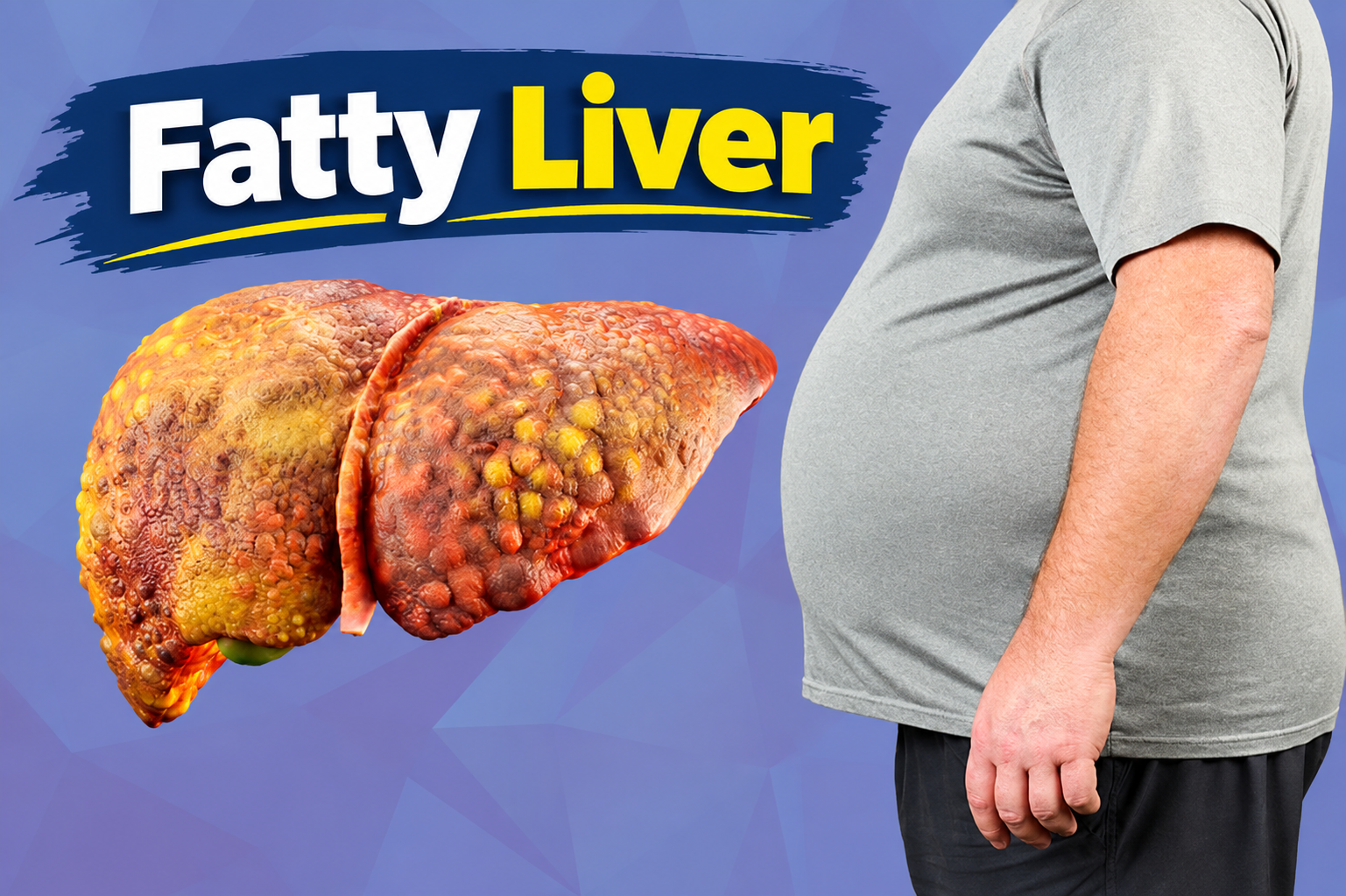
Fatty liver, clinically known as hepatic steatosis, is characterized by excessive accumulation of fat within liver cells (hepatocytes). It is commonly associated with metabolic factors such as overweight or obesity, insulin resistance, type 2 diabetes, dyslipidemia, hypertension, unhealthy dietary patterns, and physical inactivity. Alcohol consumption and certain nutritional or medical conditions may also contribute. Ayurveda does not describe fatty liver as an independent disease under the modern term “fatty liver.” However, its clinical features and underlying metabolic disturbances may be understood through concepts such as Agni Mandya (impaired metabolic function), Meda Dhatu Dushti (disturbance in fat tissue metabolism), Kapha Dosha aggravation, and Srotas Dushti (functional disturbance of bodily channels). Depending on the individual’s presentation, Ayurvedic management emphasizes appropriate Ahara (diet), Vihara (lifestyle), Deepana–Pachana approaches, and Shamana Chikitsa (palliative management) alongside appropriate medical evaluation.
Introduction
Fatty liver, or hepatic steatosis, occurs when excess fat, particularly triglycerides, accumulates within hepatocytes. It is frequently associated with metabolic dysfunction and may occur with obesity, insulin resistance, type 2 diabetes, abnormal blood lipid levels, and hypertension. In its early stages, fatty liver may produce few or no noticeable symptoms. However, persistent metabolic stress may be associated with liver inflammation and progressive fibrosis in some individuals. Therefore, appropriate assessment and management of underlying metabolic risk factors are important. Lifestyle modification remains an important component of management. Healthy dietary habits, regular physical activity, gradual weight reduction when appropriate, and control of conditions such as diabetes and dyslipidemia can support overall metabolic and liver health.
Definition
Fatty liver refers to the accumulation of excess fat, predominantly triglycerides, within hepatocytes. Fatty liver may range from simple hepatic steatosis to more advanced forms associated with hepatocellular injury, inflammation, and fibrosis. In some individuals, progressive liver fibrosis may eventually lead to cirrhosis. Common metabolic factors associated with fatty liver include:
- Overweight and obesity
- Abdominal obesity
- Insulin resistance
- Type 2 diabetes mellitus
- Dyslipidemia
- Hypertension
- Physical inactivity
Alcohol-associated liver disease represents a separate but important cause of hepatic steatosis.
Causes and Risk Factors
- Metabolic Dysfunction and Insulin Resistance- Metabolic dysfunction is a major contributor to fatty liver. Insulin resistance can increase the availability of fatty acids to the liver and influence hepatic lipid synthesis and storage.
- Overweight, Obesity, and Excess Caloric Intake- Excessive energy intake, particularly when combined with low physical activity, can promote adipose tissue expansion, insulin resistance, and increased fatty-acid delivery to the liver.
- Type 2 Diabetes Mellitus- Insulin resistance and abnormal glucose metabolism can promote increased fatty-acid availability and hepatic lipid accumulation.
- Dyslipidemia-Alterations in lipid metabolism may contribute to increased triglyceride storage within hepatocytes.
- Alcohol Consumption- Regular or excessive alcohol consumption can cause alcohol-associated hepatic steatosis and may contribute to progressive liver injury.
- Severe Malnutrition and Starvation- Fatty liver may also occur during prolonged nutritional deficiency. Increased mobilization of fatty acids from peripheral adipose tissue can increase their delivery to the liver.
- Other Contributing Factors- Certain medications, endocrine disorders, genetic factors, and other liver or metabolic conditions may also be associated with hepatic steatosis. Therefore, the underlying cause should be evaluated rather than assuming that all cases have the same origin.
Pathogenesis: Modern and Ayurvedic Perspective
From a modern perspective, fatty liver develops when hepatic fat accumulation exceeds the liver’s ability to oxidize and export lipids. From an Ayurvedic perspective, a metabolic sequence may be understood through Agni, Meda, Kapha, and Srotas.
Improper Ahara and sedentary lifestyle
↓
Agni Mandya (impaired metabolic function)
↓
Impaired metabolism and accumulation of metabolic by-products
↓
Kapha and Meda Dushti
↓
Srotas Dushti / impaired tissue-level transport and metabolism
↓
Yakrit involvement
↓
Clinical manifestation corresponding to hepatic steatosis
Signs and Symptoms of Fatty Liver
Fatty liver is often asymptomatic, particularly in its early stages. It may be identified incidentally during blood investigations or abdominal imaging.
- Asymptomatic Presentation- Many individuals with fatty liver do not experience specific symptoms.
- Fatigue- Some individuals may report tiredness, reduced energy, or general weakness.
- Right Upper Abdominal Discomfort- Occasionally, patients may experience vague discomfort, heaviness, or mild pain in the right upper abdomen.
- Enlarged Liver- Hepatomegaly may be detected during clinical examination or through imaging in some individuals. Symptoms alone cannot determine the severity of fatty liver, so appropriate diagnostic evaluation is important.
Diagnosis of Fatty Liver
Diagnosis involves assessment of metabolic risk factors, laboratory investigations, and imaging when appropriate.
Clinical Assessment
A healthcare professional may evaluate:
- Body weight and BMI
- Waist circumference
- Blood pressure
- Blood glucose and diabetes status
- Lipid profile
- Alcohol intake
- Medication history
- Family history of liver disease
- History of viral hepatitis or other liver conditions
Liver Function Tests
Liver enzymes such as ALT and AST may be assessed. Importantly, normal ALT and AST levels do not necessarily exclude hepatic steatosis or significant liver fibrosis.
Abdominal Ultrasound
Ultrasonography may demonstrate features such as increased hepatic echogenicity, commonly described as a “bright liver.” The visibility of deeper liver structures may also be reduced when steatosis is more pronounced.
FibroScan / Transient Elastography
Transient elastography can provide information regarding:
- Liver stiffness measurement (LSM): helps assess the likelihood of liver fibrosis.
- Controlled Attenuation Parameter (CAP): provides an estimate of hepatic steatosis.
Liver Biopsy
Liver biopsy is not required for every patient. In selected cases, it may be considered when determining the nature or severity of liver disease cannot be adequately established through non-invasive assessment.
Management of Fatty Liver
Lifestyle Modification
Lifestyle modification is a fundamental component of fatty liver management. The approach should be individualized according to body weight, metabolic health, nutritional status, and underlying causes.
Dietary Modification
A balanced diet can help improve overall metabolic health.
Prefer:
- Green leafy vegetables and other non-starchy vegetables
- Whole fruits such as apple, guava, orange, papaya, and berries
- Whole grains such as oats, barley, brown rice, and whole-wheat products
- Pulses, legumes, beans, and sprouts
- Appropriate portions of protein-rich foods such as eggs, fish, chicken, paneer, or tofu
- Nuts and seeds such as almonds, walnuts, flaxseeds, and chia seeds in moderate portions
- Unsweetened curd or buttermilk when suitable
- Water and unsweetened beverages
Limit:
- Sugar-sweetened beverages
- Packaged fruit juices and energy drinks
- Excess sugar, sweets, desserts, and other foods high in added sugars
- Refined flour products such as biscuits, cakes, pastries, and white bread
- Fried and deep-fried foods
- Chips, fast foods, and highly processed foods
- Excessive intake of saturated-fat-rich foods
- Large portions of refined carbohydrates
- Excessive processed and red meat
- Alcohol
Diet should be individualized, particularly in people with diabetes, kidney disease, advanced liver disease, or other medical conditions.
Exercise and Physical Activity
Regular physical activity supports metabolic health and can be beneficial even when significant weight loss does not occur.
Suitable activities may include:
- Brisk walking
- Cycling
- Swimming
- Resistance or strength training
- Other moderate physical activities appropriate to the individual’s fitness level
A combination of aerobic activity and resistance exercise can be incorporated into a regular routine.
Ayurvedic Management of Fatty Liver
Ayurvedic management is individualized according to Prakriti, Vikriti, Agni, Meda, Dosha involvement, dietary habits, lifestyle, and the overall clinical condition.
- Deepana–Pachana- Deepana–Pachana approaches are traditionally considered when Agni Mandya and impaired digestion or metabolism are present.
- Meda and Kapha Management- When excess Meda and Kapha are prominent, appropriate dietary, lifestyle, and Ayurvedic measures may be selected to support metabolic balance.
- Udvartana- Udvartana, or herbal powder massage, may be considered in suitable individuals, particularly where excess Meda and Kapha are present. Its use should be individualized according to the person’s constitution and clinical condition.
Herbal support for fatty liver by Planet Ayurveda!
Planet Ayurveda is an Ayurvedic wellness brand based in Chandigarh, India, dedicated to bringing traditional Ayurvedic knowledge into modern lifestyles. The brand offers a wide range of herbal formulations made from carefully selected Ayurvedic ingredients and produced under standardized quality practices. Planet Ayurveda focuses on authenticity, purity, consistency, and responsible wellness, serving customers in India and across the world. Alongside its herbal products, the brand provides personalized Ayurvedic consultations to help individuals understand their wellness needs and follow suitable, individualized approaches. By combining classical Ayurvedic principles with modern quality standards, Planet Ayurveda aims to make Ayurveda accessible, practical, and relevant for everyday life Depending on the individual’s assessment, Planet Ayurveda consider formulations traditionally used in the management of Yakrit and metabolic disorders, such as:
Herbal Remedies for Fatty Liver
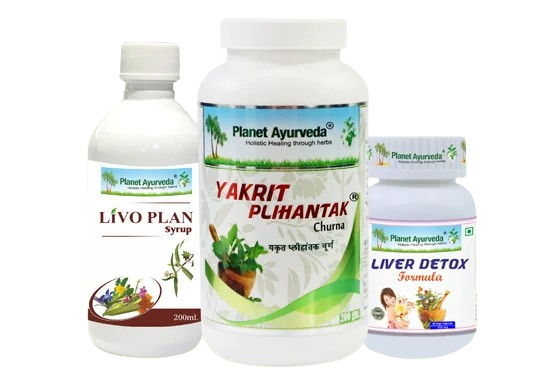

1. Yakrit Plihantak Churna
Yakrit Plihantak Churna is a classical Ayurvedic-inspired herbal powder formulated with traditionally valued herbs such as Bhumyamalaki (Phyllanthus niruri), Katuki (Picrorhiza kurroa), Makoy (Solanum nigrum), Punarnava (Boerhaavia diffusa), Kalmegha (Andrographis paniculata), Kasni (Cichorium intybus), Sharpunkha (Tephrosia purpurea), and Bhringraj (Eclipta alba). In Ayurveda, these herbs are traditionally associated with Yakrit (liver), Pitta balance, Agni, and proper digestion. The formulation is used traditionally to support healthy liver function and digestive wellness.
Dosage:1 teaspoonful twice daily before meals with warm water.
2. Livo Plan Syrup
Livo Plan Syrup is a traditional Ayurvedic polyherbal formulation combining Bhringraj (Eclipta alba), Sharpunkha (Tephrosia purpurea), Kalmegha (Andrographis paniculata), Shyonaka (Oroxylum indicum), Rohitaka (Tecomella undulata), Bhumyamalaki (Phyllanthus niruri), Patola (Trichosanthes dioica), Kasni (Cichorium intybus), and other Ayurvedic herbs. Traditionally, these botanicals are described in Ayurveda in connection with Yakrit, Pitta, Agni, and digestive processes. Livo Plan Syrup is intended to complement a balanced lifestyle by supporting normal liver and digestive function.
Dosage: 2 teaspoonfuls twice daily after meals.
3. Liver Detox Formula
Liver Detox Formula is a carefully selected Ayurvedic polyherbal capsule containing botanicals such as Kutki (Picrorhiza kurroa), Punarnava (Boerhaavia diffusa), Makoy (Solanum nigrum), Himsra (Capparis spinosa), and Kasni (Cichorium intybus). These herbs have established traditional significance in Ayurveda and are described in relation to Agni, Pitta, digestion, and Yakrit function. The formulation is intended to support digestive wellness and healthy liver function as part of an appropriate Ayurvedic lifestyle. Traditional concepts such as Pittavirechana and Yakrituttejaka refer to Ayurvedic actions described for certain herbs and formulations and should not be interpreted as biomedical claims to detoxify, treat, or cure liver disease
Dosage: 2 Capsules twice daily after meals
Conclusion
Fatty liver is closely associated with metabolic health and lifestyle factors. Although the modern diagnosis of fatty liver does not have a direct one-to-one equivalent in classical Ayurveda, its metabolic aspects can be conceptually understood through Agni Mandya, Meda Dhatu Dushti, Kapha Dosha, and Srotas Dushti. Ayurvedic management emphasizes individualized diet, lifestyle modification, appropriate Deepana–Pachana and other therapeutic approaches, and careful consideration of the person’s overall health status. At the same time, regular medical evaluation is important to identify metabolic risk factors and assess the possibility of progressive liver disease.


Dr. Vikram Chauhan
Latest posts by Dr. Vikram Chauhan (see all)
- Fatty Liver: Causes, Symptoms, Diet & Ayurvedic Management - September 26, 2026
- Pigmented Villonodular Synovitis (PVNS): Symptoms, Causes & Treatment - September 25, 2026
- Idiopathic Thrombocytopenic Purpura (ITP): Causes, Symptoms, Treatment & Ayurveda - September 24, 2026
- Ulcerative Colitis: Symptoms, Causes & Ayurvedic Treatment - September 23, 2026
- Fatty Liver: Causes, Symptoms, Diet & Ayurvedic Management - September 22, 2026