


Ulcerative Colitis: Causes, Symptoms & Ayurvedic Treatment
Abstract
Ulcerative Colitis (UC) is a chronic inflammatory disorder of the large intestine that primarily affects the colonic mucosa and usually begins in the rectum, extending continuously to varying portions of the colon. It commonly causes bloody diarrhoea, frequent stools, abdominal discomfort, urgency, and tenesmus, with symptoms fluctuating between active disease and remission. The development of UC involves an abnormal immune response influenced by genetic susceptibility, intestinal barrier dysfunction, gut microbiota, and environmental factors. Recent understanding has highlighted the importance of the gut–microbiota–immune axis, microbial metabolites, and epithelial barrier integrity in maintaining intestinal homeostasis. The long-term course is variable, ranging from mild intermittent disease to persistent or extensive inflammation requiring intensive treatment. Prolonged uncontrolled inflammation may contribute to anaemia, nutritional deficiencies, intestinal complications, and an increased risk of colorectal neoplasia. Regular monitoring and appropriate management are therefore important for maintaining remission and improving long-term prognosis.
Introduction
Ulcerative colitis involves more than visible inflammation of the colon; it can alter several interconnected processes responsible for maintaining intestinal health. The intestinal epithelial cells, mucus layer, tight-junction proteins, and immune signalling pathways work together to maintain the gut barrier, and disruption of this system can contribute to persistent mucosal inflammation. Another important area of current research is the role of short-chain fatty acids (SCFAs), particularly butyrate, which are produced when intestinal bacteria ferment dietary fibre and contribute to epithelial energy metabolism and immune regulation. Changes in bile-acid metabolism, microbial diversity, and intestinal oxygen conditions may also influence the inflammatory environment. UC can additionally affect sleep, fatigue, psychological well-being, and nutritional status, making its impact broader than gastrointestinal symptoms alone. These interconnected mechanisms help explain why UC is considered a complex, multifactorial disorder rather than an isolated disease of the colon. Globally, a systematic review estimated the prevalence of UC at approximately 120.4 per 100,000 population, with an incidence of about 5.0 per 100,000 person-years.In India, epidemiological data remain limited and vary geographically. Population-based studies from northern India reported UC prevalence of approximately 43–44 per 100,000, while a prospective study from Hyderabad reported an annual incidence of 5.40 per 100,000 during 2012–2013.
Causes And Risk Factors
Ulcerative colitis (UC) is a chronic inflammatory bowel disease with no single identifiable cause. It is thought to develop through an interaction between genetic susceptibility, abnormal immune responses, intestinal microbiota, and environmental factors. Genetic predisposition is important, particularly in individuals with a family history of inflammatory bowel disease. Alterations in gut microbiota, intestinal infections, dietary patterns, urbanisation, and exposure to antibiotics or non-steroidal anti-inflammatory drugs (NSAIDs) may contribute to disease development or exacerbation. Smoking status and cessation have also been associated with UC risk and disease behaviour, although smoking is not recommended as a treatment.
Clinical Features
The Symptoms Depend On The Extent And Severity Of Intestinal Inflammation. Ulcerative Colitis (UC) Is A Chronic Inflammatory Bowel Disease That Primarily Affects The Rectum And Colon. It Typically, it has A Relapsing–Remitting Course.
Intestinal Symptoms
- Bloody Diarrhoea — The Characteristic Symptom; Blood May Be Mixed With Or Coating The Stool.
- Increased Frequency Of Stools, Often Several Times Per Day.
- Urgency — Sudden, Difficult-To-Delay Need To Defecate.
- Tenesmus — Feeling Of Incomplete Evacuation Even After Passing Stool.
- Mucus In Stool.
- Lower Abdominal Cramps Or Pain, Often Relieved After Defecation.
- In Severe Disease, Patients May Pass Mostly Blood And Mucus With Little Faecal Matter.
Systemic Features
Especially With Extensive Or Severe Disease:
- Fever
- Fatigue And Weakness
- Loss Of Appetite
- Weight Loss
- Pallor Due To Anaemia
- Dehydration
- Tachycardia
Extra-Intestinal Manifestations
UC can Affect Organs Outside The Intestine:
- Joints: Peripheral Arthritis, Sacroiliitis, Ankylosing Spondylitis
- Skin: Erythema Nodosum, Pyoderma Gangrenosum
- Eyes: Episcleritis, Uveitis
- Liver/Biliary Tract: Primary Sclerosing Cholangitis
- Mouth: Aphthous Ulcers
Severe/Complicated Disease
Severe UC May Cause:
- Severe Abdominal Pain And Distension
- High Fever
- Marked Tachycardia
- Significant Anemia
- Dehydration
- Toxic Megacolon
- Intestinal Perforation
- Severe Hemorrhage
Classification
Ulcerative colitis can be classified according to the extent of colonic involvement:
- Ulcerative proctitis – inflammation confined to the rectum.
- Left-sided colitis – inflammation extending from the rectum through the sigmoid and descending colon.
- Proctosigmoiditis: Inflammation involves the rectum and sigmoid colon. Symptoms may include bloody diarrhoea, abdominal cramps, urgency, and tenesmus.
- Extensive colitis/pancolitis – inflammation extending beyond the splenic flexure and potentially involving the entire colon.
Investigations
The diagnosis and assessment of ulcerative colitis involve several investigations:
- Blood tests: Complete blood count (CBC), ESR, CRP, electrolytes, liver function tests, and serum albumin help assess anaemia, inflammation, and nutritional status.
- Stool examination: Stool routine examination and culture help exclude infections. Faecal calprotectin may be used to assess intestinal inflammation.
- Colonoscopy: It is an important investigation for visualising inflammation, ulceration, and the extent of disease in the colon.
- Biopsy: Tissue samples obtained during colonoscopy are examined histologically to confirm the diagnosis and exclude other causes.
- Imaging: X-ray, CT, or MRI may be used when complications such as severe inflammation, obstruction, or toxic megacolon are suspected.
Treatment
Treatment depends on the severity and extent of the disease.
- Aminosalicylates (5-ASA): Such as mesalamine, commonly used for mild-to-moderate disease.
- Corticosteroids: Used for short-term control of moderate or severe flare-ups.
- Immunomodulators: Medicines such as azathioprine may be used for maintaining remission in selected patients.
- Surgery: Colectomy may be required for severe disease that does not respond to medical treatment or for certain complications.
Ayurvedic Perspective
According to Charaka Samhita, Pittaja Atisara is described in Chikitsa Sthana, Atisara Chikitsa, Chapter 19.
Ayurvedic concept |
Features |
Possible clinical correlation in UC |
1) Pittaja Atisara |
Loose stools, burning, thirst, fever, yellow/green stool |
Diarrhoea + inflammatory features |
2 )Pittaja ghrani |
Frequent loose stools, yellowish or foul-smelling stool, burning sensation, thirst, abdominal discomfort, weakness, indigestion and increased bowel frequency. |
Frequent loose stools, urgency, abdominal discomfort and inflammatory digestive symptoms may show a clinical resemblance to UC. |
3) Raktatisara |
Loose stools with blood, pain, Weakness |
Bloody diarrhoea |
4) Kshataja Grahani |
Chronic bowel disturbance, blood + mucus, pain |
Frequent loose stools are associated with blood, mucus, abdominal pain, weakness, and irritation of the intestinal tract. |
5) Rakta-Pitta involvement |
Bleeding, burning sensation, inflammation-like symptoms, weakness and discolouration associated with bleeding |
Rectal bleeding and inflammatory manifestations in UC can be conceptually related to Pitta–Rakta involvement |
In Ayurveda, Pittaja Atisara is a type of Atisara (diarrhoea) in which Pitta dosha is considered predominant.
Nidana — Causes
Traditionally, Pitta aggravation is associated with factors such as:
- Excessive Amla (sour), Lavana (salty), Katu (pungent), Kshara, Ushna (hot) and Tikshna foods.
- Excessive Krodha (anger) and Irshya (Jealousy)
- Excessive alcohol intake
- Eating contaminated or unsuitable food
- Excessive exposure to heat or sun
- Anger and excessive stress
- Irregular eating habits
- Suppression of natural urges
Samprapti — Pathogenesis
The concepts of Pittaja Atisara (Pitta-dominant diarrhoea), Raktatisara (blood-associated diarrhoea), Grahani (disorder of intestinal digestive and absorptive function), and Rakta Dushti (vitiation of blood tissue) are considered based on their predominant clinical features. The disease process may begin with excessive intake of Pitta-prakopaka Ahara-Vihara (Pitta-aggravating diet and lifestyle), irregular dietary habits, stress, and impairment of Agni (digestive and metabolic fire), resulting in Agnimandya (reduced digestive capacity) and Ama (improperly digested metabolic waste) formation. Continued exposure to causative factors leads to Pitta Dosha (Pitta functional principle) vitiation, with associated involvement of Vata Dosha (Vata functional principle), particularly Apana Vata (the Vata subtype governing downward movement and elimination). The vitiated Doshas affect the Annavaha Srotas (channels carrying and processing food) and Purishavaha Srotas (channels associated with stool formation and elimination) and localise predominantly in the Pakvashaya (large intestine/colon). Pitta aggravation along with Rakta Dushti (vitiation of blood tissue) may produce inflammatory changes, while Vata contributes to altered bowel frequency, urgency, abdominal pain, and disturbed evacuation. Impairment of intestinal function leads to Mala Dravatva (increased liquidity of stool) and frequent loose stools, while progressive involvement of Rakta Dhatu (blood tissue) and Mamsa Dhatu (muscle tissue) may manifest as blood and mucus mixed with stool. A simplified Ayurvedic sequence is:
Pitta-prakopaka Nidana (Pitta-aggravating causes)
↓
Pitta Prakopa (aggravation of Pitta)
↓
Agni Dushti (impairment of digestive and metabolic function)
↓
Apakwa/Vidagdha Ahara (improperly digested or excessively fermented/processed food) and increased Drava nature of Pitta (increased fluidity of Pitta)
↓
Involvement of Grahani (digestive and absorptive intestinal function) and Purishavaha Srotas (stool-carrying and eliminating channels)
↓
Frequent passage of liquid stool
↓
Pittaja Atisara (Pitta-dominant diarrhoea)
Herbal Remedies By Planet Ayurveda For Ulcerative Colitis
Planet Ayurveda offers a wide range of herbal and Ayurvedic medicines for supporting overall health and well-being. Its formulations include herbal products designed for digestive health, intestinal wellness, immunity, metabolism, and other health concerns. The products are prepared using traditionally valued herbs and Ayurvedic ingredients. Planet Ayurveda focuses on supporting natural body balance through herbal formulations and healthy lifestyle practices. Its range includes tablets, capsules, powders, syrups, and other convenient forms. The formulations are developed with attention to traditional Ayurvedic principles and ingredient selection. Planet Ayurveda aims to make Ayurvedic healthcare accessible through quality herbal products for people worldwide. Here we will discuss some formulations for Ulcerative colitis management.
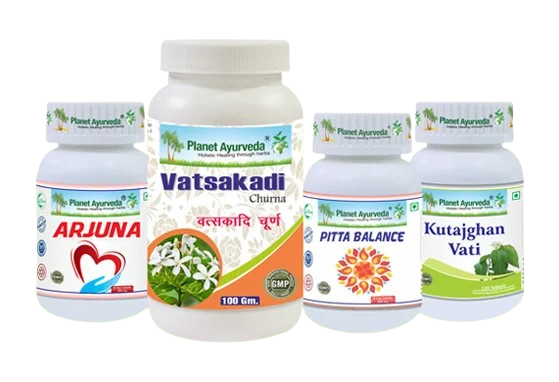
- Arjuna Capsules
- Vatsakadi Churna
- Pitta Balance
- Kutajghan Vati
ULCERATIVE COLITIS CARE PACK”

Product Description:
1. Kutaj Ghan Vati
Kutaj Ghan Vati, having Kutaj (Holarrhena antidysenterica), is traditionally used in Ayurveda for conditions such as Atisara (diarrhoea), Grahani (impaired intestinal digestive and absorptive function), and Raktatisara (diarrhoea associated with blood), which may share certain clinical features with ulcerative colitis. Its Kashaya (astringent) and Tikta (bitter) properties are traditionally considered useful for supporting normal intestinal secretions and stool consistency. Kutaj is also described as having Deepana (supporting digestive function), Pachana (supporting digestion), and Grahi (supporting stool formation) actions, making it relevant to frequent loose stools and disturbed bowel function.
Dosage: 2 tablets twice daily with plain water after meals.
2. Arjuna Capsules
Arjuna (Terminalia arjuna) may be considered in Ayurvedic management of ulcerative colitis, particularly when Pitta-Rakta involvement (Pitta and blood tissue involvement) and inflammatory manifestations are prominent. It is traditionally described as having Kashaya (astringent), Sheeta (cooling), and Ropana (tissue-healing supporting) properties. Its astringent nature may support normal stool consistency, while its traditionally described Rakta-stambhana (supporting control of bleeding) and Shothahara (supporting reduction of inflammation) actions may be relevant to intestinal bleeding and inflammatory discomfort.
Dosage: 2 capsules twice daily with plain water.
3. Pitta Balance Capsules
These capsules contain JaharMohra Pishti, Kaharava Pishti, Kamdudha Ras, Akik Pishti, Mukta Pishti, and Giloy Satva (Tinospora cordifolia), and are formulated to support Pitta-dominant features associated with ulcerative colitis, such as intestinal burning, irritation, loose stools, and bleeding. The cooling and soothing properties traditionally attributed to JaharMohra Pishti, Kaharava Pishti, Akik Pishti, and Mukta Pishti support Pitta balance and intestinal comfort. Kamdudha Ras is traditionally used for Pitta-related conditions and supports healthy digestion, while Giloy Satva provides additional support for immune balance and healthy inflammatory responses. Together, these ingredients provide a cooling and Pitta-balancing approach to supporting intestinal health in ulcerative colitis.
Dosage: 1 capsule twice daily with plain water.
4. Vatsakadi Churna
Vatsakadi Churna, with Kutaj (Holarrhena antidysenterica) as its principal ingredient, is traditionally used for Pittaja Atisara (Pitta-dominant diarrhoea), Grahani (impaired intestinal digestive and absorptive function), and Raktatisara (blood-associated diarrhoea). Kutaj possesses Kashaya (astringent), Tikta (bitter), Grahi (supporting stool formation), and Deepana-Pachana (supporting digestion and metabolism) properties. These actions are traditionally considered beneficial for maintaining normal intestinal secretions, improving stool consistency, and supporting digestive function. Its Shothahara (inflammation-supporting) and Rakta-stambhana (bleeding-controlling) properties are also traditionally relevant when loose stools are accompanied by intestinal irritation and bleeding.
Dosage: 1 tsp twice daily with lukewarm water.
Diet for Ulcerative Colitis
From an Ayurvedic perspective, dietary management of ulcerative colitis aims to balance Pitta Dosha, improve digestive fire (Agni), reduce undigested metabolic waste (Ama), and maintain normal bowel function.
- Prefer light (Laghu), freshly prepared, warm and easily digestible foods.
- Rice and rice preparations (Manda, Peya and Vilepi) may be preferred during episodes of loose stools.
- Green gram (Moong Dal) is considered light and relatively easy to digest.
- Pomegranate (Dadima) may be included because of its traditionally described absorbent (Grahi) and Pitta-balancing properties.
- Buttermilk (Takra) may be used in suitable individuals, particularly when symptoms resemble Grahani (malabsorption/intestinal dysfunction).
- Prefer well-cooked vegetables (Shaka) such as bottle gourd (Lauki), pumpkin (Kushmanda) and ridge gourd (Torai).
- Small quantities of clarified butter (Ghee) may be used when digestive capacity is adequate.
- Coconut water (Narikela Jala) may help support hydration, particularly during diarrhoea.
- Warm water (Ushna Jala) may be preferred over very cold beverages.
- Avoid very spicy, excessively sour, salty and hot foods, which are traditionally considered Pitta-aggravating (Pitta Prakopaka).
- Avoid fried and oily foods (Snigdha-Guru Ahara) and highly processed foods.
- Limit pickles (Avara/Lavana-Amla preparations), fermented foods, excessive tea and coffee, and carbonated beverages.
- During active diarrhoea, reduce raw salads and foods that increase gas (Vata-provoking foods).
- Take small, frequent meals (Alpa Matra Bhojana) rather than large meals.
- Maintain regular meal timings and avoid overeating, which may impair digestive fire (Agni).
- Avoid foods that individually trigger diarrhoea, abdominal pain, bloating or urgency, as individual tolerance varies.
- Maintain adequate fluid and electrolyte intake (Jala and Lavana replacement), especially during frequent diarrhoea.
- As symptoms improve, gradually introduce a nutritionally balanced and varied diet (Pathya Ahara) according to digestive capacity and individual tolerance.
Conclusion
Ulcerative colitis is a chronic inflammatory bowel disease that primarily affects the lining of the colon and rectum. It can cause symptoms such as abdominal pain, frequent diarrhoea, rectal bleeding, fatigue, and weight loss, which may significantly affect a person’s physical and emotional well-being. Although the exact cause of ulcerative colitis is not completely understood, genetic, immune, and environmental factors are believed to contribute to its development. There is currently no permanent cure for ulcerative colitis, but appropriate treatment can control inflammation, reduce symptoms, and help maintain remission. Treatment may include medicines such as aminosalicylates, corticosteroids, immunomodulators, or biologic therapies, depending on the severity of the disease. In some severe or complicated cases, surgery may be required. A balanced diet, adequate hydration, regular medical follow-up, and attention to individual triggers can also support overall health. Early diagnosis and proper management are important to prevent complications and improve quality of life. Patients should follow their treatment plan and seek medical advice if symptoms worsen or new symptoms develop. With continuous medical care and appropriate lifestyle management, many people with ulcerative colitis can control their symptoms and lead active, fulfilling lives.


Dr. Vikram Chauhan
Latest posts by Dr. Vikram Chauhan (see all)
- Chronic Kidney Disease (CKD): Ayurvedic Treatment & Management - November 13, 2026
- Ulcerative Colitis: Causes, Symptoms & Ayurvedic Treatment - November 13, 2026
- Urinary Tract Infection (UTI): Causes, Symptoms & Ayurvedic Treatment - November 11, 2026
- Rheumatoid Arthritis: Ayurvedic Treatment, Herbs & RA Care Pack - November 10, 2026
- Ketogenic Diet: Benefits, Foods, Weight Loss & Health Risks - November 6, 2026