


Ulcerative Colitis: Symptoms, Causes & Ayurvedic Treatment
Abstract
Ulcerative colitis is a chronic inflammatory bowel disease characterised by persistent inflammation of the colonic and rectal mucosa, commonly presenting with recurrent diarrhoea, rectal bleeding, abdominal discomfort, and urgency. Its development involves complex interactions among genetic susceptibility, immune dysregulation, gut microbiota, and environmental factors. The disease generally follows a relapsing and remitting course, with symptoms ranging from mild to severe. Early diagnosis, appropriate medical treatment, nutritional support, and individualised lifestyle measures are essential for controlling inflammation, reducing complications, and maintaining long-term remission.
Introduction
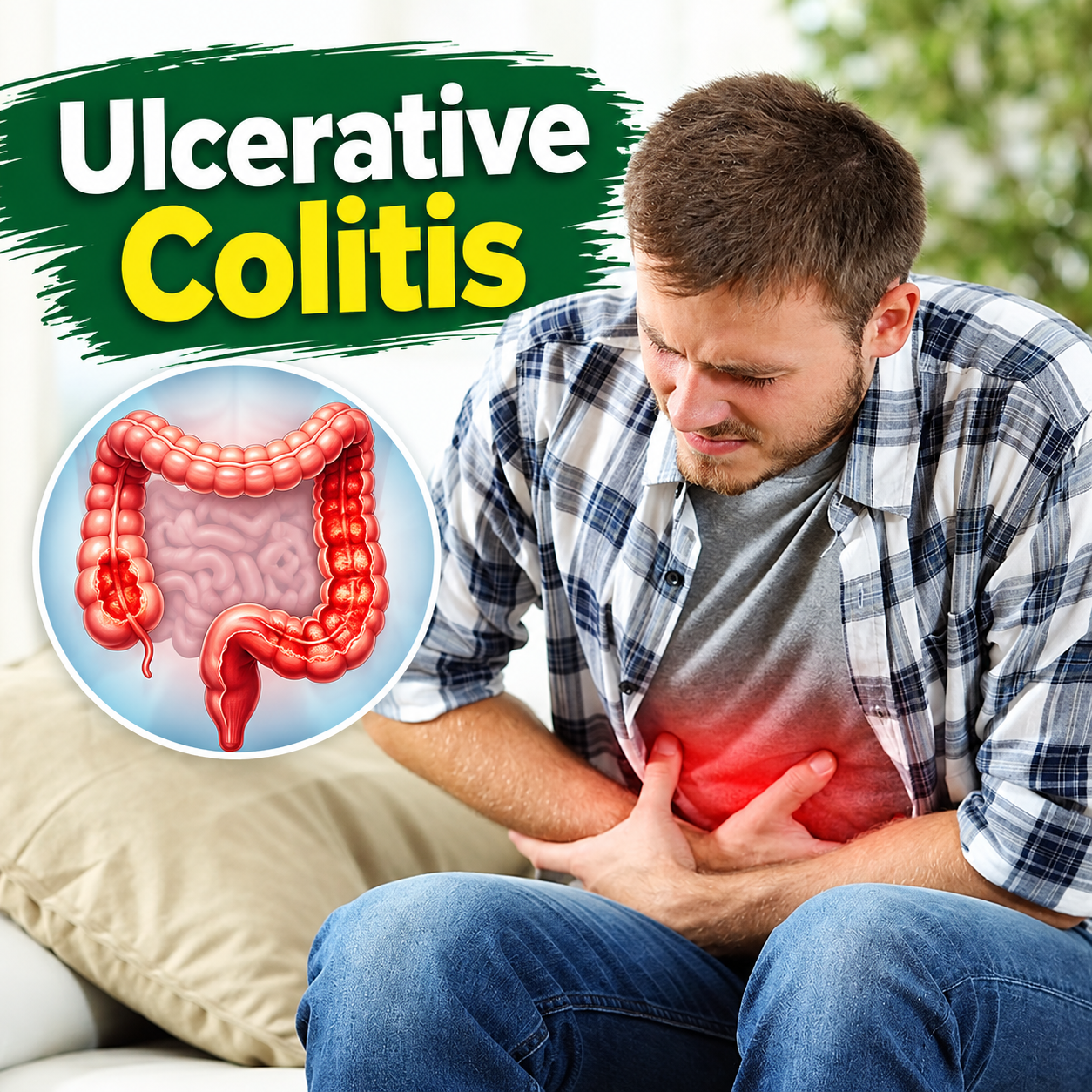
Inflammatory bowel disease (IBD) refers to a collection of chronic illnesses that are associated with recurring inflammation in the digestive tract. The common types of IBD are ulcerative colitis (UC) and Crohn’s disease (CD). UC typically involves inflammation of the colon and rectum, while CD is known for its inflammatory response in any part of the digestive tract and at deeper levels of the intestine. Ulcerative Colitis (UC) is a form of chronic inflammatory bowel disease (IBD) that is associated with inflammation of the mucosal membrane of the large intestine. UC typically affects the rectum and may spread continuously to the sigmoid colon, descending colon, or the whole colon. In contrast to Crohn’s disease, which may affect various segments of the gastrointestinal tract, UC only affects the colon and rectum. It is usually a relapsing-remitting disorder. The inflammation associated with UC may lead to the development of ulcers in the intestinal mucosa. The ulcers may result in bleeding and prevent the proper absorption of water and electrolytes. The symptoms vary from one patient to another. Patients with mild cases of UC have mild rectal bleeding and frequent stools, while patients with severe forms of UC have extensive inflammation, severe bleeding, weight loss, fever, and other symptoms.
Cause of Ulcerative Colitis
Ulcerative colitis has no definite cause; it occurs due to the interaction of genetic risk factors, abnormal immune response, gut flora, and environment.
- Abnormal immune response: The immune system acts as a defence mechanism in protecting the intestines from foreign substances like bacteria and viruses.
- Genetic factors: People having a family history of IBD, such as ulcerative colitis or other conditions such as Crohn’s disease, have a higher risk of developing IBD.
- The microbiome of the gut: Any changes in this microbiome can affect the immune system of the intestines and inflammation of this organ.
- Influence of environment: Environmental factors can affect the development and course of IBD, especially in rapidly developing countries.
Risk Factors
The following are some of the factors that may enhance the possibility of suffering from ulcerative colitis:
- Family history: Individuals having relatives who have suffered from UC and IBD are at a higher risk.
- Age: UC may happen at any age; however, it usually occurs in adolescence and early adulthood.
- Genetic predisposition: Some particular genetic attributes are linked with a higher predisposition to UC.
- Environmental exposure: Some dietary modifications, urbanisation, microbiome alterations and others may have an impact on developing UC.
- Gastrointestinal or immune predisposing factors: Some previous exposures might affect the development of UC, but they alone are not sufficient to cause UC.
- Demographic variations: Previously, high prevalence was noted among several Western populations as well as newly industrialised areas.
There was one large systematic review and meta-analysis that estimated the prevalence of ulcerative colitis in the world at around 120.4 cases per 100,000 population and an incidence of around 5.0 cases per 100,000 person-years.
Classification of Ulcerative Colitis
Ulcerative colitis is primarily categorised based on the degree of colonic involvement. These are as follows:
- Ulcerative Proctitis: Inflammation is confined to the rectum. There might be bleeding from the rectum, rectal urgency, discharge of mucus, and a feeling of an urge to defecate. Some patients may have constipation instead of diarrhoea.
- Proctosigmoiditis: The site of inflammation is the rectum and sigmoid colon. Symptoms like bloody diarrhoea, abdominal pain, rectal urgency, and tenesmus may be experienced by the patient.
- Left-Sided Colitis: It is an inflammatory condition affecting the rectum and extending up to the sigmoid and descending colon, usually extending to the splenic flexure.
- Extensive Colitis (Pancolitis): Inflammation is not confined to the left side of the large intestine but rather affects most of the entire colon. In extensive colitis, there will be an increased likelihood of experiencing frequent diarrhoea, significant blood loss, abdominal pain, fatigue, fever, and weight loss.
Signs and Symptoms of Ulcerative Colitis
The symptoms will be based on the level of severity of inflammation in the body, such as:
- Loose or watery stool
- Stool containing blood
- Stool with mucus or pus
- Abdominal pain
- Pain during defecation
- Strong urge to have a bowel movement
- Tenesmus, which is a feeling of needing to have bowel movements even when your rectum is empty
- Fever
- Fatigue
- Weakness
- Lack of appetite
- Weight loss
- Anaemia due to intestinal bleeding
Complications of Ulcerative Colitis
Uncontrolled or extensive inflammation can produce both intestinal and extraintestinal complications.
Intestinal complications:
- Severe bleeding
- Toxic megacolon
- Bowel perforation
- Colorectal cancer
Systemic and extraintestinal complications:
Other complications that may arise from ulcerative colitis include:
- Anaemia (iron deficiency or others)
- Dehydration and electrolyte abnormalities
- Bone loss or reduction in bone mineral density
- Arthritis
- Skin disorders
- Eye inflammation
- High tendency to develop venous and arterial thrombosis
- Nutritional deficiencies
- Psychological issues
These complications may vary depending on the severity of the disease and its duration, among others.
How to Diagnose Ulcerative Colitis?
- Complete blood count (for anaemia and platelets).
- Renal function tests (as the condition precedes renal failure).
- Liver function tests (as the disease causes primary sclerosing cholangitis).
- Electrolytes (for hypokalemia and hypomagnesemia).
- C-reactive protein levels (elevated as a sign of inflammation).
- Sigmoidoscopy
- Stool test (Fecal calprotectin Test)
- Colonoscopy, biopsy
Imaging such as abdominal X-ray, CT, or MRI may be required when complications or alternative diagnoses are suspected.
Treatment of Ulcerative Colitis
Modern treatment of ulcerative colitis focuses on controlling inflammation, achieving remission, and preventing relapse and complications.
- 5-ASA drugs, particularly mesalamine, are commonly used in mild-to-moderate disease.
- Corticosteroids may be prescribed for short-term control of moderate-to-severe flares.
- Immunosuppressives, biologics, and targeted oral therapies are used when disease is moderate-to-severe or inadequately controlled.
- Colectomy may be considered in severe, refractory disease or when serious complications or colorectal cancer develop.
Ayurvedic Perspective of Ulcerative Colitis
Ulcerative colitis can be conceptually correlated with Pitta Atisara (frequent loose or watery stools due to excess Pitta dosha), and Raktatisara (diarrhoea associated with blood) in Ayurveda. Pitta dosha (metabolic and inflammatory regulation) aggravation may contribute to intestinal inflammation, burning, and rectal bleeding, whereas Vata dosha (movement and regulatory functions) may contribute to abdominal cramps, urgency, and altered bowel motility. Agni dushti (impaired digestive and metabolic function) represents disturbed digestion, while Ama (improperly processed digestive and metabolic products) may reflect incomplete processing within the body. Ayurvedic management emphasises Nidana Parivarjana (avoidance of causative factors), Deepana-Pachana (supporting digestion and metabolic processing), Dosha Shamana (balancing aggravated physiological factors), etc
Herbal Medicines for Ulcerative Colitis by Planet Ayurveda
Planet Ayurveda offers a wide range of Ayurvedic medicines and herbal supplements to support digestive health and overall well-being. The formulations contain traditionally valued herbs and natural ingredients, with a focus on quality and holistic wellness. Suitable medicines, diet plans, and lifestyle recommendations can be advised according to the patient’s condition. Planet Ayurveda is committed to taking Ayurveda to every home worldwide. Planet Ayurveda offers the best combination of effective herbal remedies such as Ulcerative Colitis Care Pack for natural treatment of ulcerative colitis. These herbal remedies are manufactured from 100 per cent pure and natural herbs and are free from chemicals and side effects. These are prepared strictly according to the principles of Ayurveda. Here we will discuss some Ayurvedic formulations for the management of Ulcerative Colitis. Let’s Start!
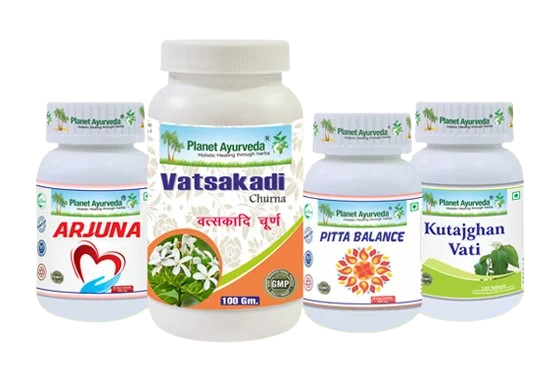
- Arjuna Capsules
- Vatsakadi Churna
- Pitta Balance
- KutajghanVati
Herbal Remedies for Ulcerative Colitis

Product description
1. Arjuna Capsules
Arjuna capsules are prepared from Arjuna (Terminalia arjuna) bark extract that is a traditionally renowned Ayurvedic herb. It possesses bioactive compounds like triterpenoids, flavonoids, tannins, glycosides, and minerals. Arjuna Capsules by Planet Ayurveda, containing Terminalia arjuna, can be described as a supportive Ayurvedic formulation for ulcerative colitis. Arjuna is traditionally valued for its Rakta-pachana (supporting healthy blood physiology), Shothahara (anti-inflammatory), and Rasayana (restorative) properties. Its antioxidant and anti-inflammatory constituents may help support intestinal tissue resilience and recovery during inflammatory conditions. In an Ayurvedic context, it may support Pitta balance (metabolic and inflammatory regulation) and Raktadhatu (blood tissue), particularly when rectal bleeding and weakness are present.
Dosage: 2 capsules two times a day with water post-meal.
2. Vatsakadi Churna
Vatsakadi Churna is an Ayurvedic formulation containing Kutaja (Holarrhena antidysenterica), Bilva (Aegle marmelos), Saunf (Foeniculum vulgare), Dhania (Coriandrum sativum), Nagarmotha (Cyperus scariosus) and many more herbs. It can be considered a supportive formulation for ulcerative colitis, particularly when frequent loose stools, mucus, abdominal discomfort, and impaired bowel function are prominent. Traditionally valued for its Grahi (stool-binding and bowel-regulating) and Deepana-Pachana (supporting digestion and metabolic function) properties, it may help improve stool consistency and reduce excessive intestinal secretions. From an Ayurvedic perspective, Vatsakadi Churna supports Pitta and Vata balance when their disturbance contributes to Atisara (frequent loose stools) and Raktatisara (bloody diarrhoea).
Dosage: 1 teaspoonful two times a day with plain water after food, or else boil the powder – 1 teaspoonful in 400 ml of water, boil till it reduces to 50 ml. Filter the preparation and take the water only and leave the sediment. Repeat twice a day. Prepare each time freshly.
3. Pitta Balance
Pitta Balance is an Ayurvedic formulation containing Praval Pishti, Akik Pishti, Jahar Mohra Pishti, Kaharwa Pishti, Mukta Pishti, and Giloy Satva (Tinospora cordifolia). It is traditionally formulated to support Pitta regulation and gastrointestinal health. Praval Pishti and Mukta Pishti provide cooling and soothing support, while Akik Pishti and Jahar Mohra Pishti are traditionally valued for their Pitta-pacifying properties. Kaharwa Pishti is traditionally used for its cooling and astringent properties, supporting Rakta Dhatu (Blood tissue) balance and soothing Pitta-related discomfort. Giloy Satva supports immune function and healthy inflammatory responses. Together, these ingredients provide cooling, soothing, and Pitta-balancing support.
Dosage: Take 1 capsule twice a day with water after meals.
4. Kutajghan Vati
Kutajghan Vati by Planet Ayurveda can be considered a supportive Ayurvedic formulation in ulcerative colitis, especially when frequent loose stools, increased stool frequency, mucus, and impaired bowel consistency are prominent. It contains concentrated Kutaja (Holarrhena antidysenterica), which is traditionally valued for its Grahi (supporting normal stool consistency), Kashaya (astringent), and intestinal-supportive properties. In an Ayurvedic interpretation, Kutaja (Holarrhena antidysenterica) may help manage Atisara (frequent loose stools) and Raktatisara (diarrhoea associated with blood) by supporting bowel regulation and reducing excessive intestinal secretions.
Dosage: Take 2 tabs twice a day with normal water after meals.
Diet
- Yogurt: Might help in maintaining good intestinal flora and assist in proper functioning of the immune system.
- Buttermilk: The diluted form of buttermilk may be taken if well-tolerated and gives a digestive-friendly drink.
- Refined foods: Should be avoided as much as possible. Foods such as white sugar, white bread, and refined flour should be avoided.
- Irritants: Irritants include foods like tea, coffee, spicy foods, and salty foods should be avoided.
- Alcohol and caffeine: Should be avoided as they can worsen some gastrointestinal symptoms.
Lifestyle Management
- Maintain adequate nutrition
- Stay hydrated
- Yoga/ Exercise regularly
- Manage stress
- Stay away from smoking and tobacco use
Conclusion
Ulcerative colitis is an inflammatory disease of the colon and rectum caused by a combination of immune dysregulation, genetic predisposition, gut flora, and the environment. Manifestations vary from limited rectal disease to pancolitis and include bloody diarrhoea, cramps, urgency, tenesmus, fatigue, and weight loss. Early diagnosis and proper treatment are critical due to the potential of persistent inflammation to lead to anaemia, malnutrition, toxic megacolon, perforation, blood clotting problems, extraintestinal manifestations, and an increased risk of colorectal cancer. Diagnosis usually involves a clinical assessment, ruling out infections, lab and stool tests, colonoscopy, and biopsy. Diet and other interventions should not follow any overly rigid recommendations. Proper nutrition, hydration, exercise, stress control, and medication compliance are crucial elements of management.


Dr. Vikram Chauhan
Latest posts by Dr. Vikram Chauhan (see all)
- Ulcerative Colitis: Symptoms, Causes & Ayurvedic Treatment - September 23, 2026
- Fatty Liver: Causes, Symptoms, Diet & Ayurvedic Management - September 22, 2026
- Ulcerative Colitis: Symptoms, Causes With Ayurvedic Treatment - September 21, 2026
- Immune Thrombocytopenia (ITP): Causes, Symptoms, Diagnosis & Treatment - September 19, 2026
- Immune Thrombocytopenia (ITP): Causes, Symptoms & Ayurvedic Support - September 18, 2026