


Herbal Remedies For Upadacitinib for IBD – Symptoms, Causes & Treatment in Ayurveda
Abstract
What happens when the inflammatory signals driving Inflammatory Bowel Disease are interrupted at the cellular level? Ulcerative Colitis and Crohns Disease are chronic inflammatory disorders of the gastrointestinal tract that can cause diarrhoea, abdominal pain, urgency, rectal bleeding, fatigue and recurrent flares. As treatment strategies have evolved, attention has shifted from broad immune suppression towards therapies that target specific intracellular signalling pathways. Upadacitinib, a preferential JAK1 inhibitor, works by interfering with JAK-mediated signalling involved in cytokine activity and immune responses, offering a targeted therapeutic approach for appropriately selected patients with moderate-to-severe IBD. Yet IBD is more than an inflammatory pathway. Ayurveda views gastrointestinal disorders through a wider lens involving Agni (digestive Fire ), Ama (improperly processed metabolic waste), Dosha (bodily humor), Grahani (Malabsorption Syndrome), Pravahika (frequent bowel movements with mucus and tenesmus) and Raktatisara(diarrhoea associated with blood), along with food habits, bowel patterns, lifestyle and individual constitution. This article explores how JAK1 inhibition fits into the modern understanding of IBD, discusses the therapeutic concept and important safety considerations surrounding upadacitinib, and examines how Ayurveda interprets intestinal inflammation from a different perspective. By placing molecular immunology alongside Ayurvedic understanding of digestion and bowel health, the article presents two distinct ways of interpreting the inflammatory story of IBD.
Keywords: IBD, Ulcerative Colitis, Upadacitinib, JAK1, Ayurveda, Agni, Ama.
Introduction
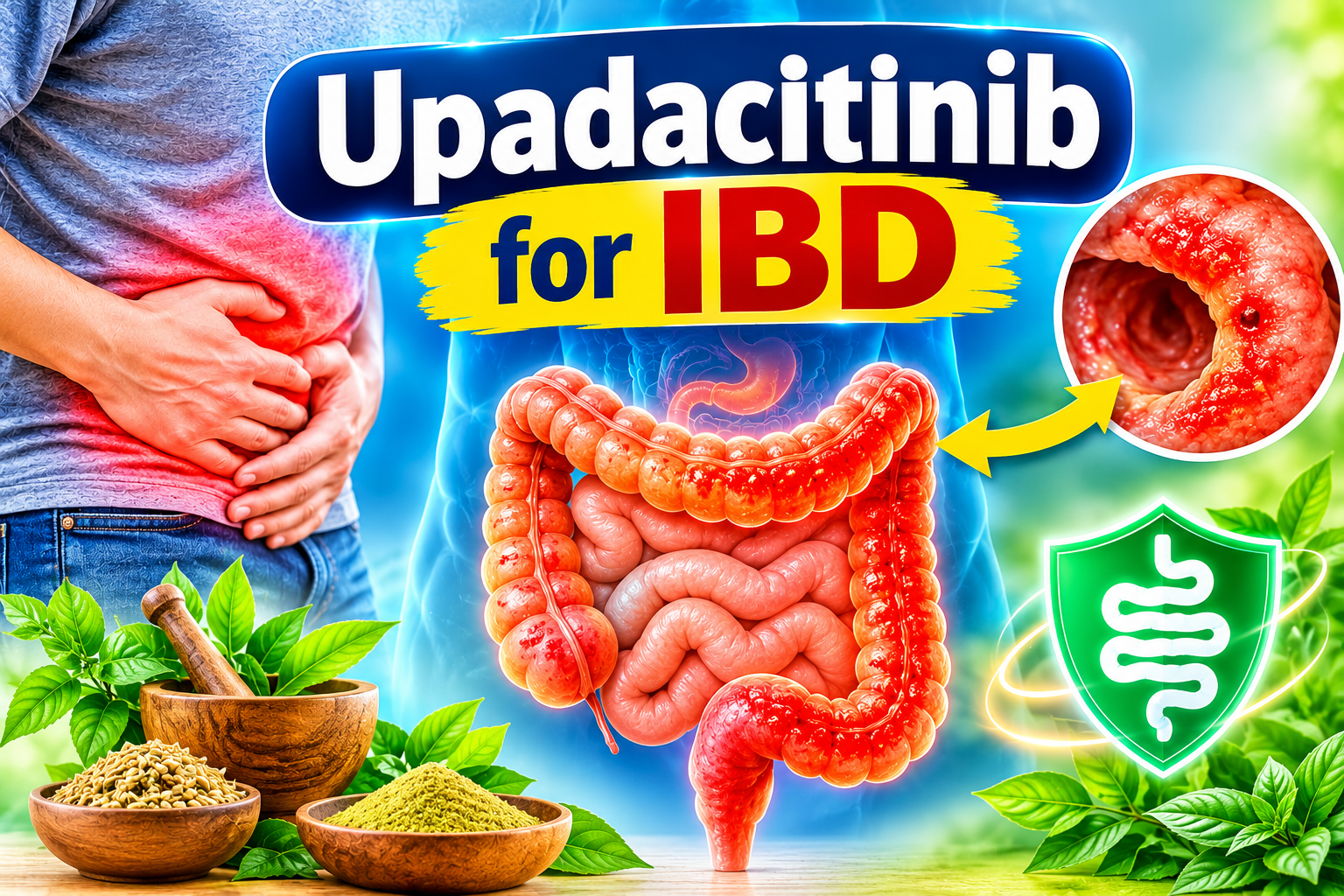
Inflammatory Bowel Disease (IBD) is not simply a problem of loose stools or abdominal discomfort.It is a long-term inflammatory disorder in which the gastrointestinal tract repeatedly enters an inflammatory state. Ulcerative Colitis (UC) primarily affects the colon and rectum, while Crohns Disease can involve different parts of the digestive tract. A person with active IBD may experience frequent bowel movements, urgency, abdominal cramps, mucus, rectal bleeding, fatigue and reduced appetite. During a flare, even ordinary activities such as eating outside, travelling or sleeping through the night can become difficult. Modern medicine has progressively moved from broad suppression of inflammation towards therapies that act on specific inflammatory pathways. One such medicine is upadacitinib, marketed under the brand name Upadoz in some markets. It belongs to the Janus kinase(JAK) inhibitor group and has an important role in the management of appropriately selected patients with moderate-to-severe IBD. But an important question remains: What happens when inflammation is viewed not only as a molecular process but also through the lens of digestion, Dosha, Agni and intestinal health? This is where the modern JAK1 approach and the Ayurvedic understanding of intestinal disorders offer two distinctly different perspectives.
IBD: When the Intestine Remains Inflamed
The intestine has a demanding job. It has to digest food, absorb nutrients and maintain a protective barrier while constantly interacting with microorganisms and immune cells. In IBD, this relationship becomes disturbed. The intestinal immune system becomes excessively activated, resulting in persistent or recurrent inflammation. In UC, the inflammatory process is concentrated in the colonic mucosa, whereas Crohns Disease can affect deeper layers and different portions of the gastrointestinal tract. Symptoms depend upon disease location and severity. Common manifestations include:
- Frequent or loose stools
- Blood or mucus in stools
- Abdominal pain and cramps
- Urgency to pass stool
- Tenesmus
- Loss of appetite
- Fatigue and weakness
- Weight loss in more active disease
- Recurrent inflammatory flares
Therefore, successful management is not limited to reducing the number of bowel movements. Controlling intestinal inflammation and maintaining remission are major therapeutic goals.
The Inflammatory Message Inside the Gut
Immune cells in the intestinal lining
Respond to inflammatory triggers in IBD
↓
Cytokine release
Inflammatory messengers bind to their specific receptors
↓
Activation of cytokine receptors
Receptor activation triggers intracellular signalling
↓
JAK–STAT signalling pathway
Janus kinases (JAKs) activate signal transducers and activators of transcription (STATs)
↓
Changes in gene activity
STAT proteins regulate the expression of inflammation-related genes
↓
Intestinal inflammation
Sustained immune activation contributes to intestinal tissue inflammation and damage
Upadacitinib: Blocking the JAK1 Signal
Upadacitinib is an oral Janus kinase (JAK) inhibitor that acts primarily on JAK1. When inflammatory cytokines bind to their receptors on immune cells, they activate intracellular signalling processes that help regulate immune activity and inflammatory gene expression. Upadacitinib inhibits JAK1 activity, interrupting selected cytokine-mediated signals before they can fully activate downstream STAT proteins. This reduces the transmission of inflammatory messages within immune cells and helps limit excessive immune activation. In inflammatory bowel disease (IBD), this mechanism helps reduce inflammation in the intestinal lining. By targeting intracellular signalling rather than directly blocking cytokines outside the cell, upadacitinib offers a targeted approach to controlling the inflammatory processes involved in ulcerative colitis and Crohns disease.
Can JAK1 Inhibition Change the Inflammatory Story?
JAK1 inhibition introduces a targeted approach to controlling the inflammatory processes involved in ulcerative colitis. Upadacitinib acts on JAK1-mediated intracellular signalling, reducing selected cytokine signals that contribute to immune activation and intestinal inflammation. The clinical significance of this approach is reflected in trials of upadacitinib, in which patients with moderate-to-severe ulcerative colitis achieved higher rates of clinical remission, clinical response and endoscopic improvement than those receiving placebo. The ECCO guideline recommends upadacitinib for inducing and maintaining remission in appropriately selected patients. These findings highlight how targeting inflammatory signalling can contribute to disease control beyond short-term symptom relief. Treatment outcomes also include improvement in intestinal inflammation, endoscopic healing, steroid-free remission and quality of life. Although responses vary, JAK1 inhibition provides an important therapeutic option for patients who require effective control of moderate-to-severe disease.
Thus, JAK1 inhibition represents a shift from simply asking:
“How can we reduce the symptoms?” to: “Can we interrupt the inflammatory communication driving the disease?” But JAK Inhibition Requires Careful Selection. A targeted medicine is still a powerful medicine. Upadacitinib carries important safety warnings concerning
- Serious Infections: Risk of tuberculosis and other serious infections.
- Malignancy: Potential cancer risk requires individual assessment.
- Cardiovascular Events: Risk of heart attack and stroke, particularly in susceptible patients.
- Thrombosis: Increased concern regarding blood clots.
- Laboratory Monitoring: Regular assessment of blood counts, liver function and lipid levels.
- Precautions: Screen for tuberculosis, review vaccination status and assess individual risk factors.
Individual risk factors therefore need to be considered before and during treatment. For this reason, upadacitinib should not be started, stopped or modified without appropriate medical supervision.
Ayurveda Looks at the Gut Differently
Ayurveda does not describe IBD as a single disease entity corresponding exactly to the modern diagnosis. However, several gastrointestinal conditions described in Ayurvedic literature have features that can resemble manifestations of IBD. These include Grahani, Atisara, Pravahika and Raktatisara, depending on the patients presentation. Recent Ayurvedic literature has discussed IBD through factors such as Agni Dushti (Impaired Digestion), Ama (Metabolic Waste), Dosha Involvement (Physiological Dysregulation), Rakta Dushti (Blood Abnormalities) and Srotas Disturbance (Transport Dysfunction). In a person with frequent loose stools, mucus, abdominal discomfort and bleeding, an Ayurvedic assessment does not stop at the bowel symptom. The physician may consider:
- Agni and digestive capacity
- Nature and frequency of bowel movements
- Dosha predominance
- Ama involvement
- Rakta involvement
- Strength and nutritional status
- Food habits
- Sleep and stress
- Seasonal influence
- Individual Prakriti and Vikriti
This creates a different framework for understanding intestinal inflammation.
The Ayurvedic Connection: Grahani, Pravahika and Raktatisara
The clinical features of ulcerative colitis (UC) can be correlated with several Ayurvedic disorders based on the symptoms and patterns of bowel disturbance. However, UC does not correspond exactly to a single Ayurvedic diagnosis.
- Grahani is associated with impaired digestion, altered Agni (digestive and metabolic function), and irregular bowel habits. Its clinical features can be compared with certain digestive disturbances observed in patients with inflammatory bowel disease (IBD).
- Pravahika is characterised by frequent bowel movements, often accompanied by mucus, abdominal discomfort and Pravahana (straining during defecation or tenesmus). These features overlap with some manifestations of UC, particularly during active disease.
- Raktatisara refers to diarrhoea accompanied by blood. This description has a symptomatic resemblance to UC when intestinal inflammation causes bloody stools, sometimes with mucus, urgency and abdominal cramps.
Ayurvedic literature has discussed these conditions in relation to UC-like presentations. A published case report, for example, described frequent watery stools, mucus, blood, abdominal discomfort and weakness in a patient whose symptoms were correlated with Pravahika. Importantly, these are symptom-based Ayurvedic correlations, not direct diagnostic equivalents.
Ayurvedic Drugs: A Different Approach to Inflammation
1. Kutaja (Holarrhena pubescens)
- Rasa (Taste): Tikta (bitter), Kashaya (astringent)
- Guna (Properties): Laghu (light), Ruksha (dry)
- Virya (Potency): Sheeta (cooling)
- Vipaka (Post-digestive effect): Katu (pungent)
- Major active compounds: Conessine, conimine and related steroidal alkaloids.
- Potential effects: Antidiarrhoeal and antimicrobial.
2. Bilva (Aegle marmelos)
- Rasa (Taste): Kashaya (astringent), Tikta (bitter), with Madhura (sweet) and other tastes described in different texts.
- Guna (Properties): Laghu (light), Ruksha (dry)
- Virya (Potency): Ushna (heating)
- Vipaka (Post-digestive effect): Katu (pungent)
- Major active compounds: Marmelosin, aegeline, tannins and coumarins.
- Potential effects: Antidiarrhoeal and digestive.
3. Saunf (Foeniculum vulgare)
- Rasa (Taste): Madhura (sweet), Katu (pungent)
- Guna (Properties): Laghu (light), Snigdha (unctuous)
- Virya (Potency): Ushna (heating)
- Vipaka (Post-digestive effect): Madhura (sweet)
- Major active compounds: Anethole, fenchone and estragole.
- Potential effects: Carminative and antispasmodic.
4. Arjuna (Terminalia arjuna)
- Rasa (Taste): Kashaya (astringent)
- Guna (Properties): Ruksha (dry), Laghu (light)
- Virya (Potency): Sheeta (cooling)
- Vipaka (Post-digestive effect): Katu (pungent)
- Major active compounds: Arjunolic acid, arjunic acid, flavonoids and tannins.
- Potential effects: Antioxidant and potential anti-inflammatory.
5. Guduchi (Tinospora cordifolia)
- Rasa (Taste): Tikta (bitter), Kashaya (astringent)
- Guna (Properties): Laghu (light), Snigdha (unctuous)
- Virya (Potency): Ushna (heating)
- Vipaka (Post-digestive effect): Madhura (sweet)
- Major active compounds: Tinosporaside, cordifolioside A, magnoflorine and other alkaloids and diterpenoids.
- Potential effects: Immunomodulatory and antioxidant.
Planet Ayurveda:UC Care Pack Double Strength: An Ayurvedic Supportive Approach
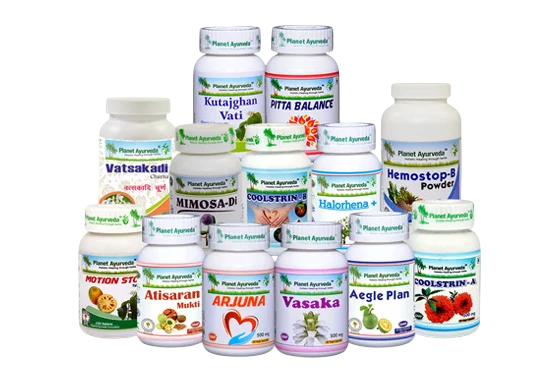
The Planet Ayurveda UC Care Pack Double Strength can be presented as an Ayurvedic supportive approach for individuals seeking a herbal formulation-based strategy for intestinal health. Rather than describing it as equivalent to upadacitinib, it is more appropriate to position the pack within the Ayurvedic framework of supporting digestion, bowel function and intestinal health.The Planet Ayurveda UC Care Pack Double Strength combines multiple Ayurvedic formulations intended to support digestive health, bowel function and intestinal comfort. The pack offers a formulation-based approach drawing on herbs traditionally used for diarrhoeal disorders, digestive disturbances and Pitta-related complaints.
- Kutajghan Vati
- Atisaran Mukti
- Pitta Balance
- Vatsakadi Churna
- Arjuna Capsules
- Motion Stop Tablets
- Vasaka Capsules
- Coolstrin A Capsules
- Coolstrin B Capsules
- Aegle Plan Capsules
- Halorhena + Capsules
- Hemostop-B Powder
- Mimosa-Di Capsules
DOUBLE STRENGTH ULCERATIVE COLITIS PACK

How the Ayurvedic Approach Differs
The distinction between the two approaches can be understood simply:
- Upadacitinib: Targets intracellular JAK-mediated inflammatory signalling.
- Ayurvedic approach: Considers digestion, Agni, Dosha, Ama, bowel function, diet, lifestyle and individual constitution while selecting supportive interventions. One approach is centred on a defined molecular target; the other uses a broader assessment of the individuals gastrointestinal and systemic state. Therefore, the two should not be described as interchangeable treatments.
Diet Becomes Part of the Story
IBD management cannot be separated completely from food habits. During active symptoms, food tolerance can vary considerably between individuals. Heavy, excessively spicy, very oily or poorly tolerated foods can aggravate digestive discomfort in some people. An Ayurvedic dietary plan can be individualised according to Agni, bowel pattern, Dosha and disease activity. General principles may include:
- Prefer freshly prepared and easily digestible meals.
- Eat smaller meals according to tolerance.
- Maintain adequate fluid intake.
- Avoid foods that repeatedly trigger symptoms.
- Limit excessively spicy, fried and highly processed foods when they worsen symptoms.
- All Citrus Fruits like Lemon, Lime, Orange, Tomato, Pineapple, Mango, Watermelon, Muskmelon, Sour Pomegranate, Sour Cherries.
- Avoid unnecessary fasting during periods of weakness or nutritional depletion.
- Maintain adequate protein and calorie intake according to individual requirements.
- During active disease, follow the diet recommended by the treating Doctor.
Diet should complement medical management rather than replace necessary treatment.
Conclusion
IBD is a complex inflammatory disorder in which intestinal symptoms and immune activity can repeatedly interact. Upadacitinib introduces a targeted strategy by interfering with JAK-mediated intracellular signalling and has an established role in appropriately selected adults with moderate-to-severe ulcerative colitis and Crohns disease. Ayurveda offers a broader perspective on intestinal health, considering Agni, Dosha, Ama, Rakta, Grahani, Pravahika, diet and lifestyle to understand individual digestive patterns.Its emphasis on personalised assessment, dietary modification and herbal formulations provides an additional dimension to the management of gastrointestinal disorders. The Planet Ayurveda UC Care Pack Double Strength brings together multiple Ayurvedic formulations traditionally used to support digestive function and bowel health.Ultimately, Ayurveda offers a valuable complementary perspective through its individualised approach to digestion, nutrition and herbal support. Integrating these principles thoughtfully with appropriate medical care can help develop a more comprehensive strategy focused on intestinal health, improved daily functioning and long-term well-being.


Dr. Vikram Chauhan
Latest posts by Dr. Vikram Chauhan (see all)
- Herbal Remedies For Upadacitinib for IBD – Symptoms, Causes & Treatment in Ayurveda - November 5, 2026
- Autoimmune Disorders: Causes, Symptoms & Ayurvedic Management - November 4, 2026
- Chronic Kidney Disease (CKD): Causes, Symptoms & Ayurvedic Treatment - November 4, 2026
- Depleted Mother Syndrome: Causes, Symptoms & Ayurvedic Care - October 30, 2026
- PCOS Treatment in Ayurveda: Causes, Symptoms & Management - October 30, 2026