


Fatty Liver: Ayurvedic Management, Diet & Causes
ABSTRACT
Fatty liver is a metabolic condition characterized by excessive accumulation of fat in the liver. It is commonly associated with excess body weight, unhealthy dietary habits, physical inactivity, diabetes, insulin resistance, and disturbances in lipid metabolism. In classical Ayurveda, fatty liver is not described as an independent disease under the modern terminology of metabolic dysfunction-associated steatotic liver disease (MASLD) or non-alcoholic fatty liver disease (NAFLD). However, its clinical features and possible pathophysiological aspects may be interpreted through broader Ayurvedic concepts such as Yakrit Vikara, Agni, Dosha, Meda Dhatu, Ama, and Srotas. Classical descriptions of Yakritodara in Charaka Samhita provide a relevant framework for understanding disorders involving the liver and abdominal region. This article reviews fatty liver from an Ayurvedic perspective, including possible causative factors, clinical manifestations, diagnostic principles, pathogenesis, management approaches, dietary recommendations, and selected classical formulations traditionally used in Yakrit-related disorders. From an Ayurvedic perspective, impaired Agni, inappropriate dietary and lifestyle practices, Kapha and Meda involvement, and disturbance of normal metabolic processes may be considered important components of the disease process. Management emphasizes Nidana Parivarjana, Agni Deepana and Pachana, appropriate dietary regulation, Meda management, physical activity, and individualized Dosha-based care. However, classical Yakritodara or Yakrit Vikara should not be considered synonymous with modern fatty liver disease. Modern investigations remain important for diagnosis, staging, and monitoring. Further clinical research is required to establish the efficacy and safety of specific Ayurvedic interventions in fatty liver disease.
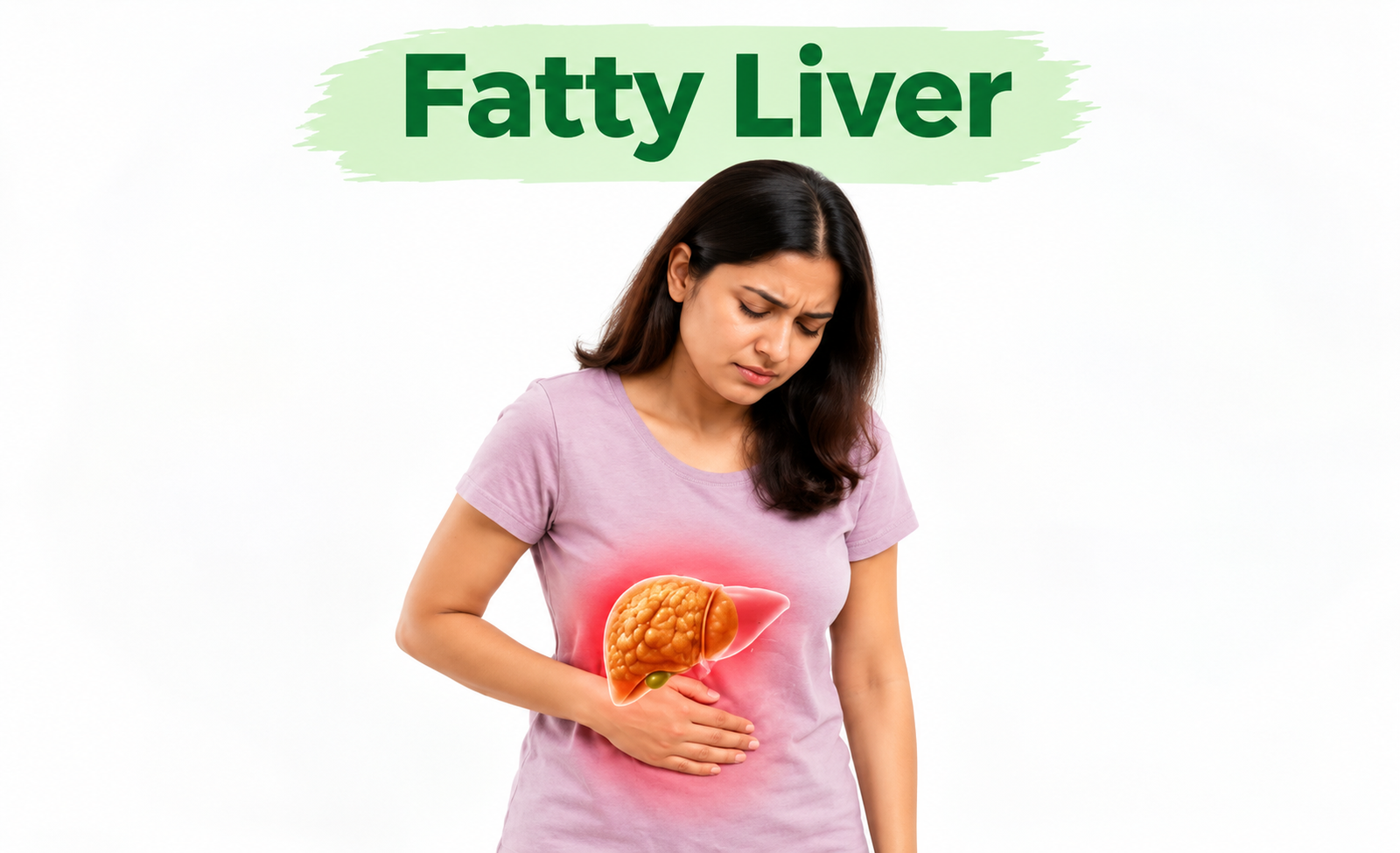
What is Fatty Liver?
Fatty liver refers to excessive accumulation of fat within liver cells. It is commonly associated with metabolic conditions such as obesity, insulin resistance, type 2 diabetes, dyslipidaemia, and metabolic syndrome. The terminology used in modern medicine has evolved from NAFLD/NASH toward MASLD (Metabolic dysfunction-associated steatotic liver disease) and MASH (Metabolic dysfunction-associated steatohepatitis).
- Simple steatosis: Fat accumulates in the liver without significant hepatocellular injury or inflammation.
- Steatohepatitis: Hepatic steatosis is accompanied by inflammation and hepatocellular injury and may progress to fibrosis.
- Progressive fibrosis may eventually lead to advanced liver disease and cirrhosis in some individuals.
Risk Factors
Important risk factors include:-
- Excess body weight and obesity
- Insulin resistance and type 2 diabetes
- Metabolic syndrome
- Elevated triglycerides and other lipid abnormalities
- Excessive intake of calorie-dense foods
- Frequent consumption of highly processed foods and sugary beverages
- Physical inactivity
- Sedentary lifestyle
- Excessive alcohol consumption, where relevant to the clinical assessment
Progression of Fatty Liver
A simplified model of progression may be represented as:
Metabolic dysfunction → Hepatic fat accumulation → Hepatocellular stress/inflammation → Fibrosis → Cirrhosis
Not every individual with hepatic steatosis progresses through all these stages. Disease progression varies according to metabolic, genetic, lifestyle, and other clinical factors.
Fatty Liver According To Ayurveda
The modern clinical entity of fatty liver is not described as a separate disease with the same terminology in classical Ayurvedic texts. Therefore, it is more appropriate to interpret fatty liver through related Ayurvedic concepts rather than directly equating it with a single classical disease. Relevant concepts include:
- Yakrit Vikara – disorders involving the liver
- Yakritodara – a classical description involving enlargement of the Yakrit in the abdominal region
- Agni – digestive and metabolic functions
- Agnimandya – impaired digestive/metabolic capacity
- Meda Dhatu – adipose/fat tissue and its metabolism
- Kapha Dosha – associated with heaviness, stability, unctuousness, and accumulation
- Srotas – physiological channels involved in transport and metabolism
- Ama – a classical concept associated with improperly processed material in the context of impaired Agni
These concepts provide an Ayurvedic framework for understanding metabolic disturbances, but they should not be presented as direct pathological equivalents of modern hepatic steatosis. Charaka Samhita describes Yakritodara in relation to Plihodara:
Charaka Samhita, Chikitsa Sthana, Udara Chikitsa, 13/38
The description indicates that enlargement of the Yakrit (liver) in the right side of the abdomen may produce a clinical picture comparable to Plihodara. Charaka therefore discusses the two conditions together because of similarities in their causative factors, clinical features, and therapeutic approach.
This classical description should be understood within its original Ayurvedic context and should not be interpreted as a direct description of modern fatty liver disease.
- Agnimandya– Agnimandya refers to impaired Agni. Ayurveda considers balanced Agni essential for appropriate digestion and metabolism.
- Kapha Dosha- Excessive consumption of heavy, unctuous, sweet, and highly processed foods together with physical inactivity may contribute to Kapha aggravation according to Ayurvedic principles.
- Meda Dhatu Dushti- Meda Dhatu is associated with adipose tissue and lipid-related metabolism. Disturbance in Meda can be considered relevant in metabolic conditions characterized by excess adiposity.
- Srotodushti- Ayurveda describes Srotas as channels involved in the movement and processing of various substances. Disturbance of their normal function is considered an important component of disease development.
- Ama- Ama is a classical Ayurvedic concept associated with impaired digestion and incomplete processing. It should not be equated directly with a specific modern biochemical substance.
Nidana – Possible Causative Factors
Ayurveda emphasizes identification and avoidance of causative factors (Nidana Parivarjana). Factors relevant to metabolic imbalance may include:
- Excessive intake of Guru (heavy) foods
- Excessive Snigdha (unctuous) foods
- Excessive Madhura (sweet) foods
- Excessive intake of Abhishyandi foods
- Overeating
- Frequent consumption of calorie-dense foods
- Lack of physical activity
- Excessive daytime sleep
- Sedentary habits
- Irregular dietary practices
The classical principle of impaired Agni is also relevant:
Charaka Samhita, Chikitsa Sthana 15
Lakshana – Clinical Features
Charaka describes the clinical presentation of Plihodara and Yakritodara in the context of abdominal disorders.
तदा प्लीहोदरं तस्य निर्दिशेद् भिषगुत्तमः ॥
Classically described manifestations associated with Udara disorders include:
- Daurbalya – weakness
- Aruchi – reduced appetite or interest in food
- Avipaka – indigestion
- Anaha – abdominal distension
- Pipasa – excessive thirst
- Angamarda – generalized body discomfort
- Chhardi – vomiting
- Agninasha – marked reduction of digestive capacity
- Karshya – emaciation
- Asya-Vairasya – unpleasant taste in the mouth
- Koshtha-Vata-Shula – abdominal discomfort associated with Vata
- Difficulty in the normal passage of stool and urine
- Shwasa – breathing difficulty
- Kasa – cough
- Mridu Jwara – mild fever
- Murchha – fainting or loss of consciousness in severe disease presentations
These classical manifestations belong to the broader description of Udara disorders and should not be presented as specific symptoms of modern fatty liver disease. Many individuals with fatty liver may remain asymptomatic, particularly during the early stages.
Samprapti – Ayurvedic Understanding Of Pathogenesis
Nidana Sevana
↓
Agnimandya
↓
Impaired digestion and metabolic processing
↓
Dosha and Dhatu imbalance
↓
Meda Dhatu Dushti
↓
Srotodushti
↓
Yakrit Kriya Vaigunya
↓
Accumulation of hepatic fat
↓
Yakrit Vikara / Steatotic Liver Manifestation
AYURVEDIC APPROACH TO DIAGNOSIS
Ayurvedic diagnosis involves assessment of both Roga (disease) and Rogi (patient).
The classical framework of Nidana Panchaka includes:
- Hetu – Causative Factors- The physician evaluates dietary, behavioural, and lifestyle factors that may contribute to the disease process.
- Purvarupa – Premonitory Features- Early or subtle manifestations appearing before the complete expression of disease are considered.
- Rupa – Clinical Manifestations- The physician evaluates the signs and symptoms present after disease manifestation. In Yakrit-related abdominal disorders, assessment of the abdominal region, digestive function, appetite, bowel habits, strength, and associated manifestations is important.
- Upashaya – Therapeutic Response- The response to suitable dietary, behavioural, or therapeutic measures may provide additional information regarding the disease process.
- Samprapti – Disease Process- The physician considers the involvement of Dosha, Agni, Dhatu, Srotas, and Adhisthana to understand disease development and determine an individualized management strategy.
Modern Diagnostic Evaluation
In suspected fatty liver, Ayurvedic assessment should be complemented by appropriate modern medical evaluation.
Depending on the clinical situation, this may include:
- Liver function tests
- Blood glucose and HbA1c
- Lipid profile
- Abdominal ultrasonography
- Non-invasive fibrosis assessment where indicated
- Other investigations recommended by the treating physician
Modern investigations are important for identifying steatosis, assessing metabolic risk factors, and detecting possible fibrosis or advanced liver disease.
Chikitsa – Ayurvedic Management Approach
According to Ayurvedic principles, management should be individualized according to Dosha, Agni, Bala, Prakriti, age, associated conditions, and disease stage.
- Agni Management- Ayurveda gives importance to maintaining appropriate Agni. Deepana and Pachana measures may traditionally be considered when Agnimandya is present and appropriate for the individual.
- Meda Management- Where excess body weight and Meda are involved, appropriate dietary regulation, physical activity,zand weight management are important. Langhana may be considered according to the individual’s strength and clinical condition.
- Kapha Management- Reduction of excessive Guru, Snigdha, and Madhura dietary patterns, along with regular physical activity, may be advised when Kapha and Meda aggravation are prominent.
- Srotas Management- Ayurvedic management may aim to maintain appropriate functioning of the relevant Srotas through dietary regulation, lifestyle modification, and individualized therapies.
- Shodhana- Classical Ayurvedic texts describe procedures such as Virechana in selected conditions. Such procedures should only be considered after appropriate assessment of the patient’s strength, Dosha status, disease stage, and suitability.
- Basti- Basti therapies are described in the management of various disorders, including selected Udara conditions. Their use should be individualized rather than routinely recommended for every patient with fatty liver.
- Snehana and Swedana- Snehana and Swedana may be used as preparatory procedures when indicated for a particular therapeutic plan.
- Pathya Ahara-,A suitable diet consisting of light, digestible foods and appropriate nutritional balance is emphasized according to the individual’s condition.
- Yakritodara- Charaka indicates that the therapeutic approach used for Plihodara may also be adopted for Yakritodara because of similarities in their causative factors, manifestations, and therapeutic considerations.
Classical Ayurvedic Formulations And Herbs
The following herbs and formulations have traditionally been discussed in relation to Yakrit, digestive, metabolic, or associated disorders:
- Arogyavardhini Vati
- Punarnavadi Mandoora
- Bhumyamalaki (Phyllanthus niruri)
- Katuki (Picrorhiza kurroa)
- Kalmegha (Andrographis paniculata)
- Punarnava (Boerhavia diffusa)
- Guduchi (Tinospora cordifolia)
- Triphala
- Phalatrikadi Kwatha
- Bhumyamalakyadi formulations
These should be selected according to the patient’s individual Ayurvedic assessment rather than used routinely for every case of fatty liver.
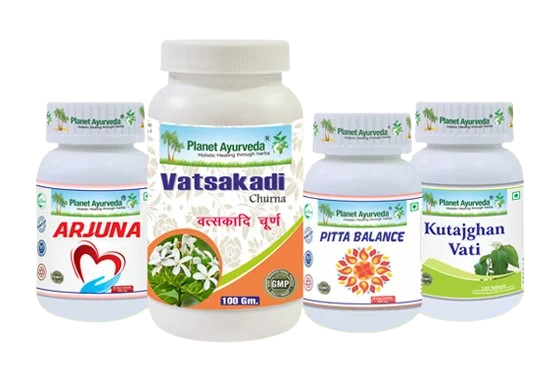
Planet Ayurveda’s Herbal Support Pack For Liver Health
Planet Ayurveda Is An Ayurvedic Wellness Brand Dedicated To Bringing Traditional Ayurvedic Wisdom Into Modern Lifestyles. Based In Chandigarh, India, The Brand Offers A Diverse Range Of Herbal Formulations Developed With Carefully Selected Ayurvedic Ingredients And Standardized Manufacturing Practices. Planet Ayurveda Focuses On Quality, Consistency, And Authentic Ayurvedic Principles While Making Its Products Accessible To Customers Worldwide. With A Broad Portfolio Covering Everyday Wellness And Specialized Health-Support Needs, The Brand Combines Classical Knowledge With Modern Quality Standards. For managing Fatty liver we have numerous formulations as follows
Herbal Remedies for Fatty Liver

Product Description
1. Yakrit Plihantak Churna
Yakrit Plihantak Churna is a traditional Ayurvedic polyherbal powder formulated with herbs including Bhumyamalaki (Phyllanthus niruri), Katuki (Picrorhiza kurroa), Makoy (Solanum nigrum), Punarnava (Boerhaavia diffusa), Kalmegha (Andrographis paniculata), Kasni (Cichorium intybus), Sharpunkha (Tephrosia purpurea), and Bhringraj (Eclipta alba). In Ayurveda, these herbs are traditionally associated with Yakrit (liver), digestion, Agni, and Pitta balance. The formulation is used as part of traditional Ayurvedic wellness practices to support healthy liver and digestive function. Dosage: 1 teaspoonful twice daily before meals with warm water, or as directed by a qualified Ayurvedic physician.
Dosage: 1 teaspoonful twice daily before meals with warm water or as directed by an Ayurvedic physician.
2. Livo Plan Syrup
Livo Plan Syrup is a traditional Ayurvedic polyherbal formulation containing Bhringraj (Eclipta alba), Sharpunkha (Tephrosia purpurea), Kalmegha (Andrographis paniculata), Shyonaka (Oroxylum indicum), Rohitaka (Tecomella undulata), Bhumyamalaki (Phyllanthus niruri), Patola (Trichosanthes dioica), Kasni (Cichorium intybus), and other traditionally used herbs. Ayurvedic literature describes several of these herbs in relation to Yakrit, Pitta, Agni, and digestive function. The formulation is intended to support normal liver and digestive wellness as part of a balanced Ayurvedic routine. Dosage: 2 teaspoonfuls twice daily after meals, or as directed by a qualified Ayurvedic physician
Dosage- 2 teaspoonfuls twice daily after meals or as directed.
3. Liver Detox Formula
Liver Detox Formula is a traditional Ayurvedic polyherbal capsule containing herbs such as Kutki (Picrorhiza kurroa), Punarnava (Boerhaavia diffusa), Makoy (Solanum nigrum), Himsra (Capparis spinosa), Kasni (Cichorium intybus), and other Ayurvedic botanicals. These ingredients have a long history of traditional use in Ayurvedic formulations addressing Agni, Pitta, digestion, and Yakrit-related wellness. The formulation is designed to complement a balanced lifestyle and traditional Ayurvedic approach to maintaining digestive and liver health. Ayurvedic concepts such as Pittavirechana and Yakrituttejaka describe traditional actions and should not be understood as direct claims to treat or cure liver disease.
Dosage- 1 capsule twice daily after meals with warm water or as directed.
Pathya–Apathya In Yakrit Vikara/Fatty Liver
Pathya – Recommended
- Green leafy vegetables
- Fresh seasonal fruits in appropriate portions
- Whole grains and adequate dietary fibre
- Moong dal and light preparations
- Light, freshly prepared meals
- Adequate water intake according to individual requirements
- Regular physical activity
- Maintaining a healthy body weight
- Regular meal timings
- Adequate and consistent sleep
Apathya – To Be Avoided or Limited
- Excessively oily and fried foods
- Highly processed foods
- Excessive sweets and added sugars
- Sugary beverages
- Excessive intake of fatty foods
- Overeating
- Frequent fast food or junk food
- Excessive daytime sleeping
- Prolonged sedentary behaviour
- Irregular eating habits
- Excessive alcohol consumption
Dietary recommendations should be individualized, particularly in patients with diabetes, obesity, advanced liver disease, or other associated medical conditions.
CONCLUSION
At last we can say that Fatty liver is a common metabolic condition associated with factors such as excess body weight, insulin resistance, diabetes, dyslipidaemia, unhealthy dietary patterns, and physical inactivity. Although the modern condition of fatty liver is not described as a separate disease entity in classical Ayurveda, its various aspects can be explored through Ayurvedic concepts such as Yakrit Vikara, Yakritodara, Agni, Dosha, Meda Dhatu, and Srotas. From an Ayurvedic perspective, management emphasizes Nidana Parivarjana, maintenance of Agni, appropriate dietary regulation, Meda management, physical activity, and individualized Dosha-based care. Classical therapies such as Deepana-Pachana, Langhana, and selected Shodhana procedures may be considered where appropriate and under qualified supervision. At the same time, modern diagnostic investigations remain essential for identifying hepatic steatosis, assessing metabolic risk factors, monitoring liver status, and detecting fibrosis or advanced disease. Therefore, Ayurvedic management should be integrated with appropriate medical evaluation rather than used as a substitute for necessary diagnosis and monitoring.


Dr. Vikram Chauhan
Latest posts by Dr. Vikram Chauhan (see all)
- Fatty Liver: Ayurvedic Management, Diet & Causes - October 1, 2026
- Treatment of Acute Flaccid Myelitis (AFM) in Ayurveda with Herbal Remedies - September 30, 2026
- Sarcoidosis: Causes, Symptoms & Ayurvedic Management - September 29, 2026
- Acidity & Heartburn: Antacids vs Ayurvedic Management of Amlapitta - September 28, 2026
- Fatty Liver: Causes, Symptoms, Diet & Ayurvedic Management - September 26, 2026