


Fatty Liver: Diet & Ayurvedic Management
Abstract
Fatty liver is a common metabolic condition characterised by excessive accumulation of fat within liver cells. It is strongly associated with obesity, insulin resistance, diabetes, dyslipidemia, and unhealthy dietary habits. Although early stages may remain asymptomatic, progressive fat accumulation can lead to inflammation, fibrosis, cirrhosis, and impaired liver function. Early recognition, healthy dietary practices, regular physical activity, weight management, and appropriate medical care are important for preventing disease progression and maintaining liver health.
Introduction
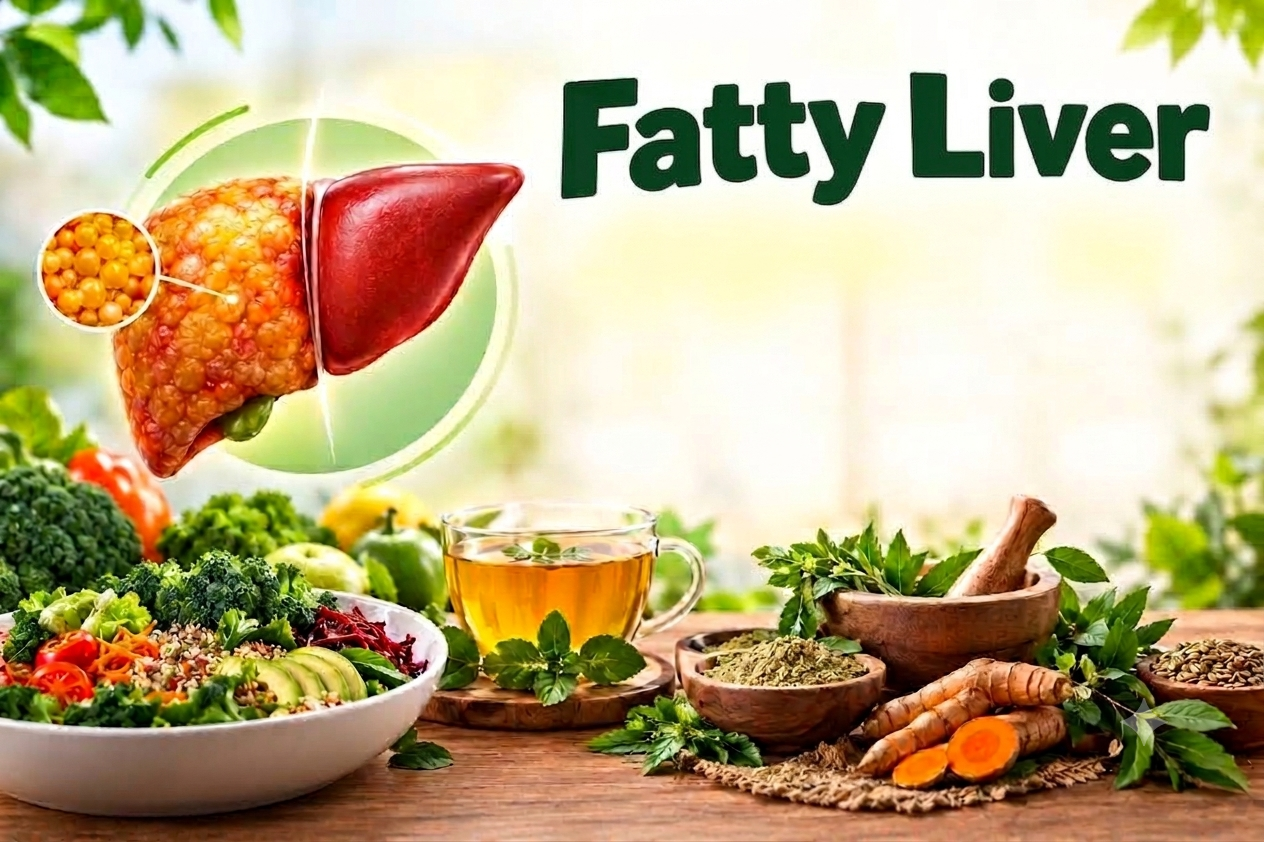
Fatty liver, referred to in medical terminology as steatotic liver disease (SLD), is a medical disorder characterised by the presence of excess fat in the liver cells. Fat is present in the normal liver in small amounts; however, the presence of fat in excess amounts may impair normal liver functions and, in certain cases, cause progressive liver damage. MASLD, or metabolic dysfunction-associated steatotic liver disease, is the name that has now replaced NAFLD or non-alcoholic fatty liver disease, in the recent past for those patients who suffer from hepatic steatosis along with cardiometabolic risks. Fatty liver disease is referred to as a silent disorder, since most people suffer from few or no symptoms, especially when the disease is still in its early stages. In certain cases, however, fatty liver can lead to inflammation and scarring of the liver.
Causes and Risk Factors of Fatty Liver
Fatty liver usually develops through a combination of metabolic, dietary, lifestyle and genetic factors.
- Overweight and Obesity: Excess body fat, particularly abdominal or visceral fat, is strongly related to fatty liver. Increased delivery of fatty acids to the liver and metabolic disturbances can contribute to hepatic fat accumulation.
- Insulin Resistance and Type 2 Diabetes: Insulin resistance increases fat deposition in the liver. Type 2 diabetes is an important risk factor for fatty liver and progression to more advanced liver disease.
- Abnormal Blood Lipids: High triglycerides and other abnormalities in cholesterol metabolism may result in the deposition of fat in the liver.
- Unhealthy Diet Patterns: Repeated intake of high-calorie meals, processed food products, too much sugar, and sugar-containing drinks may predispose to metabolic disturbances and the development of fatty liver.
- Lack of Physical Activity: Low levels of physical activity may impair energy balance, leading to overweight, insulin resistance and metabolic abnormalities.
- Consumption of Alcohol: Excessive consumption of alcohol may lead to alcohol-related liver diseases and increase fat content in the liver. Hence, alcohol history should be taken into account while diagnosing fatty liver disease.
- Some Drugs and Other Disorders: Sometimes fat deposition in the liver may be related to some drugs, poisons, rapid weight loss, malnutrition and genetic disorders
Signs and Symptoms of Fatty Liver
- Often asymptomatic
- Enlarged liver (hepatomegaly)
- In advanced disease: jaundice, abdominal/ leg swelling, easy bruising.
A fatty liver can be symptom-free. Most individuals tend to find out about it through blood tests or through imaging of the abdomen. Symptoms of fatty liver can include:
- Gastric issues like gas, acidity, acid reflux, and bloating
- Constipation or incomplete evacuation
- Feeling tired or low on energy
- Weakness
- Slight pain in the upper right part of the abdomen (right hypochondriac region)
- Malaise
- In rare cases, the individual’s liver can be noted to be enlarged during physical examination.
The following symptoms can become severe with time in the case of liver diseases progressing: Yellowing of the skin, bloating of the abdomen, swelling of the legs, bluish discolouration, confusion and severe unintentional weight loss.
Diagnosis
Diagnosis of fatty liver disease begins with a detailed medical history, physical examination, laboratory investigations, and imaging studies. These assessments help identify liver fat accumulation, evaluate liver function, determine the risk of fibrosis, and exclude other causes of liver disease.
- Physical Examination: Includes assessment of body weight, Body Mass Index (BMI), waist circumference, blood pressure, signs of insulin resistance, abdominal obesity, liver enlargement, jaundice, and swelling of the legs or abdomen.
- Liver Function Tests: Measure ALT, AST, ALP, GGT, and bilirubin levels to assess liver function and detect possible liver injury.
- Abdominal Ultrasound: A common initial imaging test used to detect fat accumulation in the liver.
- FibroScan: The Controlled Attenuation Parameter (CAP) assesses liver fat, while liver stiffness measurement estimates the degree of fibrosis.
- Additional Tests: May include Hepatitis B and C screening, lipid profile, blood glucose, HbA1c, and other investigations to exclude alternative causes of liver disease.
Modern Management for Fatty Liver
Medical treatment for fatty liver disease depends on the underlying cause, associated conditions, and stage of liver damage. Statins may be prescribed to manage dyslipidemia and reduce cardiovascular risk. Antidiabetic medicines can help control diabetes and insulin resistance when present. Vitamin E or pioglitazone may be considered for selected patients with MASH under medical supervision. Resmetirom may be used in eligible patients with non-cirrhotic MASH and significant liver fibrosis. All medicines should be prescribed by a qualified healthcare professional after evaluating the patient’s overall health and liver disease stage.
Ayurveda Insight
According to Ayurveda, “good health is the balance between the Doshas (functional regulatory system), Dhatus (tissues), Malas (excreta) and Agni (Digestive fire).” Proper digestive process is an essential part of this equilibrium. Fatty liver disease has no direct relation or exact equivalent within Ayurveda. The pathophysiology may be understood stepwise as follows: unhealthy dietary habits, overeating, sedentary lifestyle, and irregular routines disturb Agni (digestive and metabolic fire), resulting in improper digestion and metabolism. This promotes the formation of Ama (improperly digested or metabolised material) and aggravates Kapha Dosha. Increased Kapha and impaired metabolism disturb Meda Dhatu (adipose tissue), leading to excessive fat accumulation. Gradually, dysfunction of the Medovaha Srotas (channels involved in fat metabolism) develops, causing obstruction and impaired transportation of nutrients and lipids. These changes affect Yakrit (liver), resulting in hepatic fat deposition and the progression of fatty liver disease.
Herbal Remedies for Fatty Liver by Planet Ayurveda
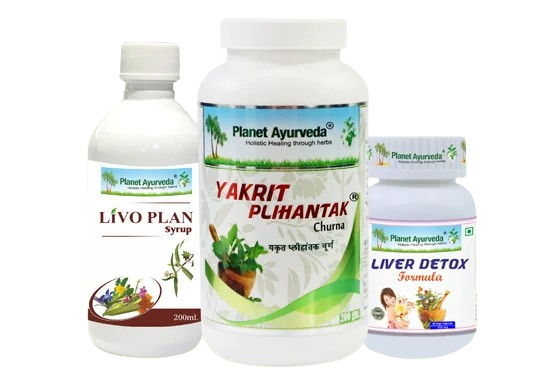
Planet Ayurveda offers a wide range of herbal medicines prepared from carefully selected natural ingredients. These formulations are developed according to Ayurvedic principles and traditional herbal knowledge. The medicines are designed to support various health concerns and promote overall well-being. Planet Ayurveda focuses on providing quality herbal healthcare through natural and holistic approaches. Planet Ayurveda provides the Fatty Liver Care Pack, which is a combination of Ayurvedic herbal formulas specially designed for liver care and metabolism care.
- Yakrit Plihantak Churna
- Livoplan Syrup
- Liver Detox Formula Capsules
Herbal Remedies for Fatty Liver

Product Description
1. Yakrit Plihantak Churna
This herbal powder contains Bhringraj (Eclipta alba), Punarnava (Boerhavia diffusa), Kalmegh (Andrographis paniculata), Makoy (Solanum nigrum), Bhumi Amla (Phyllanthus niruri), Kutki (Picrorhiza kurroa), Kasni (Cichorium intybus), and Sharpunkha (Tephrosia purpurea) that support healthy liver function and metabolism. Bhumiamla (Phyllanthus niruri) is traditionally valued for supporting hepatic function and antioxidant protection. Katuki (Picrorhiza kurroa) may help maintain normal liver enzyme activity and support bile flow. Makoy (Solanum indicum) and Punarnava (Boerhaavia diffusa) are traditionally used to support liver health and healthy fluid balance. Kalmegh (Andrographis paniculata) provides antioxidant and hepatoprotective support. Kaasni (Cichorium intybus) is traditionally associated with digestive and liver support, while Sharpunkha (Tephrosia purpurea) is used in Ayurveda to support liver and spleen health. Bhringraj (Eclipta alba) further complements the formulation by supporting hepatic wellness and antioxidant defences, making the combination useful as supportive care for fatty liver alongside appropriate diet and lifestyle measures.
Dosage: Take 1 teaspoonful twice daily before meals with warm water, or administer according to the decoction method.
2. Livoplan Syrup
This herbal syrup combines several traditionally used herbs like Bhringraj (Eclipta alba), Kalmegh (Andrographis paniculata), Shyonak (Oroxylum indicum), Rohitaka (Tecomella undulata), Bhumi Amla (Phyllanthus niruri), and Trayamana (Gentiana kurroo) and many more that collectively support liver health and healthy metabolic function. Bhringraj (Eclipta alba) is traditionally valued for its hepatoprotective and antioxidant properties, while Sharpunkha (Tephrosia purpurea) supports liver and spleen function. Kalmegh (Andrographis paniculata) provides antioxidant support and helps maintain healthy hepatic function. Shyonak (Oroxylum indicum) and Rohitaka (Tecomella undulata) are traditionally used to support liver and digestive health. Bhumiamla (Phyllanthus niruri) supports natural hepatic detoxification and antioxidant defences. Patol (Trichosanthes dioica) and Kasni (Cichorium intybus) support digestion and normal liver function, while Pitpapda (Fumaria indica) complements the formulation through its traditional cleansing properties. Together, these herbs provide comprehensive supportive care for maintaining healthy liver function and lipid metabolism in fatty liver.
Dosage: Take 1–2 tsp twice daily after meals, or as directed by a qualified physician.
3. Liver Detox Formula
Liver Detox Formula contains a blend of herbs like Katuki (Picrorhiza kurroa), Punarnava (Boerhavia diffusa), Kalmegh (Andrographis paniculata), Makoy (Solanum nigrum), and many more herbs that are traditionally used to support liver health and healthy metabolism. Punarnava (Boerhaavia diffusa) supports normal liver function and fluid balance, while Makoy (Solanum nigrum) is traditionally valued for its hepatoprotective and antioxidant properties. Jhavuka (Tamarix gallica) supports natural cleansing processes and digestive function. Katuki (Picrorhiza kurroa) is traditionally used to promote bile flow and support hepatic function. Together, these herbs may support healthy lipid metabolism and help maintain normal liver enzyme activity. The formulation also supports digestion and the body’s natural detoxification pathways. These combined properties make the formula a supportive herbal approach for maintaining liver wellness in individuals with fatty liver, alongside appropriate diet and lifestyle measures.
Dosage: Take 1–2 capsules twice daily after meals with warm water, preferably under the guidance of a physician.
Diet and Lifestyle in Fatty Liver
A healthy diet and lifestyle play a vital role in managing fatty liver disease, reducing liver fat, improving metabolic health, and preventing further liver damage.
- Reduce sugar and refined carbohydrates, especially sugary drinks, sweets, and refined foods.
- Limit saturated fats and fried foods; prefer unsaturated fats such as nuts, seeds, and olive oil in appropriate portions.
- Avoid or minimise alcohol, particularly in alcohol-related liver disease.
- Exercise regularly, aiming for at least 150 minutes of moderate physical activity per week.
- Gradual weight loss is recommended for people who are overweight or obese, as it can reduce liver fat and improve metabolic health
Conclusion
Fatty liver is a growing metabolic and hepatic disease which can continue to remain asymptomatic for a long period of time. Its occurrence is generally linked with obesity, insulin resistance, diabetes, dyslipidaemia, improper nutrition and lack of exercise. Even if some people do not develop any symptoms, the progression of the condition may lead to inflammation, fibrosis and ultimately to cirrhosis. Based on the Ayurvedic system, treatment can be looked at from the angle of Agni (digestive fire), Kapha (stability), Meda (adipose tissue), Srotas (channels) and Nidana Parivarjana (preventive management). An integrative strategy takes into account dietary modification and changes in lifestyle, proper physical activity and effective management of weight. The most important factor in treating fatty liver disease is a long-term approach towards diet, exercise and metabolic health.


Dr. Vikram Chauhan
Latest posts by Dr. Vikram Chauhan (see all)
- Fatty Liver: Diet & Ayurvedic Management - September 15, 2026
- Fatty Liver: Causes, Symptoms & Ayurvedic Management - September 14, 2026
- Hearing Loss in Children: Causes, Symptoms & Ayurvedic Treatment - September 12, 2026
- Best Water Vessel According to Ayurveda - September 10, 2026
- Understanding Antioxidants: Benefits & How Arjun Tea Supports Heart Health - September 8, 2026