

Herbal Remedies For Immune Thrombocytopenia (ITP) – Symptoms, Causes & Treatment in Ayurveda
Abstract
Immune thrombocytopenia (ITP) formerly known as Idiopathic Thrombocytopenic Purpura , is an acquired autoimmune hematological disorder characterized by a persistently or intermittently reduced platelet count resulting from immune-mediated platelet destruction and impaired platelet production. The condition affects individuals across all age groups and presents with a wide spectrum of clinical manifestations, ranging from asymptomatic thrombocytopenia and cutaneous purpura to mucosal bleeding. The pathogenesis of ITP involves complex interactions between autoantibodies, cellular immune dysfunction, accelerated platelet clearance, and abnormalities in megakaryocyte function. Diagnosis is primarily based on clinical assessment, complete blood count, peripheral blood smear examination and exclusion of alternative causes of thrombocytopenia.
Introduction to ITP
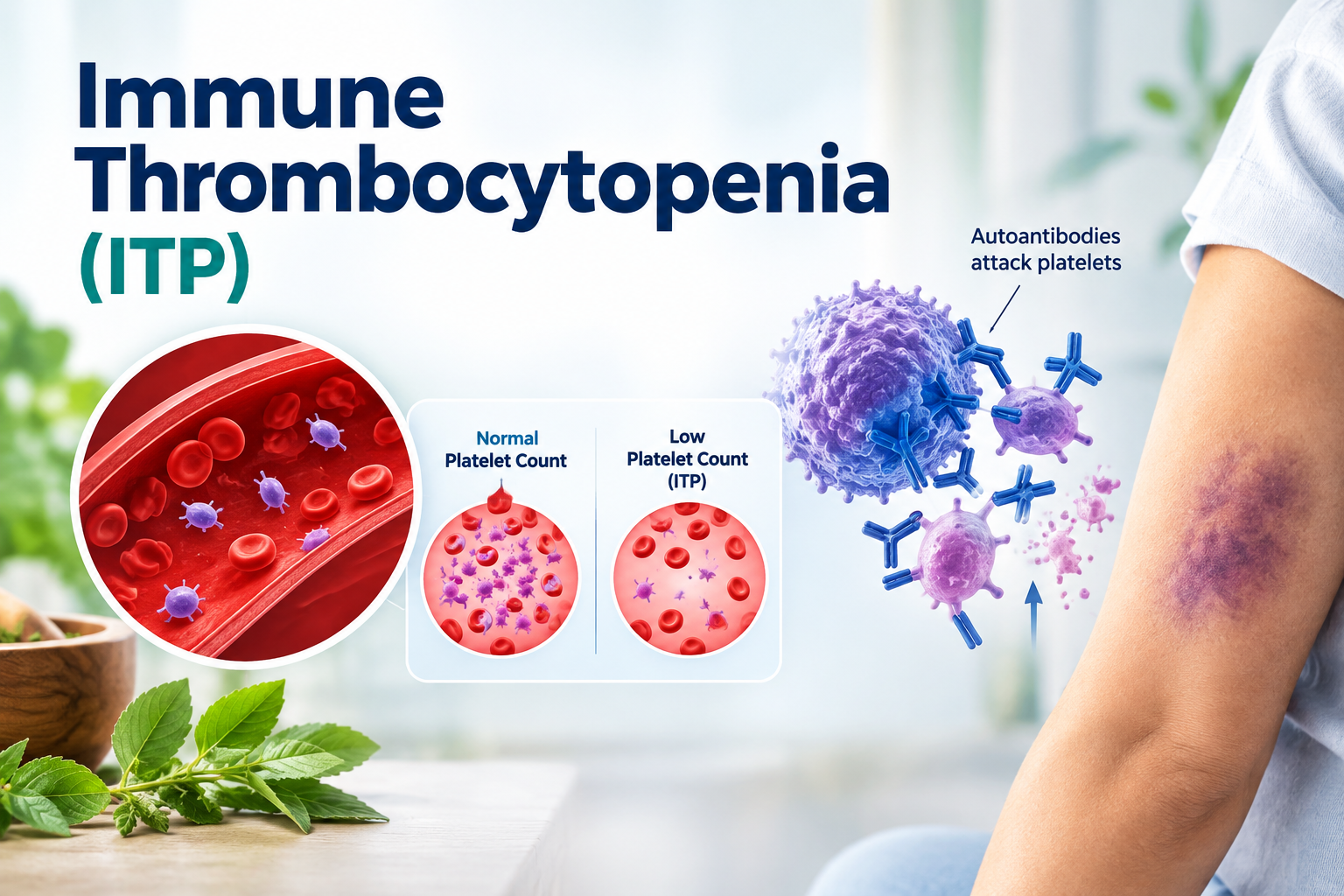
Immune thrombocytopenia (ITP) is a blood disorder characterized by a reduced platelet count, which can interfere with the normal blood-clotting process. Platelets are small blood cells that gather at the site of an injury to form a clot, helping to prevent excessive blood loss. When platelet levels are low, the body may have difficulty controlling bleeding. ITP is classified into Acute and Chronic forms based on its duration. Acute ITP generally resolves within 12 months and is more commonly observed in children. In contrast, Chronic ITP persists for 12 months or longer and is primarily seen in adults, although it can also occur in children and adolescents. Chronic ITP is approximately two to three times more common in women than in men.
Ayurvedic perspective of ITP
From the perspective of Ayurveda, ITP can be explored through the classical concepts of Rakta Dhatu (blood tissue), Rakta Kshaya (depletion of blood-related tissue), Rakta Pradoshaja Vikara (disorders involving the vitiation of blood) and Raktapitta (acondition characterized by bleeding manifestations). However, the direct ayurvedic reference of ITP is not mentioned in samhita; it can be understood through signs and symptoms. In ITP , the platelet count decreases because of immune- mediated mechanisms. From an Ayurvedic point, the associated bleeding tendency may be discussed in relation to disturbances involving Rakta Dhatu and the body’s ability to maintain normal haemostasis. Charak Samhita describes Rakta as :
” तद्विशुद्धं हि रुधिरं बलवर्णसुखायुषा। युनक्ति प्राणिनः शोणितं ह्यनुवर्तते॥ “ (Sutra Sthana, Chapter 24, Shloka 4 )
- Pure blood is described as supporting bala(strength), Varna (complexion), Sukha (well being)and Ayu (longevity).
The term Rakta Pradoshaja Vikara refers to disorders arising from the vitiation or disturbance of Rakta Dhatu. Classical Ayurvedic literature describes various manifestations associated with Rakta Dushti (vitiation of blood) , including certain inflammatory and bleeding conditions.
Charak Samhita describes disorders associated with rakta as :
ततः शोणितजा रोगाः प्रजायन्ते पृथग्विधाः। मुखपाकोऽक्षिरागश्च पूतिघ्राणास्यगन्धिता॥ (Sutra Sthana,Chapter 24, Shloka 11 )
- The verse introduces various disorders associated with disturbed blood, including oral inflammation, redness of the eyes and certain abnormal odours.
Raktapitta is a classical Ayurvedic disease characterized primarily by abnormal bleeding from different parts of the body. It is traditionally associated with the vitiation of Pitta and Rakta. Because patients with ITP may experience nosebleeds , gum bleeding, heavy menstrual bleeding, or other haemorrhagic manifestations, it can be compared with Raktapitta.
Causes and risk factors of ITP
- Autoimmune reaction : The body may produce autoantibodies that bind to platelet surface proteins, marking the platelets for destruction by immune cells, particularly in the spleen.
- Viral infections : such as Human immunodeficiency virus (HIV) , Hepatitis C virus (HCV)etc.
- Certain medicines: like quinine can occasionally cause immune-mediated thrombocytopenia by triggering antibodies
- Autoimmune disorders : Systemic lupus erythematosus (SLE).
- Age : Acute ITP is generally observed in children because of increased susceptibility to infection while Chronic ITP is commonly observed in adults.
- Sex : Chronic ITP occurs more frequently in women than in men, particularly among adults.
Sign and Symptoms of ITP
The clinical presentation varies from person to person. Some individuals do not experience noticeable symptoms and the condition may be discovered incidentally during a routine complete blood count (CBC). Others may develop visible signs of bleeding, ranging from minor skin changes to more serious haemorrhagic complications. Bleeding may occur within the skin, beneath mucosal surfaces or in internal organs.
The common clinical manifestations of ITP :
- Petechiae: Small, pinpoint-like spots that develop when tiny blood vessels leak blood into the surrounding skin. They may appear red, purple or reddish-brown and generally do not disappear when pressure is applied to the affected area.
- Purpura: Refers to larger areas of bleeding beneath the skin. These lesions may appear as purple, reddish or brownish patches and can develop when blood escapes from small blood vessels into the surrounding tissues.
- Hematomas: When blood collects within soft tissues following leakage from damaged blood vessels. It may present as a swollen, discoloured or tender lump beneath the skin. In individuals with ITP, hematomas may develop after relatively minor trauma because of impaired platelet-mediated clot formation.
- Nasal and gingival bleeding: Recurrent nosebleeds and bleeding from the gums are common mucosal manifestations of thrombocytopenia. Bleeding may occur spontaneously or after activities such as brushing the teeth, flossing or minor injury. In some cases, bleeding may persist longer than expected.
- Hematuria and gastrointestinal bleeding: A reduced platelet count may lead to bleeding in the urinary or gastrointestinal tract. Hematuria refers to the presence of blood in the urine, which may make it appear pink, red or brown. Gastrointestinal bleeding may be noticed as red blood in the stool or black, tarry stools.
- Heavy menstrual bleeding: Individuals who menstruate may experience menorrhagia ,characterized by unusually heavy or prolonged menstrual periods. Excessive menstrual blood loss may interfere with daily activities and can eventually contribute to iron deficiency and anemia.
- Fatigue and general weakness: Tiredness, reduced energy and weakness may occur in individuals with ITP. When bleeding results in anemia, fatigue may become more pronounced and can affect the individuals ability to perform routine activities.
- Pallor and dizziness: Prolonged or substantial blood loss may reduce haemoglobin levels, resulting in anemia. This can cause paleness of the skin or inner eyelids, dizziness, light-headedness, breathlessness on exertion and reduced exercise tolerance. Severe blood loss may also lead to fainting or other signs of circulatory compromise.
Diagnosis of ITP
1. Clinical history
Includes easy bruising, petechiae, nosebleeds, gum bleeding, heavy menstrual bleeding and other episodes of abnormal bleeding. A history of recent infections , autoimmune diseases, previous episodes of thrombocytopenia, family history of blood disorders and the use of prescription medicines, over-the-counter drugs or herbal supplements should also be reviewed.
2. Physical examination
- The skin and mucous membranes are examined for petechiae, purpura, bruising and active bleeding.
- enlargement of the spleen or liver
3. Complete blood count (CBC)
A confirmed platelet count below 150 × 10’9 /L is defined as thrombocytopenia .
4. Peripheral blood smear examination
Show a reduced number of platelets , detect platelet clumping , abnormal red blood cells or abnormal white blood cells.
5. Investigations
- HIV and hepatitis C testing
- Liver function tests
- Helicobacter pylori testing
Herbal Approach to ITP by Planet Ayurveda
Planet Ayurveda offers three specially formulated combinations of herbal products that is ; ITP care pack for adults , ITP care pack for children (5 years to 14 years ) , ITP care pack for kids ( less than 5 years ) intended to support the Ayurvedic management of Idiopathic Thrombocytopenic Purpura (ITP) . These formulations are prepared using carefully selected herbs of high quality and are developed in accordance with the traditional principles of Ayurveda. The products are promoted as natural, plant-based and vegetarian formulations, with an emphasis on purity and quality. Planet Ayurveda highlights its commitment to providing herbal products prepared without unnecessary additives, artificial preservatives or synthetic ingredients. These formulations are intended for individuals interested in exploring traditional Ayurvedic approaches to health and wellness.
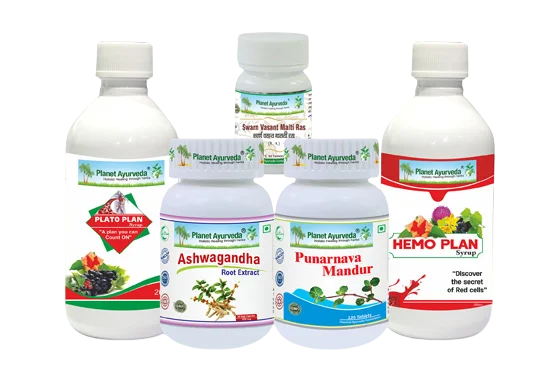
ITP LEVEL-1 (BASIC PACK)

Product Description
1. Plato Plan Syrup
Planet Ayurvedas Plato Plan Syrup is a multi-herbal formulation containing eight listed botanical ingredients and a syrup base. It has ingredients like Erand Karkati (Carica papaya) , Ashwagandha ( Withania somnifera ) , Shigru (Moringa pterygosperma) etc Papaya leaf extract has possible effects on platelet counts. Ashwagandha contain compounds that have been studied for their effects on immune and inflammatory pathways.
Dosage : Take one to two teaspoons of the syrup two times a day, or follow the dosage recommended by a qualified Ayurvedic practitioner.
2. Ashwagandha Capsules
This formulation contains Ashwagandha (Withania somnifera) Root extract. The root contains withanolides and other plant constituents that have been investigated for various biological activities. In traditional Ayurvedic practice, this herb is valued for its Medhya (supporting mental functions), Rasayana (rejuvenating) and Dhatu Pushti Kara (nourishing body tissues) properties . It is described as having a bitter and astringent taste (Rasa), a heating potency (Virya) and a pungent post-digestive effect (Vipaka).
Dosage : Take one to two capsules twice a day after meals, swallowing them with a glass of plain water.
3. Punarnava Mandur
Punarnava Mandur is a traditional Ayurvedic herbo-mineral formulation commonly used in Ayurveda for conditions associated with anaemia, impaired digestion and certain disorders involving fluid retention. It combines Mandura bhasma(processed iron oxide) with several medicinal herbs, including Punarnava (Boerhaavia diffusa) , Shunthi (dry ginger) ( Zingiber officinale), Pippali (long pepper) (Piper longum ) , Maricha (black pepper) (Piper nigrum) , Haridra (turmeric) (Curcuma longa) etc.
Dosage : Take one to two tablets two or three times daily with lukewarm water, or as advised by a qualified healthcare practitioner.
4. Hemo Plan Syrup
A polyherbal formulation containing selected herbal extracts traditionally used in Ayurveda to support general health and blood-related wellness. The formulation includes Manjistha ( Rubia cordifolia ), Shatavari (Asparagus racemosus) , Gorakhmundi (Sphaeranthus indicus) etc . Some of its plant ingredients contain compounds investigated for antioxidant or anti-inflammatory activity.
Dosage : Take one to two teaspoons of the syrup twice daily.
5. Swarn Vasant Malti Ras
Swarn Vasant Malti Ras is a traditional Ayurvedic herbo-mineral preparation . It is described as a formulation made from selected ingredients such as , Swarna Bhasma (processed gold), Mukta Bhasma (processed pearl) , Shuddha Hingula (processed cinnabar) etc. Traditionally, preparations of this type are associated with supporting general health and vitality.
Dosage : Take one tablet once or twice daily, along with honey, butter, or Pippali (long pepper) powder, as advised by a qualified practitioner.
Diet and Lifestyle management.
- Balanced and nourishing diet like whole grains, pulses etc.
- Iron-rich foods such as chickpeas, beans etc. , fruits and vegetables
- Stress management
- Yoga asanas like Sukhasana ( easy sitting position ) ,shavasana(corpse pose).
Preventive measures
- Avoid alcohol intake.
- Avoid activities that could result in head or abdominal injury when platelet counts are very low.
- Avoid medicines and supplements that increase bleeding.
- Maintain personal hygiene and oral health.
- Monitor platelet count regularly.
Conclusion
An autoimmune haematological disorder characterized by a reduced platelet count, which may increase the risk of bruising and bleeding. Ayurvedic principles like Nidana Parivarjana (avoidance of aggravating factors), Pathya Ahara (appropriate dietary practices), Pathya Vihara (health-supporting lifestyle) helps in managing the disease a scientifically responsible approach to ITP should integrate an understanding of classical Ayurvedic principles with current haematological knowledge. Dietary support, suitable physical activity, stress management and careful avoidance of bleeding risks may complement medical care, but they must not replace evidence-based treatment. A coordinated, patient-centred approach that prioritizes bleeding prevention, platelet monitoring and appropriate medical management offers the most responsible foundation for long-term care.


Dr. Vikram Chauhan
Latest posts by Dr. Vikram Chauhan (see all)
- Keto Diet: Benefits, Foods, Weight Loss & Side Effects - October 29, 2026
- Herbal Remedies For Immune Thrombocytopenia (ITP) – Symptoms, Causes & Treatment in Ayurveda - October 29, 2026
- Herbal Remedies For Ulcerative Colitis – Symptoms, Causes & Treatment in Ayurveda - October 28, 2026
- Herbal Remedies For Psoriatic Arthritis – Symptoms, Causes & Treatment in Ayurveda - October 27, 2026
- Herbal Remedies For Atopic Dermatitis – Symptoms, Causes & Treatment in Ayurveda - October 27, 2026