


Herbal Remedies For Atopic Dermatitis – Symptoms, Causes & Treatment in Ayurveda
Abstract
Atopic dermatitis (AD) is a long-term inflammatory skin condition characterised by recurrent episodes of itching, dryness, redness, irritation, and eczematous skin lesions. Its development involves several interconnected factors, including disruption of the skin barrier, abnormal immune responses, genetic predisposition, environmental influences, and alterations in the skin microbiome. Persistent pruritus can result in frequent scratching, which further weakens the skin barrier and contributes to a continuing cycle of inflammation, itching, and skin damage. In addition to physical symptoms, AD may negatively affect sleep, daily functioning, psychological wellbeing, and overall quality of life.Treatment strategies depend on disease severity and individual patient needs. Basic management includes regular use of moisturisers, topical anti-inflammatory therapy, identification and avoidance of aggravating factors. Patients with moderate-to-severe disease or inadequate response to topical treatment may require systemic therapies. Advances in the understanding of inflammatory signalling have resulted in targeted treatments such as biologic agents and Janus kinase (JAK) inhibitors.Upadacitinib is a selective JAK1 inhibitor that interferes with intracellular cytokine signalling involved in the inflammatory processes and pruritus associated with AD, making it a valuable systemic treatment option for suitable patients.
Introduction
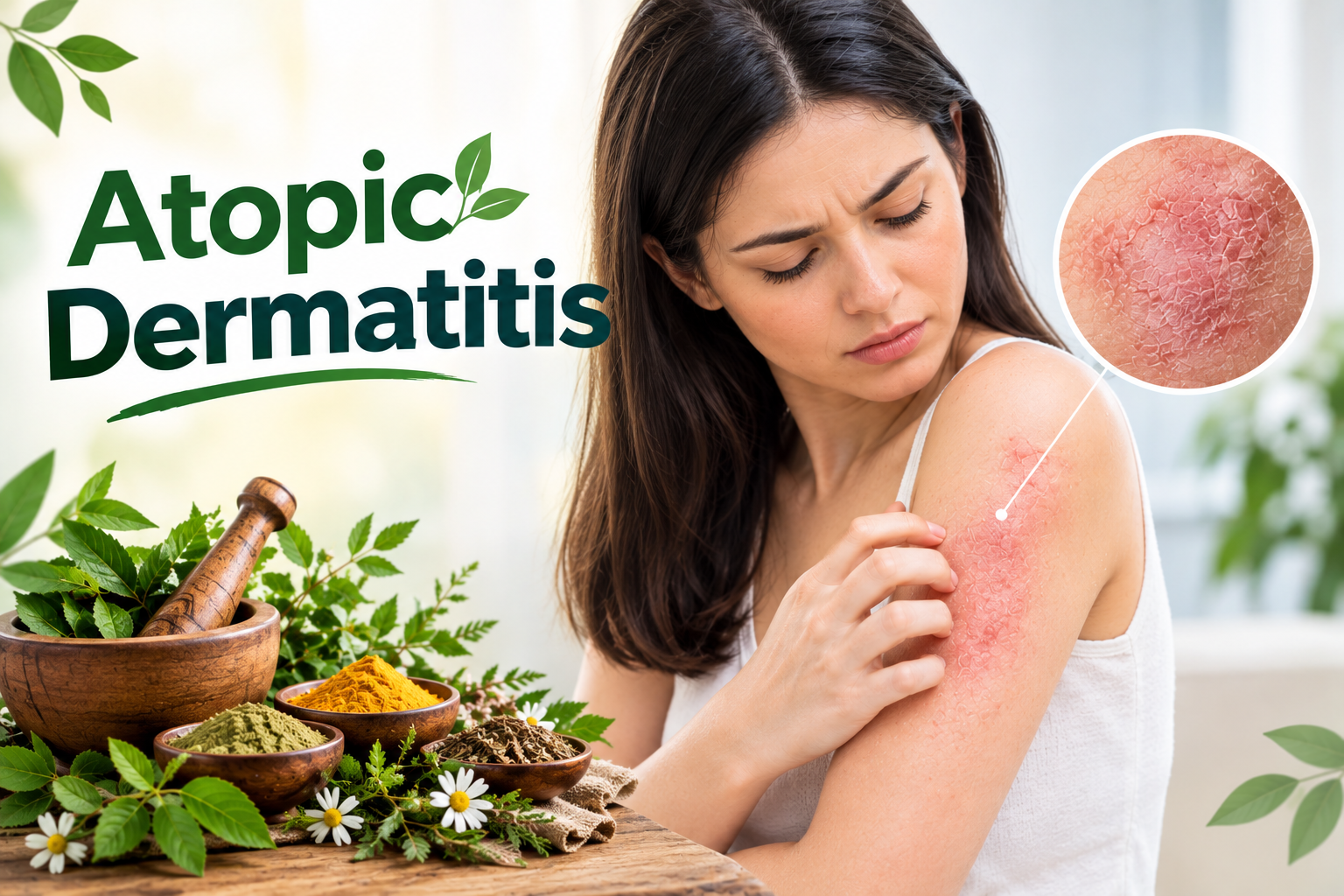
Atopic dermatitis (AD) is a chronic, relapsing inflammatory skin disorder characterised by itching, dryness, redness, scaling, and recurrent eczematous lesions. It develops through a complex interaction between genetic susceptibility, impaired skin-barrier function, immune dysregulation, environmental triggers, and changes in the skin microbiome. Persistent itching often leads to scratching, which further damages the skin barrier and intensifies inflammation, creating an itch–scratch cycle. AD can affect sleep, daily activities, emotional wellbeing, and overall quality of life. Treatment depends on disease severity and may include moisturisers, topical anti-inflammatory medicines, phototherapy, biologic therapies, and systemic treatments. Advances in understanding inflammatory signalling have introduced targeted therapies such as Janus kinase (JAK) inhibitors. Upadacitinib, a selective JAK1 inhibitor, is an important systemic option for appropriately selected patients with moderate-to-severe AD.
Main causes of atopic dermatitis
- Genetic factors: A family history of eczema, asthma, or allergic rhinitis can increase the risk. Some people have changes in the filaggrin gene, which affects the skins protective barrier.
- Weak skin barrier: The skin loses moisture more easily and allows irritants and allergens to enter, leading to dryness and inflammation.
- Immune-system activity: An overactive immune response can cause inflammation.
- Environmental triggers: Dust, pollen, pollution, cold weather, low humidity, and sweating can worsen symptoms.
- Irritants: Fragranced soaps, detergents, shampoos, cosmetics, and harsh skincare products may trigger flare-ups.
- Stress: Emotional stress can worsen itching and trigger or aggravate flare-ups.
- Microbes on the skin: Staphylococcus aureus bacteria commonly colonize eczema-prone skin and can aggravate inflammation or contribute to skin infections.
- Scratching: Scratching damages the skin barrier further, creating an itch–scratch cycle that worsens the condition .
Signs & Symptoms of Atopic Dermatitis
- Intense itching (pruritus) – Often the most prominent symptom.
- Dry, rough skin – Skin may become flaky, cracked or scaly.
- Red or inflamed patches – Areas may appear erythematous and irritated.
- Rashes – Often occur on the face, neck, hands and skin folds.
- Oozing or crusting – May occur during acute flares.
- Thickened skin – Chronic scratching can cause lichenification.
- Skin cracks and fissures – Particularly in severely dry areas.
- Swelling and tenderness – Can accompany active inflammation.
- Sleep disturbance – Persistent itching may interfere with sleep.
- Recurrent flare-ups – Symptoms often improve and then return with triggers.
Role of JAK–STAT Pathway in Atopic Dermatitis
The Janus kinase–signal transducer and activator of transcription (JAK–STAT) pathway regulates several cellular processes involved in atopic dermatitis (AD), particularly immune responses and cutaneous inflammation. In this condition, abnormal cytokine signaling contributes to changes in epidermal integrity and persistent skin irritation. Interleukins IL-4 and IL-13 interfere with the normal formation of the epidermal barrier, weakening its protection and facilitating the entry of environmental irritants and allergens. IL-31 is associated with itch sensation, whereas IL-22 can promote epidermal thickening and alter keratinocyte differentiation. Together, these mechanisms contribute to the characteristic inflammatory changes observed in AD. Targeting JAK-mediated signaling has consequently become an important treatment strategy. JAK inhibitors, including abrocitinib, upadacitinib, and topical ruxolitinib, can help control inflammation and relieve symptoms in appropriately selected patients.
Inflammatory cytokine → Cytokine receptor → JAK1 activation → STAT phosphorylation → Nuclear signalling → Inflammatory gene expression → Itch + barrier disruption + skin inflammation
Beyond the Rash: Interrupting the Inflammatory Cycle
The visible rash represents only one aspect of atopic dermatitis. Underlying inflammatory activity and impaired barrier function contribute to persistent discomfort, lesions, and increased sensitivity to external irritants.The interaction between these processes creates a cycle in which inflammation promotes itching, scratching damages the skin, and barrier disruption facilitates further irritation and inflammatory activity.Targeted therapies such as upadacitinib address selected intracellular mechanisms involved in this process. When effective, they can reduce inflammatory activity and pruritus, allowing the skin to recover more effectively alongside appropriate topical care.However,improvement in inflammatory signalling does not eliminate every cause of barrier dysfunction. Continued moisturization, avoidance of irritating products, and individualized management of triggers remain necessary. A comprehensive treatment strategy therefore combines control of inflammation with restoration of the skin barrier, reduction of itching, prevention of complications, and ongoing assessment of disease activity.
Treatment Options for Atopic Dermatitis
Treatment selection depends on the severity of disease, affected body areas,, patient preferences, and the balance between benefits and risks.
7.1 Topical corticosteroids
Topical corticosteroids are widely used to control acute inflammatory flares. Their potency, application frequency, and duration should be selected according to the affected site, patient age, and disease severity. Prolonged or inappropriate use can cause adverse effects, including skin atrophy.
7.2 Topical calcineurin inhibitors
Tacrolimus and pimecrolimus provide steroid-sparing anti-inflammatory options, particularly for sensitive areas such as the face, eyelids, and skin folds, when clinically appropriate.
7.3 Topical PDE-4 and JAK inhibitors
Crisaborole is a topical phosphodiesterase-4 inhibitor used for eligible patients. Topical JAK inhibitors, including ruxolitinib, are another option for selected patients, subject to local indications, age restrictions, and prescribing guidance.
7.4 Biologic therapies
Dupilumab and tralokinumab target components of type 2 inflammatory signalling. They may be appropriate for patients whose moderate-to-severe disease requires systemic treatment.
7.5 Oral JAK inhibitors
Upadacitinib and abrocitinib inhibit intracellular JAK signalling and may provide substantial improvements in itching and inflammatory skin lesions. Their use requires careful patient selection and monitoring.
7.6 Conventional systemic immunomodulators
Cyclosporine, methotrexate, azathioprine, and mycophenolate mofetil may be considered in selected patients under specialist supervision. Their suitability depends on individual clinical circumstances.
An Ayurvedic Approach to Understanding Atopic Dermatitis
Atopic dermatitis (AD) is a recurring inflammatory skin condition that commonly presents with itching, dryness, irritation, and changes in skin texture. In contemporary medicine, its development is associated with impaired epidermal barrier function and alterations in immune activity. Ayurveda approaches skin disorders through a traditional system of assessment involving Dosha (functional regulatory principles), Dushya (tissues affected by disease), Nidana (causative factors), and Samprapti (the process through which a disorder develops).
Role of Doshas in Atopic Dermatitis
The characteristic features of atopic dermatitis can be explored through the Ayurveda concepts of Vata, Pitta, and Kapha. Vata is traditionally associated with roughness, scaling, dryness, and itching.Pitta is linked to redness, warmth, burning sensations, and irritation, while Kapha may be considered when lesions exhibit moisture, discharge, or thickening. These associations provide a traditional interpretive framework rather than a direct equivalent of modern dermatological diagnosis. Twak, or skin, is the principal tissue involved in this assessment. Depending on the presentation, Ayurvedic interpretation may also consider Rakta Dhatu (blood tissue), Mamsa Dhatu (muscle tissue), Lasika (lymphatic or interstitial fluid), and Kleda (tissue moisture). The relevance of these components is considered individually, taking into account the appearance, duration, and severity of the skin condition. Several influences may be examined as potential Nidana, including environmental exposure, excessive heat, psychological stress, unsuitable dietary practices, irregular daily habits, and sensitivity to particular substances. Identifying relevant aggravating factors can help guide an individualised care plan, although not every factor affects all patients.
Ayurvedic Explanation of Disease Progression
In Ayurveda, Samprapti describes the traditional sequence of events involved in the development of a disorder. The proposed interpretation for atopic dermatitis may be summarised as: Nidana Sevana (exposure to aggravating influences) → Dosha Prakopa (aggravation of Doshas) → Agni Dushti (disturbance of digestive and metabolic functions) → Ama formation (a traditional concept of incompletely processed substances) → Rakta–Twak involvement (association with blood tissue and skin) → manifestation of skin symptoms. This Ayurvedic model relates the clinical presentation to Kandu (itching), Daha (burning), Raga (redness), and Rukshata (dryness). Symptoms may recur when individual aggravating factors remain present. However, this sequence represents a traditional explanatory model and has not been established as the biomedical mechanism responsible for atopic dermatitis.
Ayurvedic Treatment Principles
Chikitsa Siddhanta encompasses the principles used to determine an appropriate therapeutic approach. Within Ayurveda, treatment selection is traditionally guided by the patients Dosha involvement, affected tissues, Agni (digestive and metabolic function), Bala (strength and tolerance), and Roga Bala (severity of the condition). Depending on the individual assessment, traditional approaches may include Nidana Parivarjana (limiting exposure to aggravating factors), Agni Deepana (supporting digestive function), Ama Pachana (measures directed towards Ama), Dosha Shamana (pacification of aggravated Doshas), Ahara Chikitsa (dietary guidance), Vihara Chikitsa (lifestyle modification), Rakta-Prasadana (traditional measures associated with Rakta), and Bahya Chikitsa (external applications). For individuals living with atopic dermatitis, these traditional principles should be considered alongside established medical care. Protecting the skin barrier, applying suitable moisturisers, avoiding identified irritants, and following a dermatologists treatment recommendations remain central to symptom management.
Herbal Remedies for ATOPIC DERMATITIS by Planet Ayurveda
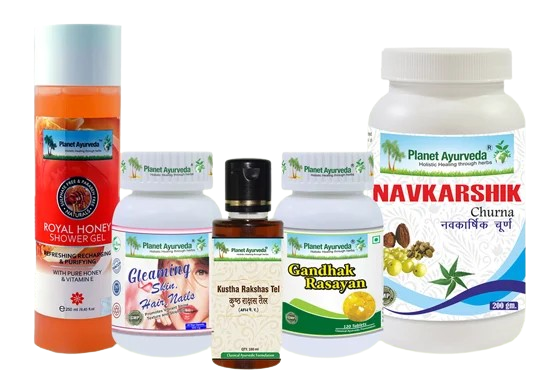
Planet Ayurveda specialises in products based on Ayurvedic ingredients and traditional formulations. Its product range encompasses herbal supplements, single-herb preparations, compound formulations, oils, juices, nutraceuticals, and personal-care products. The companys approach draws upon concepts such as Prakriti (individual constitution), Dosha (functional principles), Agni (digestive and metabolic function), Ahara (diet), Vihara (lifestyle), and Nidana (causative factors). Individual products have different compositions and intended uses, making it important to examine each formulation separately. When these products are discussed in connection with atopic dermatitis, traditional indications must be distinguished from clinically verified outcomes. Their suitability depends on ingredient composition, manufacturing quality, individual sensitivity, and available safety information. They should not be considered substitutes for prescribed medication or established eczema care. The following overview examines five Planet Ayurveda products and outlines their reported ingredients, traditional context, and important precautions.
- Gleaming Skin, Hair, Nails Formula
- Navkarshik Churna
- Gandhak Rasayan
- Kustha Rakshas Tel
- Royal Honey Shower Gel
ATOPIC DERMATITIS CARE PACK

Product description
1. Gleaming Skin, Hair, Nails Formula
Gleaming Skin, Hair, Nails Formula is marketed as an herbal supplement for general skin, hair, and nail wellness. The supplied product information identifies Manjistha (Rubia cordifolia), Ghrit Kumari (Aloe barbadensis), and Pitta Papda (Fumaria officinalis) among its ingredients. These botanical ingredients have different applications in traditional herbal practices. Manjistha is commonly incorporated into Ayurvedic preparations associated with skin wellness, while Aloe vera is widely used in topical personal-care products. Nevertheless, the presence of these herbs does not establish that the combined formulation improves atopic dermatitis. Its potential suitability depends on the complete ingredient list, the amount of each ingredient, tolerability, and supporting clinical evidence.
Dosage – Take 1 capsule twice daily with warm water after meals
2. Navkarshik Churna
Navkarshik Churna is described as a traditional herbal powder containing Triphala, Vacha (Acorus calamus), and Manjistha (Rubia cordifolia), among other ingredients. In Ayurvedic practice, its constituent herbs are discussed in relation to digestive function and traditional approaches to skin wellness. The formulation may be examined through concepts such as Agni, Pitta Dosha, and Rakta Dhatu. However, assertions that it eliminates toxins or reduces eczema-related inflammation require reliable supporting evidence. Its safety cannot be determined without confirming the exact ingredients, their concentrations, and the quality of the finished preparation.
Dosage -One teaspoonful twice daily with warm water after meals.
3. Gandhak Rasayan
Gandhak Rasayan is a traditional Ayurvedic formulation associated with purified sulfur, referred to as Gandhak. It appears in certain classical and proprietary preparations intended for different wellness applications, including traditional approaches to skin health. Its use within Ayurveda is generally considered in relation to the patients individual presentation and the principles guiding formulation selection. Nevertheless, traditional use alone does not establish clinical effectiveness for atopic dermatitis, and strong evidence supporting this specific indication remains limited.
Dosage – Two tablets twice daily with warm water after meals.
4. Kustha Rakshas Tel
Kustha Rakshas Tel is described as an Ayurvedic oil intended for external application. According to the supplied product description, its listed ingredients include Parada (mercury), Gandhak (sulfur),and Saptaparna (Alstonia scholaris). Topical preparations have a place in various traditional skin-care practices, but the reported presence of mercury creates a significant safety concern. The potential for harm depends on the mercury compound involved, its concentration, the formulation, and the extent of exposure. Application to irritated or damaged skin requires particular caution. For eczema-prone skin, dermatologically appropriate emollients and fragrance-free moisturisers are generally preferred for maintaining hydration and supporting barrier function. The safety of this specific oil should be independently established before it is considered for skin use.
Dosage – 3ml twice daily for local application.
5. Royal Honey Shower Gel
Royal Honey Shower Gel is described as a cleansing product containing Vitamin E, Aloe vera extract (Aloe barbadensis), and tea tree extract (Melaleuca alternifolia). These ingredients may be incorporated into personal-care products for cleansing and skin-conditioning purposes. Choosing an appropriate cleanser is particularly important for people with atopic dermatitis because their skin barrier may be more susceptible to irritation. Harsh cleansing agents can aggravate dryness, while certain botanical ingredients may trigger sensitivity or contact reactions. Tea tree extract, in particular, is not suitable for every individual. For sensitive or eczema-prone skin, a mild, fragrance-free cleanser is generally a preferable starting point. Before using this shower gel, the full ingredient list should be reviewed to determine whether.
Dosage – Use lukewarm water, avoid vigorous rubbing, and gently pat the skin dry after bathing
Dietary and Lifestyle Guidance for Atopic Dermatitis
A consistent daily routine can help protect the skin barrier and minimise avoidable irritation. The following measures are commonly recommended as part of general eczema care.
- Protect skin moisture: Apply a thick, fragrance-free emollient regularly, especially immediately after bathing.
- Avoid hot water: Keep baths and showers short and use lukewarm water to reduce additional dryness.
- Choose suitable cleansers: Use mild, fragrance-free products and avoid harsh soaps, abrasive scrubs, and irritating skincare ingredients.
- Manage itching: Keep fingernails short and apply a cool compress when itching becomes uncomfortable.
- Wear skin-friendly fabrics: Select soft, breathable clothing and avoid materials that cause repeated friction or irritation.
- Monitor potential triggers: Observe whether heat, sweating, detergents, fragrances, or particular skincare products aggravate symptoms.
- Maintain a balanced diet: Avoid unnecessary food restrictions. If a food allergy is suspected, seek appropriate medical assessment before eliminating foods.
- Maintain a comfortable environment: Limit excessive heat and address very dry indoor air if it worsens skin discomfort.
- Prioritise rest and stress management: A regular sleep routine and suitable relaxation practices may support general well-being.
- Seek appropriate treatment: Consult a healthcare professional when symptoms persist, disrupt sleep, spread, or show signs of infection. Use prescribed anti-inflammatory treatments according to medical advice.
Conclusion
Atopic dermatitis is a recurrent inflammatory condition that can affect skin comfort, sleep, and everyday activities. Effective management focuses on protecting the skin barrier, controlling inflammation, and identifying individual aggravating factors. Ayurveda provides an additional traditional framework for interpreting skin disorders through Dosha, Dushya, Agni, Ahara, Vihara, and Nidana.Botanical ingredients such as Manjistha, Neem (Azadirachta indica), and Aloe vera, along with traditional preparations containing Gandhak, are used in various Ayurvedic products. Their historical use, however, should not be interpreted as proof of effectiveness against atopic dermatitis. Each formulation requires separate evaluation of its composition, safety, and supporting evidence. Particular care is necessary when a product is reported to contain potentially hazardous substances such as mercury.Planet Ayurveda products may be discussed in the context of traditional wellness practices, but therapeutic claims should be based on credible clinical evidence. A comprehensive care plan should prioritise regular moisturisation, gentle cleansing, appropriate medical treatment, and avoidance of established personal triggers. Where Ayurvedic interventions are considered, professional guidance and careful safety assessment are essential to ensure that they complement rather than replace evidence-based dermatological care.


Dr. Vikram Chauhan
Latest posts by Dr. Vikram Chauhan (see all)
- Herbal Remedies For Atopic Dermatitis – Symptoms, Causes & Treatment in Ayurveda - October 27, 2026
- Herbal Remedies For Dog Ear Hematoma – Symptoms, Causes & Treatment in Ayurveda - October 26, 2026
- Herbal Remedies for PCOD/PCOS: Symptoms, Causes & Ayurvedic Treatment - October 26, 2026
- Depleted Mother Syndrome: Symptoms & Ayurvedic Care - October 24, 2026
- Ketogenic Diet Guide: Benefits, Foods and Risks - October 24, 2026