


Herbal Remedies For Psoriatic Arthritis – Symptoms, Causes & Treatment in Ayurveda
Abstract
Psoriatic arthritis (PsA) is a chronic immune-mediated inflammatory disorder characterized by joint pain, stiffness, swelling, enthesitis, dactylitis, and associated psoriatic skin manifestations. Modern treatment primarily focuses on suppressing inflammation and preventing progressive joint damage through targeted pharmacological therapies. Upadacitinib, a selective Janus kinase 1 (JAK1) inhibitor, acts on intracellular inflammatory signaling pathways and has demonstrated efficacy in reducing disease activity and improving physical function in patients with PsA. From an Ayurvedic perspective, the clinical manifestations of PsA may be conceptually correlated with disorders involving Vata (the functional principle associated with movement and regulation), Pitta (the principle associated with metabolism and transformation), Kapha (the principle associated with stability and lubrication), and Rakta (blood and its physiological functions). Conditions such as Vatarakta (a disorder characterized by the interaction of Vata and blood, traditionally associated with painful inflammatory manifestations), Kushtha (a broad group of chronic skin disorders), and Amavata (a condition traditionally associated with the accumulation of incompletely metabolized toxic material, or Ama, with musculoskeletal manifestations) may provide conceptual frameworks for interpreting certain features of PsA. The Ayurvedic concept of Agni (digestive and metabolic capacity) and Ama (incompletely metabolized metabolic products described in Ayurveda) may offer an additional theoretical perspective on chronic inflammatory conditions. This review explores the therapeutic role of upadacitinib in targeting inflammatory pathways in PsA and discusses its possible conceptual correlation with Ayurvedic principles.
Introduction
Psoriatic arthritis (PsA) is a heterogeneous inflammatory disorder that can affect both the musculoskeletal system and the skin. It commonly develops in individuals with psoriasis, but joint manifestations may occasionally appear before obvious skin lesions. The disease can involve peripheral joints, the spine, entheses, and entire digits, producing pain, swelling, stiffness, and progressive impairment of physical function. Early recognition and appropriate treatment are important because persistent inflammation may result in irreversible structural changes and disability.
Advances in understanding the immunological basis of PsA have shifted treatment toward therapies that selectively interfere with specific inflammatory pathways. Among these, upadacitinib, a selective Janus kinase 1 inhibitor, has emerged as an oral targeted therapy for controlling inflammatory activity in patients with active PsA. Its mechanism involves modulation of intracellular cytokine signaling, offering a different therapeutic approach from conventional disease-modifying drugs.
Causes and Risk Factors of Psoriatic Arthritis
- Genetic factors: A family history of psoriasis or PsA increases susceptibility. Several genetic variants, particularly those involving immune regulation, have been associated with the disease.
- Immune-system dysregulation: Abnormal activation of immune pathways leads to excessive production of inflammatory mediators such as TNF-α, IL-17, and IL-23, contributing to inflammation of the joints, skin, and entheses.
- Psoriasis: Most people who develop PsA have psoriasis, although arthritis can occasionally occur before the skin disease becomes apparent.
- Environmental triggers: Physical trauma, infections, stress, and other environmental exposures may contribute to triggering disease in genetically susceptible individuals.
- Obesity and metabolic factors: Increased body weight and metabolic disturbances are associated with a greater risk of developing PsA and may contribute to persistent inflammation.
- Smoking and lifestyle factors: Smoking and certain unhealthy lifestyle patterns may influence inflammatory activity and disease risk.
Signs and Symptoms of Psoriatic Arthritis
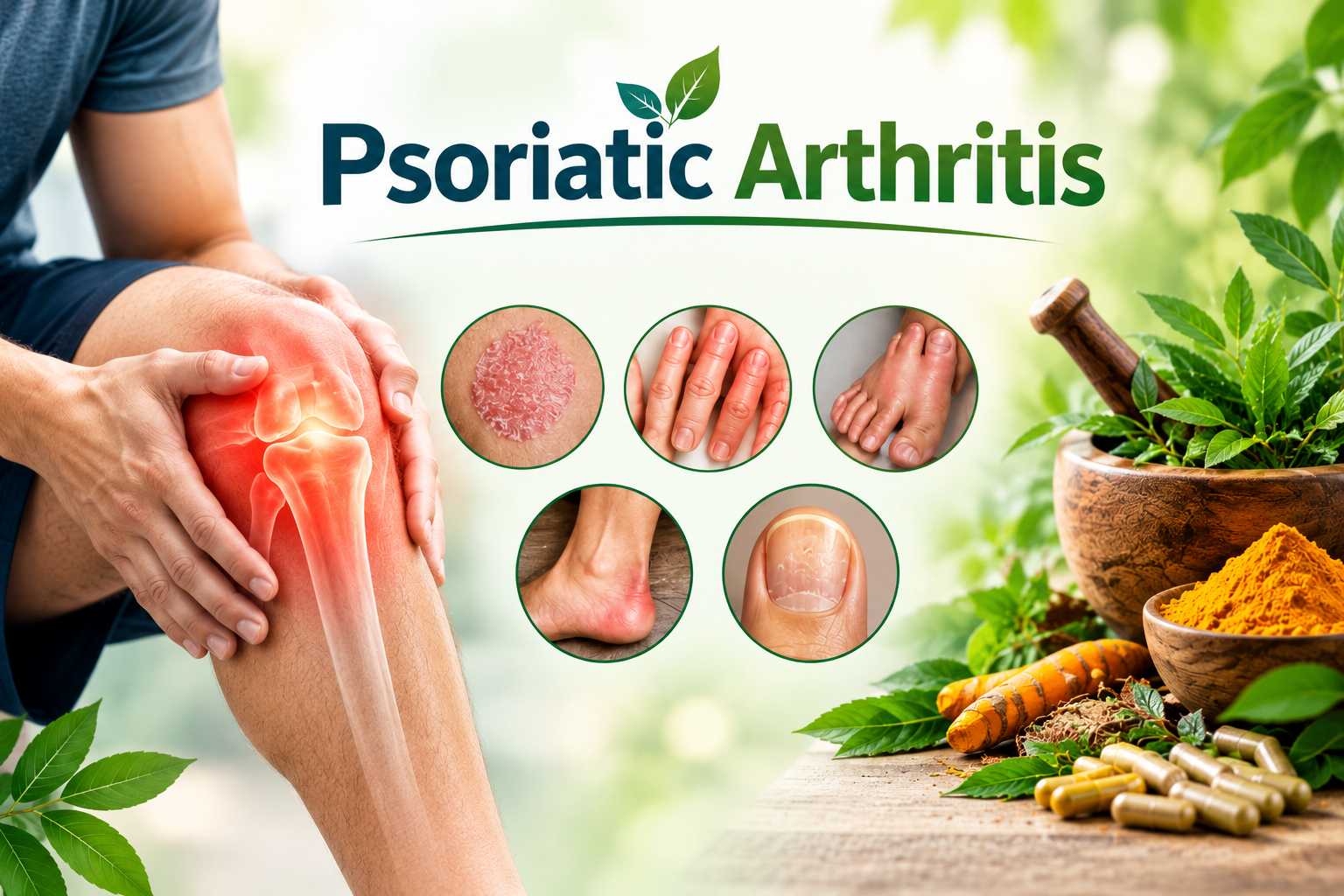
Psoriatic arthritis (PsA) can present differently from one person to another. Symptoms may develop gradually or appear suddenly and can involve the joints, skin, nails, and areas where tendons or ligaments attach to bone.
- Joint pain and swelling: Inflammation may affect one or several joints, commonly involving the fingers, toes, knees, ankles, or wrists.
- Morning stiffness: Stiffness and discomfort are often more pronounced after periods of rest and may improve with movement.
- Dactylitis: Swelling of an entire finger or toe, giving it a characteristic “sausage-like” appearance.
- Enthesitis: Inflammation at the sites where tendons or ligaments attach to bone, commonly causing heel or foot pain.
- Back or neck pain: Some patients develop inflammatory involvement of the spine, producing persistent stiffness and pain.
- Psoriatic skin lesions: Well-defined, scaly, red or inflamed patches may occur, particularly on the scalp, elbows, knees, or other areas.
- Nail changes: Pitting, discoloration, thickening, separation of the nail from the nail bed, or other dystrophic changes may occur.
- Fatigue: Persistent inflammation can be associated with tiredness and reduced energy.
- Reduced mobility and function: Ongoing pain and inflammation may interfere with daily activities and physical performance.
Pathology of Psoriatic Arthritis and the Role of JAK1
Psoriatic arthritis (PsA) is a chronic immune-mediated inflammatory disease in which dysregulation of both innate and adaptive immune responses leads to inflammation of the joints, entheses, skin, and, in some patients, the axial skeleton. The pathological process is influenced by genetic susceptibility, environmental triggers, and abnormal activation of inflammatory pathways.
Pathological process
The development of PsA involves activation of immune cells and increased production of inflammatory cytokines. Important mediators include tumor necrosis factor-alpha (TNF-α), interleukin-17 (IL-17), interleukin-23 (IL-23), interferons, and other cytokines. These mediators promote recruitment and activation of inflammatory cells within the synovium and entheses.Inflammation of the synovial tissue can produce synovitis, leading to pain, swelling, and restricted joint movement. At the entheses, inflammation can result in enthesitis, while inflammation involving an entire digit may produce dactylitis. Persistent inflammation can stimulate both bone erosion and abnormal new bone formation, contributing to structural damage and disability.
Role of JAK1
The Janus kinase (JAK)-signal transducer and activator of transcription (STAT) pathway is an important intracellular mechanism through which numerous cytokines transmit inflammatory signals. JAK1 is one of the four JAK family members and participates in signaling initiated by several cytokine receptors.When cytokines bind to their receptors, associated JAK proteins become activated and phosphorylate STAT proteins. Activated STATs then enter the nucleus and regulate the expression of genes involved in immune activation and inflammation. Excessive or persistent cytokine signaling can therefore contribute to chronic inflammatory activity in PsA.Upadacitinib is an orally administered selective JAK1 inhibitor. By inhibiting JAK1-mediated signaling, it reduces downstream cytokine activity and helps suppress inflammatory responses. This targeted mechanism provides a therapeutic approach for reducing disease activity and improving manifestations such as peripheral arthritis, enthesitis, dactylitis, and skin involvement.
Diagnosis Psoriatic Arthritis
The diagnosis of psoriatic arthritis (PsA) is primarily clinical and requires careful assessment of the patient’s musculoskeletal, dermatological, and family history. No single laboratory investigation can definitively establish the diagnosis. The presence of psoriasis, nail abnormalities, dactylitis, enthesitis, inflammatory back pain, and peripheral arthritis provides important diagnostic clues. The Classification Criteria for Psoriatic Arthritis (CASPAR) are widely used to support classification and include evidence of psoriasis, psoriatic nail dystrophy, negative rheumatoid factor, previous or current dactylitis, and radiographic evidence of new bone formation. Laboratory investigations such as erythrocyte sedimentation rate and C-reactive protein may assist in evaluating inflammatory activity, whereas rheumatoid factor and anti-cyclic citrullinated peptide antibodies can help differentiate PsA from other inflammatory arthritides. Radiography, ultrasonography, and magnetic resonance imaging are useful for identifying synovitis, enthesitis, erosions, and abnormal bone formation.
Treatment
The primary goals of treatment are to control inflammation, relieve symptoms, prevent structural damage, maintain physical function, and improve quality of life. Treatment is individualized according to the predominant manifestations and severity of disease.
- NSAIDs: Non-steroidal anti-inflammatory drugs may be used for symptomatic relief of pain and stiffness, particularly in mild disease.
- Conventional DMARDs: Methotrexate, sulfasalazine, and leflunomide may be used for peripheral joint disease.
- Biological therapies: TNF inhibitors, IL-17 inhibitors, IL-12/23 or IL-23 inhibitors are used when conventional treatment is inadequate or when disease severity warrants targeted therapy.
- JAK inhibitors: Targeted synthetic DMARDs such as upadacitinib inhibit intracellular inflammatory signaling. Upadacitinib selectively inhibits JAK1 and can be effective against several PsA manifestations.
- Glucocorticoids: Local corticosteroid injections may be considered for selected inflamed joints . Their use should be carefully individualized.
Ayurvedic Correlation of Psoriatic Arthritis
Nidana (Etiological Factors)
In Ayurveda, disease development is associated with dietary, lifestyle, environmental, and behavioral factors that disturb the equilibrium of Dosha (functional biological principles). For the clinical features observed in psoriatic arthritis (PsA), excessive intake of incompatible, heavy, oily, excessively sour, salty, or spicy foods may be considered relevant dietary factors. Irregular dietary habits, sedentary behavior, excessive exertion, suppression of natural urges, disturbed sleep, and psychological stress may also contribute to Dosha imbalance and impaired metabolic function. Repeated exposure to such factors may disturb Agni (digestive and metabolic function) and promote the formation of Ama (incompletely metabolized material).
Purvarupa (Premonitory Features)
The early or premonitory manifestations may be conceptually correlated with nonspecific features such as heaviness of the body, reduced appetite, fatigue, generalized discomfort, mild stiffness, and a feeling of sluggishness. Depending on the predominant Dosha, early skin-related symptoms such as dryness, itching, discoloration, or irritation may also be considered. These features may precede the more established joint and cutaneous manifestations.
Rupa (Clinical Manifestations)
The major clinical manifestations of PsA include joint pain, swelling, stiffness, restricted movement, enthesitis, dactylitis, and inflammatory skin and nail changes. Joint pain, stiffness, and restricted movement may be predominantly correlated with Vata. Redness, warmth, burning sensation, and inflammatory skin changes may be associated with Pitta and Rakta (blood). Heaviness, swelling, and stiffness may involve Kapha (the principle associated with stability and lubrication). The combination of musculoskeletal and skin manifestations can therefore be viewed through the interaction of multiple Dosha and tissue factors.
Samprapti ( Pathogenesis)
The possible Samprapti Ghataka (components involved in the pathogenesis of disease) of psoriatic arthritis may be conceptually described as follows:
- Dosha (functional regulatory principles): Predominantly Vata (principle associated with movement and regulation), with variable involvement of Pitta (principle associated with metabolism, transformation, and inflammatory processes) and Kapha (principle associated with stability, structure, and lubrication).
- Dushya (body tissues affected by the disease process): Rakta (blood), Mamsa (muscle tissue), Meda (adipose or fatty tissue), Asthi (bone tissue), and Majja (bone marrow and nervous tissue) may be considered according to the clinical presentation.
- Agni (digestive and metabolic function): Agni Dushti (impairment or disturbance of digestive and metabolic function) may be considered a contributing factor within the Ayurvedic framework.
- Ama (incompletely digested or metabolized material): Formation and accumulation of Ama may be considered in presentations associated with heaviness, stiffness, poor digestion, and inflammatory manifestations.
- Srotas (body channels or physiological pathways): Rasavaha Srotas (channels responsible for the transportation of nutrient fluid), Raktavaha Srotas (channels associated with blood circulation), Mamsavaha Srotas (channels associated with muscle tissue), and Asthivaha Srotas (channels associated with bone tissue) may be conceptually involved.
- Srotodushti (disturbance or dysfunction of body channels): Abnormality in the normal functioning and transportation within the Srotas (body channels) may contribute to the development and localization of disease manifestations.
- Udbhava Sthana (site of origin of the disease process): The gastrointestinal tract may be considered an important site in relation to disturbance of Agni (digestive and metabolic function) and formation of Ama (incompletely metabolized material).
- Adhisthana (site of disease manifestation): The skin, joints, entheses, connective tissues, and related musculoskeletal structures may represent the principal sites where the clinical manifestations become evident.
Ayurvedic Management of Psoriatic Arthritis
1. Nidana Parivarjana (Avoidance of Causative Factors)
Nidana Parivarjana means avoidance of disease-causing or aggravating factors. Dietary and lifestyle factors considered unsuitable for the individual may be minimized. Regular meals, adequate sleep, appropriate physical activity, and reduction of psychological stress may support overall health.
2. Deepana-Pachana (Improving Digestion and Metabolism)
Deepana refers to supporting digestive capacity, while Pachana refers to supporting the processing or elimination of Ama. These approaches are traditionally considered when impaired Agni and Ama are prominent. Dietary modification and individualized herbal preparations may be considered under qualified Ayurvedic supervision.
3. Shodhana Chikitsa (Therapeutic Purification)
Shodhana Chikitsa refers to therapeutic purification procedures used in Ayurveda. Depending on the individuals condition and clinical assessment, procedures such as Virechana (therapeutic purgation) or other Panchakarma procedures may be considered traditionally. These procedures require appropriate patient selection and supervision by a qualified Ayurvedic physician.
4. Shamana Chikitsa (Palliative Management)
Shamana Chikitsa means therapeutic measures aimed at reducing or balancing aggravated Dosha without intensive purification. Dietary regulation, lifestyle measures, and appropriately selected Ayurvedic medicines may be used according to the individuals presentation.
5. Pathya-Apathya (Suitable and Unsuitable Diet and Lifestyle)
Pathya refers to wholesome and suitable dietary and lifestyle practices, whereas Apathya refers to unsuitable or potentially aggravating practices. Individualized dietary advice may emphasize balanced, easily digestible foods and avoidance of foods that consistently aggravate the patients symptoms. Maintaining appropriate body weight and regular, tolerable physical activity may also be beneficial.
6. Rasayana (Supportive Rejuvenative Approach)
Rasayana refers to Ayurvedic approaches traditionally intended to support tissue health, vitality, and physiological resilience. Such interventions may be considered during stable phases of disease according to individual constitution and clinical status.
HERBAL REMEDIES FOR PSORIATIC ARTHRITIS BY PLANET AYURVEDA
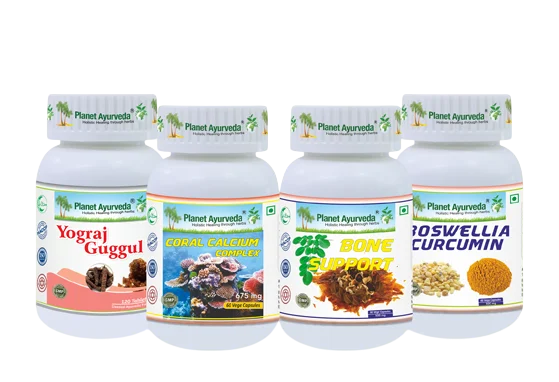
Planet Ayurveda is an Ayurvedic healthcare and wellness organization in India that focuses on providing traditional Ayurvedic medicines and herbal products. The company offers a wide range of formulations made from herbs, medicinal plants, and other natural ingredients. Its products are designed to support general health and wellness and are based on the principles of Ayurveda, an ancient Indian system of medicine. Planet Ayurveda aims to combine traditional Ayurvedic knowledge with modern manufacturing and quality standards. It provides products for various wellness needs, including digestion, immunity, energy, and lifestyle support. The organization also promotes awareness and use of Ayurveda in daily life. Products for managing Psoriatic arthritis by Planet Ayurveda are as follows :-
Herbal Remedies for Psoriatic Arthritis

PRODUCTS DESCRIPTION
1. Boswellia–Curcumin Capsule
Boswellia–Curcumin Capsule is a plant-based herbal formulation containing extracts of Boswellia serrata (Shallaki) and Curcuma longa (Turmeric/Curcumin). Both botanicals have a long history of use in Ayurvedic practice and are recognized for their antioxidant and traditionally supportive properties. The combination is commonly used as a dietary supplement to support joint comfort, flexibility, mobility, and normal muscle function. Its formulation is suitable for individuals looking for plant-derived nutritional support as part of a healthy and active lifestyle.
Dosage: 1 capsule twice daily, after meals with plain water.
2. Coral Calcium Complex Capsule
Coral Calcium Complex Capsule is a traditional Ayurvedic mineral-herbal formulation comprising ingredients such as Pravala Pishti (processed coral), Akika Pishti (processed agate), Jahar Mohra Pishti, Mukta Pishti (processed pearl), Kamdudha Ras, and Guduchi Satva derived from Tinospora cordifolia. The formulation combines mineral-based preparations with an Ayurvedic botanical ingredient and is traditionally used to support bone and mineral health. Several of its components are recognized as sources of calcium and other mineral constituents, which may contribute to maintaining normal skeletal structure and physiological functions. Traditionally, such formulations are used in conditions associated with weakness of the bones and musculoskeletal system, including disorders affecting bone density and joint function.
Dosage: 1 capsule twice daily, after meals with plain water.
3. Bone Supports Capsule
Bone Supports Capsule is an Ayurvedic herbal-mineral formulation developed to provide Nutritional and traditional support for skeletal and joint health. Its composition includes ingredients such as purified Laksha (Laccifer lacca), Suhanjana Beej (Moringa oleifera seeds), Hadjod (Cissus quadrangularis), Arjuna (Terminalia arjuna), Pravala Pishti (Corallium rubrum), and Mukta (pearl-derived calcium preparation). The combination of botanical extracts and mineral-based ingredients is traditionally utilized to support bone strength and normal musculoskeletal function. Certain ingredients in the formulation are considered to provide mineral components that may contribute to maintaining skeletal health. The formulation may therefore be considered as a supportive component of an Ayurvedic approach to maintaining bone integrity, joint flexibility, and mobility.
Dosage:– 1 capsule twice daily, after meals with plain water
4. Yograj guggul
Planet Ayurveda’s Yograj Guggul Tablet is a classical Ayurvedic herbal formulation commonly used to support joint, muscle, and musculoskeletal health. It contains Shuddha Guggulu (Commiphora mukul) along with herbs such as Triphala (Phyllanthus emblica, Terminalia chebula, and Terminalia bellirica), Pippali (Piper longum), Ajwain (Trachyspermum ammi), Vidanga (Embelia ribes), Ginger (Zingiber officinale), Black Pepper (Piper nigrum), Cinnamon (Cinnamomum verum), Cardamom (Elettaria cardamomum), and other ingredients. In Ayurveda, it is traditionally used for joint stiffness, discomfort, muscle problems, and Vata-related conditions.
Dosage:- 1–2 tablets, twice daily after meals, with lukewarm
Conclusion
Psoriatic arthritis is a complex chronic inflammatory disease involving the joints, entheses, skin, nails, and, in some patients, the axial skeleton. Its multifactorial pathogenesis involves genetic susceptibility, immune dysregulation, environmental influences, and the activation of several inflammatory cytokine pathways. Among the targeted therapeutic approaches, upadacitinib, a selective Janus kinase 1 (JAK1) inhibitor, acts on intracellular cytokine signaling and has demonstrated clinical efficacy in reducing disease activity and improving physical function in patients with active psoriatic arthritis. Its role is particularly relevant in the modern management of PsA because inhibition of JAK1 can modulate signaling from multiple cytokines involved in chronic inflammation.From an Ayurvedic perspective, the clinical features of psoriatic arthritis do not correspond precisely to a single classical disease entity. However, certain manifestations may be conceptually interpreted through conditions such as Vatarakta, Kushtha, and Amavata, depending on the predominant clinical features and the individual’s Ayurvedic assessment. The involvement of Vata, Pitta, Kapha, Rakta, Agni, Ama, and affected Srotas provides a theoretical framework for understanding the combination of musculoskeletal and cutaneous manifestations. Such correlations should be regarded as conceptual interpretations rather than direct biomedical equivalents.Ayurvedic management traditionally emphasizes Nidana Parivarjana, appropriate dietary and lifestyle measures, Deepana-Pachana, Shamana Chikitsa, and, when clinically appropriate, supervised Shodhana and Rasayana approaches. Herbal and mineral formulations such as Boswellia–Curcumin, Coral Calcium Complex, Bone Supports, and Yograj Guggul are promoted in Ayurvedic practice for supportive musculoskeletal care. However, their use in psoriatic arthritis should be considered complementary rather than a substitute for evidence-based rheumatological treatment. The therapeutic claims of proprietary products should also be distinguished from established clinical evidence, and their safety, quality, dosage, and potential interactions should be evaluated before use.Overall, an integrated approach may provide a broader framework for managing patients with psoriatic arthritis, combining appropriate modern pharmacotherapy with individualized lifestyle .


Dr. Vikram Chauhan
Latest posts by Dr. Vikram Chauhan (see all)
- Herbal Remedies For Ulcerative Colitis – Symptoms, Causes & Treatment in Ayurveda - October 28, 2026
- Herbal Remedies For Psoriatic Arthritis – Symptoms, Causes & Treatment in Ayurveda - October 27, 2026
- Herbal Remedies For Atopic Dermatitis – Symptoms, Causes & Treatment in Ayurveda - October 27, 2026
- Herbal Remedies For Dog Ear Hematoma – Symptoms, Causes & Treatment in Ayurveda - October 26, 2026
- Herbal Remedies for PCOD/PCOS: Symptoms, Causes & Ayurvedic Treatment - October 26, 2026