


Herbal Remedies For Ulcerative Colitis – Symptoms, Causes & Treatment in Ayurveda
Abstract
Ulcerative colitis (UC) is a long-term inflammatory disease of the gastrointestinal tract that follows a relapsing and remitting course. It mainly involves the mucosal lining of the colon, with inflammation usually originating in the rectum and spreading in a continuous manner. Although the precise cause of UC has not yet been established, its development is believed to result from a complex interaction among genetic susceptibility, abnormal immune responses within the intestine, changes in the gut microbiota, environmental factors, and disruption of the intestinal epithelial barrier. The disease commonly fluctuates between periods of active inflammation and remission, while its extent and severity can differ substantially from one individual to another. The primary goals of UC management are to achieve and sustain remission, promote healing of the intestinal mucosa, minimize disease- related complications, and enhance patients’ overall quality of life.
Introduction
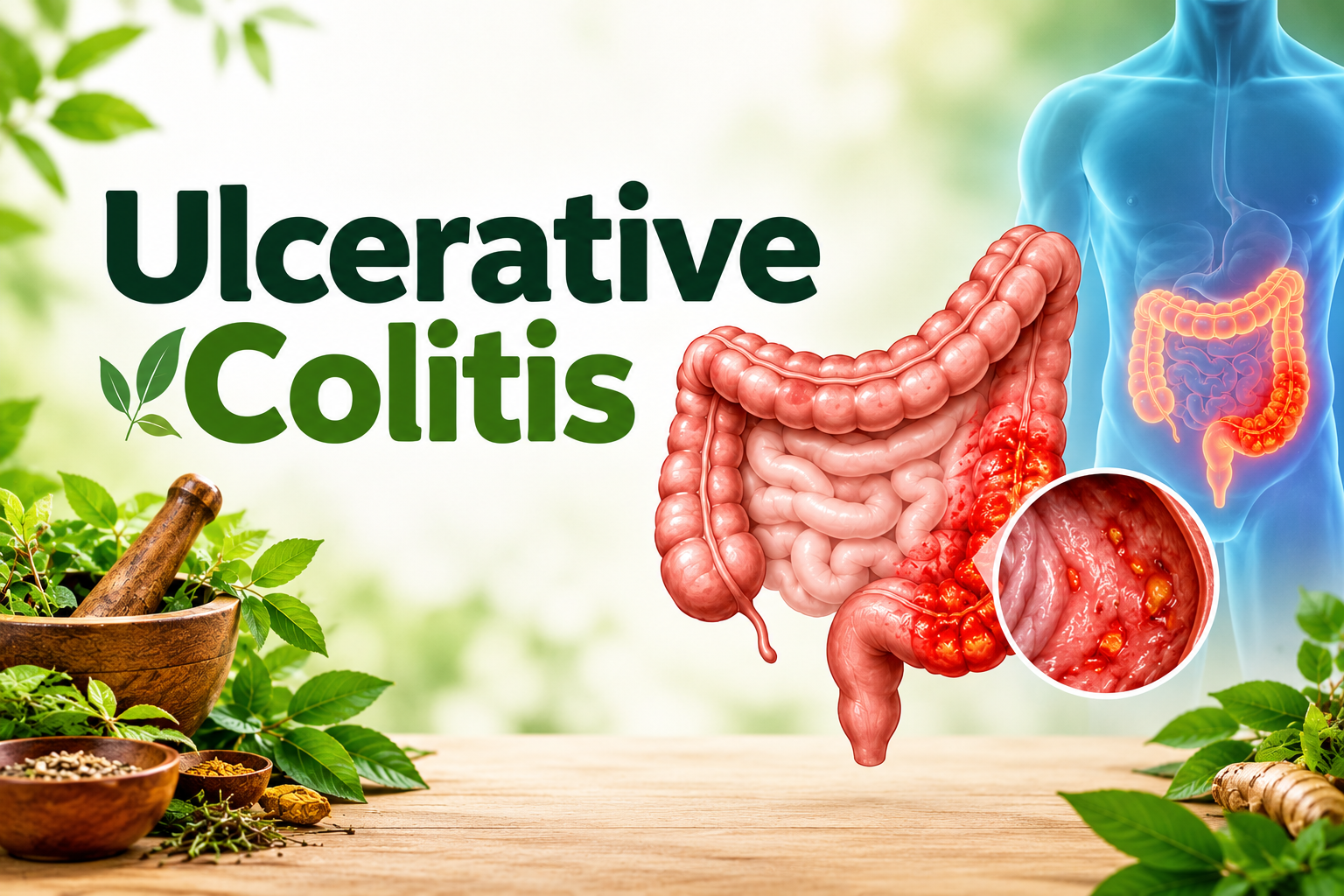
Ulcerative colitis (UC) is a chronic inflammatory condition of the large intestine in which an abnormal immune response contributes to persistent inflammation of the colonic lining. Prolonged inflammation may damage the intestinal mucosa and lead to the development of ulcers , rectal bleeding, abdominal discomfort and disturbances in normal bowel habits.
Based on the part of colonic involvement, ulcerative colitis can be classified into the following forms:
- Ulcerative proctitis: Inflammation is confined to the rectum.
- Proctosigmoiditis: The inflammatory process involves both the rectum and the sigmoid colon.
- Left-sided colitis: Inflammation extends proximally from the rectum through the left portion of the colon.
Ayurvedic perspective of Ulcerative Colitis
In Ayurveda , there is no single classical disease that can directly be correlated with modern Ulcerative Colitis . However , some of its symptoms can be related to conditions such as Raktatisara Grahani .
Raktatisara refers to the condition associated with blood in the stool while Grahani refers to the condition associated with weak digestion and disturbed bowel habits. In Ayurvedic medicine, Agni is regarded as a fundamental factor responsible for digestion and metabolism. An imbalance or reduction in Agni can interfere with the proper digestion and assimilation of food, potentially resulting in gastrointestinal disturbances and irregular bowel function.
Charak samhita mentions :
” पित्तातिसारी यस्त्वेतां क्रियां मुक्त्वा निषेवते । पित्तलान्यन्नपानानि तस्य पित्तं महाबलम् ॥६९॥ ” (Chikitsa Sthana)
According to Ayurvedic descriptions, pronounced aggravation of Pitta in Pittatisara may progress to Raktatisara, in which the presence of blood in the stool is a characteristic feature. This condition may also manifest with excessive thirst, abdominal discomfort, a burning sensation, and irritation or inflammatory changes around the anal region. Some of these manifestations, particularly rectal bleeding and inflammatory bowel symptoms, can also be observed in ulcerative colitis. However, Raktatisara should be understood as an Ayurvedic clinical concept that has certain overlapping features with ulcerative colitis rather than being considered directly equivalent to the modern medical diagnosis.
Causes and risk factors
- Genetic factors: A hereditary or genetic predisposition may increase an individual’s susceptibility to developing ulcerative colitis.
- Immune dysfunction: In ulcerative colitis, an abnormal or excessive immune response may occur against components within the gastrointestinal tract. Persistent activation of the immune system can maintain inflammation in the intestinal mucosa, potentially leading to tissue injury, mucosal damage, and ulcer formation.
- Gut microbiota : Disruption of the normal balance and diversity of intestinal microorganisms, may promote an inflammatory environment and contribute to the onset or progression of ulcerative colitis.
- Environmental and lifestyle influences: Several external factors may influence susceptibility to ulcerative colitis or affect its clinical course. These may include dietary patterns, gastrointestinal infections, prior exposure to antibiotics, environmental pollution, smoking-related factors, and other lifestyle-related conditions.
Signs and Symptoms
Gastrointestinal Manifestations
- Frequent loose stools: Inflammation of the colonic mucosa can disturb normal intestinal function, resulting in repeated passage of soft, loose, or watery stools.
- Rectal bleeding: Ulceration and damage to the intestinal mucosa may lead to bleeding.
- Mucus discharge: Inflammatory changes in the colon may increase mucosal secretion, causing mucus to become noticeable in the stool.
- Abdominal discomfort and cramping: Inflammation within the colon may produce abdominal pain, discomfort, or spasmodic cramps.
- Bowel urgency: Individuals may experience a sudden and compelling need to defecate, making it difficult to postpone or control the bowel movement.
- Tenesmus: A persistent sensation of needing to evacuate the bowel may remain even after passing stool.
- Increased frequency of defecation: During periods of active disease, bowel movements may occur repeatedly throughout the day and may also disturb sleep at night.
- Fatigue and generalized weakness: Persistent inflammation, recurrent diarrhea, inadequate nutritional intake, and ongoing blood loss can contribute to exhaustion and physical weakness. Significant or prolonged bleeding may also result in anemia.
- Loss of appetite: Abdominal symptoms and frequent bowel movements may decrease the desire to consume food. If poor appetite persists, insufficient intake of essential nutrients may occur.
- Unintentional weight reduction: Prolonged disease activity can result in weight loss due to recurrent diarrhea, decreased food consumption, impaired nutritional status, and the increased metabolic demands associated with chronic inflammation.
Extraintestinal Manifestations Ulcerative colitis may also produce inflammatory effects beyond the gastrointestinal system. These manifestations can involve several organs and may occur alongside intestinal symptoms.
- Joint involvement
- Reduced bone strength
- Eye involvement
Diagnosis of ulcerative colitis
1. Clinical Assessment
A detailed medical history is obtained to identify symptoms suggestive of ulcerative colitis, including:
- Recurrent episodes of diarrhea accompanied by visible blood.
- Presence of mucus in the fecal matter.
- A sudden and difficult-to-control urge to defecate, often accompanied by a sensation of incomplete bowel clearance.
- Pain, discomfort, or cramping, particularly in the lower abdomen.
2. Physical Examination
The patients general condition is assessed by recording vital signs such as pulse rate, blood pressure, and body temperature. Hydration status is also evaluated. Abdominal examination may reveal tenderness, abdominal distension, or, in some cases, a palpable mass.
3. Laboratory Investigations
Routine blood investigations may be performed to evaluate systemic inflammation and identify complications. These commonly include:
- Complete blood count (CBC): Helps assess anemia and other hematological abnormalities.
- C-reactive protein (CRP): A marker that may indicate the presence and intensity of systemic inflammation.
- Erythrocyte sedimentation rate (ESR): May provide additional information regarding ongoing inflammatory activity.
4. Stool Analysis
Stool testing is carried out to exclude infectious causes of diarrhea and rectal bleeding. Microbiological investigations, such as stool culture and other pathogen-specific tests, may be used to detect enteric infections.
5. Colonoscopic Evaluation
Colonoscopy allows direct visualization of the colonic mucosa and may demonstrate characteristic inflammatory changes, including:
- Widespread or continuous mucosal inflammation.
- Redness and edema of the mucosal surface.
- Formation of superficial ulcers.
- Easy bleeding of the mucosa when touched.
6. Imaging Studies
In patients with severe or complicated disease, imaging techniques such as abdominal radiography, computed tomography (CT), or magnetic resonance imaging (MRI) may be used to evaluate the extent and severity of colonic inflammation and to identify possible complications.
Ayurvedic Approach
Ayurvedic management may include Langhana, which involves taking a light and easily digestible diet when Agni is weak and symptoms such as heaviness or poor appetite are present. Deepana- Pachana measures are traditionally used to support Agni and improve digestion. In cases of aggravated Pitta, Pitta-Shamana approaches may include cooling, soothing, and non-irritating foods. Takra (buttermilk) is traditionally considered useful for supporting digestion and maintaining healthy bowel function when suitable for the individual. Gentle yoga practices such as Sukhasana and Vajrasana may also be included as supportive measures to promote relaxation and digestive well-being.
Herbal Remedies for Ulcerative Colitis by Planet Ayurveda
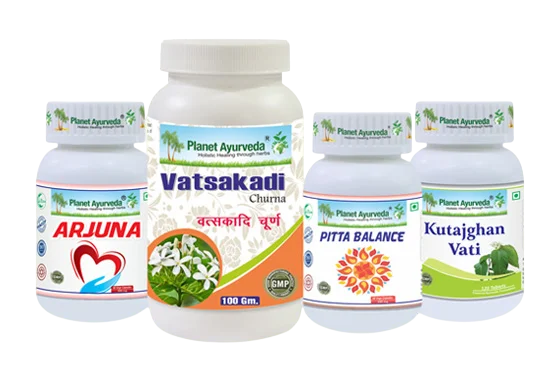
Planet Ayurveda provides different herbal products intended to support digestive health in people with ulcerative colitis. One of these products is the Ulcerative Colitis Care Pack , which contains a combination of herbs traditionally used in Ayurveda to support healthy digestion and normal intestinal function. The products are prepared using selected herbs and plant-based ingredients based on traditional Ayurvedic practices. Planet ayurveda ulcerative colitis pack
- Arjuna Capsules
- Vatsakadi Churna
- Pitta Balance
- Kutajghan Vati
ULCERATIVE COLITIS CARE PACK

Product description
1. Arjuna capsules
These capsules are prepared using Arjuna (Terminalia arjuna) is a medicinal tree widely recognized in Ayurveda, where its bark has traditionally been used for various therapeutic purposes, particularly for supporting cardiovascular health. From an Ayurvedic perspective, Arjuna possesses Kashaya Rasa (astringent taste), which is traditionally associated with controlling excessive bleeding (Ati Rakta Pravritti) and supporting tissue stability. From a modern perspective, Terminalia arjuna contains various bioactive compounds, including tannins, flavonoids, and other polyphenolic constituents. These compounds have been investigated for their antioxidant and anti-inflammatory activities. Experimental research also suggests that extracts of the plant may provide protective effects against inflammatory and oxidative damage. These properties may indicate a potential supportive role in maintaining tissue integrity, although further clinical research is required to establish its effectiveness specifically in ulcerative colitis and intestinal mucosal protection.
Dosage: Take 1–2 capsules two times a day after meals, preferably with plain water.
2. Vatsakadi Churna
Vatsakadi Churna is an Ayurvedic herbal formulation prepared from several medicinal plants , including Bilva (Aegle marmelos), Kutaja (Holarrhena antidysenterica) and Saunf (Foeniculum vulgare). From the Ayurvedic perspective, Kutaja is traditionally used for disorders associated with frequent loose stools and disturbances of intestinal function. Bilva is considered to possess Grahi properties and is traditionally used to help regulate excessive bowel movements. Saunf is commonly regarded as a digestive and carminative herb and is traditionally used to support normal digestion and reduce digestive discomfort. Together, these herbs have traditionally been used in Ayurvedic practice for conditions such as Atisara (diarrhea), digestive disturbances, impaired digestion, and increased frequency of bowel movements.
Dosage : 1 teaspoon of Vatsakadi Churna may be taken with plain water.
3. Pitta Balance
Pitta Balance is an Ayurvedic capsule formulation containing ingredients such as Jaharmohra Pishti (a processed mineral preparation), Akik Pishti (derived from agate) and Giloy Satva (extract of Tinospora cordifolia). Jaharmohra Pishti is traditionally described in Ayurveda as a cooling preparation and is commonly used in formulations intended to balance aggravated Pitta. Akik Pishti is another traditionally used mineral preparation that is included in Ayurvedic formulations for its cooling and soothing properties. Giloy Satva , prepared from Tinospora cordifolia (Guduchi or Giloy), has been studied for its antioxidant, immunomodulatory, and anti-inflammatory activities. Collectively, these ingredients are traditionally used to support Pitta balance, healthy digestion, and a cooling effect on the body.
Dosage : Take 1–2 capsules twice daily after meals with plain water, or as directed by a qualified healthcare professional.
4. Kutajghan Vati
Kutajghan Vati is an Ayurvedic tablet preparation mainly made from Kutaja (Holarrhena antidysenterica) . The bark of the plant is traditionally used in Ayurvedic medicine for digestive and intestinal problems. It is commonly used in conditions such as frequent loose stools, diarrhea, dysentery, and disturbed bowel function.
Dosage : Take 2 tablets twice a day after meals with plain water, or as advised by a qualified healthcare professional.
Diet and Lifestyle
- Instead of eating two or three very large meals, many patients find smaller meals easier to tolerate.
- Easily digestible food
- Avoid spicy , deep fried food
- Maintain good physical activities
- Manage stress
- Avoid smoking alcohol
Conclusion
Ulcerative colitis is a persistent inflammatory condition affecting the colon and may interfere with digestion, nutritional status, routine activities, and overall well-being. Although conventional medical treatment is effective in reducing inflammation and helping patients remain in remission, maintaining long-term disease control can sometimes be difficult. In this context, Ayurveda may be considered a complementary approach, with emphasis on individualized diet, healthy lifestyle practices, digestive support, and management of symptoms. The holistic and patient-specific nature of Ayurvedic care may provide additional supportive benefits when used appropriately alongside standard medical treatment.


Dr. Vikram Chauhan
Latest posts by Dr. Vikram Chauhan (see all)
- Herbal Remedies For Ulcerative Colitis – Symptoms, Causes & Treatment in Ayurveda - October 28, 2026
- Herbal Remedies For Psoriatic Arthritis – Symptoms, Causes & Treatment in Ayurveda - October 27, 2026
- Herbal Remedies For Atopic Dermatitis – Symptoms, Causes & Treatment in Ayurveda - October 27, 2026
- Herbal Remedies For Dog Ear Hematoma – Symptoms, Causes & Treatment in Ayurveda - October 26, 2026
- Herbal Remedies for PCOD/PCOS: Symptoms, Causes & Ayurvedic Treatment - October 26, 2026