


Ulcerative Colitis: Causes, Symptoms & Treatment with Ayurveda
Abstract
Ulcerative colitis is a chronic inflammatory condition that affects the inner lining of the large intestine. It can cause symptoms such as frequent loose stools, abdominal discomfort, urgency to pass stool, and sometimes blood or mucus in the stool. The severity and pattern of symptoms may vary from person to person, with periods of flare-ups followed by remission. Although the exact cause is not fully understood, immune system activity, genetics, gut health, and environmental factors may contribute to its development. Proper medical evaluation is important for identifying the condition and managing symptoms. Treatment generally focuses on reducing inflammation, controlling flare-ups, and maintaining remission. Along with prescribed care, a balanced diet, adequate hydration, stress management, and regular medical follow-up may support overall digestive health and well-being.
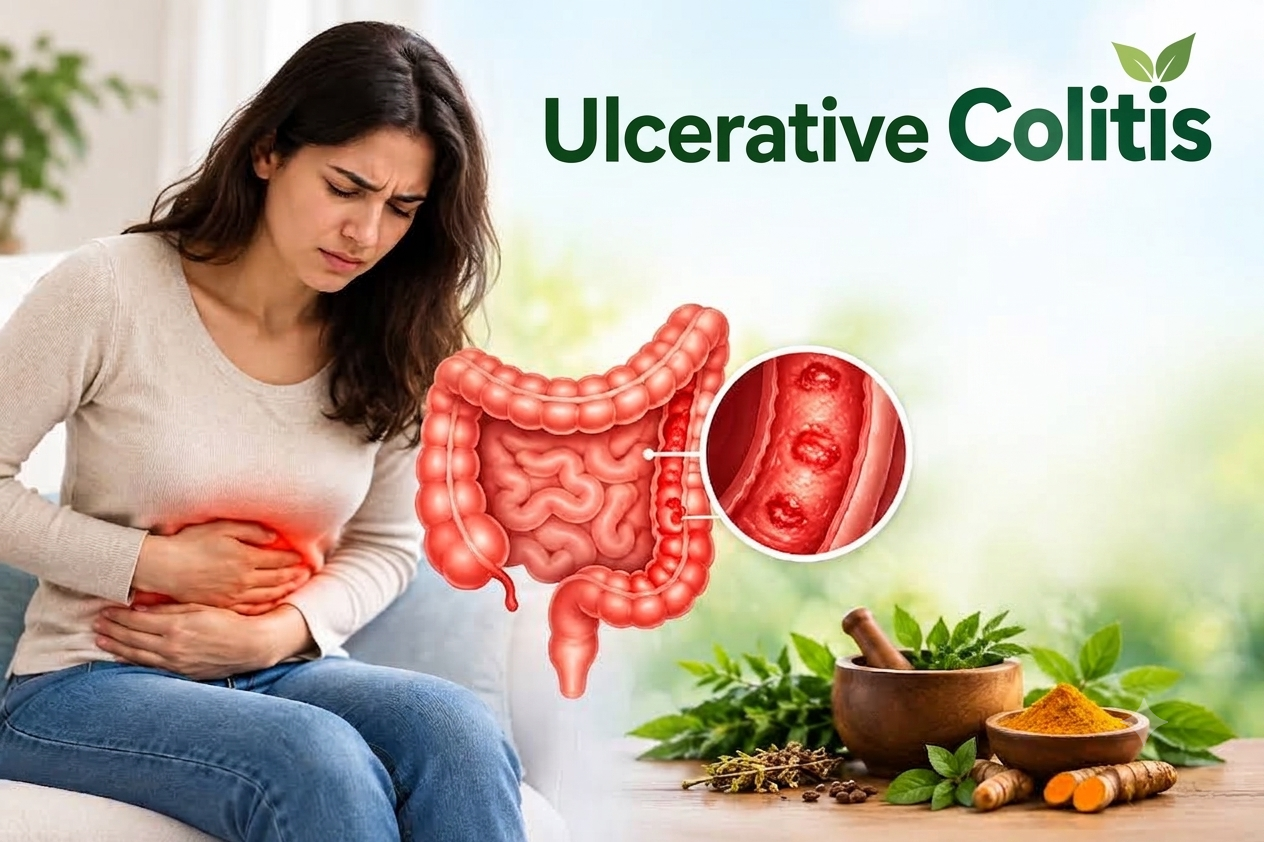
Statistics for Ulcerative Colitis
- Ulcerative colitis (UC) is a chronic inflammatory bowel disease with a growing global burden.
- A recent systematic review and meta-analysis estimated the worldwide prevalence of UC at approximately 120.4 cases per 100,000 people, while the global incidence was about 5.0 new cases per 100,000 person-years
- Prevalence was highest in Europe, at around 198.6 per 100,000 people, whereas North America had the highest reported incidence, approximately 9.8 per 100,000 person-years
- The disease is more commonly reported in adults than children. Research also indicates that UC is becoming increasingly recognized in developing and newly industrialized.
Facts about Ulcerative Colitis
- It is a chronic condition: Ulcerative colitis can last for many years, with symptoms often coming and going in phases called flare-ups and remission.
- It mainly affects the colon: Unlike Crohn’s disease, which can affect different parts of the digestive tract, ulcerative colitis primarily involves the large intestine and rectum.
- Symptoms can vary: Some people experience mild symptoms, while others may have frequent diarrhea, abdominal cramps, urgency, fatigue, or blood in the stool.
- It can affect more than the gut: UC may sometimes be associated with joint pain, skin problems, or inflammation affecting the eyes.
- Stress is not the sole cause: Stress does not directly cause ulcerative colitis, although significant stress may worsen symptoms or make flare-ups harder to manage.
- Diet is individual: There is no single diet that works for everyone with UC. Certain foods may trigger symptoms in some people but not others.
- Treatment aims to control inflammation: Medical treatment generally focuses on reducing inflammation, controlling symptoms, and maintaining remission.
- Regular monitoring matters: Long-term ulcerative colitis may increase the risk of certain complications, so regular follow-up with a healthcare professional is important
Introduction
Ulcerative colitis is a long-term inflammatory condition that affects the large intestine, mainly the colon and rectum. It develops when the lining of the intestine becomes inflamed, which can result in small ulcers and irritation. Common symptoms include frequent loose stools, abdominal cramps, urgency to use the toilet, fatigue, and sometimes blood or mucus in the stool. The condition can affect people of different ages and often follows a pattern of flare-ups and periods when symptoms become less noticeable. The exact cause of ulcerative colitis is not completely understood, but immune system responses, genetic factors, gut microorganisms, and environmental influences may play a role. Early diagnosis and appropriate treatment can help manage inflammation, reduce symptoms, and improve quality of life. Regular medical care and healthy lifestyle habits are also important for long-term management.
Causes of Ulcerative Colitis
The exact cause of ulcerative colitis (UC) is not fully understood. Current research suggests that it develops through a complex interaction between the immune system, genetic background, gut microbiome, and environmental influences. Rather than having one single cause, several factors may work together and contribute to inflammation in the colon and rectum.The causes include:
Immune System Response
In ulcerative colitis, this immune response may become incorrectly directed toward the intestinal environment. The immune system can remain active even when there is no harmful infection to fight. This prolonged immune activity can damage the inner lining of the colon and lead to inflammation, irritation, and ulcer formation.
Genetic Factors
Genetics can influence a person’s susceptibility to ulcerative colitis. The condition is more likely to occur in people who have a close family member with inflammatory bowel disease. However, having a family history does not mean that a person will definitely develop UC.
Environmental Influences
Environmental factors may also affect the development or progression of ulcerative colitis. Researchers have investigated factors such as diet, smoking patterns, antibiotic exposure, infections, lifestyle, and early-life environmental exposures. However, these factors do not act as simple, direct causes.
Signs and Symptoms of Ulcerative Colitis
- Frequent or urgent bowel movements
- Bloody diarrhea or blood mixed with stool
- Mucus or pus in the stool
- Abdominal cramps and pain
- Rectal pain or a feeling of needing to pass stool even when the bowel is empty (tenesmus)
- Fatigue and weakness, especially from blood loss/anemia
- Loss of appetite and weight loss
- Fever in more severe cases
- Joint pain or swelling
- Skin rashes or painful skin lesions
- Eye redness or inflammation
- Mouth ulcers
Diagnosis of Ulcerative Colitis
Ulcerative colitis is diagnosed by checking the bowel and ruling out other causes of diarrhea and bleeding.
- History & examination: Doctor asks about diarrhea, blood in stool, abdominal pain, weight loss, and family history.
- Stool tests: Check for infections and blood in the stool.
- Blood tests: Look for anemia and signs of inflammation.
- Colonoscopy: A small camera is used to look inside the large intestine for redness, swelling, ulcers, and bleeding.
- Biopsy: Small pieces of bowel tissue are taken during colonoscopy and examined under a microscope. This helps confirm the diagnosis.
- Imaging: CT or MRI may sometimes be used, especially if complications are suspected.
Treatment for Ulcerative Colitis
Treatment of ulcerative colitis aims to reduce inflammation, control symptoms, and prevent flare-ups. The treatment depends on the severity of the disease.
- Medicines: Aminosalicylates such as mesalamine are commonly used for mild to moderate disease. Corticosteroids may be used for short periods during severe flare-ups. Immunosuppressants and biologic medicines may be used when other treatments are not effective.
- Diet and lifestyle: Eat a balanced diet, drink enough fluids, and avoid foods that worsen symptoms. During flare-ups, soft and easily digestible foods may be helpful.
- Surgery: Surgery may be needed when medicines fail, severe complications occur, or there is a high risk of colon cancer. Removal of the colon can cure ulcerative colitis.
- Regular follow-up: Patients need regular medical check-ups to monitor symptoms, treatment response, and possible complications.
Ayurvedic Insights
In Ayurveda, ulcerative colitis may be understood through concepts such as Raktatisara, involving disturbance of digestion and inflammation of the intestinal tract. Management traditionally focuses on balancing the Doshas, improving digestion, and supporting bowel health. Dietary measures may include light, easily digestible foods such as rice, cooked vegetables, and suitable soups, while very spicy, oily, fried, or irritating foods may be avoided during symptoms. Ayurveda also emphasizes adequate rest, stress management, and maintaining regular eating habits. Herbal preparations such as Amla, Guduchi, Kutaja, and Bilva are traditionally used for digestive and inflammatory conditions, but their suitability varies from person to person. Ayurvedic treatment should be taken under guidance from a qualified practitioner and should not replace prescribed medical treatment, especially during severe flare-ups or bleeding.
Pathogenesis of Ulcerative Colitis According to Ayurveda
This disease is thought to begin with Agnimandya( digestive fire) caused by improper diet, irregular eating habits, stress, and other factors. This leads to formation of Ama (toxins) and disturbance of the Doshas, particularly Pitta and Vata. Increased Pitta may cause inflammation, burning, and bleeding, while disturbed Vata may contribute to abdominal pain, cramps, and irregular bowel movements. The disturbed Doshas affect the Grahani (duodenum) and Purishavaha Srotas( gastrointestinal tract), leading to impaired intestinal function. Continued inflammation may result in frequent loose stools, mucus, abdominal discomfort, and blood in the stool. Thus, Ayurveda describes the condition as a progressive disturbance of digestion, Doshas, and intestinal tissues.
Herbal Remedies by Planet Ayurveda for Ulcerative Colitis
Planet Ayurveda is a well-established Ayurvedic healthcare organization that works to promote the ancient knowledge of Ayurveda through natural remedies and holistic health solutions. The company develops a wide range of herbal formulations using pure, high-quality ingredients and standardized herbal extracts, with a focus on maintaining safety, authenticity, and effectiveness. Following the principles of classical Ayurveda, Planet Ayurveda aims to support overall health by addressing the underlying causes of health concerns and encouraging balance in the body, mind, and emotions. With an emphasis on quality, natural ingredients, and traditional approaches supported by modern research, the organization works toward making Ayurvedic wellness solutions available globally. We will explore various herbal approaches used for the management of Ulcerative Colitis according to Ayurvedic principles. The herbal formulations are:
- Arjuna Capsules
- Vatsakadi Churna
- Pitta Balance
- Kutajghan Vati
Herbal Remedies for Ulcerative Colitis
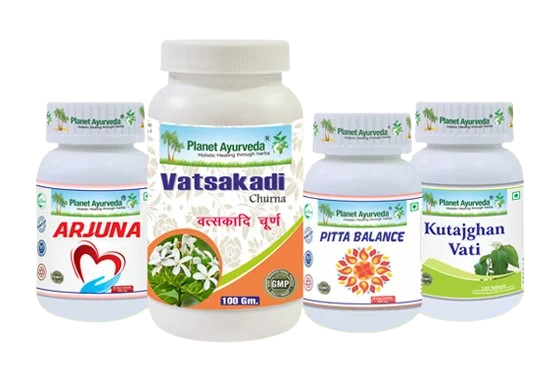

Product description:
1. Arjuna Capsules
Arjuna Capsules contain Arjuna (Terminalia arjuna) and are used as a supportive Ayurvedic medicine in the management of ulcerative colitis. Arjuna is traditionally considered to have astringent, anti-inflammatory, antioxidant, and wound-healing properties, which may help support the intestinal mucosa and reduce symptoms such as loose stools and intestinal irritation.
Dosage– 1 Capsule twice a day.
2. Vatsakadi Churna
Vatsakadi Churna is an Ayurvedic polyherbal formulation traditionally used to support digestive health and manage symptoms such as diarrhea, abdominal discomfort, gas, and irregular bowel movements associated with ulcerative colitis. Its ingredients include Kutaj (Holarrhena antidysenterica), Bilva (Aegle marmelos), Saunf (Foeniculum vulgare), Dhania (Coriandrum sativum), Nagarmotha (Cyperus rotundus), Anar (Punica granatum), Chhoti Elaichi (Elettaria cardamomum), and Jaiphal (Myristica fragrans). These herbs are traditionally considered to support digestion, improve bowel function, reduce excessive loose stools, and provide astringent and digestive effects.
Dosage – 1 teaspoon full with water after food
3. Pitta Balance
Pitta Balance is an Ayurvedic formulation traditionally used to pacify aggravated Pitta Dosha, which is associated with heat, inflammation, and bleeding. In the Ayurvedic management of ulcerative colitis, it may be considered supportive for symptoms such as intestinal burning, irritation, and blood in stools. Its ingredients are Jahar Mohra Pishti (Serpentine), Kaharawa Pishti (Amber), Akik Pishti (Agate), Mukta Pishti (Pearl), and Giloy Satva (Tinospora cordifolia) per capsule. Planet Ayurveda These ingredients are traditionally considered cooling and Pitta-balancing.
Dosage-1 capsule two times daily with water.
4. Kutajghan vati
Kutajghan Vati is an Ayurvedic herbal preparation containing Kutaja (Holarrhena antidysenterica), it is traditionally used to support bowel function and control symptoms such as frequent loose stools, mucus, and intestinal irritation. Kutaja has astringent and digestive properties and is traditionally described as Grahi ( absorb)and useful in Atisara( loose motion) and Pravahika(inflammation diarrhoea)
Dosage – 2 tablets twice a day with water.
Conclusion
Ulcerative colitis is a chronic inflammatory disease of the large intestine that mainly causes diarrhea, abdominal pain, urgency, and blood or mucus in the stool. Early diagnosis and proper management are important to control inflammation, prevent complications, and improve quality of life. Modern treatment includes medicines, dietary and lifestyle modifications, regular monitoring, and surgery when required. From the Ayurvedic perspective, ulcerative colitis may be understood through conditions such as Grahani, Raktatisara, and Pravahika, with emphasis on balancing Doshas and improving digestion. Ayurvedic medicines may provide supportive benefits, but they should be used under professional guidance along with appropriate medical treatment.


Dr. Vikram Chauhan
Latest posts by Dr. Vikram Chauhan (see all)
- Immune Thrombocytopenia (ITP): Causes, Symptoms & Ayurvedic Support - September 18, 2026
- Ulcerative Colitis: Causes, Symptoms & Treatment with Ayurveda - September 17, 2026
- Holistic PCOD Management: Modern Science Meets Ayurvedic Healing - September 16, 2026
- Fatty Liver: Diet & Ayurvedic Management - September 15, 2026
- Fatty Liver: Causes, Symptoms & Ayurvedic Management - September 14, 2026