


Cocoon Syndrome – Symptoms, Causes, Diagnosis & Treatment
Abstract
Cocoon Syndrome, medically known as Sclerosing Encapsulating Peritonitis (SEP) or Abdominal Cocoon Syndrome, is a rare disorder characterised by the formation of a dense fibrocollagenous membrane that partially or completely encases the small intestine. This abnormal encapsulation restricts bowel mobility, resulting in recurrent intestinal obstruction, abdominal pain, malnutrition, and weight loss. The condition may be primary (idiopathic) or secondary to factors such as long-term peritoneal dialysis, abdominal tuberculosis, previous surgeries, autoimmune disorders, chronic peritoneal inflammation, and certain medications. Due to its rarity and nonspecific clinical presentation, diagnosis is often delayed until advanced stages or during surgery. Modern management includes nutritional support, medical therapy in selected patients, and surgical excision of the fibrous membrane. From an Ayurvedic perspective, Cocoon Syndrome can be understood through the concepts of Agnimandya, Ama, Srotorodha, and Vata-Kapha Dushti, resulting in impaired gastrointestinal function and tissue fibrosis. This article provides a comprehensive discussion of Cocoon Syndrome, including its causes, pathophysiology, diagnosis, treatment, prognosis, and Ayurvedic understanding.
Introduction
The peritoneum is a smooth serous membrane lining the abdominal cavity and covering most abdominal organs. It facilitates friction-free movement of the intestines and supports normal digestive function. In Cocoon Syndrome, this membrane undergoes chronic inflammation followed by excessive fibrocollagenous deposition, eventually forming a thick capsule around the bowel. As the disease progresses, intestinal loops become entrapped, leading to varying degrees of bowel obstruction. The condition was first described in adolescent females from tropical regions, leading to the initial belief that it primarily affected young women. First described in 1907 as peritonitis chronica fibrosa incapsulata and later termed "abdominal cocoon" in 1978, ACS is a distinct clinicopathological entity. The hallmark of the syndrome is the formation of a thick fibro-collagenous sheath that encloses the small bowel loops—primarily the jejunum and ileum—into a compact, immobile mass. However, subsequent research has demonstrated that Cocoon Syndrome can occur in individuals of any age or gender. It is now recognised as a rare but important cause of recurrent intestinal obstruction worldwide. Because the symptoms resemble those of many other gastrointestinal disorders, early diagnosis remains difficult. Increased awareness among clinicians and improved imaging techniques have enhanced preoperative recognition, allowing timely intervention and better patient outcomes.
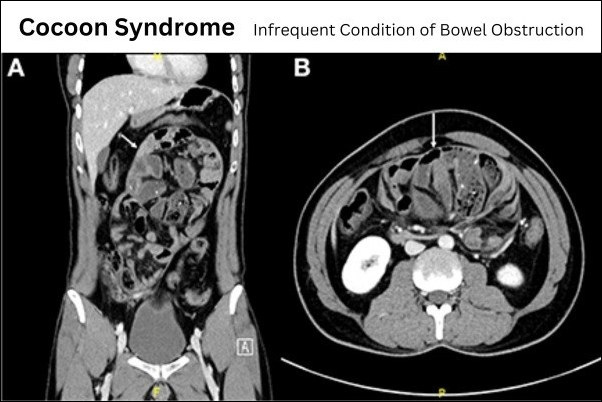
Understanding Cocoon Syndrome
Cocoon Syndrome refers to the abnormal encasement of the small intestine within a dense fibrous membrane resembling a cocoon. The fibrous capsule limits intestinal motility and causes varying degrees of obstruction. Unlike postoperative adhesions, where individual bowel loops stick together, Cocoon Syndrome involves the formation of a continuous fibrocollagenous membrane surrounding the bowel. The severity may range from partial involvement of a few intestinal segments to complete encapsulation of the entire small intestine and, occasionally, portions of the colon or other abdominal organs.
Classification of Cocoon Syndrome
Abdominal Cocoon Syndrome is categorised into primary (idiopathic) and secondary variants based on the presence of identifiable triggers.
1. Primary (Idiopathic) Cocoon Syndrome
Primary ACS occurs without any prior history of intra-abdominal inflammation or surgical intervention. Historically, it was reported primarily in young, perimenarchal females in tropical and subtropical zones, leading to theories involving retrograde menstruation accompanied by subclinical viral gynaecological infections or local cell-mediated immune responses. However, contemporary clinical literature documents idiopathic ACS across all age groups, genders, and regions, with several studies showing a male predominance. Other developmental hypotheses propose congenital vascular anomalies of the mesentery or hypoplasia of the greater omentum as contributing factors.
Primary disease is further classified into:
- Type I – Partial encapsulation of the small intestine
- Type II – Complete encapsulation of the small intestine
- Type III – Encapsulation involving the small intestine along with other abdominal organs
2. Secondary Cocoon Syndrome
Secondary ACS arises as an end-stage response to chronic, recurrent peritoneal inflammation. Common predisposing factors include:
- Long-Term Peritoneal Dialysis: Exposure to bio-incompatible dialysates containing high glucose degradation products and low pH induces mesothelial damage, culminating in progressive peritoneal sclerosis.
- Abdominal Tuberculosis: Granulomatous infections are well-known triggers for excessive fibrous thickening of the peritoneum.
- Pharmacological Causes: Historical usage of specific beta-blockers, such as practolol, was associated with systemic and peritoneal fibrotic reactions.
- Surgical and Mechanical Irritation: Prior abdominal operations, ventriculoperitoneal or peritoneovenous shunts, liver transplantation, and recurrent bacterial peritonitis can spark abnormal fibroblast activation.
- Systemic Inflammatory Conditions: Systemic lupus erythematosus, sarcoidosis, and gastrointestinal malignancies have also been reported in association with secondary peritoneal encasement.
Pathophysiology and Histopathology
The development of ACS involves a multi-step inflammatory and fibrotic cascade:
- Mesothelial Disruption: Chemical, mechanical, or infectious agents damage the protective mesothelial layer lining the visceral and parietal peritoneum.
- Fibrin Exudation: The damaged peritoneum releases fibrin-rich exudates. Under conditions of chronic inflammation, local fibrinolytic mechanisms are suppressed, preventing normal fibrin clearance.
- Cytokine Activation: Activated macrophages and submesothelial cells release pro-fibrotic signalling molecules, particularly Transforming Growth Factor-beta 1 (TGF-β1), Vascular Endothelial Growth Factor (VEGF), and Platelet-Derived Growth Factor (PDGF).
- Fibroblast Transdifferentiation: TGF-β1 converts submesothelial fibroblasts into active myofibroblasts, leading to heavy deposition of Type I and Type III collagen. Over time, this transforms the fibrin layer into a dense, thick, grayish-white fibrous coat around the intestine.
Microscopic evaluation reveals dense, hypocellular fibrous tissue with scattered chronic inflammatory infiltrates (lymphocytes and plasma cells), mild vascular proliferation, and an absence of malignant cells.
Clinical Manifestations
Symptoms often develop gradually over several months or years. The clinical spectrum of ACS varies according to the degree of bowel restriction:
- Chronic and Intermittent Symptoms: Patients often report a long history of recurrent colicky abdominal pain, early satiety, postprandial fullness, excessive gas, nausea, and altered bowel habits. Progressive weight loss and malnutrition are common due to impaired digestion and fear of eating.
- Acute Obstructive Episodes: The condition frequently transitions into acute mechanical obstruction, marked by sudden severe abdominal pain, bilious vomiting, marked distension, and failure to pass gas or stool. A soft, non-tender abdominal mass corresponding to the clumped bowel loops may sometimes be felt on examination.
Complications
Delayed diagnosis may result in serious complications including:
- Complete intestinal obstruction
- Chronic malnutrition
- Electrolyte imbalance
- Intestinal ischemia
- Bowel perforation
- Peritonitis
- Sepsis
- Multiple organ dysfunction
- Reduced quality of life
Diagnostic Evaluation
Clinical Assessment
- Medical History: Carefully evaluate for prior abdominal surgery, peritoneal dialysis, tuberculosis, autoimmune disorders, or recurrent bowel obstruction.
- Physical Examination: Assess for hallmark signs including abdominal tenderness, distension, or a palpable abdominal mass.
Laboratory Investigations
- Blood Tests: Look for non-specific systemic indicators such as elevated inflammatory markers, anaemia, hypoalbuminemia, electrolyte abnormalities, and nutritional deficiencies.
Imaging Studies
- Plain X-ray: Check for multiple central air-fluid levels indicating mechanical intestinal obstruction.
- Ultrasonography: Identify clustered bowel loops encased within a distinct echogenic membrane.
- Computed Tomography (CT): Utilise CT as the gold-standard modality to confirm congregated bowel loops, a thick fibrous capsule, peritoneal thickening, calcification, loculated ascites, and proximal bowel dilation.
- Magnetic Resonance Imaging (MRI): Apply MRI for high-resolution soft tissue characterisation to map out the exact structural extent of the disease.
Surgical Exploration
- Definitive Diagnosis: Confirm the diagnosis during exploratory surgery by direct visualisation of the characteristic fibrous cocoon wrapping the bowel.
Differential Diagnosis
Conditions resembling Cocoon Syndrome include:
- Adhesive intestinal obstruction
- Internal hernia
- Crohn’s disease
- Tuberculous peritonitis
- Peritoneal carcinomatosis
- Encapsulating Peritoneal Sclerosis
- Mesenteric tumors
- Congenital peritoneal encapsulation
Management
Management depends on symptom severity and whether the obstruction is partial or complete.
Conservative and Medical Therapy
For patients with asymptomatic incidental findings or mild, partial obstruction without vascular compromise, conservative treatment is appropriate:
- Bowel decompression via nasogastric tube, intravenous fluid resuscitation, and bowel rest.
- Total Parenteral Nutrition (TPN) or elemental diets to correct malnutrition and reduce metabolic demands on the gut.
- Anti-inflammatory and antifibrotic medications, such as oral systemic corticosteroids (prednisolone) and Tamoxifen (which inhibits TGF-β1 activity), to stabilise or reduce membrane thickness.
Surgical Intervention
Surgery is advised for complete or acute mechanical obstruction, or when bowel ischemia is suspected:
- Exploratory Laparotomy: Performed using a wide midline incision to ensure safe intra-abdominal entry.
- Membrane Excision and Enterolysis: The encapsulating sac is carefully incised and stripped away from the intestinal walls, followed by meticulous release of inter-loop adhesions to restore natural bowel motility.
- Conservative Bowel Management: Intestinal resections should be strictly reserved for non-viable or gangrenous segments, as unnecessary resections dramatically increase surgical mortality, fistula risk, and short-bowel syndrome.
Nutritional Rehabilitation
Malnutrition significantly affects prognosis. Nutritional care involves:
- High-protein diet
- Calorie supplementation
- Vitamin and mineral replacement
- Enteral nutrition whenever feasible
- Parenteral nutrition in severe obstruction
Proper nutritional rehabilitation improves postoperative recovery.
Ayurvedic Perspective
In classical Ayurvedic literature, Abdominal Cocoon Syndrome does not carry a single direct nominal equivalent, but its clinicopathological features align closely with severe gastrointestinal pathologies involving the Annavaha and Purishavaha Srotas (digestive and excretory channels). In particular, its features mirror descriptions of Baddha Gudodara (Obstructive Abdominal Disorder due to Intestinal Blockage) and Gulma (Deep-Seated Abdominal Mass or Abdominal Lump) and systemic Ama (toxins)-Vata manifestations affecting the internal membranes (Kala).
Samprapti (Pathogenesis)
- Dosha Involvement: The structural, fibrotic element represents an aggravation of Kapha (specifically Kledaka Kapha forming dense, solid, fibrous tissue), combined with severely vitiated Vata (Samana and Apana Vayu), which causes drying (Rukshata), constriction, and stiffness (Kharata).
- Role of Ama (Toxins) and Agni (Digestive Fire): Chronic Mandagni (impaired digestive fire) produces Ama (toxic metabolic residue). When Ama (toxic metabolic residue) circulates and settles within the cecum/bowel and Koshtha (abdominal cavity), it coats the local membranes (Kala), giving rise to a dense, fibrous, sheath-like band.
- Channel Obstruction: The core structural defect is classified as Sanga (stagnation/obstruction) within the Annavaha and Purishavaha Srotas (digestive and excretory channels), resulting in mechanical blockage (Udavarta) where the downward movement of Apana Vayu is blocked, causing upward displacement, vomiting, and severe colicky pain.
Therapeutic Principles (Chikitsa Sutra)
Ayurvedic management strategies aim to soften dense fibrotic accumulations, clear channel blockages (Srotorodha), restore Vata Anulomana (downward Vata flow), and strengthen Agni (Digestive fire):
- Deepana (Enhancement of Digestive Fire) and Pachana (Digestion of Ama or Metabolic Toxins): Administration of digestive herbs such as Pippali (Piper longum), Maricha (Piper nigrum), Shunthi (Zingiber officinale), and Chitrakadi Vati to digest Ama and clear metabolic toxins.
- Lekhana (Scraping or Reduction of Excess Tissue) and Shothahara Karma (Anti-inflammatory Action): Utilisation of Lekhana (tissue-scraping) and anti-inflammatory formulations like Kanchanar Guggulu to soften fibrotic peritoneal growths and clear local oedema.
- Vata Anulomana (Restoration of Normal Vata Movement and Bowel Function): Safe, gentle laxatives like Erandataila (Castor oil) with Triphala Kashayam facilitate normal bowel evacuation, provided there is no acute strangulation.
- Basti (medicated oil enemas) Therapy: After resolving acute mechanical obstruction, Niruha Basti (decoction enemas) and Anuvasana Basti (medicated oil enemas) lubricate the intestinal walls, soothe Vata, and help reduce post-surgical adhesion formation.
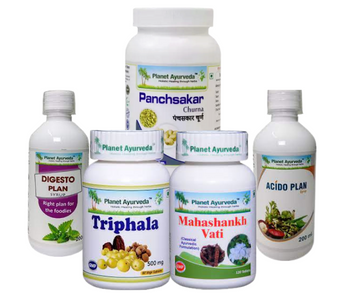
Herbal Remedies for Cocoon Syndrome by Planet Ayurveda
Planet Ayurveda is a trusted name in Ayurvedic healthcare, offering authentic herbal formulations inspired by classical Ayurvedic texts. The company is committed to maintaining high standards of quality by using carefully selected herbs and standardised manufacturing practices. Along with a wide range of herbal supplements, Planet Ayurveda provides expert online consultations and personalised wellness guidance to support holistic health. With a mission to make Ayurveda accessible worldwide, the company emphasises natural healing, preventive healthcare, and sustainable wellness through traditional Ayurvedic principles and evidence-based herbal formulations. Here, in this article, we will discuss some effective Ayurveda formulations for the management of Cocoon Syndrome. Let’s start!
- Triphala capsules
- Panchsakar Churna
- Digestoplan Syrup
- Acidoplan Syrup
- Mahashankh vati

Product Description
1. Triphala Capsules
Triphala Capsules, containing Amalaki (Indian Gooseberry, Emblica officinalis), Haritaki (Chebulic Myrobalan, Terminalia chebula), and Bibhitaki (Belleric Myrobalan, Terminalia bellirica), may provide valuable Ayurvedic support in the management of Cocoon Syndrome by promoting balanced digestive function and maintaining healthy intestinal physiology. In Ayurveda, the condition is associated with Vata-Kapha imbalance, which can disturb the natural movement of the intestines and impair nutrient assimilation. Triphala is renowned for its Rasayana (rejuvenative) and Mridu Anulomana (gentle bowel-regulating) properties, helping to support normal intestinal transit and digestive comfort. It also nourishes the Annavaha Srotas (gastrointestinal channels) and promotes healthy tissue regeneration while maintaining Agni (digestive fire). By supporting digestive harmony, bowel regularity, and optimal gastrointestinal function, Triphala Capsules complement the holistic Ayurvedic management of Cocoon Syndrome.
Dosage: 1 Capsule twice daily after a meal with plain water.
2. Panchsakar Churna
Panchsakar Churna, containing Sonth (Dry Ginger, Zingiber officinale), Saunf (Fennel, Foeniculum vulgare), Senai (Indian Senna, Cassia angustifolia), Saindhav Lavan (Rock Salt), and Choti Harad (Chebulic Myrobalan, Terminalia chebula), may provide supportive Ayurvedic care in the management of Cocoon Syndrome by encouraging smooth intestinal transit and maintaining the natural rhythm of bowel movements. According to Ayurveda, the condition is associated with impaired Apana Vata, resulting in sluggish gastrointestinal activity and abdominal discomfort. This classical formulation helps promote Vatanulomana (proper movement of Vata), supports the softening and passage of intestinal contents, and maintains digestive comfort. Sonth and Saunf help optimise gastrointestinal motility, while Choti Harad supports healthy colon function and regular elimination. Together, these herbs help maintain the functional integrity of the Annavaha Srotas, supporting digestive efficiency and overall abdominal well-being as part of a holistic Ayurvedic approach to Cocoon Syndrome.
Dosage: ½ tsp twice daily after a meal with lukewarm water.
3. Digestoplan Syrup
Digesto Plan Syrup, enriched with Amalaki (Indian Gooseberry, Emblica officinalis), Haritaki (Chebulic Myrobalan, Terminalia chebula), Bibhitaki (Belleric Myrobalan, Terminalia bellirica), Ajwain (Carom, Trachyspermum ammi), Sonth (Dry Ginger, Zingiber officinale)and many more, may provide supportive Ayurvedic care in the management of Cocoon Syndrome by promoting harmonious digestive activity and improving the assimilation of nutrients in individuals with compromised gastrointestinal function. The formulation supports Jatharagni (digestive fire), helping food undergo proper transformation into Ahara Rasa, the primary nourishing essence required for tissue health. Herbs such as Ajwain, Pippali, Marich, and Sonth enhance digestive efficiency, while Saunf, Pudina, and Shatapushpa help maintain gastrointestinal comfort and balanced intestinal function. The classical Triphala components further support the health of the Annavaha Srotas and promote regular digestive processes. Together, these herbs help sustain optimal digestion, nutrient utilisation, and overall gastrointestinal well-being as part of a holistic Ayurvedic approach to Cocoon Syndrome.
Dosage: 2 tsp twice daily after a meal with lukewarm water.
4. Acidoplan Syrup
Acidoplan Syrup, containing Patola (Pointed Gourd, Trichosanthes dioica), Sajjikshar (Natural Sodium Bicarbonate), Ghrit Kumari (Aloe Vera, Aloe barbadensis), Saunf (Fennel, Foeniculum vulgare), Triphala (Amalaki – Emblica officinalis, Haritaki – Terminalia chebula, Bibhitaki – Terminalia bellirica), Kokum (Garcinia indica), Pittapapada (Fumaria indica), and Shatavari (Asparagus racemosus), may provide supportive Ayurvedic care in the management of Cocoon Syndrome by promoting a balanced gastrointestinal environment and supporting healthy mucosal function. From an Ayurvedic perspective, it helps maintain the equilibrium of Pachaka Pitta while preserving the integrity of the digestive tract, which is essential for efficient digestion and nutrient absorption. Ghrit Kumari and Shatavari support the nourishment of the gastrointestinal lining, whereas Patola and Pittapapada help maintain normal physiological inflammatory responses. Saunf, Triphala, and Kokum contribute to digestive comfort and balanced bowel function, supporting the healthy functioning of the Annavaha Srotas (Channels of the digestive system). Collectively, these herbs help promote digestive resilience and overall gastrointestinal wellness as part of a Holistic Ayurvedic approach to Cocoon Syndrome.
Dosage: 2 tsp twice daily after a meal with lukewarm water.
5. Mahashankh Vati
Mahashankh Vati, containing Shunthi (Dry Ginger, Zingiber officinale), Pippali (Long Pepper, Piper longum), Shankha Bhasma (Calx of Conch Shell), Tamarind Bark (Tamarindus indica), Shuddha Vatsanabha (Purified Aconitum ferox), Saindhava Lavana (Rock Salt), and Kala Namak (Black Salt), may provide supportive Ayurvedic care in the management of Cocoon Syndrome by enhancing digestive efficiency and maintaining the coordinated movement of the gastrointestinal tract. The formulation supports Jatharagni (digestive fire) and helps balance Samana Vata, which governs digestion and nutrient assimilation. Shankha Bhasma and the mineral salts help maintain a healthy digestive environment, while Shunthi and Pippali promote proper digestion and gastrointestinal motility. Tamarind Bark supports digestive comfort, and Shuddha Vatsanabha, when processed according to classical Ayurvedic methods, contributes to balancing Vata and supporting normal digestive function. Together, these ingredients help maintain healthy Grahani (small intestine) function, promote efficient nutrient absorption, and support overall gastrointestinal wellness as part of a holistic Ayurvedic approach to Cocoon Syndrome.
Dosage: 2 tablets twice daily, to be chewed 20 minutes before a meal.
Dietary Recommendations
Patients may benefit from
- Freshly prepared warm meals
- Easily digestible foods
- Adequate hydration
- Small frequent meals
- Light soups and soft cooked foods
- Digestive spices like cumin, coriander, and ginger when appropriate
Foods to avoid include:
- Heavy fried foods
- Processed foods
- Excessively cold meals
- Overeating
- Incompatible food combinations
Lifestyle Measures
Supportive lifestyle practices include:
- Regular meal timings
- Gentle walking after meals if tolerated
- Stress reduction through meditation
- Adequate sleep
- Avoidance of smoking and alcohol
- Physician-guided physical activity
Conclusion
Cocoon Syndrome is an uncommon but clinically significant cause of recurrent intestinal obstruction resulting from progressive fibrocollagenous encapsulation of the bowel. Because of its nonspecific presentation, diagnosis is frequently delayed until advanced disease or surgical exploration. Modern imaging, particularly computed tomography, has greatly improved preoperative recognition and treatment planning. Surgical excision of the fibrous membrane remains the cornerstone of management in symptomatic patients, while nutritional rehabilitation plays a vital role in recovery. From an Ayurvedic perspective, the condition may be interpreted through the concepts of Baddha Gudodara (Obstructive Abdominal Disorder due to Intestinal Blockage) and Gulma (Deep-Seated Abdominal Mass or Abdominal Lump) and systemic Ama (toxins)-Vata manifestations affecting the internal membranes (Kala), highlighting the importance of restoring digestive function, maintaining unobstructed physiological channels, and supporting tissue nourishment. An integrated approach that combines timely medical or surgical intervention with appropriate dietary, lifestyle, and supportive Ayurvedic principles may help optimise patient care and improve overall quality of life.


Dr. Vikram Chauhan
Latest posts by Dr. Vikram Chauhan (see all)
- Cocoon Syndrome – Symptoms, Causes, Diagnosis & Treatment - August 7, 2026
- How Often Should You Get Your Teeth Cleaned? Expert Guide - August 4, 2026
- What is Redensyl? – How Does It Help Hair Growth? – Best Ayurvedic Alternatives - August 1, 2026
- Dating a Narcissist – Here’s How to Protect Your Peace , Narcissistic Personality Disorder - July 31, 2026
- Metformin Uses, Side Effects & Ayurvedic Options for Blood Sugar Management - July 31, 2026