


Holistic PCOD Management: Modern Science Meets Ayurvedic Healing
Abstract
PCOD is not simply about irregular periods—it can involve changes in hormones, metabolism, ovulation, weight, skin, and fertility. Some women may experience acne, excess facial hair, weight gain, or difficulty conceiving, while others may have few noticeable symptoms. The good news is that everyday habits can make a meaningful difference. Regular physical activity, adequate sleep, a balanced diet rich in protein, fiber, vegetables, and whole foods, and maintaining a healthy weight can support metabolic and reproductive health. Tracking menstrual cycles can also help identify changes early. This article explores PCOD through both scientific and Ayurvedic perspectives, focusing on practical, sustainable approaches to long-term well-being. Let’s discuss!
Introduction
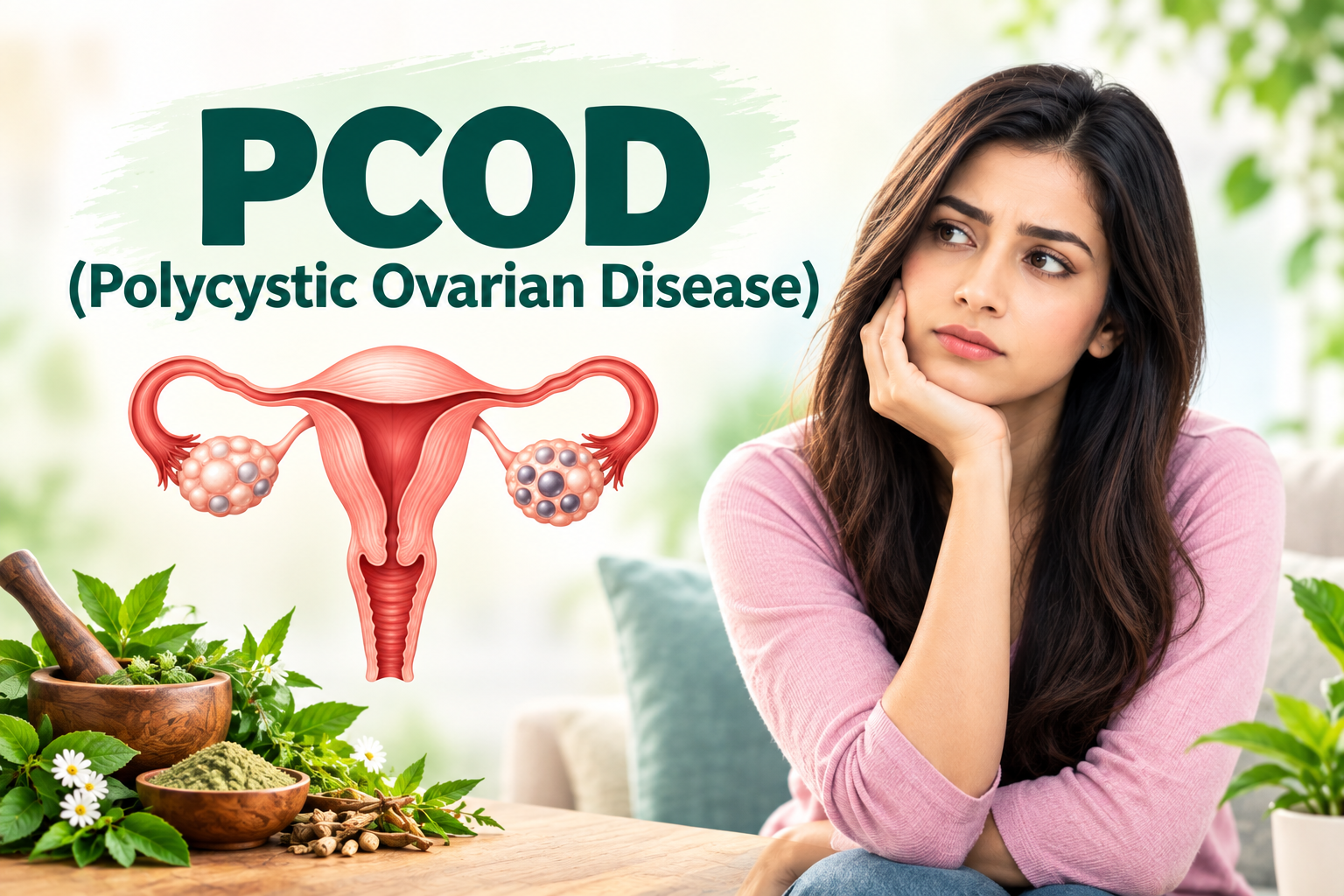
PCOD (Polycystic Ovarian Disease) is a condition in which the ovaries may produce higher-than-normal levels of certain hormones, particularly androgens. Ovulation may become irregular, and multiple small follicles may be seen in the ovaries. PCOD (Polycystic Ovarian Disease) and PCOS (Polycystic Ovary Syndrome) are related terms but are not always used interchangeably. PCOS is a broader metabolic and hormonal syndrome and may involve insulin resistance and other health risks. The new medical name for Polycystic Ovary Syndrome is Polyendocrine Metabolic Ovarian Syndrome (PMOS). The new name better describes how the condition affects hormones, metabolism, and overall health. Polycystic ovary syndrome (PCOS/PCOD) affects about 10%-13% of women of reproductive age worldwide, and up to 70% of cases remain undiagnosed. The annual incidence worldwide is more than 1.1 million new cases, and the total prevalence worldwide is more than 65 million cases. The prevalence varies widely depending on the diagnostic criteria and the population in a given region. PCOD is not just about the ovaries; it is about restoring the harmony between hormones, metabolism, lifestyle, and reproductive health.
Definition of PMOS (Polyendocrine Metabolic Ovarian Syndrome)
- Plural: poly
- Endocrine: Glands that produce hormones
- Metabolic: Insulin action and metabolism
- Ovarian: Impact on the ovaries
- Syndrome: A set of related symptoms.
Causes of PCOD
The development of PCOD is considered multifactorial, involving interactions between genetic, endocrine, metabolic, and environmental factors. Major contributing factors include:
- Hormonal imbalance: Disturbed regulation of reproductive hormones and enhanced androgen activity can interfere with normal ovarian function.
- Insulin resistance: Decreased insulin sensitivity may lead to compensatory hyperinsulinemia, which may enhance androgen production and contribute to metabolic derangements.
- Genetic predisposition: Family history of hormonal or metabolic abnormalities associated with PCOS may increase susceptibility.
- HPO Axis dysfunction: Altered gonadotropin secretion may aggravate ovulatory dysfunction and abnormal follicular development.
- Excess body weight and adiposity: Although ovarian syndromes can also occur in lean individuals, an increased amount of adipose tissue may exacerbate insulin resistance and endocrine abnormalities.
- Lifestyle factors, such as chronic stress, poor sleep, and physical inactivity, may contribute to hormonal and metabolic dysregulation.
Pathogenesis
The pathogenesis of Polyendocrine Metabolic Ovarian Syndrome is based on the complicated interaction of ovarian, endocrine, and metabolic pathways. Hyperinsulinemia further stimulates androgen synthesis and decreases sex hormone-binding globulin, with resultant increased levels of circulating free androgens; altered gonadotropin signaling can stimulate increased ovarian androgen production. The overall hormonal environment or balance in the body results in impaired ovulation and follicular arrest by disrupting normal follicle development. Changes in ovarian steroidogenesis, insulin signaling, and metabolic regulation further sustain endocrine dysfunction, eventually resulting in menstrual irregularities, anovulation, hyperandrogenic manifestations, and reproductive disturbances.
Signs and Symptoms
Polyendocrine Metabolic Ovarian Syndrome (PMOS) may present with a wide range of reproductive, endocrine, and metabolic manifestations. The commonly observed signs and symptoms include:
- Irregular menstrual cycles: Oligomenorrhea, amenorrhea, or unpredictable menstrual bleeding.
- Ovulatory dysfunction: Irregular or absent ovulation, which may contribute to difficulty conceiving.
- Hyperandrogenic manifestations: Hirsutism, acne, oily skin, and androgen-related hair thinning.
- Weight gain: Particularly increased central or abdominal adiposity.
- Insulin resistance: May be associated with increased hunger, fatigue, and metabolic abnormalities.
- Skin changes: Acanthosis nigricans and increased skin pigmentation, particularly around the neck or skin folds.
- Mood-related symptoms: Anxiety, low mood, irritability, or emotional fluctuations may occur.
- Reproductive difficulties: Reduced fertility may result from persistent ovulatory dysfunction.
Symptom severity and combinations vary considerably among individuals, and not all patients experience every manifestation.
Diagnosis
The diagnosis of Polyendocrine Metabolic Ovarian Syndrome (PMOS) is made by clinical history, physical examination, biochemical investigations and, where appropriate, pelvic ultrasonography. No single test is diagnostic.
- Menstrual history: Evaluation of cycle length, irregularity, oligomenorrhea, or amenorrhea to determine ovulatory dysfunction.
- Clinical assessment of hyperandrogenism: Assessment of androgen-related hair loss, acne, and hirsutism.
- Biochemical assessment: Measurement of total and/or free testosterone and other relevant hormonal parameters if necessary.
- Metabolic assessment: Glucose metabolism, insulin resistance, lipid profile, blood pressure, and body composition assessment as needed. Pelvic ultrasonography: ovarian morphology and follicular pattern assessment as clinically indicated.
- Other differential diagnoses to be ruled out include hyperprolactinemia, thyroid dysfunction, and non-classic congenital adrenal hyperplasia.
“Early and accurate diagnosis is essential for appropriate management and prevention of long-term reproductive and metabolic complications.”
Medications Used in Modern PCOS Management
Medication is selected according to the patient’s symptoms and treatment goals:
- Combined oral contraceptives (COCs): Help regulate menstrual cycles and reduce androgen-related symptoms.
- Metformin: Used particularly when insulin resistance or metabolic abnormalities are present.
- Letrozole: First-line ovulation-induction medication for many women with PCOS who are trying to conceive.
- Clomiphene citrate: An alternative ovulation-induction medicine in selected cases.
- Anti-androgens such as spironolactone: May help reduce hirsutism and acne; effective contraception is important because of potential fetal risks.
- Topical treatments for acne/hirsutism: May be used alongside systemic treatment when appropriate.
Ayurveda’s Insight
In Ayurveda, PCOD can be understood as a multifactorial disorder involving Agni, Doshas, Medas Dhatu and Artavavaha Srotas, rather than as a condition of the ovaries alone. Ayurvedic assessment commonly considers Vata-Kapha involvement, particularly when Kapha and Medas increase and obstruct normal physiological movement of Vata. Impaired Jatharagni and Dhatvagni may contribute to improper tissue metabolism and the formation of Ama, while disturbance of Artavavaha Srotas may manifest as irregular or scanty menstruation and impaired ovulation. These Ayurvedic concepts should be viewed as traditional explanatory frameworks rather than direct equivalents of modern hormonal diagnoses.
Ayurvedic management therefore emphasizes Nidana Parivarjana (removing contributing factors), improving Agni, supporting appropriate Vatanulomana and Srotas function, and addressing excess Medas when present. Individualized use of herbs and formulations may be considered according to Prakriti, Vikriti, Agni, menstrual pattern, and metabolic status. Dinacharya, regular physical activity, adequate sleep and a balanced, sustainable diet are equally important. Modern PCOS guidelines also recognize lifestyle management as a core component, with benefits possible even without weight loss.
Herbal remedies for PCOD by Planet Ayurveda
Planet Ayurveda brings the wisdom of traditional Ayurveda into carefully formulated herbal preparations designed to support holistic health and well-being. Its formulations feature thoughtfully selected herbs known for their diverse therapeutic properties and are prepared with standardized herbal ingredients while keeping Ayurvedic principles at the core. These herbal remedies can complement a balanced lifestyle by supporting healthy digestion, metabolism, immunity, vitality, and overall physiological balance. With an emphasis on quality, authenticity, and traditional herbal knowledge, Planet Ayurveda offers convenient formulations for those seeking natural support in their everyday wellness journey.
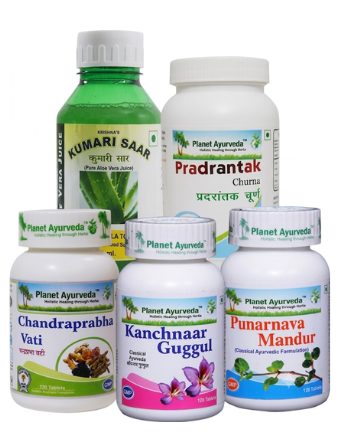
Some of the products are:-
- Chandraprabha Vati
- Pradrantak Churna
- Kanchnaar Guggul
- Punarnava Mandur
- Kumari Saar
Herbal Remedies for PCOD (Polycystic Ovarian Disease)

Product Description
1. Chandraprabha Vati
Planet Ayurveda Chandraprabha Vati is a classical Ayurvedic polyherbal formulation containing a diverse combination of herbs and mineral ingredients. Its formulation includes Guggul (Commiphora mukul), Shilajit (Asphaltum), Vacha (Acorus calamus), Haridra (Curcuma longa), Amalaki (Emblica officinalis), Mustak (Cyperus rotundus), Chavya (Piper chaba), Vidanga (Embelia ribes), Guduchi (Tinospora cordifolia), Shunthi (Zingiber officinale), Maricha (Piper nigrum), Pippali (Piper longum), Dalchini (Cinnamomum zeylanicum), Danti (Baliospermum montanum), Tejapatra (Cinnamomum tamala), and Ela (Elettaria cardamomum), along with Shodhana and Kshara ingredients. From an Ayurvedic perspective, PCOD can involve Kapha-Meda Dushti (disturbance of metabolic and adipose tissue function), Agni Mandya (impaired metabolism), and Apana Vata Vaigunya (disturbance of menstrual and reproductive regulation). The Deepana-Pachana (digestive and metabolic supporting), Lekhana (scraping/metabolic reducing), and Kapha-Meda balancing properties of ingredients in Chandraprabha Vati make it relevant as supportive Ayurvedic management in selected PCOD presentations.
Dosage: Take 2 tablets, twice daily with warm water after meals.
2. Pradrantak Churna
Planet Ayurveda Pradrantak Churna is an Ayurvedic herbal formulation prepared with a combination of Lodhra (Symplocos racemosa), Ashoka (Saraca indica), Arjuna (Terminalia arjuna), and Udumbara (Ficus glomerata). These herbs are traditionally valued for their role in supporting female reproductive health and maintaining physiological balance. In PCOD, menstrual irregularity and hormonal disturbances are common concerns. From an Ayurvedic perspective, such manifestations may be considered in relation to Artava Dushti (menstrual dysfunction), Apana Vata Vaigunya (disturbed reproductive regulation), and Dosha imbalance. Pradrantak Churna may be incorporated into an individualized Ayurvedic regimen to support healthy menstrual function and reproductive wellness. Ashoka and Lodhra are traditionally regarded as important herbs for female reproductive health, while Udumbara and Arjuna complement the formulation through their traditional Kashaya Rasa (astringent) and stabilizing properties. Thus, Pradrantak Churna can serve as supportive herbal care for women with PCOD, particularly when menstrual and reproductive symptoms are prominent.
Dosage: Take 1 teaspoonful twice daily with warm water after meals.
3. Kanchnaar Guggul
Planet Ayurveda Kanchnaar Guggul is a classical Ayurvedic formulation containing Kanchnaar (Bauhinia variegata), along with Amalaki (Emblica officinalis), Haritaki (Terminalia chebula), Bibhitaki (Terminalia bellirica), Maricha (Piper nigrum), Pippali (Piper longum), Shunthi (Zingiber officinale), and Varuna (Crataeva religiosa). The formulation is traditionally used in conditions involving Kapha aggravation, Meda Dushti (disturbance of adipose tissue metabolism), and Srotorodha (functional obstruction of body channels). In PCOD, these Ayurvedic concepts may be relevant where weight gain, sluggish metabolism, menstrual irregularity, and features of Kapha-Meda imbalance are prominent. Kanchnaar is traditionally valued for its Lekhana and Granthi-hara actions (supporting the reduction of excessive tissue accumulation and abnormal growths), while Triphala ingredients support healthy digestion and elimination. Shunthi, Maricha, and Pippali provide Deepana-Pachana properties (supporting digestive and metabolic function), which may complement dietary and lifestyle measures in women with metabolic features of PCOD. Varuna is traditionally associated with supporting healthy tissue and urinary function.
Dosage: Take 2 tablets twice daily with warm water after meals.
4. Kumari Saar
Planet Ayurveda Kumari Saar is a classical Ayurvedic preparation made from Kumari (Aloe vera), an important herb traditionally associated with women’s reproductive health. In PCOD, where menstrual irregularity, impaired digestion, and metabolic imbalance may be present, Kumari is valued for its Deepana-Pachana and Anulomana properties (supporting digestion and healthy bowel movement). From an Ayurvedic perspective, it may help support the proper functioning of Apana Vata (regulator of menstruation and reproductive functions and maintain balance among the Doshas. Kumari is also traditionally considered supportive of Artava (menstrual function) and healthy female reproductive physiology. Therefore, Kumari Saar may be incorporated into an individualized Ayurvedic approach for women with PCOD, particularly when digestive sluggishness and irregular menstrual patterns are prominent.
Dosage : Take 2 tsp twice daily with plain water after meals.
5. Punarnava Mandoor
Planet Ayurveda Punarnava Mandur is a classical Ayurvedic formulation containing Punarnava (Boerhaavia diffusa), Triphala, Trikatu, and Mandura Bhasma, along with other ingredients. It is traditionally used in conditions associated with Pandu (anemia), Shotha (swelling), and impaired metabolic function. In PCOD, it is used as supportive care when menstrual disturbances are accompanied by weakness, poor digestion, metabolic sluggishness, or a tendency toward fluid retention. Punarnava is traditionally valued for its Mutrala and Shothahara properties (supporting healthy urinary elimination and fluid balance), while Trikatu provides Deepana-Pachana action (supporting digestion and metabolism).
Dosage: Take 2 tabs twice daily with plain water after meals.
Diet and Lifestyle in PCOD
Diet and lifestyle modification are fundamental in PCOD because the condition is closely associated with insulin resistance, hyperandrogenism, excess adiposity, metabolic dysfunction, and ovulatory disturbances. The following measures can help improve metabolic and reproductive health:-
- Choose High-Fiber, Low-Refined-Carbohydrate Foods: Dietary fiber slows glucose absorption and can reduce rapid post-meal increases in blood glucose and insulin. Better insulin regulation may subsequently reduce excessive ovarian androgen stimulation.
- Include Adequate Protein: Protein increases satiety and helps preserve lean muscle mass, particularly during weight reduction. Maintaining muscle mass also supports better glucose disposal and insulin sensitivity.
- Prefer Healthy Fats: Replacing excessive saturated and trans fats with unsaturated fats can support cardiovascular and metabolic health.PCOD is associated with increased cardiometabolic risk in some women, making overall dietary fat quality important.
- Reduce Added Sugar and Ultra-Processed Foods: These foods can increase total energy intake and produce rapid glucose and insulin responses. Reducing them can support weight management and metabolic control.
- Maintain a Healthy Body Weight: In women with overweight or obesity, even modest, sustained weight reduction can improve insulin sensitivity and may help restore more regular ovulatory and menstrual function.
- Exercise Regularly: Brisk walking, cycling, swimming, and strength training improve insulin sensitivity and cardiovascular fitness. Resistance exercise additionally helps increase or preserve muscle mass, which is important for glucose metabolism.
- Maintain Regular and Adequate Sleep: Poor sleep and sleep disturbances are associated with impaired glucose regulation, increased appetite, and metabolic dysfunction, all of which can aggravate PCOD-related problems.
- Manage Psychological Stress: Yoga, Pranayama, meditation, breathing exercises, and relaxation techniques can be incorporated as supportive measures. Stress management is particularly useful for improving overall quality of life and maintaining adherence to healthy habits.
Panchakarma (Detoxification procedures) in PCOD
- Virechana (therapeutic purgation): Supports Pitta-Kapha balance and metabolic regulation.
- Basti (medicated enema): Supports Apana Vata (reproductive and menstrual regulation).
- Udvartana (herbal powder massage): Useful for Meda Dushti (adipose-metabolic imbalance) and weight management.
- Abhyanga-Swedana (oil massage and sudation): Supports circulation, relaxation, and metabolic activity.
Panchakarma should be individualized according to Prakriti, Dosha, Agni, Bala, and clinical presentation.
Home Remedies for PCOD
- Methi (Fenugreek): Rich in soluble fiber and bioactive compounds that support blood sugar control and insulin sensitivity.
- Dalchini (Cinnamon): Contains polyphenols that may support glucose metabolism.
- High-fiber foods: Help control blood sugar, improve satiety, and support healthy weight.
- Protein-rich foods: Support muscle mass, satiety, and glucose utilization.
- Jeera (Cumin) water: Cumin contains antioxidant and digestive-supportive compounds that support digestion.
Conclusion
Finally, we can conclude that PCOD is more than an irregular menstrual cycle and more than an ovarian finding; it is a complex interplay of hormones, metabolism, lifestyle, and reproductive health. Therefore, the goal should not simply be to manage symptoms, but to understand the root of the imbalance and restore harmony within the body. Ayurveda provides a holistic perspective through Dosha (functional biological principles), Agni (digestion and metabolism), Meda (adipose tissue and lipid metabolism), Artava (menstrual and reproductive function), and Apana Vata (regulation of menstruation and reproductive functions), while modern medicine contributes precise diagnosis, monitoring, and evidence-based management. When appropriate medical care is combined with balanced nutrition, regular movement, restorative sleep, stress management, and individualized Ayurvedic care, management becomes a journey toward sustainable health rather than temporary symptom control. Ultimately, PCOD is manageable, and small, consistent changes can create meaningful improvements—because caring for hormonal health today is an investment in a woman’s reproductive health, metabolic health, and quality of life for years to come.


Dr. Vikram Chauhan
Latest posts by Dr. Vikram Chauhan (see all)
- Holistic PCOD Management: Modern Science Meets Ayurvedic Healing - September 16, 2026
- Fatty Liver: Diet & Ayurvedic Management - September 15, 2026
- Fatty Liver: Causes, Symptoms & Ayurvedic Management - September 14, 2026
- Hearing Loss in Children: Causes, Symptoms & Ayurvedic Treatment - September 12, 2026
- Best Water Vessel According to Ayurveda - September 10, 2026