


What is Glottis Cancer? – Causes, Symptoms & Herbal Remedies
Abstract
Glottis cancer is a malignant tumor originating from the true vocal cords within the larynx and is predominantly of squamous cell origin. It represents the most frequently diagnosed subtype of laryngeal cancer and is notable for its early clinical presentation due to voice-related symptoms. Early detection often allows organ-preserving treatment with excellent survival outcomes. Despite favorable prognosis in early stages, advanced disease can significantly impair phonation, respiration, and quality of life. This article provides a focused, evidence-based discussion on glottis cancer, outlining its etiological factors, clinical manifestations, diagnostic workup, contemporary management strategies, and supportive Ayurvedic perspectives for comprehensive patient care.
Introduction
The larynx is a vital anatomical structure responsible for voice production, airway protection, and regulation of breathing. The glottis, forming the central part of the larynx, consists of the true vocal cords and the anterior and posterior commissures. Due to constant mechanical activity and direct exposure to inhaled toxins, this region is particularly vulnerable to carcinogenic impacts. Glottis cancer develops from the stratified squamous epithelium of the vocal cords and is most commonly observed in individuals with a history of prolonged tobacco use. Unlike supraglottic and subglottic malignancies, glottic tumors typically present with early functional disturbance rather than regional lymphadenopathy, owing to limited lymphatic drainage. This distinct biological behavior influences staging, treatment planning, and prognosis. Understanding the anatomical, pathological, and clinical uniqueness of glottis cancer is essential for early diagnosis, effective intervention, and preservation of laryngeal function.
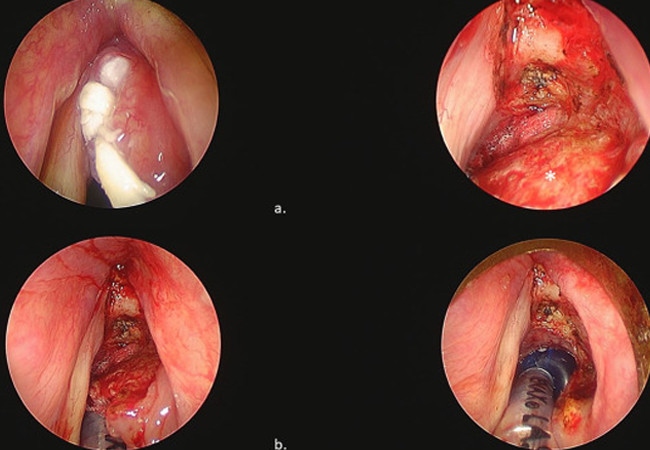
Causes
Glottis cancer is multifactorial in origin, with several well-established risk factors contributing to its development:
- Tobacco consumption: Smoking (cigarettes, bidis, cigars) is the most significant risk factor, causing chronic mucosal irritation and genetic mutations.
- Alcohol intake: Alcohol acts synergistically with tobacco, enhancing carcinogenic effects on the laryngeal epithelium.
- Occupational exposures: Prolonged exposure to asbestos, wood dust, paint fumes, and chemical vapors increases risk.
- Chronic laryngeal irritation: Persistent laryngitis, voice abuse, and gastroesophageal reflux disease (GERD) may contribute to malignant transformation.
- Human papillomavirus (HPV): Certain oncogenic HPV strains have been implicated, though less prominently than in oropharyngeal cancers.
- Nutritional deficiencies: Low intake of antioxidants, vitamins A, C, and E may predispose individuals to mucosal damage and carcinogenesis.
Signs and Symptoms
Clinical manifestations of glottis cancer are closely related to the involvement of the vocal cords:
- Persistent hoarseness or change in voice (most common and earliest symptom)
- Voice fatigue and reduced vocal range
- Throat discomfort or foreign body sensation
- Pain radiating to the ear (referred otalgia) in advanced disease
- Difficulty in breathing or stridor (in late stages)
- Chronic cough or occasional hemoptysis
- Dysphagia is less common initially but may occur with tumor progression
Investigations
A systematic diagnostic approach is essential for accurate staging and management planning:
- Indirect or flexible laryngoscopy: Initial visualization of vocal cord lesions, ulcerations, or impaired mobility
- Direct laryngoscopy with biopsy: Gold standard for histopathological confirmation
- Histopathology: Usually reveals squamous cell carcinoma with varying degrees of differentiation
- Imaging studies
- CT scan or MRI of the neck to assess tumor extent, cartilage invasion, and soft tissue spread
- Chest imaging to rule out pulmonary metastasis or synchronous malignancies
- Staging: Done according to the TNM (Tumor, Node, Metastasis) classification system
- Voice assessment and pulmonary function tests: Helpful in treatment planning, especially before surgery or radiotherapy
Management
Management of glottis cancer depends on the stage of disease, vocal cord mobility, patient’s general condition, and desire for voice preservation.
Early-stage disease (Stage I–II)
- Radiotherapy: Highly effective with excellent local control and voice preservation
- Endoscopic surgery: Transoral laser microsurgery for selected small lesions
- Partial laryngectomy: Considered in specific cases where radiotherapy is contraindicated
Advanced-stage disease (Stage III–IV)
- Combined modality treatment: Surgery followed by radiotherapy or chemoradiation
- Total laryngectomy: Indicated in extensive disease, cartilage invasion, or recurrent tumors
- Chemotherapy: Used as concurrent chemoradiation or for palliative intent in metastatic disease
- Voice rehabilitation: Tracheoesophageal prosthesis, esophageal speech, or electrolarynx post-laryngectomy
Ayurvedic Aspect and Management
From an Ayurvedic perspective of glottis cancer can be correlated with Balasa (a type of kanthgata roga (throat disease). The pathogenesis is understood in terms of Tridosha vitiation, predominantly Kapha and Vata, along with pranavaha srotodushti. Chronic exposure to causative factors like smoke, alcohol, and excessive voice strain leads to Agnimandya (low digestion), Ama formation (endotoxins accumulation), and localized tissue degeneration, eventually manifesting as a deep-seated growth.
- The vitiated Kapha and Vata dosha produces a dreadful swelling that causes pain, breathlessness and injury to vital parts (Marmaabhigata), it is known as Balasa.
- It is asadhya vyadhi (incurable disease), however, to make life better for the affected person some of the remedies can be used.
Ayurvedic Management principles include
- Nidana Parivarjana: Avoidance of causative factors such as smoking, alcohol, and irritant foods
- Shodhana therapies (where appropriate and under expert supervision)
- Vamana for Kapha dominance
- Virechana for Pitta-Rakta involvement
- Shamana therapy: Use of herbs and formulations with anti-inflammatory, antioxidant, and tissue-supportive properties
- Rasayana therapy: To improve immunity, tissue strength, and overall vitality
- Pathya-Apathya: Emphasis on light, warm, non-irritating diet; avoidance of spicy, sour, fermented, and excessively hot foods.
Herbal Remedies by Planet Ayurveda for Glottis Cancer
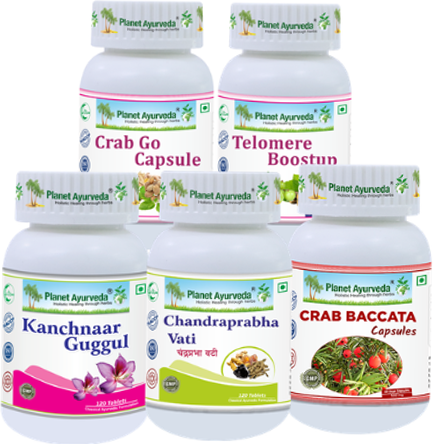

Planet Ayurveda is a well-established Ayurvedic healthcare brand dedicated to delivering natural and holistic wellness solutions through authentic herbal formulations. Grounded in classical Ayurvedic knowledge, the company develops plant-based products using carefully selected herbs and traditional preparation methods. Planet Ayurveda places strong emphasis on purity, safety, and quality while addressing a wide range of health concerns. By integrating ancient Ayurvedic wisdom with modern manufacturing standards, the brand offers reliable herbal support for long-term health, balance, and overall well-being. Planet Ayurveda is pleased to present its range of products that helps in supporting the health of aggrieved persons.
List of products
- Kanchnaar Guggul
- Chandraprabha Vati
- Crab Baccata Capsules
- Crab Go Capsule
- Telomere Boostup
Product description
1. Kanchnaar Guggul
Kanchnaar Guggul is a classical ayurvedic medicine for Granthi (cysts), Arbuda (tumors), and lymphatic swellings, making it a vital intervention in the management of Glottis cancer. Its primary action involves the Lekhana (scraping) of the malignant Mamsa-ankuras (fleshy growths) that develop on the true vocal cords, thereby addressing the root of the hoarseness and throat obstruction. The formulation is powered by its lead ingredient, Kanchnaar (Bauhinia variegata), working to arrest abnormal cell proliferation and reduce glandular congestion. This is supported by Shuddha Guggulu (Commiphora mukul), which acts as a catalyst to penetrate deep into the laryngeal tissues and clear Srotas (channels) of Ama (endotoxins). Other key ingredients like Triphala (Amalaki, Bibhitaki, and Haritaki) provide systemic detoxification, while Trikatu (Sunthi, Maricha, and Pippali) and Varuna (Crataeva nurvala) improve the cellular metabolism and reduce the localized inflammation and pain. By balancing the vitiated Kapha and Vata doshas, Kanchnaar Guggul helps in managing the tumor mass and improving the overall functional health of the larynx.
Dosage : Two tablets twice a day.
2. Chandraprabha Vati
Chandraprabha Vati is a classical ayurvedic medicine for clearing obstructions, reducing inflammation, and rejuvenating the body’s vital tissues. Its diverse composition featuring potent ingredients like Shilajit (Asphaltum), Guggulu (Commiphora mukul), Loha Bhasma (iron calx), Vacha (Acorus calamus), and Karpur (camphor) provides a multi-targeted approach to laryngeal malignancies. The formulation exerts a Lekhana (scraping) action on the abnormal Mamsa (fleshy) growths on the vocal cords, primarily through the presence of Guggulu and Shilajit, which help reduce the tumor mass. Vacha (Acorus calamus) and Musta (Cyperus rotundus) help clear the Pranavaha Srotas (respiratory channels) and assist in managing Swarabheda (hoarseness). Additionally, the inclusion of Trikatu (Ginger, Black pepper, and Long pepper) and Amla (Emblica officinalis) helps in digesting Ama (metabolic toxins) and improving the Agnimandya (low digestive fire). By acting as a Rasayana (rejuvenative), Chandraprabha Vati also helps combat the exhaustion and tissue wasting (Dhatu Kshaya) associated with chronic malignancy, thereby improving the patient’s overall strength and quality of life.
Dosage : Two tablets twice a day
3. Crab Baccata Capsules
Crab Baccata Capsules are a product of Planet Ayurveda formulated from the standardized extract of Taxus baccata (Himalayan Yew), offer a potent Ayurvedic approach to managing Glottis cancer by utilizing the plant’s natural cytotoxic properties to arrest malignant cell division. The bioactive taxanes in this formulation act as mitotic inhibitors that help reduce tumor mass and prevent further spread. Its Tikta (bitter) and Ushna (hot) attributes provide a specialized Lekhana (scraping) action, which is essential for clearing the obstructions in the Pranavaha Srotas (respiratory channels) and relieving the persistent hoarseness and "foreign body sensation" associated with glottic tumors. Furthermore, the anti-inflammatory and tissue-supportive nature of Taxus baccata helps soothe the laryngeal mucosa, making it a valuable herbal support for maintaining airway patency and improving the functional quality of the voice during the management of laryngeal malignancies.
Dosage : One capsule twice a day.
4. Crab Go Capsule
Planet Ayurveda’s Crab Go Capsule serves as a specialized polyherbal intervention for Glottis cancer by combining potent Arbudahara (anti-tumor) and Rasayana (rejuvenative) herbs to arrest malignant growth and enhance systemic vitality. Formulated with standardized extracts of Curcumin (Curcuma longa), Kanchnaar (Bauhinia variegata), and Ashwagandha (Withania somnifera), this capsule works to reduce the size of the Mamsankura (fleshy growths) while providing powerful antioxidant protection against cellular degeneration. The synergistic action of Tulsi (Ocimum sanctum) and Guggulu (Commiphora mukul) helps in clearing the Pranavaha Srotas (respiratory channels), thereby relieving the obstruction and hoarseness. By targeting the vitiated Kapha and Vata doshas at the root level, Crab Go Capsule not only helps in inhibiting the proliferation of malignant squamous cells but also supports the patient’s overall strength, making it an essential part of an integrated approach to laryngeal health.
Dosage -Two capsules twice a day.
5. Telomere Boostup
Telomere Boostup capsules by Planet Ayurveda provide a specialized Rasayana (rejuvenative) approach to managing Glottis cancer by focusing on cellular integrity and DNA protection. This formulation contains standardized extracts of Ashwagandha (Withania somnifera) and Giloy (Tinospora cordifolia), which act as powerful immuno-modulators to strengthen the body’s natural defense against the malignant Mamsankura (fleshy growths). The inclusion of Amla (Emblica officinalis) and Grapeseed (Vitis vinifera) provides a concentration of antioxidants that neutralize the oxidative stress and Ama (endotoxins). Furthermore, Moringa (Moringa oleifera) provides essential micro-nutrients to address the nutritional deficiencies often associated with laryngeal malignancies. By supporting healthy telomere function and improving Ojas (vitality), these capsules help maintain the functional capacity of the voice box and support the longevity of healthy laryngeal tissues while the body battles the proliferative stage of the malignancy.
Dosage – One capsule twice a day.
Conclusion
Glottis cancer remains a significant clinical challenge, yet its distinct biological behavior presenting early through discernible voice changes provides a critical window for successful intervention and organ preservation. The journey toward effective management necessitates a comprehensive strategy that harmonizes advanced oncological protocols with the restorative principles of traditional wisdom. Ayurveda shifts the clinical focus from merely addressing the tumor to strengthening the body’s internal environment, emphasizing the balance of Vata and Kapha doshas and the purification of the Pranavaha Srotas (respiratory channels). The mentioned formulations work synergistically to provide Lekhana (scraping) of the malignant mass, antioxidant protection, and systemic rejuvenation. While the disease is traditionally viewed as Asadhya (difficult to treat), a multidisciplinary approach combining modern surgical or radiotherapeutic precision with Ayurvedic supportive care represents the most promising pathway to maintaining laryngeal function and enhancing the overall quality of life for the patient.


Dr. Vikram Chauhan
Latest posts by Dr. Vikram Chauhan (see all)
- Management of Olfactory neuroblastoma (ONB) in Ayurveda - September 28, 2026
- What is Aroma Therapy? – How is it an important part of Indian and different cultures since long? - September 18, 2026
- Cow Dung & Wood Heat vs Room Heaters – Health Benefits & Risks - September 17, 2026
- Let’s bust some myths about Infertility and Pregnancy? - September 15, 2026
- Zero Volt Therapy – Benefits, Uses & Holistic Wellness Approach - September 10, 2026