


Ayurvedic Management of Subglottic Cancer – Natural Treatment
Abstract
The larynx plays a critical role in phonation, respiration, and airway protection and is anatomically divided into the supraglottis, glottis, and subglottis. The subglottic region extends from approximately 1 cm below the vocal cords to the inferior margin of the cricoid cartilage. Malignancies originating in this region are uncommon but clinically significant due to their tendency for circumferential spread, early airway compromise, and submucosal extension. Subglottic cancers often present at an advanced stage because early lesions may remain clinically silent or mimic benign respiratory conditions. This article presents a comprehensive, research-based overview of subglottic cancer, covering its etiology, clinical manifestations, diagnostic approach, modern management strategies, and Ayurvedic correlation with integrative management principles
Introduction
Subglottic cancer is a rare and aggressive malignancy arising from the subglottis, the portion of the larynx located below the true vocal cords and extending to the lower border of the cricoid cartilage. It accounts for less than 5% of all laryngeal cancers and is most commonly squamous cell carcinoma in histology. Due to the relative paucity of early symptoms and the narrow anatomical confines of the subglottic region, diagnosis is often delayed, leading to advanced-stage presentation.
Causes
Subglottic cancer shares many etiological factors with other laryngeal malignancies, although certain risks are particularly relevant to this region:
- Tobacco use (smoking and smokeless forms), which causes chronic mucosal irritation and genetic mutations
- Alcohol consumption, acting synergistically with tobacco
- Human papillomavirus (HPV) infection, especially high-risk oncogenic strains
- Chronic laryngeal inflammation due to long-standing laryngitis or gastroesophageal reflux disease
- Occupational exposure to industrial fumes, asbestos, nickel, or sulfuric acid mist
- Previous radiation exposure to the head and neck region
- Immunosuppression, including HIV infection or long-term immunosuppressive therapy
Signs and Symptoms
Clinical manifestations depend on the extent of tumor growth and airway involvement. Early symptoms are often subtle, contributing to delayed diagnosis.
- Progressive dyspnea, especially on exertion
- Stridor or noisy breathing due to airway narrowing
- Persistent cough or sensation of airway obstruction
- Hemoptysis in advanced disease
- Voice changes are usually late and less prominent compared to glottic cancer
- Dysphagia or choking sensation if the tumor extends superiorly
- Neck lymphadenopathy, though less common initially due to limited lymphatic drainage
- Weight loss and fatigue in advanced stages
Investigation
A structured diagnostic approach is crucial for accurate staging and treatment planning.
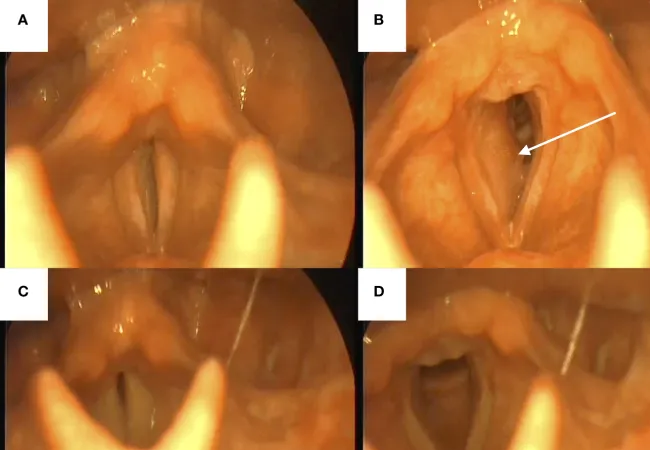
- Indirect and flexible laryngoscopy to visualize subglottic lesions and airway narrowing
- Direct laryngoscopy with biopsy for histopathological confirmation
- Contrast-enhanced CT scan of the neck to assess tumor extent, cartilage invasion, and airway compromise
- MRI for superior soft tissue delineation and submucosal spread
- PET-CT in advanced disease to detect regional or distant metastasis
- Pulmonary function tests if airway obstruction is suspected
- Routine blood investigations for baseline assessment and treatment planning
Management
Management depends on tumor stage, airway status, patient fitness, and organ preservation goals.
1. Early-stage disease (Stage I–II)
- Definitive radiotherapy with curative intent
- Endoscopic surgical excision in selected cases
2. Locally advanced disease (Stage III–IV)
- Total laryngectomy with or without partial pharyngectomy
- Concurrent chemoradiotherapy for organ preservation when feasible
- Tracheostomy for acute or impending airway obstruction
3. Advanced or recurrent disease
- Salvage surgery
- Palliative radiotherapy or chemotherapy
- Symptom-directed supportive care
Ayurvedic Correlation and Management
In Ayurveda, subglottic cancer can be correlated with Arbuda (tumor) and Karkatarbuda (malignant tumor), described as deep-seated, slowly progressive, firm masses arising due to chronic Tridosha vitiation with dominance of Kapha along with Rakta Dushti. Chronic exposure to causative factors leads to derangement of Mamsa Dhatu and obstruction of Srotas, resulting in abnormal tissue growth. On disease specific the condition can be correlated with Valaya (kanthgata roga).
When Kapha becomes vitiated, it leads to the formation of a large, bulky, rounded swelling that gradually enlarges and obstructs the throat, causing difficulty in swallowing food; this condition is referred to as Valaya.
Ayurvedic management is supportive and complementary, aimed at improving quality of life, reducing treatment-related toxicity, and enhancing systemic strength. It should always be undertaken under expert supervision.
- Dosha Shamana: Balancing Kapha through appropriate Ahara (diet) and Aushadha (medicines)
- Rakta Prasadana (blood purification) to address Rakta Dushti
- Deepana–Pachana to correct impaired Agni (digestion) and reduce Ama (endotoxins)
- Rasayana (rejuvenation) therapy to enhance immunity and tissue health
Herbal and Formulation Support
- Herbs with Lekhana (scraping), Shothahara (antiinflammatory), and Rakta Shodhaka (blood cleansing) properties such as Haridra (Curcuma longa), Manjistha (Rubia cordifolia), and Guduchi (Tinospora cordifolia)
- Classical formulations used judiciously to support systemic balance
- Gargles and local therapies for throat comfort when indicated
Lifestyle and Diet
- Light, warm, non-irritating diet avoiding tobacco, alcohol, and excessively spicy foods
- Pranayama practices such as Anuloma–Viloma and Bhramari to improve respiratory function (avoiding strain)
- Stress reduction through meditation and adequate rest
Herbal Remedies by Planet Ayurveda for Subglottic Cancer
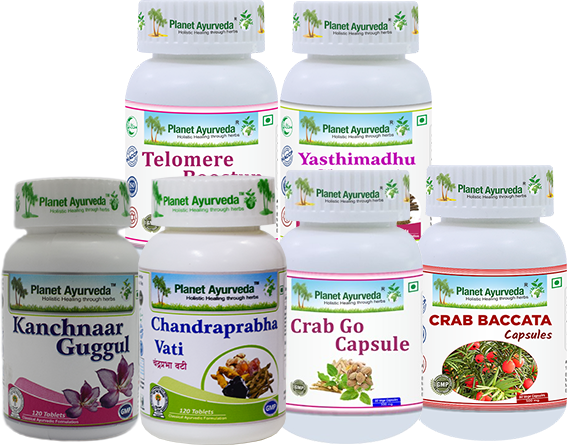

Planet Ayurveda is a respected Ayurvedic wellness brand committed to promoting natural health through genuine herbal formulations. Inspired by classical Ayurvedic texts, the company creates plant-based supplements using traditionally processed herbs and strict quality measures. Planet Ayurveda focuses on holistic care by addressing the root cause of imbalances rather than just symptoms. By blending ancient Ayurvedic wisdom with modern quality control practices, the brand delivers safe, reliable, and effective herbal solutions that support overall wellness and long-term health maintenance. Planet Aurveda presents its list of products that are helpful in supporting the condition of Subglottic Cancer.
Product list
- Kanchnaar Guggul
- Chandraprabha Vati
- Crab Go Capsule
- Crab Baccata Capsules
- Telomere Boostup
- Yashtimadhughan Vati
Product Description
1. Kanchnaar Guggul
Kanchnaar Guggul is a classical ayurvedic medicine that aids in managing subglottic cancer primarily through its Lekhana (scraping) action, which targets the firm, deep-seated masses. The key chemical constituents driving this process are Guggulsterones (E and Z isomers) from Guggul (Commiphora mukul) and Flavonoids (such as Quercetin and Kaempferol) alongside Tannins from Kanchnaar (Bauhinia variegata). These compounds exert a potent anti-proliferative effect by inducing apoptosis (programmed cell death) in malignant cells and inhibiting the pro-inflammatory pathways (like NF-kB). Furthermore, the Saponins and Triterpenoids in the formulation enhance lymphatic drainage, which is crucial for reducing lymphadenopathy. By modulating these cellular signals, the formulation helps to restrict the circumferential spread of the tumor and manage the "stony" hardness of the growth, ultimately supporting the maintenance of a clearer airway.
Dosage : Two tablets twice a day.
2. Chandraprabha Vati
Chandraprabha Vati is a classical ayurvedic medicine helps in supporting the management of subglottic cancer by acting as a systemic Srotoshodhana (channel cleanser) and a potent Rasayana (rejuvenative) that addresses the deep-seated tissue vitiation (Mamsa-Rakta Dushti). Its primary action is driven by chemical constituents like Guggulsterones from Shuddha Guggulu (Commphora mukul) and Fulvic Acid from Shuddha Shilajit (Asphaltum), which together exhibit significant anti-tumor and anti-inflammatory properties by inhibiting pro-inflammatory cytokines and reducing oxidative stress at the cellular level. Additionally, the presence of Curcumin from Haridra (Curcuma longa) and Piperine from Marich (Piper nigrum) enhances the bioavailability of the formulation, allowing it to penetrate the narrow, "silent" subglottic region to clear the obstruction caused by the tumor mass. These constituents work synergistically to modulate the immune response and strengthen the laryngeal mucosa, helping to manage the respiratory distress and progressive dyspnea characteristic of advanced subglottic malignancy
Dosage : Two tablets twice a day.
3. Crab Go Capsule
Crab Go Capsule by Planet Ayurveda helps in the management of subglottic cancer by utilizing a potent blend of cytotoxic and immunomodulatory herbs that target the abnormal tissue overgrowth and mucosal inflammation characteristic of this laryngeal malignancy. The primary mechanism involves the action of Withaferin A and Withanolides from Ashwagandha (Withania somnifera), which have been scientifically shown to induce apoptosis (programmed cell death) in cancer cells and inhibit angiogenesis (the formation of new blood vessels that feed the tumor). These constituents are supported by Curcuminoids from Haridra (Curcuma longa), which act as powerful anti-inflammatory agents to reduce the chronic laryngeal irritation that contributes to subglottic lesions. Furthermore, the Saponins and Alkaloids found in ingredients like Giloy (Tinospora cordifolia) and Shatavari (Asparagus racemosus) enhance the body’s immunity, helping to clear "Ama" (metabolic toxins) and strengthen the laryngeal tissues against tumor spread. By modulating these critical signaling pathways, Crab Go Capsule supports the reduction of tumor growth, thereby assisting in the improved quality of life.
Dosage : Two capsules twice a day.
4. Crab Baccata Capsules
Crab Baccata Capsules are a product of Planet Ayurveda and contain Taxus baccata, known as Himalayan Yew, help in the management of subglottic cancer by acting as a powerful natural cytotoxic agent that targets the rapid and uncontrolled cell division. The primary mechanism of action is driven by the presence of Taxanes (specifically 10-deacetylbaccatin III), which are natural precursors to potent chemotherapy drugs; these chemical constituents work by stabilizing microtubules within cancer cells, effectively "freezing" the cell during mitosis (division) and preventing the tumor from expanding into the narrow subglottic lumen. Diterpenoids and Alkaloids in Taxus baccata exert an anti-proliferative effect that helps to soften and reduce the tumor mass, thereby potentially easing the progressive dyspnea and airway obstruction. Additionally, its Tikta (bitter) and Ushna (heating) properties help in digesting the Ama (toxic waste) and clearing the Srotas (respiratory channels), providing a targeted Ayurvedic approach to slowing the circumferential spread of the malignancy.
Dosage – One capsule twice a day.
5. Telomere Boostup
Planet Ayurveda’s Telomere Boostup supports the management of subglottic cancer by focusing on cellular longevity and genomic stability. The formulation works primarily through Withanolides from Ashwagandha (Withania somnifera) and Tinosporoside from Giloy (Tinospora cordifolia), which act as natural telomerase modulators; these chemical constituents help protect the healthy DNA of laryngeal cells from the oxidative damage caused by radiation, potentially slowing the progress of cellular dysplasia. Additionally, the Curcuminoids and Ginsenosides (from herbs like Haridra and Ashwagandha) promote the natural apoptosis (cell death) of the tumor mass. By enhancing the Ojas (vital strength) and correcting Dhatu Paka (tissue over-metabolism), this formulation supports the laryngeal mucosa’s resilience against the spread and submucosal extension of the malignancy, helping to maintain tissue integrity during aggressive treatments.
Dosage – One capsule twice a day
6. Yasthimadhu Ghan Vati
Yashtimadhu Ghan Vati helps support management of subglottic cancer by acting as a powerful Ropana (healing) and Kanthya (throat-beneficial) agent, specifically targeting the mucosal irritation and inflammation associated with the tumor. The primary chemical constituent, Glycyrrhizin (a triterpenoid saponin), along with Liquiritin and Flavonoids of Yashrimadhi (Glycyrrhiza glabra), exerts a potent anti-inflammatory and cytoprotective effect on the laryngeal lining; these compounds form a protective bio-layer over the mucosa, which helps soothe the chronic laryngeal inflammation. Furthermore, these constituents inhibit the growth of malignant cells by modulating p53 and Bcl-2 signaling pathways, promoting apoptosis in the tumor mass. Its Vata-Pitta Shamak (pacifying) properties help reduce the burning sensation and choking sensation in the throat, providing critical support for the delicate subglottic tissues during the cancer management.
Dosage – Two tablets twice a day.
Conclusion
Subglottic cancer is a rare yet clinically challenging malignancy due to its silent onset, narrow anatomical location, and tendency for circumferential and submucosal spread leading to airway compromise. Early recognition, accurate staging, and timely multidisciplinary intervention remain crucial for improving outcomes and preserving quality of life. Modern oncological management forms the cornerstone of treatment, while Ayurveda offers a complementary framework by addressing the disease at the level of Dosha, Dhatu (tissue), and Srotas (microchannels) imbalance. Supportive Ayurvedic measures focusing on Kapha–Rakta pacification, immune modulation, tissue rejuvenation, and symptom relief can play a valuable adjunctive role. An integrative approach, undertaken under expert supervision, holds promise in enhancing patient resilience, reducing treatment-related burden, and supporting holistic well-being in subglottic cancer care.
Disclaimer
Ayurveda does not replace surgical or oncological treatment in subglottic cancer but serves as an integrative approach to support healing, reduce complications, and promote holistic well-being. We do not claim the above mentioned products will treat Subglottic Cancer.


Dr. Vikram Chauhan
Latest posts by Dr. Vikram Chauhan (see all)
- Management of Olfactory neuroblastoma (ONB) in Ayurveda - September 28, 2026
- What is Aroma Therapy? – How is it an important part of Indian and different cultures since long? - September 18, 2026
- Cow Dung & Wood Heat vs Room Heaters – Health Benefits & Risks - September 17, 2026
- Let’s bust some myths about Infertility and Pregnancy? - September 15, 2026
- Zero Volt Therapy – Benefits, Uses & Holistic Wellness Approach - September 10, 2026