


Management of Olfactory neuroblastoma (ONB) in Ayurveda
Abstract
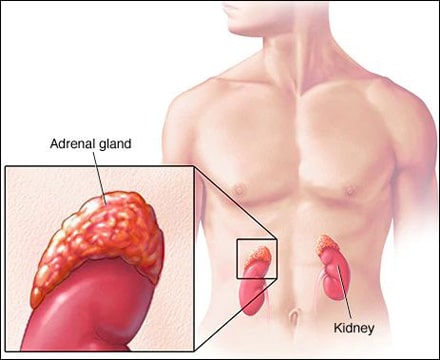
Neuroblastoma is a malignant tumor arising from primitive neural crest cells that form the sympathetic nervous system, most commonly affecting infants and young children. It typically originates in the adrenal medulla or along the sympathetic chain and is characterized by aggressive behavior, variable differentiation, and a strong association with genetic and molecular abnormalities. The disease demonstrates the capacity of neuroectodermal cells to undergo uncontrolled proliferation, invade surrounding tissues, and metastasize to distant organs such as bone marrow, liver, and lymph nodes. Olfactory neuroblastoma shares this neuroectodermal origin, representing a rare, site-specific variant that arises from the olfactory neuroepithelium. In the text below, we shall discuss more about Olfactory neuroblastoma and its management.
Introduction
Olfactory neuroblastoma is also referred to as esthesioneuroblastoma which is a rare malignant tumor of neuroectodermal origin that arises from the olfactory neuroepithelium located in the upper part of the nasal cavity near the cribriform plate of the ethmoid bone. It represents a small proportion of all sinonasal malignancies and poses significant diagnostic and therapeutic challenges due to its rarity and diverse clinical behavior.
Epidemiology
Olfactory neuroblastoma can occur at any age but most commonly presents in adults in the fifth to sixth decades of life. There is a slight male predominance reported in clinical series. The tumor is extremely rare, accounting for an estimated 3% of all nasal cavity cancers.
Pathogenesis and Histogenesis
The tumor is believed to originate from the basal progenitor or stem cells of the olfactory neuroepithelium, which are capable of neuroectodermal differentiation. This origin explains the neuroendocrine features seen in histopathology and the immunohistochemical profile that distinguishes Olfactory neuroblastoma from other small round cell tumors of the sinonasal region.
Clinical Presentation
Patients with Olfactory neuroblastoma often present with non‑specific symptoms that overlap with benign sinonasal conditions, contributing to diagnostic delay. The most frequent presenting features include:
- Nasal obstruction
- Epistaxis (nosebleeds)
- Rhinorrhea, anosmia, or lacrimation
- Facial pain or headache
- Visual symptoms if orbit or optic nerve is involved
Rarely, patients may present with neurological signs if the tumor extends into the anterior cranial fossa.
Diagnosis
Radiological Evaluation
Imaging plays a critical role in defining the extent of the tumor:
- CT scans
- MRI
Histolopathology
Stagin
Clinical staging systems commonly used for Olfactory neuroblastoma include:
- Kadish staging: A three‑stage system (A: confined to nasal cavity; B: involvement of paranasal sinuses; C: extension beyond sinonasal region including anterior cranial fossa)
- Dulguerov modification: Incorporates TNM criteria and prognostic value
Higher stages correlate with increased risk of recurrence and worse outcomes.
Treatment Strategies
1. Surgical Management
Complete surgical resection remains the cornerstone of treatment. Historically, open craniofacial approaches were standard. With advances in endoscopic techniques, many centers now prefer endonasal endoscopic resection, which can achieve equivalent oncologic outcomes with reduced morbidity in appropriate cases.
2. Radiation Therapy
Radiation therapy is widely employed as an adjuvant to surgery to reduce local recurrence. Techniques such as conformal radiation and intensity‑modulated radiotherapy have improved local control while minimizing toxicity to nearby critical structures like the brain and eyes.
3. Chemotherapy
The role of chemotherapy is not as well established as surgery and radiation in Olfactory neuroblastoma. It is most commonly considered:
- In advanced disease
- In unresectable tumors
- As part of combined chemoradiation protocols
Some case reports suggest benefit, but optimal regimens and indications require further research.
Multimodality Approach
A combined approach involving surgery, radiotherapy, and, where appropriate, chemotherapy is often utilized to maximize disease control and survival in Olfactory neuroblastoma.
Prognosis and Outcomes
Survival outcomes in olfactory neuroblastoma vary widely and depend on stage at presentation, completeness of surgical resection, histologic grade, and response to adjuvant therapy. Five‑year survival rates range significantly based on extent of disease:
- Approx. 75% in early, confined cases (Kadish A)
- Lower survival in advanced disease with intracranial spread.
Recurrences can occur locally, regionally in cervical lymph nodes, or distantly, emphasizing the need for long‑term surveillance.
Ayurvedic Aspect of Olfactory neuroblastoma
In Ayurveda, there is no direct correlation of Olfactory neuroblastoma, however the condition can be correlated with arbuda Arbuda (malignant tumors/cancers) depending on the nature, progression, and aggressiveness.
Dosha Involvement
1. Vata Dosha (Movement and Neurological Functions)
- Vata governs neurological activity, including sensation, olfaction, and nerve conduction.
- Disruption of Vata in the Urdhvajatrugata Marma (head and cranial region) can lead to aberrant growth and irregular cellular proliferation.
- Manifestations: anosmia, nasal obstruction, craniofacial discomfort, headache — all primarily Vata signs.
2. Kapha Dosha (Structural and Growth Regulation)
- Kapha provides cohesion, lubrication, and cellular growth regulation.
- Excessive Kapha, when combined with Vata imbalance, can lead to granthi formation or tumor development due to sluggish circulation and stagnation.
- Manifestations: gradual tumor enlargement, heaviness in the head, nasal congestion.
3. Pitta Dosha (Metabolic and Transformative Processes)
- Pitta is responsible for cellular metabolism and inflammatory processes.
- Aggravation of Pitta in the nasal and cranial region can lead to tissue inflammation, necrosis, or ulceration, correlating with epistaxis and local tissue invasion.
Thus, ONB can be understood as a Vata-Kapha-Pitta prakopa leading to Arbuda in the Urdhvajatrugata region.Dhatu (Tissue) Involvement
- Rakta Dhatu (Blood): Epistaxis (nosebleeds) and vascular invasion indicate Rakta involvement.
- Mamsa Dhatu (Muscle/Soft Tissue): Tumor mass formation corresponds to abnormal Mamsa growth.
- Majja Dhatu (Nervous Tissue / Bone Marrow): Intracranial extension affecting olfactory nerves or cranial bones reflects Majja involvement.
The progressive involvement of multiple dhatus (tissues) aligns with Malignant Arbuda, where tissues from Rasa to Majja are affected in an ascending manner.
1. Samprapti (Pathogenesis)
- Dosha imbalance (Vata-Kapha-Pitta) →
- Rasa-Rakta Dhatu vitiation →
- Mamsa and Majja dhatu involvement →
- Granthi formation →
- Progression to Arbuda (malignant tumor) with potential local invasion and intracranial extension.
Ayurvedic Therapeutic Approach
- Shodhana (Detoxification / Purification)
- Nasya therapy with Vata-Pitta-Kapha balancing oils (e.g., Anu Taila) to pacify doshas in the nasal cavity.
- Shaman (Palliative / Dosha-Pacifying)
- Vata-Kapha-Pitta pacifying herbs:
- Guduchi (Tinospora cordifolia) – immunomodulatory, anti-inflammatory
- Haridra (Curcuma longa) – anti-inflammatory, cytoprotective
- Ashwagandha (Withania somnifera) – Rasayana, supports nervous tissue and immunity
- Antitumor herbs:
- Bhringaraj (Eclipta alba), Kanchnaar (Bauhinia variegata), Amla (Emblica officinalis), Kutki (Picrorhiza kurroa) – support liver metabolism and rakta shodhan (blood cleansing)
- Rasayana Therapy (Rejuvenation)
- Focused on Majja dhatu and systemic immunity to prevent recurrence.
- Chyawanprash, Amalaki Rasayana, Brahm Rasayan etc.
- Surgical Intervention Correlation
- While Ayurveda encourages shodhana and shaman, advanced Arbuda may require Surgical excision.
Herbal Remedies by Planet Ayurveda for Olfactory neuroblastoma
Planet Ayurveda is a globally recognized Ayurvedic healthcare brand dedicated to preserving the authenticity of classical Indian medicine while addressing modern health challenges. Founded with the vision of delivering safe, natural, and effective herbal solutions, the company combines traditional Ayurvedic wisdom with scientific research and quality manufacturing practices. Planet Ayurveda formulates its products using standardized herbal extracts, prepared without chemicals, preservatives, or additives. With a strong emphasis on holistic healing, patient education, and sustainable healthcare, the organization continues to promote natural wellness across diverse populations worldwide. Planet Ayurveda is pleased to present its list of products that are effective in the management of Olfactory neuroblastoma.
Product list
- Kanchnaar Guggul
- Crab Baccata Capsules
- Tumotrim Capsules
- Chandraprabha Vati
- Boswellia Curcumin
- Tulsi Capsules


Product Description
1. Kanchnaar Guggul
Kanchnaar Guggul is a classical ayurvedic medicine traditionally used to manage abnormal tissue swellings, lymphatic congestion, and nodular growths. It works by detoxifying the body, balancing Kapha and Vata doshas, and supporting Rakta (blood) and Mamsa (muscle/tissue) health, which are involved in arbuda. Its ingredients, such as Kanchanar (Bauhinia variegata) and Guggulu (Commiphora mukul), possess anti-inflammatory, antioxidant, and antiproliferative properties, potentially helping regulate abnormal cell proliferation and tissue inflammation. Kanchnaar Guggul serves as an addition in the management of Olfactory neuroblastoma
Dosage : Two tablets twice a day.
2. Crab Baccata Capsules
Crab Baccata Capsules are a product of Planet Ayurveda and contain a standardized extract of Thuner (Taxus baccata), a plant known for its anti‑inflammatory (shothaghna) and cytotoxic properties. In this formulation, the diterpene alkaloid paclitaxel (taxol), a compound widely studied in modern oncology interferes with microtubule dynamics, stabilizes cell division structures, and induces apoptosis (programmed cell death) in rapidly dividing cells, which helps control abnormal proliferation characteristic of tumors. Additionally, it supports healthy cell growth and functioning and assists in managing chronic malignant inflammation by balancing Kapha and reducing tissue stagnation, aligning with Ayurvedic concepts of clearing srotorodha (channel blockages) and supporting Rakta dhatu (blood tissue) health. With its anticancer properties, Crab Baccata Capsules are helpful in the management of Olfactory neuroblastoma.
Dosage : One capsule twice a day.
3. Tumotrim Capsules
TumoTrim Capsules is a product of Planet Ayurveda formulated for the conditions involving abnormal cell growth like Olfactory neuroblastoma. It contains standardized extracts of herbs such as Haridra (Curcuma longa), Shallaki (Boswellia serrata), Tulsi (Ocimum sanctum), Ashwagandha (Withania somnifera), Maricha (Piper nigrum), and Sonth (Zingiber officinale). These ingredients are traditionally known for their anti‑inflammatory, antioxidant, and immunomodulatory properties, such as curcumin from turmeric helps manage inflammation and may support normal cellular regulation, while boswellic acids from Shallaki help balance inflammatory responses and support healthy tissue function. Tulsi and Ashwagandha contribute adaptogenic effects and immune support, and black pepper and ginger enhance bioavailability and digestive strength. Together, this blend helps support the body’s natural defenses, reduce oxidative stress, promote balanced inflammatory responses, and assist in maintaining overall strength and wellbeing during challenging health conditions. This way, Tumotrim Capsules not only address tumor growth but also check the associated symptoms.
Dosage: Two capsules twice a day.
4. Chandraprabha Vati
Chandraprabha Vati is a classical Ayurvedic herbal‑mineral formulation traditionally used to promote systemic strength, detoxification, anti‑inflammatory balance, and overall well‑being. The herbs and minerals in this preparation act as Rasayana (rejuvenators) that help improve immunity, metabolism, and cellular health, which can be beneficial when the body is challenged by aggressive pathological conditions. It supports detoxification and reduction of inflammation, helping eliminate metabolic wastes. Its anti‑inflammatory and antioxidant properties assist in balancing metabolic stress and may help mitigate chronic inflammation in olfactory neuroblastoma. Additionally, by promoting strength, vitality, and immunity, Chandraprabha Vati contributes to overall patient support during conventional cancer therapies, enhances recovery capacity, and helps maintain general physiological balance under the stress of disease and treatment.
Dosage : Two tablets twice a day.
5. Boswellia Curcumin
Boswellia Curcumin capsules are a patent product of Planet Ayurveda combining shallaki (Boswellia serrata) and haridra (Curcuma longa), both renowned for their anti-inflammatory, antioxidant, immunomodulatory, and cytoprotective properties. Boswellic acids in Boswellia inhibit inflammatory signaling pathways such as NF‑κB, reduce expression of cytokines and mediators that promote abnormal cell proliferation, angiogenesis, and tissue invasion, and help maintain vascular and connective tissue health. Curcumin complements these effects by regulating oxidative stress, modulating inflammatory cytokines like IL‑6, TNF‑α, and IL‑1β, and supporting apoptosis in aberrant cells while protecting normal tissues. From an Ayurvedic perspective, the formulation helps pacify Vata and Kapha doshas, supports Rakta (blood) and Mamsa (muscle) dhatu (tissue), reduces stagnation in the channels (srotorodha), and promotes systemic rejuvenation (Rasayana effect). With these properties, Boswellia Curcumin helps in the management of Olfactory neuroblastoma.
Dosage:- One capsule twice a day.
6. Tulsi Capsules
Planet Ayurveda’s Tulsi capsules contain standardized extract of Tulsi (Ocimum sanctum), a revered herb in Ayurveda known for its adaptogenic, antioxidant, anti-cancerous, immunomodulatory, and anti‑inflammatory properties. Tulsi extracts have free radicals’ scavenging properties and boost antioxidant enzymes like glutathione and superoxide dismutase, and protect cells from oxidative damage, which is important in conditions with high metabolic and inflammatory stress such as tumors. It also exhibits immunomodulatory effects that help strengthen both cellular and humoral immunity, potentially aiding the body’s defense mechanisms during disease and treatment. Additionally, compounds in Tulsi have the ability to inhibit inflammatory pathways, reduce DNA damage, and induce apoptosis in abnormal cells, which supports cellular homeostasis and helps mitigate harmful processes involved in tumorigenesis. Tulsi helps pacify Vata and Kapha doshas, supports elimination of toxins (Ama) and maintains metabolic balance (Agni). With its rich properties, Tulsi capsules help in the management of Olfactory neuroblastoma.
Dosage : One capsule twice a day.
Conclusion
Olfactory Neuroblastoma (ONB) is a rare and aggressive malignant tumor of neuroectodermal origin that presents significant diagnostic and therapeutic challenges due to its location, diverse clinical behavior, and potential for local invasion and metastasis. Conventional management primarily involves a multimodal approach including surgical resection, radiotherapy, and, in selected cases, chemotherapy, with prognosis largely dependent on tumor stage, histologic grade, and completeness of treatment. Herbal formulations from Planet Ayurveda offer complementary support through anti-inflammatory, antioxidant, immunomodulatory, and cytoprotective properties. Above mentioned products improve patient quality of life, and support long-term management in individuals affected by Olfactory Neuroblastoma.


Dr. Vikram Chauhan
Latest posts by Dr. Vikram Chauhan (see all)
- Management of Olfactory neuroblastoma (ONB) in Ayurveda - September 28, 2026
- What is Aroma Therapy? – How is it an important part of Indian and different cultures since long? - September 18, 2026
- Cow Dung & Wood Heat vs Room Heaters – Health Benefits & Risks - September 17, 2026
- Let’s bust some myths about Infertility and Pregnancy? - September 15, 2026
- Zero Volt Therapy – Benefits, Uses & Holistic Wellness Approach - September 10, 2026