


Urinary Tract Infection (UTI): Causes, Symptoms & Ayurvedic Care
Abstract
Urinary Tract Infection (UTI) is a frequently encountered condition affecting different parts of the urinary system and commonly presenting with burning urination, increased frequency, urgency, lower abdominal discomfort, and, in some cases, fever or flank pain. Ayurveda does not describe UTI as a single disease entity, but its clinical features can be conceptually related to Mutrakrichhra (Painful or Difficult Urination) and disturbances of Mutravaha Srotas (Urinary Channels). Ayurvedic understanding emphasises the role of Dosha (Body Regulatory Principles), Agni (Digestive and Metabolic Fire), diet, hydration, and lifestyle in maintaining urinary health. Appropriate dietary practices, Nidana Parivarjana (Avoidance of Causative Factors), and individualised Ayurvedic supportive measures may help maintain healthy urinary function. However, suspected bacterial UTI requires proper clinical assessment and timely medical treatment to reduce the risk of complications. An integrated approach combining appropriate diagnosis, healthy lifestyle practices, and individualised care may support better urinary health and prevention of recurrence.
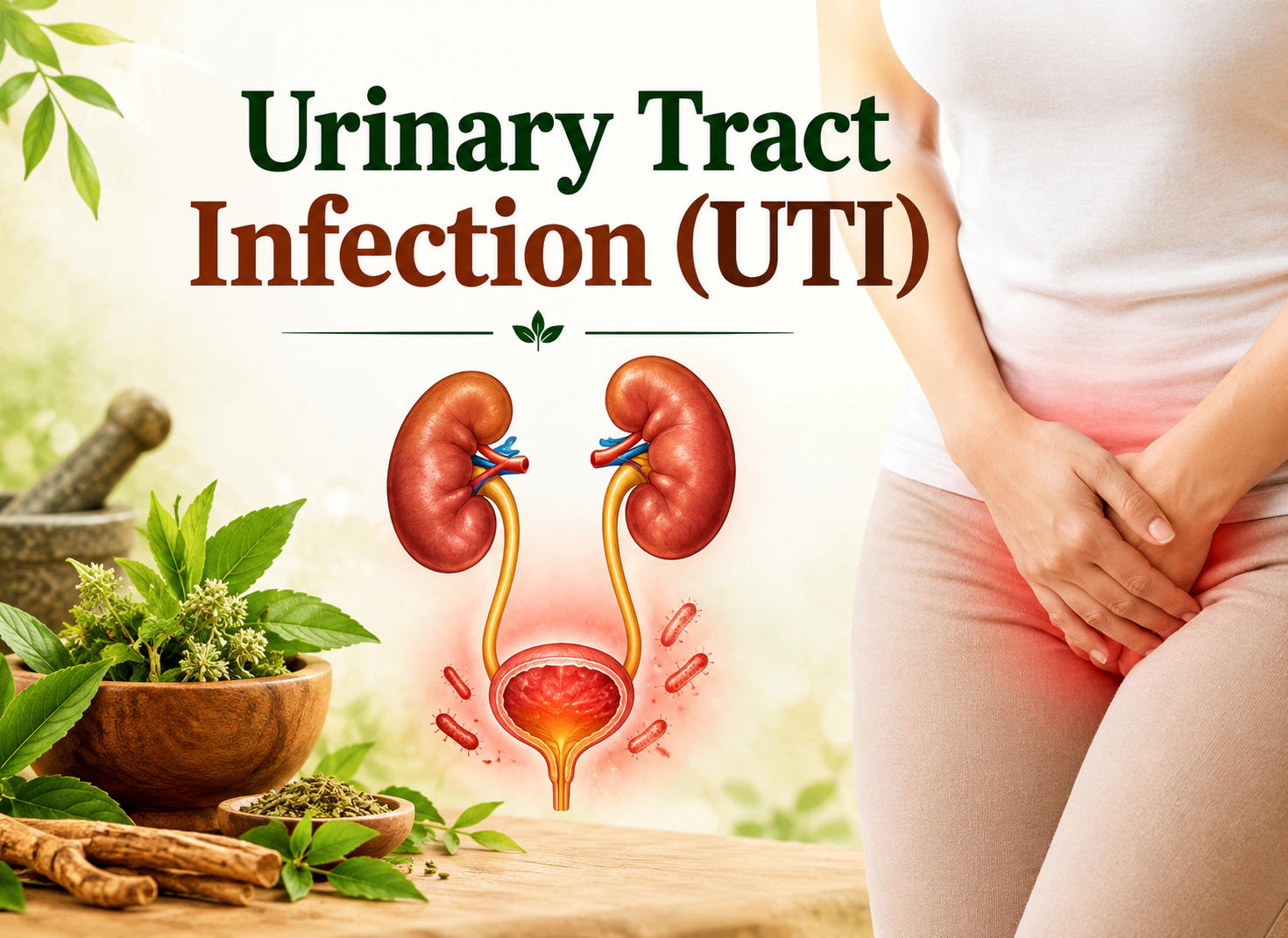
Introduction
A urinary tract infection (UTI) is an infection that can affect any part of the urinary system, including the urethra, urinary bladder, ureters, or kidneys. It usually develops when harmful microorganisms, especially bacteria, enter the urinary tract and grow there. UTIs are very common and are frequently seen in clinical practice. Most UTIs are caused by Gram-negative bacteria, and Escherichia coli (E. coli) is the most common cause. Women are more likely to develop UTIs than men because of differences in the structure of the urinary tract. The symptoms depend on which part of the urinary tract is affected. A lower UTI commonly causes burning or pain while passing urine, frequent urination, and a sudden urge to urinate. If the infection reaches the kidneys, a person may develop fever, pain in the side or lower back, nausea, vomiting, and other signs of illness.UTIs can be broadly described as uncomplicated or complicated, depending on the person’s health and the presence of conditions that may make the infection more difficult to treat. Early diagnosis and proper treatment are important because an infection that starts in the bladder can sometimes spread to the kidneys and cause more serious complications.
Cause
- Female sex – Women have a shorter urethra, so bacteria can reach the bladder more easily.
- Sexual activity – Sexual intercourse can push bacteria into the urinary passage and increase the chance of infection.
- New sexual partner – Having a new sexual partner may increase the risk of developing a UTI.
- Use of spermicides – Spermicides may disrupt the normal protective bacteria around the urinary opening, allowing harmful bacteria to grow.
- Urinary blockage – Anything that prevents normal urine flow can cause urine to remain in the urinary tract, creating favourable conditions for bacteria.
- Urinary stones – Kidney or urinary stones may block urine flow and can also provide a place where bacteria remain and multiply.
- Urinary catheter – Long-term use of a urinary catheter increases the possibility of bacteria entering the urinary tract and causing infection.
- Diabetes – High blood sugar and glucose in the urine can make a person more prone to urinary infections.
- Nervous system disorders – Certain neurological conditions may interfere with normal bladder emptying, causing urine to remain in the bladder.
- Vesicoureteric reflux (VUR) – In this condition, urine flows backwards from the bladder toward the ureters and kidneys, which can help infection spread upward.
- Bladder diverticula – Small pouch-like outgrowths in the bladder may trap urine and allow bacteria to survive.
- Abnormal urinary tract structure or function – Problems with the shape or working of the urinary system can interfere with proper urine flow and increase infection risk.
- After menopause – Hormonal changes after menopause can alter the urinary and genital environment, making UTIs more likely.
Signs and Symptoms of UTI
Symptoms of Lower UTI
- Pain or burning during urination – Urinating may cause a burning or uncomfortable sensation.
- Frequent urination – The person may feel the need to urinate repeatedly, even when only a small amount of urine is passed.
- Sudden urinary urgency – There may be a strong and immediate desire to pass urine.
- Lower abdominal discomfort – Pain, pressure, or heaviness may be felt in the lower abdomen.
- Changes in urine appearance – Urine may become cloudy or look different from normal.
- Strong-smelling urine – The urine may develop an unusually strong or unpleasant odour.
- Blood in urine – Some people may notice a pink, red, or darker colour due to blood in the urine.
- Incomplete bladder emptying – There may be a sensation that some urine is still left in the bladder after urination.
Symptoms of Upper UTI
- Fever – An increase in body temperature may occur.
- Chills or shivering – The person may experience episodes of chills along with fever.
- Pain in the back or side – Discomfort may occur around the kidney region.
- Nausea and vomiting – A kidney infection can cause digestive symptoms.
- General weakness or feeling unwell – The person may feel tired, weak, or significantly ill.
- Urinary symptoms – Burning, urgency, and frequent urination can also occur with an upper urinary infection.
Pathophysiology
Entry of infectious organisms
↓
Microorganisms enter the urinary tract, usually through the urethra
↓
Colonisation of the urinary tract
↓
Microorganisms attach to the surface of the urethra or bladder
↓
Growth and multiplication of bacteria
↓
The body’s normal urinary protective mechanisms are unable to clear the organisms
↓
Immune system activation
↓
White blood cells respond to the infection and produce local inflammation
↓
Inflammation of the urinary tract
↓
Irritation of the bladder and urethra produces symptoms such as burning urination, increased frequency, urgency, and lower abdominal discomfort
↓
Upward progression of infection
↓
In some cases, microorganisms travel from the bladder through the ureters toward the kidneys
↓
Kidney involvement (Pyelonephritis)
↓
Fever, chills, pain in the flank or back, nausea, and vomiting may develop
↓
Severe infection
↓
Infection may cause kidney tissue damage or spread into the bloodstream
↓
Bacteria in the bloodstream (Bacteraemia)
↓
Potential development of Sepsis
Diagnosis of Urinary Tract Infection (UTI)
The diagnosis of a urinary tract infection (UTI) is based on a combination of the patient’s clinical symptoms, physical examination, and appropriate laboratory investigations. Diagnostic tests help establish the presence of infection, identify the causative microorganism, and determine whether the infection has extended to the upper urinary tract or kidneys.
Clinical Assessment
The initial evaluation includes a detailed history of the patient’s symptoms. Common symptoms that may indicate a UTI include:
- Pain or burning sensation during urination
- Increased urinary frequency or urgency
- Discomfort or pressure in the lower abdomen
- Fever, chills, or feeling unwell
- Pain in the back or flank region
- Blood in the urine or noticeable changes in urine appearance
Urine Routine Examination
Routine urine analysis is commonly performed to identify abnormalities associated with urinary infection. Findings that may support the diagnosis include:
- White blood cells (pus cells): May indicate inflammation or infection in the urinary tract.
- Red blood cells: Can be present in some cases of UTI.
- Bacteria: Their presence may indicate bacterial growth, although contamination can also occur.
- Nitrites: May indicate the presence of certain bacteria capable of converting nitrates into nitrites.
- Leukocyte esterase: Indicates the presence of white blood cells and may support the diagnosis of urinary inflammation or infection.
Urine Culture
A urine culture is performed to detect bacterial growth and identify the microorganism responsible for the infection. It is particularly useful in recurrent, complicated, or severe infections. The culture may also include antimicrobial susceptibility testing, which helps determine which antibiotics are effective against the identified organism.
Blood Investigations
- Complete blood count (CBC)
- Kidney function tests
- Inflammatory markers
Imaging Studies
Imaging is generally not necessary in every uncomplicated UTI. However, it may be considered when there is suspicion of an underlying abnormality or complication. Depending on the clinical requirement, investigations may include
- Ultrasound of the urinary tract
- CT scan
- Other appropriate urinary tract imaging studies
Treatment of Urinary Tract Infection (UTI)
Treatment of UTI focuses on clearing the infection, reducing symptoms, and preventing recurrence. Management depends on the severity and location of the infection.
- Antibiotic Therapy: Bacterial UTIs are treated with suitable antibiotics selected according to the type of infection, patient factors, and, when required, urine culture results.
- Adequate Hydration: Drinking sufficient fluids helps maintain normal urinary function and prevents dehydration, unless fluid restriction has been advised.
- Symptom Relief: Appropriate medicines may be used to control burning urination, pain, fever, and abdominal discomfort.
- Treatment of Complications: Kidney infections or severe UTIs may require more intensive treatment and, in some cases, hospital care.
- Addressing the Underlying Cause: Recurrent or complicated UTIs may require treatment of contributing problems such as urinary stones, obstruction, or incomplete bladder emptying
AYURVEDA ASPECTS
Poorvarupa (Prodromal Features) of UTI – Ayurvedic Perspective
- Mutra Daha (Burning Sensation During Urination) – may indicate early irritation of the Mutravaha Srotas (Urinary Channels).
- Mutra Pravritti Adhikyata (Increased Urinary Frequency) – frequent urge to urinate may occur due to disturbance of Apana Vayu (Downward-Moving Vata).
- Adho Udara Aswasthata (Lower Abdominal Discomfort) – may be associated with early disturbance of Apana Vayu (Downward-Moving Vata).
- Mutra Vega (Urinary Urge) – altered or repeated urinary urges may indicate disturbance of urinary function.
- Mutra Marga Aswasthata (Urinary Tract Discomfort) – may reflect early involvement of the Mutravaha Srotas (Urinary Channels).
- Daurbalya (Weakness) or Klama (Fatigue) – may accompany the developing condition in some individuals.
Lakshana (Signs and Symptoms) of UTI
- Mutra Daha (Burning Urination) – burning or heat while passing urine.
- Mutra Shoola (Pain During Urination) – discomfort or pain associated with urination.
- Muhurmuhur Mutra Pravritti (Frequent Urination) – repeated need to pass urine.
- Alpa Mutra Pravritti (Low Urine Output per Urination) – passing small amounts of urine repeatedly.
- Adho Udara Shoola (Lower Abdominal Pain) – discomfort or pain in the lower abdomen.
- Mutra Vaivarnya (Change in Urine Colour) – alteration in the usual appearance of urine.
- Mutra Durgandhya (Unusual Urine Odour) – noticeable change in urinary smell.
- Kati Shoola (Lower Back or Flank Discomfort) – pain around the lower back region, particularly when the upper urinary tract may be involved.
- Jwara (Fever) – fever may occur with a more extensive infection.
- Daurbalya (General Weakness) – tiredness or weakness may accompany the condition.
SAMPRAPTI (PATHOPHYSIOLOGY)
Nidana (Causative Factors)
↓
Improper diet and lifestyle • Suppression of natural urinary urges • Inadequate hydration • Poor urinary hygiene
↓
Agni Vaishamya (Impaired Digestive and Metabolic Function)
↓
Dosha Prakopa (Aggravation of Doshas)
↓
Predominant disturbance of Apana Vayu (Downward-Moving Vata) with involvement of Pitta Dosha (Heat/Metabolic Principle)
↓
Mutravaha Srotas Dushti (Disturbance of Urinary Channels)
↓
Srotorodha (Obstruction or Impaired Flow) and local irritation
↓
Mutra Dushti (Abnormality in Urinary Function)
↓
Mutrakrichhrata (Painful or Difficult Urination), Mutra Daha (Burning Urination) and frequent urinary urge
↓
Manifestation of Lakshana (Signs and Symptoms)
Ayurvedic Samprapti Ghataka (Pathogenic Factors)
- Dosha (Regulatory Factors): Vata and Pitta
- Dushya (Affected Tissues/Body Components): Mutra (Urine) and relevant body fluids
- Srotas (Channels): Mutravaha Srotas (Urinary Channels)
- Srotodushti (Channel Disturbance): Sanga (Obstruction) and irritation
- Adhisthana (Site of Manifestation): Mutravaha Srotas (Urinary System)
- Rogamarga (Disease Pathway): Abhyantara Marga (Internal Disease Pathway)
Treatment
Nidana Parivarjana
- Avoidance of Causative Factors
- Suppression of Mutra Vega (Urinary Urge)
- Inadequate fluid intake
- Excessively spicy, salty, or irritating foods
- Poor urinary hygiene
- Excessive physical exertion during illness
Mutrala Dravyas (Urinary-Supportive Herbs)
Ayurveda describes several herbs traditionally used to support normal urinary flow. Depending on the Dosha (Functional Regulatory Factors) and individual condition, formulations containing Gokshura (Tribulus terrestris), Punarnava (Boerhavia diffusa), and Varuna (Crataeva nurvala) may be considered by an Ayurvedic practitioner.
Pitta-Shamana (Pacifying Pitta)
When burning urination and heat-related symptoms are prominent, Ayurvedic management may emphasise Pitta Shamana (Pitta-Pacifying Measures) through an appropriate diet and traditionally cooling substances.
Support for Mutravaha Srotas (Urinary Channels)
Ayurvedic treatment may aim to maintain healthy urinary function and support the proper movement of Apana Vayu (Downward-Moving Vata). Selection of medicines should be individualised according to the patient’s Prakriti (Constitution), Dosha (Functional Factors), symptoms, and disease severity.
Classical Shloka
A classical reference describing Mutrakrichhra (Painful/Difficult Urination) is found in Charaka Samhita, Chikitsa Sthana, Mutrakrichhra Chikitsa:
“मूत्रकृच्छ्रे तु मूत्रस्य कृच्छ्रेण प्रवृत्तिः।”
Meaning: Mutrakrichhra (Painful/Difficult Urination) is characterised by difficulty or discomfort associated with the passage of urine.
HERBAL REMEDIES FOR UTI BY PLANET AYURVEDA
Planet Ayurveda provides herbal and classical Ayurvedic formulations intended to support different aspects of wellness. For urinary health, certain traditionally used herbs and formulations may be incorporated as supportive care, depending on individual needs.
UTI CARE PACK


1. Punarnava Capsules
Planet Ayurveda’s Punarnava Capsules are a capsule-form herbal formulation prepared with standardized extract of Punarnava (Boerhaavia diffusa). In Ayurveda, Punarnava is traditionally associated with Mutravaha Srotas (urinary channels) and is valued for its Mutrala action, supporting healthy urine formation and flow. It is included in urinary-support protocols to promote normal elimination and maintain healthy fluid balance. In the context of UTI support, Punarnava may help maintain comfortable urination and normal urinary-system function. Its role is primarily supportive, particularly when healthy urine flow and fluid balance are important.
Dosage: 2 capsules twice daily with warm water after meals.
2. Gokshuradi Guggul
Gokshuradi Guggul is a classical Ayurvedic tablet formulation traditionally used to support Mutravaha Srotas (urinary channels). Its key ingredients include Gokshura (Tribulus terrestris), Shuddha Guggulu (Commiphora mukul), Triphala—Haritaki (Terminalia chebula), Bibhitaki (Terminalia bellirica) and Amalaki (Phyllanthus emblica)—along with Trikatu—Shunthi (Zingiber officinale), Maricha (Piper nigrum) and Pippali (Piper longum)—and Mustaka (Cyperus rotundus). Together, these herbs traditionally support healthy urinary flow and comfortable urination. In UTI-support regimens, it is used to maintain normal urinary passage and urinary-system function.
Dosage: 2 tablets twice daily with warm water after meals.
3. Varunadi Vati
Varunadi Vati is a tablet-form Ayurvedic formulation traditionally used to support urinary tract, bladder and kidney function. Important ingredients include Varuna (Crataeva nurvala), Punarnava (Boerhaavia diffusa), Gokshura (Tribulus terrestris) and Shuddha Guggulu (Commiphora mukul). Varuna and Gokshura are traditionally associated with Mutravaha Srotas (urinary channels), while Punarnava supports healthy urine formation and fluid balance. In the context of UTI support, Varunadi Vati may be included to maintain normal urinary flow and comfortable bladder function. Its traditional role is supportive rather than being positioned as a treatment for infection itself.
Dosage: 2 tablets twice daily with warm water after meals.
4. Chandanadi Vati
Chandanadi Vati is a classical Ayurvedic tablet formulation traditionally used when urinary burning and heat-related discomfort are prominent. Its ingredients include Shweta Chandan (Santalum album), Gokshura (Tribulus terrestris), Amalaki (Phyllanthus emblica), Pashanbheda (Bergenia ligulata), Kapur (Cinnamomum camphora), Gairik (Red Ochre/Mineral source), Rasaut (Berberis aristata) and Choti Elaichi (Elettaria cardamomum), among others. Chandan and other traditionally cooling ingredients give this formulation particular relevance in Mutra Daha (burning during urination) and Pitta-related urinary discomfort. Within a UTI-support regimen, it primarily supports urinary comfort.
Dosage: 2 tablets twice daily with warm water after meals.
5. Reno Plan Syrup
Reno Plan Syrup is a liquid herbal formulation designed to provide comprehensive support for the kidneys and urinary system. Its key ingredients include Punarnava (Boerhaavia diffusa), Varuna (Crataeva nurvala), Gorakhmundi (Sphaeranthus indicus), Gokshura (Tribulus terrestris), Bhumi Amla (Phyllanthus amarus), Kaasni (Cichorium intybus), Trapush (Cucumis sativus), Saral (Pinus roxburghii) and Kalmegh (Andrographis paniculata), along with Trinpanchmool herbs. Punarnava and Gokshura traditionally support healthy urine flow, while Varuna and other herbs support normal urinary-system function. It provides broad supportive care for urinary wellness.
Dosage: 2 teaspoons twice daily with warm water after meals.
Diet Regimen – Ayurvedic Perspective
From an Ayurvedic perspective, dietary management in urinary disorders focuses on maintaining Agni (Digestive and Metabolic Fire), supporting Mutravaha Srotas (Urinary Channels), and maintaining a balanced Dosha (Body Regulatory Principles). Food should be light, fresh, easy to digest, and appropriate to the individual’s Prakriti (Body Constitution).
Pathya (Diet given)
- Ushna Jala (Warm Water): Take adequate amounts of clean water throughout the day to support normal urine flow and hydration.
- Narikela Jala (Coconut Water): Can be included as a refreshing and hydrating drink when suitable for the individual.
- Yava (Barley): A light grain traditionally considered supportive for urinary health and suitable as part of a balanced diet.
- Mudga (Green Gram): Light and easy to digest; can be consumed as a thin dal or light preparation.
- Shali Dhanya (Rice): Soft, properly cooked rice can be included when a light and easily digestible meal is preferred.
- Drava Ahara (Fluid-Based Foods): Light soups, thin dal, and other nourishing fluids can help maintain adequate fluid intake.
- Shakabhaji (Fresh Vegetables): Prefer lightly cooked vegetables rather than very oily, fried, or heavily spiced preparations.
- Phala (Fresh Fruits): Fresh, water-rich fruits can be included according to individual tolerance and digestive capacity.
- Takra (Buttermilk): Plain, lightly prepared buttermilk may be suitable for some individuals when digestion is comfortable.
- Regular Meals: Eating meals at appropriate times helps maintain Agni (Digestive Fire) and prevents unnecessary digestive disturbance.
Foods to Limit – Apathya (Avoidable Diet)
- Ati-Tikshna Ahara (Very Spicy Foods): Excessive chilli and highly pungent foods may aggravate Pitta Dosha (Heat Principle) and increase urinary discomfort in sensitive individuals.
- Ati-Amla Ahara (Excessively Sour Foods): Very sour foods should be limited when burning urination or Pitta-related symptoms are prominent.
- Ati-Lavana Ahara (Excessively Salty Foods): Avoid excessive salt and highly processed salty foods.
- Madya (Alcohol): Alcohol should preferably be avoided during urinary discomfort and infection.
- Ati-Katu and Fried Foods (Very Pungent and Fried Foods): Heavy, oily, and highly fried meals may impair digestion and should be minimised.
- Excessive Caffeine: Large amounts of coffee, strong tea, and caffeinated beverages may worsen urinary frequency or bladder irritation in some individuals.
- Processed and Junk Foods: Packaged snacks, fast foods, and highly processed meals should be reduced.
CONCLUSION
Urinary Tract Infection (UTI) is a common urinary condition that requires timely diagnosis and appropriate care. From an Ayurvedic perspective, UTI-related symptoms can be understood in relation to Mutrakrichhra (Painful or Difficult Urination) and disturbance of Mutravaha Srotas (Urinary Channels). Maintaining proper hydration, following a light and balanced diet, avoiding suppression of natural urinary urges, and practising healthy lifestyle habits may support urinary health. Ayurvedic management can be individualised according to Dosha (Body Regulatory Principles) and Prakriti (Body Constitution), while suspected bacterial infections should receive appropriate medical evaluation and treatment when required.


Dr. Vikram Chauhan
Latest posts by Dr. Vikram Chauhan (see all)
- Herniated Disc & Ayurveda: Herbs, Diet and Lifestyle Guide - October 21, 2026
- Globus Pharyngeus: Ayurvedic Treatment & Remedies - October 21, 2026
- Urinary Tract Infection (UTI): Causes, Symptoms & Ayurvedic Care - October 21, 2026
- Prostate Cancer: Symptoms, Treatment & Ayurvedic Support - October 20, 2026
- Metachromatic Leukodystrophy: Symptoms & Ayurvedic Care - October 19, 2026