


Herniated Disc & Ayurveda: Herbs, Diet and Lifestyle Guide
ABSTRACT
Recent clinical investigations and large-scale meta-analyses in modern orthopedics reveal a remarkable physiological truth: approximately 97% of lumbar disc herniations resolve successfully without ever requiring surgical intervention. Spontaneous resorption mechanisms driven by macrophage- mediated phagocytosis, neovascularization, and localized inflammatory cascades allow extruded and sequestered disc material to shrink and dissolve over time when managed through targeted conservative approaches. Despite these encouraging empirical statistics, patients crippled by acute radicular pain or sciatica are frequently rushed toward invasive procedures carrying high rates of long-term failure and post-surgical syndrome. This article explores the ancient, time-tested paradigm of Ayurveda, which aligns seamlessly with modern conservative data by addressing the root metabolic and biomechanical causes of spinal degeneration. By pacifying aggravated Vata Dosha, eliminating deep-seated metabolic toxins (Ama), restoring internal oleation (Snehana), and utilizing authentic herbal combinations from Planet Ayurveda, patients can achieve profound structural recovery, eliminate nerve compression, and regain long-term mobility safely without going under the surgery.
Introduction
When sharp, shooting pain radiates down the leg and debilitating lower back stiffness strikes, modern medical channels frequently steer patients toward a narrow path of strong pharmaceutical painkillers, epidural steroid injections, or early surgical intervention. Yet, ground-breaking clinical data tells a profoundly different and more hopeful story. Comprehensive medical reviews demonstrate that up to 97% of herniated discs do not require surgery, healing instead through natural conservative mechanisms over time.
However, standard conventional physical therapy or passive rest often only masks symptoms without correcting the systemic tissue depletion and energetic imbalances that caused the disc to rupture in the first place. To truly conquer spinal degeneration, we must bridge modern medical statistics with the ancient, profound science of Ayurveda. Originating over five millennia ago, Ayurveda views the human body as an interconnected web governed by dynamic biological forces known as Doshas. By understanding how aggravated energy channels, digestive toxins, and structural bone and tissue depletion manifest as a herniated disc, Ayurveda provides a structured, empowering roadmap to true healing, allowing the body to leverage its innate capacity to recover without the trauma of invasive operations.
Understanding the Herniated Disc Through Modern and
Ayurvedic Lenses
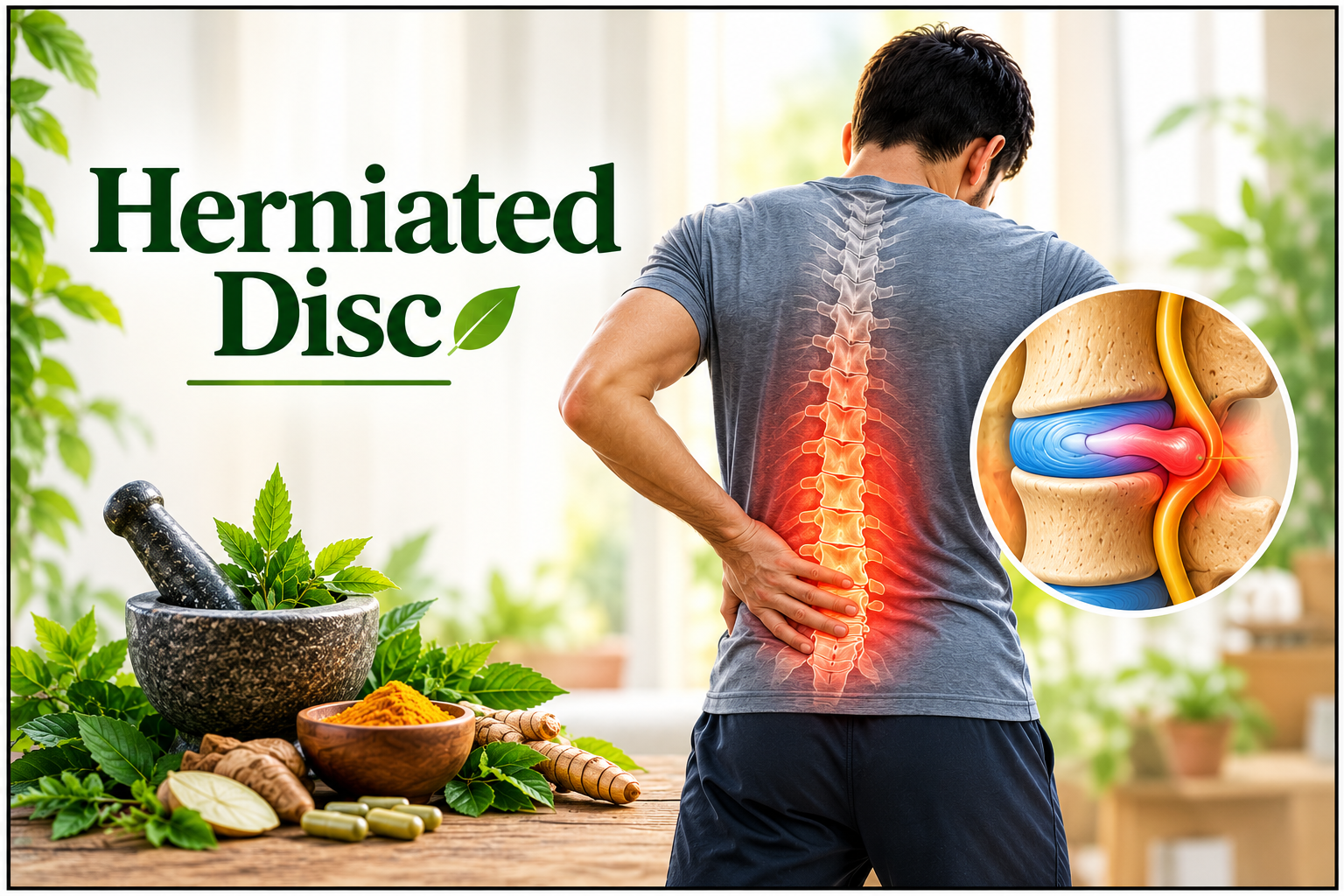
To comprehend how Ayurveda heals a herniated disc, it helps to understand what the condition actually is. The spine is composed of vertebrae cushioned by round, rubbery discs that act as shock absorbers. Each disc has a tough outer ring (anulus fibrosus) and a soft, gel-like center (nucleus pulposus). When a tear or rupture occurs within the outer ring, the inner gel pushes outward—a condition known as a herniated, slipped, or ruptured disc. This protruding material can press against nearby spinal nerves, triggering sharp pain, tingling, burning sensations, and weakness that can travel down the legs (sciatica).
In conventional medicine, treatment ranges from rest and physical therapy to anti-inflammatory medications, steroid injections, and ultimately surgery like microdiscectomy or spinal fusion. However, surgery carries inherent risks, long recovery times, and does not always guarantee complete pain relief.
Ayurveda approaches this condition through the lens of the Tridosha theory—specifically focusing on Vata Dosha. According to Ayurvedic principles, the spine and nervous system are governed primarily by Vata, the energy of movement composed of space and air elements. When Vata becomes aggravated due to poor posture, trauma, aging, psychological stress, or improper dietary habits, it dries out the lubricating fluids of the body, creates channel blockages (Srothorodh), and causes structural tissues (Dhatus) to degenerate. Specifically, the bony tissue (Asthi Dhatu) and marrow/nervous tissue (Majja Dhatu) suffer from depletion and dryness. In Ayurveda, a herniated disc is categorized under Gridhrasi (often correlated with sciatica) or general Vata Vyadhi (disorders of the nervous and musculoskeletal systems).
Thus, Ayurvedic treatment does not merely numb the pain; it pacifies aggravated Vata, nourishes the degenerative tissue, reduces localized inflammation, and restores structural balance to the spine.
The Ayurvedic Etiology and Pathogenesis of Spinal Disorders
Why do discs herniate? While modern medicine points to heavy lifting, sudden jerks, or degenerative wear and tear, Ayurveda delves deeper into lifestyle and metabolic factors.
- Agni Mandya (Weak Digestive Fire): When digestion is sluggish, it produces an endotoxin known as Ama. This sticky, toxic residue circulates through the body and settles in weaker channels, such as the joints and spinal spaces.
- Vata Prakopa (Aggravated Vata): Excessive consumption of dry, cold, light, or stale foods, irregular sleep patterns, suppression of natural urges, and excessive physical or mental strain aggravate Vata dosha.
- Dhatu Kshaya (Tissue Depletion): As people age or maintain poor nutrition, the deep tissues of the body—including the protective cushioning around the spine—lose their moisture, elasticity, and resilience.
When aggravated Vata combines with accumulated Ama, it enters the channels of the lower back (Kati), creating stiffness, spasms, and displacement of the soft tissues. Healing requires a multi-pronged strategy: eliminating Ama (endo toxins), pacifying Vata, lubricating the spinal joints, and strengthening the core musculature.
Holistic Management Pillars in Ayurveda
An authentic Ayurvedic protocol for a herniated disc is comprehensive and individualized. It typically encompasses four main dimensions:
1. Ahara (Dietary Modifications)
Diet plays a foundational role in subduing Vata. Patients are advised to consume warm, freshly cooked, grounding, and unctuous (healthy fat-rich) foods. Ghee (clarified butter), sesame oil, warm soups, and cooked grains help lubricate internal channels and pacify dry, erratic Vata energy. Cold carbonated drinks, raw salads, dry snacks, and processed foods are strictly minimized.
2. Vihara (Lifestyle and Ergonomics)
Correcting daily habits is non-negotiable. Patients learn proper posture, gentle stretching, and restorative yoga asanas that do not compress the spine. Adequate rest, avoiding heavy lifting, and maintaining a calm mental state are emphasized to prevent further Vata aggravation.
3. Shodhan Chikitsa (Purification Therapies)
For chronic or severe cases, classical Ayurvedic detoxification procedures (Panchakarma) are immensely beneficial. Treatments like Kati Basti (retaining warm, medicated herbal oils in a dam-like structure over the lower back), Basti (medicated enemas considered the supreme treatment for Vata disorders), and Abhyanga (therapeutic oil massage) help flush out toxins, relax spasmodic muscles, and deeply nourish the spinal nerves.
4. Shamana Chikitsa (Herbal Formulations)
Herbal medicines are the cornerstone of daily management. They work systemically to reduce inflammation, clear Ama (endotoxins), nourish bone and nerve tissue, and relieve pain naturally without the side effects associated with long-term NSAID use.
When seeking reliable, high-potency herbal remedies to support spinal recovery, Planet Ayurveda stands out as a globally trusted name. Founded on the authentic principles of traditional Ayurvedic science, Planet Ayurveda is dedicated to manufacturing 100% pure herbal supplements under strict quality controls. Their formulations are free from chemicals, preservatives, synthetic additives, and heavy metals, ensuring that patients receive the unadulterated healing power of nature.
Planet Ayurveda combines ancient classical recipes with modern technological precision, making it an ideal choice for individuals seeking natural relief from chronic conditions like herniated discs, sciatica, and degenerative joint diseases. Their targeted herbal combinations work synergistically to balance Vata, clear toxins from deep tissues, and regenerate musculoskeletal health.
Targeted Herbal Regimen for Herniated Disc Management
To effectively manage a herniated disc, reduce nerve compression, and promote tissue regeneration, a specific combination of herbal remedies can be incorporated into your daily routine. Here is a detailed breakdown of the recommended products and their specific dosages:
- Boswellia curcumin
- Aamvatantak Churna
- Yograj Guggul
- Hakam Churna
- Mahatriphala Ghrit
Herniated Disc & Ayurveda: Herbs, Diet and Lifestyle Guide


PRODUCT DESCRIPTION
1. Boswellia Curcumin
This powerful formulation combines two of nature’s most potent anti- inflammatory agents: Boswellia serrata (Shallaki) and standardized extract of Curcumin (Curcuma longa). Boswellia helps reduce swelling around compressed nerves and improves blood circulation to the affected spinal area, while curcumin acts as a potent antioxidant that inhibits inflammatory pathways at a cellular level. Together, they offer natural relief from sharp, shooting back pain and stiffness without gastric side effects.
Dose: 2 cap twice daily after meal with warm water;
2. Aamvatantak Churna
A carefully curated herbal powder designed to combat Ama (toxins) and pacify aggravated Vata. It contains herbs like Ashwagandha (Withania somnifera), Methi (Trigonella foenum-graecum), Suranjan (Colchicum luteum), and Gorakhmundi (Sphaeranthus indicus). This churna helps clear metabolic blockages from the joints and spinal channels, reduces stiffness, and prevents inflammatory flare-ups associated with disc degeneration.
Dose: 1 tsp twice daily with warm water after meal
3. Yograj Guggul
A classic, highly revered Ayurvedic formulation centered around Guggul (resin of Commiphora mukul), blended with purifying and rejuvenating herbs like Chitraka, Pippali, Ajwain, and Triphala. Yograj Guggul is traditionally prescribed for all musculoskeletal and neurological disorders governed by Vata. It penetrates deep into the Asthi Dhatu (bone tissue), scrapes away accumulated toxins, strengthens the spinal column, and supports healthy nerve function.
Dose: 2 tabs twice daily after meal with warm water.
4. Hakam Churna
Often referred to as the “Tritherapy for Vata, “Hakam Churna is a potent blend of four drying and heating herbs: Chandrasur (Lepidium sativum), Kalonji (Nigella sativa), Methi (Fenugreek), and Ajwain (Trachyspermum ammi). It is exceptionally effective in pacifying deep-seated Vata dosha, improving digestion, alleviating chronic backache, and melting away stiffness in the lower back and neck regions.
Dose: 1 tsp twice daily with warm water after meal
5. Mahatriphala Ghrit
A medicated ghee preparation infused with the classic Triphala herbs (Amalaki, Bibhitaki, Haritaki) along with a rich array of nourishing botanicals. In Ayurveda, medicated ghee acts as a Yogavahi—a carrier that penetrates deep cell membranes and lubricates internal channels. Mahatriphala Ghrit nourishes the nervous system, supports eye and tissue health, and provides deep internal oleation (Snehana) to dry, degenerative spinal discs.
Dose: 1 tsp twice daily with warm water after meal
Complementary Lifestyle Tips for a Healthy Spine
While herbs and treatments lay the foundation for healing, your daily habits dictate your long-term recovery:
- Maintain Gentle Movement: Avoid prolonged bed rest, which can weaken core muscles. Engage in short, gentle walks and restorative yoga poses (such as Bhujangasana or Setu Bandhasana) under expert guidance.
- Practice Proper Ergonomics: Ensure your workstation supports your lumbar curve. Avoid slouching on soft couches or lifting heavy objects from the waist. Always bend your knees and keep your back straight when lifting.
- Stay Hydrated: Drink plenty of warm water throughout the day to help flush out toxins and keep the gelatinous discs hydrated.
- Manage Stress: Mental stress tightens muscles and worsens Vata imbalances. Incorporate meditation, deep breathing (Pranayama), and adequate sleep into your routine.
Conclusion
A herniated disc diagnosis can feel overwhelming, especially when faced with recommendations for invasive surgery. However, knowing that the vast majority of cases heal naturally opens the door to safer, more holistic healing modalities. Ayurveda offers a comprehensive, empowering pathway that respects the bodys innate intelligence. By addressing root causes like Vata aggravation and toxin accumulation through targeted dietary adjustments, lifestyle changes, and authentic herbal formulations like those offered by Planet Ayurveda, you can reclaim your mobility, alleviate chronic pain, and restore long-term vitality to your spine without ever going under the knife. Always consult a qualified Ayurvedic practitioner or healthcare provider before beginning any new herbal regimen or treatment plan.


Dr. Vikram Chauhan
Latest posts by Dr. Vikram Chauhan (see all)
- Herniated Disc & Ayurveda: Herbs, Diet and Lifestyle Guide - October 21, 2026
- Globus Pharyngeus: Ayurvedic Treatment & Remedies - October 21, 2026
- Urinary Tract Infection (UTI): Causes, Symptoms & Ayurvedic Care - October 21, 2026
- Prostate Cancer: Symptoms, Treatment & Ayurvedic Support - October 20, 2026
- Metachromatic Leukodystrophy: Symptoms & Ayurvedic Care - October 19, 2026