


Metachromatic Leukodystrophy: Symptoms & Ayurvedic Care
ABSTRACT
Metachromatic leukodystrophy presents with progressive neurological deterioration, with the clinical pattern largely influenced by the age of onset and disease severity. Patients can develop motor impairment, loss of previously acquired skills, muscle stiffness or weakness, difficulties with speech and swallowing, cognitive decline, behavioral changes, and impaired coordination. Diagnosis involves a combination of neurological assessment, biochemical testing, enzyme activity measurement, genetic analysis, and brain imaging. Early recognition is important because disease progression can be rapid, particularly in early-onset forms. Management requires multidisciplinary care involving neurologists, physiotherapists, speech therapists, nutrition specialists, and genetic counselors. Supportive measures focus on maintaining mobility, communication, nutrition, comfort, and overall quality of life.
INTRODUCTION
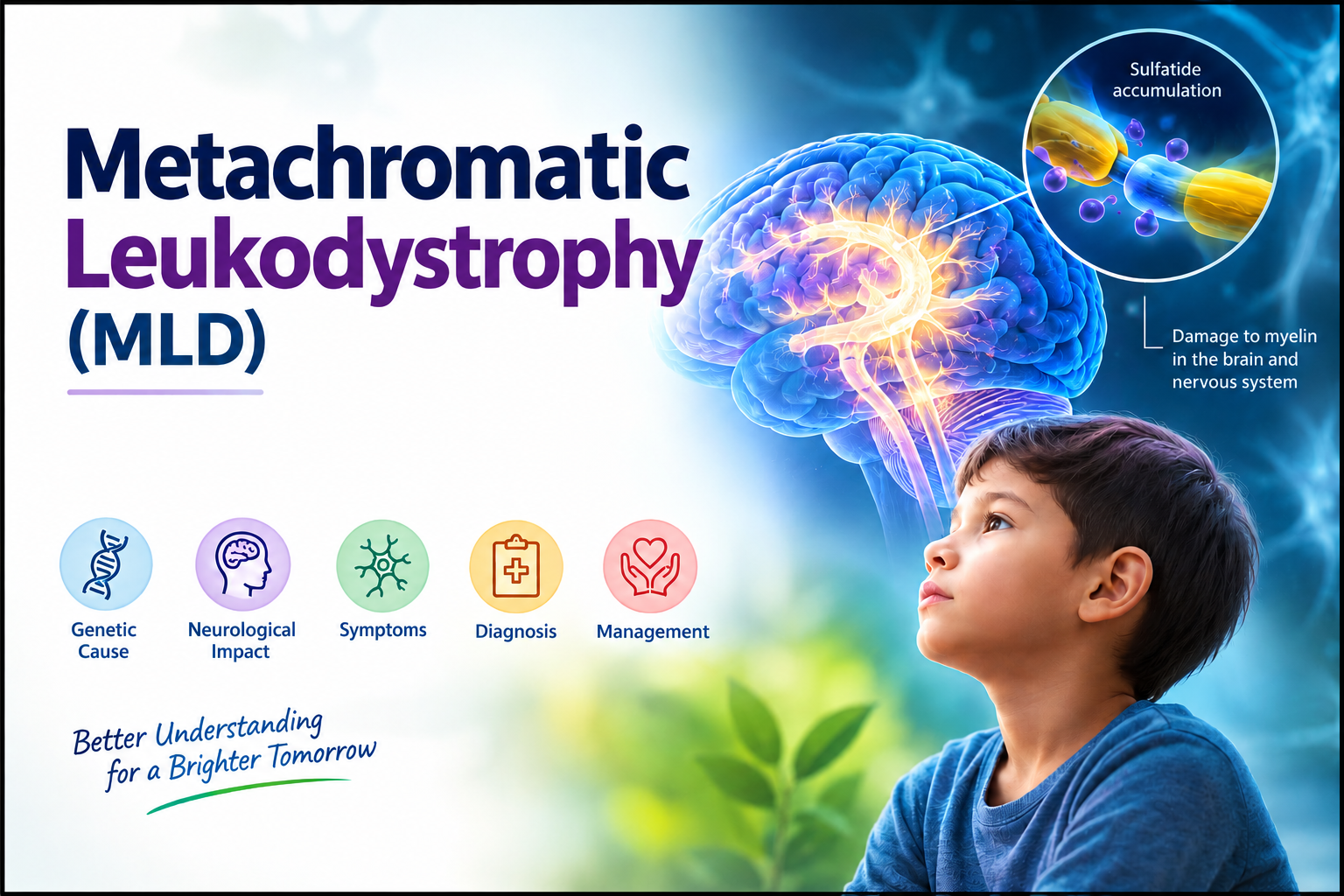
Metachromatic leukodystrophy (MLD) is a rare inherited metabolic disorder in which the body cannot properly break down certain fatty substances called sulfatides. Their accumulation causes progressive damage to myelin, the protective covering of nerve fibers in the brain, spinal cord, and peripheral nerves. MLD primarily results from deficiency of the enzyme arylsulfatase A (ARSA) and is usually inherited in an autosomal recessive pattern. The resulting demyelination gradually interferes with nerve signal transmission, leading to progressive problems with movement, coordination, speech, cognition, behavior, and other neurological functions. The condition can develop during infancy, childhood, adolescence, or adulthood, with the clinical features and rate of progression varying according to the age of onset.
STATATICS FOR METACHROMATIC LEUKODYSTROPHY
Metachromatic leukodystrophy (MLD) is a rare inherited disorder with substantial variation in frequency among populations. Reported prevalence ranges from approximately 1 in 40,000 to 1 in 170,000 people. A 2024 systematic review reported birth prevalence between 0.16 and 1.85 cases per 100,000 live births, with European estimates ranging from 0.38 to 1.85 per 100,000 live births. The late-infantile form is the most frequently reported subtype, followed by juvenile and adult forms. Late-infantile and juvenile cases together represent at least two- thirds of diagnosed cases in many studies. Carrier frequency is estimated at approximately 1 in 100 to 1 in population.
CAUSES OF METACHROMATIC LEUKODYSTROPHY
- ARSA gene mutations: MLD is primarily caused by pathogenic changes in the ARSA gene, which provides instructions for producing arylsulfatase A.
- Enzyme deficiency: Reduced or absent arylsulfatase A activity prevents normal breakdown of sulfatides.
- Sulfatide accumulation: Undegraded sulfatides progressively accumulate inside cells, particularly those involved in maintaining myelin.
- Progressive demyelination: Sulfatide accumulation damages myelin in the central and peripheral nervous systems, disrupting normal nerve transmission.
- Autosomal recessive inheritance: The condition generally develops when a child inherits a disease-causing ARSA variant from both parents.
- Carrier parents: Parents who carry one pathogenic ARSA variant are generally unaffected but can pass the variant to their children.
- Rare alternative cause: A small proportion of individuals have multiple sulfatase deficiency, a different inherited disorder involving impaired activation of several sulfatase enzymes.
- Not acquired: MLD is a genetic metabolic disorder and is not caused by diet, infection, lifestyle, or environmental exposure.
PATHOGENIESIS OF METACHROMATIC LEUKODYSTROPHY
ARSA gene mutation
↓
Reduced or absent arylsulfatase A enzyme activity
↓
Impaired degradation of sulfatides
↓
Sulfatide accumulation in lysosomes
↓
Damage to oligodendrocytes and Schwann cells
↓
Progressive destruction of myelin
↓
Demyelination in the central and peripheral nervous systems
↓
Impaired nerve impulse transmission
↓
Progressive neurological dysfunction
↓
Motor weakness + gait disturbance + coordination problems
↓
Speech, cognitive, behavioral and swallowing difficulties
↓
Progressive loss of previously acquired skills and functional independence
SIGNS AND SYMPTOMS OF METACHROMATIC LEUKODYSTROPHY
- Developmental regression: Previously acquired skills such as walking, speaking, or learning gradually decline.
- Gait problems: Difficulty walking, frequent falls, poor balance, and unsteady movements can develop.
- Muscle weakness: Progressive weakness affects mobility and the ability to perform daily activities.
- Muscle stiffness: Increased muscle tone and spasticity can make movements difficult.
- Poor coordination: Fine and gross motor coordination becomes increasingly impaired.
- Speech difficulties: Slurred speech and reduced ability to communicate can occur.
- Swallowing problems: Progressive neurological involvement can interfere with eating and swallowing.
- Cognitive decline: Memory, concentration, learning ability, and understanding can gradually deteriorate.
- Behavioral changes: Irritability, personality changes, emotional difficulties, or psychiatric symptoms can appear, particularly in later-onset MLD.
- Peripheral neuropathy: Nerve damage outside the brain and spinal cord can cause weakness, altered sensation, and reduced reflexes.
- Loss of bladder control: Urinary difficulties or incontinence can occur as neurological impairment progresses.
- Seizures: Some individuals develop seizures, particularly during advanced disease.
- Visual and hearing problems: Progressive nerve involvement can affect vision or hearing in some patients.
- Advanced neurological impairment: Severe disease can result in loss of independent movement, communication, and other daily functions.
DIAGNOSIS OF METACHROMATIC LEUKODYSTROPHY
- Clinical evaluation: The doctor assesses progressive changes in walking, muscle strength, coordination, speech, behavior, and cognitive abilities. The age at which these problems begin also provides important diagnostic clues.
- Family history: Since MLD is inherited, information about affected relatives,unexplained neurological illness, or similar childhood problems in the family can support clinical suspicion.
- Arylsulfatase A enzyme testing: Blood cells are tested to measure arylsulfatase A activity. Markedly reduced enzyme activity supports the possibility of MLD.
- Urinary sulfatide analysis: Sulfatides accumulate because they cannot be properly broken down. Their increased concentration in urine provides useful biochemical evidence.
- Genetic testing: Testing of the ARSA gene identifies disease-causing genetic variants and is important for confirming the diagnosis.
- Brain MRI: MRI helps detect characteristic abnormalities in the brains white matter and determine the distribution and progression of demyelination.
- Nerve conduction studies: These tests evaluate peripheral nerve function and can identify abnormalities caused by myelin damage outside the brain and spinal cord.
- Evoked potential testing: This assessment measures how quickly electrical signals travel through specific sensory pathways and can provide additional evidence of neurological involvement.
MANAGEMENT
- Early specialist assessment: Management should begin as early as possible through a multidisciplinary team involving neurology, genetics, rehabilitation, nutrition, and other relevant specialists.
- Disease-modifying treatment: In selected patients, hematopoietic stem cell transplantation (HSCT) can be considered, particularly when performed before significant neurological deterioration.
- Gene therapy: Atidarsagene autotemcel is a gene therapy option for eligible patients with certain early-onset forms of MLD. Treatment eligibility depends on age, genetic confirmation, neurological status, and local regulatory approval.
- Physiotherapy: Regular physiotherapy helps maintain mobility, flexibility, muscle function, and joint movement while reducing complications associated with immobility.
- Occupational therapy: Occupational therapists can assist with adaptive techniques and equipment to improve independence and safety during daily activities.
- Speech and swallowing support: Speech-language therapy can help maintain communication and assess swallowing difficulties. Modified food consistency or feeding support may be required when swallowing becomes unsafe.
- Nutritional care: Regular nutritional assessment is important to maintain adequate calories, hydration, and essential nutrients, particularly when feeding difficulties develop.
- Management of muscle stiffness: Spasticity and abnormal muscle tone can be managed using individualized physiotherapy and prescribed medicines when required.
- Seizure management: If seizures occur, appropriate neurological evaluation and antiseizure medication may be necessary.
- Respiratory care: Progressive weakness and swallowing impairment can increase respiratory complications. Monitoring, airway clearance, and appropriate respiratory support should be provided when indicated.
- Psychological and social support: Counseling and caregiver support are important because progressive neurological disability can place considerable emotional and practical demands on families.
- Genetic counseling: Families should receive counseling regarding the autosomal recessive inheritance of MLD, recurrence risk, and available testing options.
- Regular monitoring: Neurological function, mobility, nutrition, swallowing, respiratory status, communication, and overall quality of life should be assessed regularly.
AYURVEDIC INSIGHTS
Ayurveda does not describe MLD as a specific named disease; therefore, a direct one-to-one correlation should not be made. However, its clinical presentation can be understood through Ayurvedic concepts involving Vata dosha, Majja Dhatu ( deeper tissue) Snayu (tendons, ligament) and the Majjavaha strotas (neurological system) .Progressive weakness, impaired coordination, stiffness, abnormal movements, speech difficulties, and loss of neurological functions can be viewed from the perspective of Vata dushti affecting the nervous and musculoskeletal systems. The gradual deterioration of neurological tissues may be discussed in relation to Majja Dhatu kshaya and impairment of tissue nourishment. Features such as reduced strength and declining physical capacity can also be considered under Bala kshaya. From an Ayurvedic perspective, assessment would focus on the individual’s Prakriti, Vikriti, Agni ( digestive fire), Bala, Dosha involvement, Dhatu status, and Srotas rather than assigning MLD to a single classical disease entity.
SAMPRAPTI ( PATHOGENESIS) IN AYURVEDA
Beeja Dushti / Genetic Defect
↓
ARSA enzyme deficiency
↓
Impaired metabolism of sulfatides
↓
Accumulation of abnormal metabolic material
↓
Majja Dhatu ( deeper tissue) Dushti
↓
Majjavaha Srotas (neurological system) Dushti
↓
Vata Prakopa and Avarana
↓
Impairment of Majja( deeper tissue) and Snayu ( tendons and ligaments) functions
↓
Progressive impairment of nerve conduction and neuromuscular function
↓
Demyelination of CNS and PNS
↓
Motor, sensory, cognitive and behavioral dysfunction
↓
Progressive neurological deterioration and loss of functional abilities
LAKSHAN (SYMPTOMS) IN AYURVEDA
Since MLD does not have a direct one-to-one description in Ayurveda, its manifestations can be conceptually correlated with features of Vata dushti, Majja Dhatu dushti, and Majjavaha Srotas dushti.
- Daurbalya (general weakness): Progressive reduction in muscle strength and physical capacity.
- Cheshta Hani: Gradual impairment of voluntary movements and difficulty performing routine activities.
- Gati Vikriti: Abnormal or disturbed gait with difficulty walking and maintaining stability.
- Akshama Gati: Reduced ability to move independently as neurological impairment progresses.
- Kampa: Tremors or involuntary movements may be correlated with aggravated Vata.
- Stambha: Muscle stiffness and restricted movements can be interpreted as Vata- related stiffness.
- Sankocha: Tightness or abnormal contraction of muscles may interfere with normal mobility.
- Vak Vikara: Speech difficulties and impaired verbal communication may be considered under disturbance of Vata affecting neurological functions.
- Buddhi Vikara: Progressive impairment of cognitive functions can be conceptually related to Majja dushti.
- Smriti Hani: Decline in memory and previously acquired abilities.
- Manasika Vikara: Behavioral and psychological changes may occur during disease progression.
- Indriya Vaigunya: Disturbances involving sensory functions can be correlated with impairment of neurological pathways.
- Mootra Niyantrana Hani: Loss of bladder control may occur in advanced neurological involvement.
- Bala Kshaya: Progressive decline in functional strength and endurance.
- Sarva Kriya Hani: In advanced stages, progressive neurological deterioration can lead to dependence on caregivers for routine activities.
CHIKISTA ( MANAGEMENT) IN AYURVEDA
MLD is a genetic, progressive neurological disorder, and Ayurveda does not describe a specific treatment protocol for MLD. Ayurvedic management can therefore be presented as a supportive, individualized approach, while disease-specific neurological treatment and rehabilitation remain essential.
- Vata management: As progressive motor and neurological manifestations can be conceptually associated with Vata dushti, treatment may focus on appropriate Vata-pacifying measures based on the patients condition.
- Snehana: Medicated oil application or gentle Abhyanga can be considered to support comfort, flexibility, and musculoskeletal function when appropriate.
- Swedana: Mild, carefully selected Swedana may be considered for stiffness and restricted movement, provided the patient is medically suitable.
- Basti Chikitsa: In Ayurveda, Basti is an important therapy for Vata disorders. Its use in MLD should be individualized by a qualified Ayurvedic physician and should not be presented as a treatment for the underlying genetic defect.
- Majja Dhatu support: Dietary and therapeutic measures aimed at maintaining adequate nourishment of Majja Dhatu may be considered according to Agni, Prakriti, Bala, and disease stage.
- Rasayana approach: Selected Rasayana measures may be considered with the aim of supporting strength, nourishment, and overall wellbeing, particularly after proper assessment.
- Nutritional support: Adequate calories, protein, hydration, and micronutrients should be maintained according to individual requirements. Feeding modifications may be required when swallowing becomes difficult.
HERBAL REMEDIES FOR METACHROMATIC LEUKODYSTROPHY BY
PLANET AYURVEDA
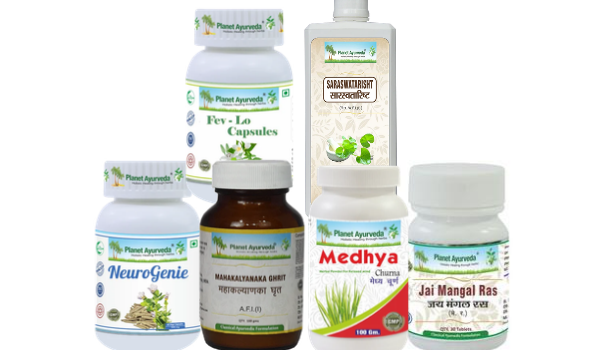
Planet Ayurveda is a well-established Ayurvedic healthcare organization that works to promote the ancient knowledge of Ayurveda through natural remedies and holistic health solutions. The company develops a wide range of herbal formulations using pure, high-quality ingredients and standardized herbal extracts, with a focus on maintaining safety, authenticity, and effectiveness. Following the principles of classical Ayurveda, Planet Ayurveda aims to support overall health by addressing the underlying causes of health concerns and encouraging balance in the body, mind, and emotions. With an emphasis on quality, natural ingredients, and traditional approaches supported by modern research, the organization works toward making Ayurvedic wellness solutions available globally. Planet Ayurveda offers various Ayurvedic formulations that are designed to use in supportive management of Metachromatic Leukodystrophy.The formulations are;
- Neurogenie Capsules
- Fev lo Capsules
- Jai Mangal Ras
- Saraswatarisht
- Medhya Churna
- Kalyanak ghrit
Metachromatic Leukodystrophy

PRODUCT DESCRIPTION
1. NEUROGENIE CAPSULES
Neurogenie Capsules contain Brahmi (Bacopa monnieri) and Ashwagandha (Withania somnifera), two Ayurvedic herbs traditionally used for neurological and cognitive support. Brahmi (Bacopa monnieri) is regarded as a Medhya Rasayana and is traditionally used to support memory, concentration, and mental functions. Ashwagandha (Withania somnifera) is valued for supporting Bala (strength), Medha (cognitive function), and overall neurological wellbeing. In MLD, Neurogenie Capsules can be considered as a supportive component of an individualized Ayurvedic care plan focusing on cognitive function, strength, and general wellbeing.
Dosage -1 Capsule twice a day .
2. FEV LO CAPSULES
It contains Giloy (Tinospora cordifolia), and Kalmegh (Andrographis paniculata) and many more herbs. Giloy (Tinospora cordifolia) is traditionally used to support general strength and immune function, while Kalmegh (Andrographis paniculata) is valued in Ayurveda for its Tikta properties and supportive role in maintaining metabolic and systemic health.
Dosage-1 Capsule twice a day.
3. JAI MANGAL RAS TABLETS
It is a herbo-mineral Ayurvedic formulation containing Parada ( purified mercury), Gandhaka (purified sulphur), Tamra (copper) Bhasma, Maricha (Piper nigrum) and many more herbs. In an Ayurvedic supportive approach to MLD, it can be considered according to the patients Vata involvement, Agni (digestive fire) Bala, and overall disease presentation. The formulation is traditionally used in conditions involving weakness and impaired physiological functions and may be incorporated into a broader plan focused on maintaining strength and functional wellbeing.
Dosage-1 tablet once a day.
4. SARASWATARISHT (GOLD)
Saraswatarishta is an Ayurvedic formulation containing Brahmi (Bacopa monnieri), Shatavari (Asparagus racemosus), Vidarikand (Pueraria tuberosa), and Harad (Terminalia chebula), along with other herbs.Brahmi (Bacopa monnieri) is traditionally valued for Medhya (increasing memory) properties, while Shatavari (Asparagus racemosus) and Vidarikand (Pueraria tuberosa) support nourishment and strength. Harad (Terminalia chebula) is traditionally used to support digestion and metabolism.
Dosage-5 ml twice a day.
5. MEDHYA CHURNA
it contains Shankhpushpi (Convolvulus pluricaulis), Ashwagandha (Withania somnifera), Brahmi (Bacopa monnieri), Shonth (Zingiber officinale), and Maricha (Piper nigrum) and many more herbs. This formulation can be considered for promoting cognitive function, mental alertness, digestion, and general neurological wellbeing. Shankhpushpi (Convolvulus pluricaulis) and Brahmi (Bacopa monnieri) are traditionally recognized for Medhya (increasing memory) properties, while Ashwagandha (Withania somnifera) supports strength and nourishment. Shonth (Zingiber officinale) and Maricha (Piper nigrum) support Agni (digestive fire) and digestion.
Dosage-¼ tsp twice a day.
6. KALYANAK GHRIT
It is an Ayurvedic medicated ghee containing ingredients such as Elachi (Elettaria cardamomum), Devadaru (Cedrus deodara), Haridra (Curcuma longa), and Shalaparni (Desmodium gangeticum), along with other herbs., it can be considered within an individualized Ayurvedic approach aimed at supporting Medha, Majja Dhatu, strength, and overall neurological wellbeing. Haridra (Curcuma longa) and Devadaru (Cedrus deodara) are traditionally valued for their supportive effects on systemic health, while Shalaparni (Desmodium gangeticum) is associated with nourishment and strength.
Dosage-½ tsp twice a day.
CONCLUSION
Metachromatic leukodystrophy is a progressive inherited disorder in which neurological function gradually declines because of widespread myelin injury. Its variable age of onset produces different clinical patterns, ranging from developmental regression in children to cognitive, psychiatric, motor, and peripheral nerve manifestations in adults. Confirming the diagnosis at an early stage is particularly important because therapeutic opportunities are more meaningful before extensive neurological damage occurs. Modern care therefore combines genetic confirmation, specialist monitoring, rehabilitation, nutritional support, and appropriate disease-modifying therapy whenever the patient meets eligibility criteria.


Dr. Vikram Chauhan
Latest posts by Dr. Vikram Chauhan (see all)
- Metachromatic Leukodystrophy: Symptoms & Ayurvedic Care - October 19, 2026
- Estrogen Metabolism: Understanding Estrogen Detox, Gut Health and Ayurveda - October 19, 2026
- Lynch Syndrome: Symptoms, Causes & Ayurvedic Care - October 17, 2026
- Keto Diet: Benefits, Side Effects & Ayurvedic View - October 17, 2026
- PCOS in Bollywood Actresses: Ayurveda, Remedies & Diet - October 16, 2026