


Keto Diet: Benefits, Side Effects & Ayurvedic View
INTRODUCTION
The Keto Diet (Ketogenic Diet) is a dietary pattern that contains very little carbohydrate, moderate protein and a higher proportion of fat. Its main purpose is to shift the body’s energy source from glucose toward fat and ketone bodies.Normally, carbohydrates from foods such as rice, wheat, bread, potatoes,sugar and fruits are converted into glucose. Glucose is commonly used as a major source of energy. When carbohydrate intake becomes very low, the body has less glucose available and begins using stored and dietary fat more extensively.The liver converts fatty acids into ketone bodies, which can then serve as an energy source for several tissues, including the brain.The ketogenic diet was initially developed as a therapeutic dietary approach for certain types of epilepsy. Today, it is also commonly used for weight management and metabolic health.
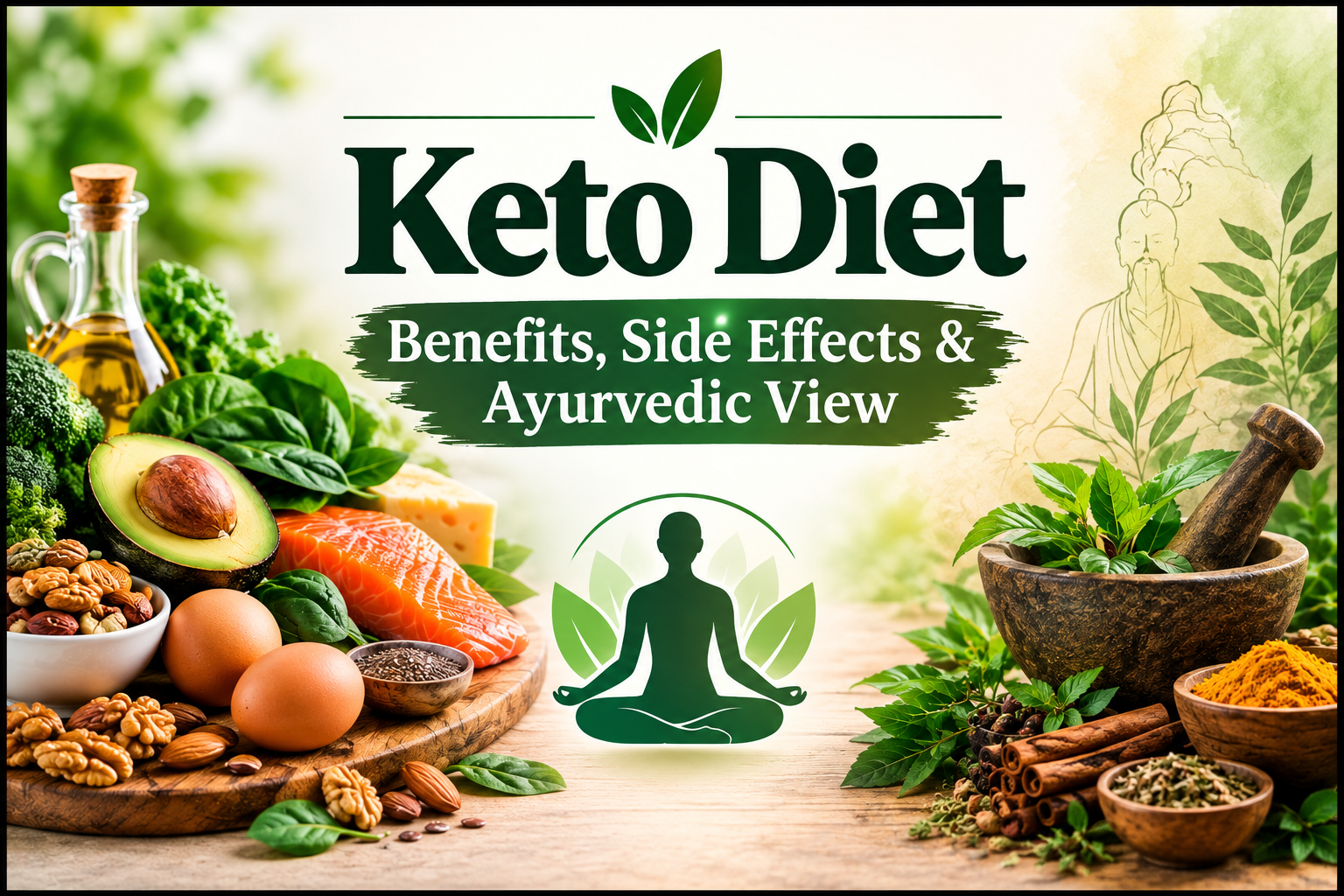
What Is a Ketogenic Diet?
A ketogenic diet generally provides:
- Very low carbohydrate: commonly around 20–50 g of carbohydrate per day, depending on the individual protocol.
- Moderate protein: sufficient to maintain muscle and body functions without making protein the dominant energy source.
- High fat: fat supplies most of the remaining calories.
The exact proportions can differ according to the purpose of the diet. A therapeutic ketogenic diet used for epilepsy is more precisely formulated than a general weight-loss keto plan.
The central objective is to achieve nutritional ketosis, in which the body produces increased amounts of ketone bodies because carbohydrate availability is low.
What Is Ketosis?
Ketosis is a metabolic state in which the body produces increased amounts of ketone bodies because carbohydrate availability is low.
The major ketone bodies are:
- Beta-hydroxybutyrate
- Acetoacetate
- Acetone
When carbohydrate intake is sufficiently restricted, insulin levels generally decrease and fat breakdown increases. The liver then converts some fatty acids into ketones.It is important to distinguish nutritional ketosis from diabetic ketoacidosis. Nutritional ketosis is a controlled metabolic response to carbohydrate restriction, whereas diabetic ketoacidosis is a serious medical emergency associated primarily with insulin deficiency.
How Does the Keto Diet Work?
Very Low Carbohydrate Intake
↓
Reduced Blood Glucose Availability
↓
Reduced Liver Glycogen Stores
↓
Increased Fat Breakdown (Lipolysis)
↓
Increased Free Fatty Acids
↓
Free Fatty Acids Reach the Liver
↓
Ketogenesis
↓
Formation of Ketone Bodies
↓
Beta-hydroxybutyrate + Acetoacetate + Acetone
↓
Ketones Used as an Alternative Energy Source
↓
Brain and Other Body Tissues Utilize Ketones
↓
Reduced Insulin Levels
↓
Increased Fat Utilization
↓
Increased Use of Stored Fat + Greater Satiety
↓
Reduced Calorie Intake
↓
Potential Weight Loss
Foods Commonly Included
A well-planned ketogenic diet usually emphasizes nutrient-dense foods rather than simply processed high-fat foods.
Healthy Fat Sources
- Avocado
- Nuts and seeds
- Coconut
- Olive oil
- Ghee in appropriate quantities
- Butter in moderation
- Nut and seed butters without added sugar
Protein Sources
- Eggs
- Fish
- Chicken
- Paneer
- Tofu
- Unsweetened dairy products
- Other appropriate protein sources according to individual dietary preferences
Low-Carbohydrate Vegetables
- Spinach
- Cucumber
- Cauliflower
- Broccoli
- Cabbage
- Capsicum
- Zucchini
- Mushrooms
- Green leafy vegetables
Non-starchy vegetables are particularly useful because they provide fiber, vitamins and minerals while keeping carbohydrate intake relatively low.
Foods Usually Restricted
The following foods are generally limited because they contain substantial amounts of carbohydrate:
- Sugar and sweets
- Soft drinks and sugary beverages
- Cakes and biscuits
- Bread and bakery products
- Rice
- Wheat-based foods
- Maida-based snacks
- Potatoes
- Sweet potatoes
- Most sugary breakfast cereals
- Sweetened dairy products
- Large portions of high-carbohydrate fruits
- Processed foods containing added sugars
The amount of carbohydrate that can be accommodated depends on the individuals ketogenic protocol and metabolic response.
Benefits of the Ketogenic Diet
1. Weight Management
One of the major reasons people follow a ketogenic diet is weight reduction. Restricting carbohydrates can reduce appetite in some individuals,while increased dietary fat and adequate protein can improve satiety. Reduced glycogen stores also cause an initial reduction in body water, which can produce a rapid fall in body weight during the early phase. However,long-term weight management still depends on sustainable calorie intake, food quality and adherence.
2. Improved Blood Glucose Control
Reducing carbohydrate intake can produce smaller post-meal glucose rises. Some people with type 2 diabetes experience improved glucose control while following a carefully supervised low-carbohydrate diet.People taking glucose-lowering medicines, particularly insulin or medicines that can cause hypoglycemia, should not substantially reduce carbohydrates without medical supervision because medication requirements can change.smaller post-meal glucose rises. Some people with type 2 diabetes experience improved glucose control while following a carefully supervised low-carbohydrate diet.People taking glucose-lowering medicines, particularly insulin or medicines that can cause hypoglycemia, should not substantially reduce carbohydrates without medical supervision because medication requirements can change.
3. Reduced Appetite
Higher protein intake, dietary fat and the metabolic effects of ketosis can reduce hunger in some individuals. This can make it easier for certain people to maintain a calorie deficit.
4. Therapeutic Role in Epilepsy
The ketogenic diet has an established therapeutic role in specific forms of epilepsy, particularly when seizures remain uncontrolled despite appropriate medicines. In this setting, it should be implemented under specialist supervision with appropriate nutritional monitoring.
5. Possible Effects on Metabolic Health
Changes in body weight, triglycerides, HDL cholesterol, blood glucose and other metabolic parameters can occur with ketogenic diets.
Common Side Effects
Some people experience temporary symptoms when carbohydrate intake is reduced sharply. These can include:
- Headache
- Fatigue
- Dizziness
- Constipation
- Muscle cramps
- Bad breath
- Nausea
- Reduced exercise performance during the adaptation period
This early phase is sometimes called the “keto flu.” Changes in fluid and electrolyte balance can contribute to several of these symptoms.Long-term poorly planned ketogenic diets can also create problems such as inadequate fiber intake, micronutrient deficiencies and unfavorable changes in blood lipids in some individuals.
WHO AVOID KETO DIET ?
People with certain medical conditions should not begin a strict ketogenic diet without professional guidance. Particular caution is needed in people with:
- Type 1 diabetes
- Pregnancy or breastfeeding
- Significant kidney disease
- Liver disease
- Gallbladder or pancreatic disorders
- A history of eating disorders
- Certain inherited metabolic disorders
People taking insulin or other glucose-lowering medicines should discuss carbohydrate restriction with their healthcare professional because blood glucose can fall substantially.A ketogenic diet is also different from diabetic ketoacidosis (DKA). Nutritional ketosis is a controlled metabolic state, whereas DKA is a medical emergency involving severe metabolic disturbance.
Is Keto Better Than Every Other Diet?
No single dietary pattern is ideal for everyone.The best diet is one that provides adequate nutrition, suits the individuals health status, fits cultural food preferences and can be maintained over time. Some people find keto convenient and satisfying, while others find the carbohydrate restriction difficult to sustain.For many individuals, a moderate-carbohydrate diet rich in vegetables, pulses, whole grains, fruits, lean proteins and healthy fats can also support healthy weight management.
AYURVEDIC CORRELATION OF KETO DIET
The Ketogenic Diet (Keto Diet) has become a popular dietary approach for weight management and metabolic health. It is based on very low carbohydrate intake, moderate protein and higher dietary fat, encouraging the body to use fat and ketone bodies as major energy sources. Although Ayurveda does not describe the modern keto diet as a specific dietary system, several of its principles can be discussed in relation to Agni (digestive fire),Meda (fat) Dhatu, Kapha Dosha, Ama (endotoxins) and Langhana (fasting) This correlation provides an Ayurvedic perspective on how a low-carbohydrate diet may influence digestion, metabolism and body weight, while also highlighting the importance of individual constitution, digestive capacity and dietary suitability.
1. Keto Diet and Agni
Ayurveda gives great importance to Agni (the digestive fire) When digestion is weak,symptoms such as heaviness, bloating, irregular appetite and excessive formation of Ama can develop.A carefully planned diet with appropriate meal timing and suitable food combinations can support healthy Agni. However, a high-fat diet is not automatically suitable for every person. Heavy and excessively oily foods can aggravate Mandagni in some individuals.
2. Keto Diet and Meda Dhatu
One of the major reasons people follow a keto diet is weight management. Ayurveda describes Meda Dhatu in relation to fat tissue and discusses excessive accumulation of Meda under conditions associated with Medovaha Srotas.For an individual with excess body weight, Ayurveda emphasizes appropriate Ahara, Vihara, exercise and dietary discipline rather than simply increasing dietary fat.
3. Keto Diet and Kapha Dosha
From an Ayurvedic perspective, excessive heaviness, lethargy, excessive sleep, increased appetite and accumulation of Meda are commonly associated with aggravated Kapha Dosha.A carefully designed low-carbohydrate diet that reduces refined sugar, sweets and highly processed carbohydrate-rich foods can conceptually fit a Kapha-reducing dietary approach.However, keto should not be equated directly with a Kapha diet. The amount and quality of fat, protein and vegetables still need to be considered.
4.Role of Ama
Frequent overeating, incompatible foods and impaired digestion can contribute to Ama formation according to Ayurveda.A keto diet that replaces refined carbohydrates and ultra-processed foods with fresh, wholesome foods can reduce some dietary factors associated with poor digestion. But simply entering ketosis does not mean that Ama has been eliminated.
5.Langhana and Keto Diet
Ayurveda describes Langhana, or therapeutic lightening approaches, for selected conditions and individuals. Some aspects of calorie restriction and simplified eating can appear conceptually similar to the idea of reducing the bodys metabolic burden.However, Langhana is not equivalent to the ketogenic diet. Ayurvedic Langhana is individualized according to Dosha, Agni, Bala, season and disease condition.
6. Keto and Dinacharya
Keto focuses primarily on what foods are consumed, whereas Ayurveda also considers when and how food is consumed.A keto plan can therefore be combined with Ayurvedic lifestyle principles such as ;Regular meal timing + mindful eating + adequate sleep + daily physical activity + appropriate hydration.
CONCLUSION
The Keto Diet is a modern low-carbohydrate dietary approach that can support weight management and metabolic health in selected individuals. From an Ayurvedic perspective, its principles can be viewed in relation to Agni (digestive fire) Meda Dhatu, Kapha Dosha, Ama and Langhana ( fasting) However, Ayurveda does not consider one diet suitable for everyone. Factors such as Prakriti, Vikriti, Agni, Bala, age, season and lifestyle should be considered before adopting a restrictive dietary pattern. A keto diet can be planned in an Ayurvedic manner by emphasizing suitable foods, proper meal timing, adequate hydration and digestive capacity. Therefore, the goal should not simply be carbohydrate restriction, but a personalized and sustainable approach that supports digestion, healthy body composition and overall wellbeing.


Dr. Vikram Chauhan
Latest posts by Dr. Vikram Chauhan (see all)
- Lynch Syndrome: Symptoms, Causes & Ayurvedic Care - October 17, 2026
- Keto Diet: Benefits, Side Effects & Ayurvedic View - October 17, 2026
- PCOS in Bollywood Actresses: Ayurveda, Remedies & Diet - October 16, 2026
- Nidana Panchaka in Ayurveda: 5 Diagnostic Principles - October 16, 2026
- Tonsillitis: Causes, Symptoms & Ayurvedic Treatment - October 15, 2026