

Scleroderma Treatment in Ayurveda – Ayurvedic Care & Management
Abstract
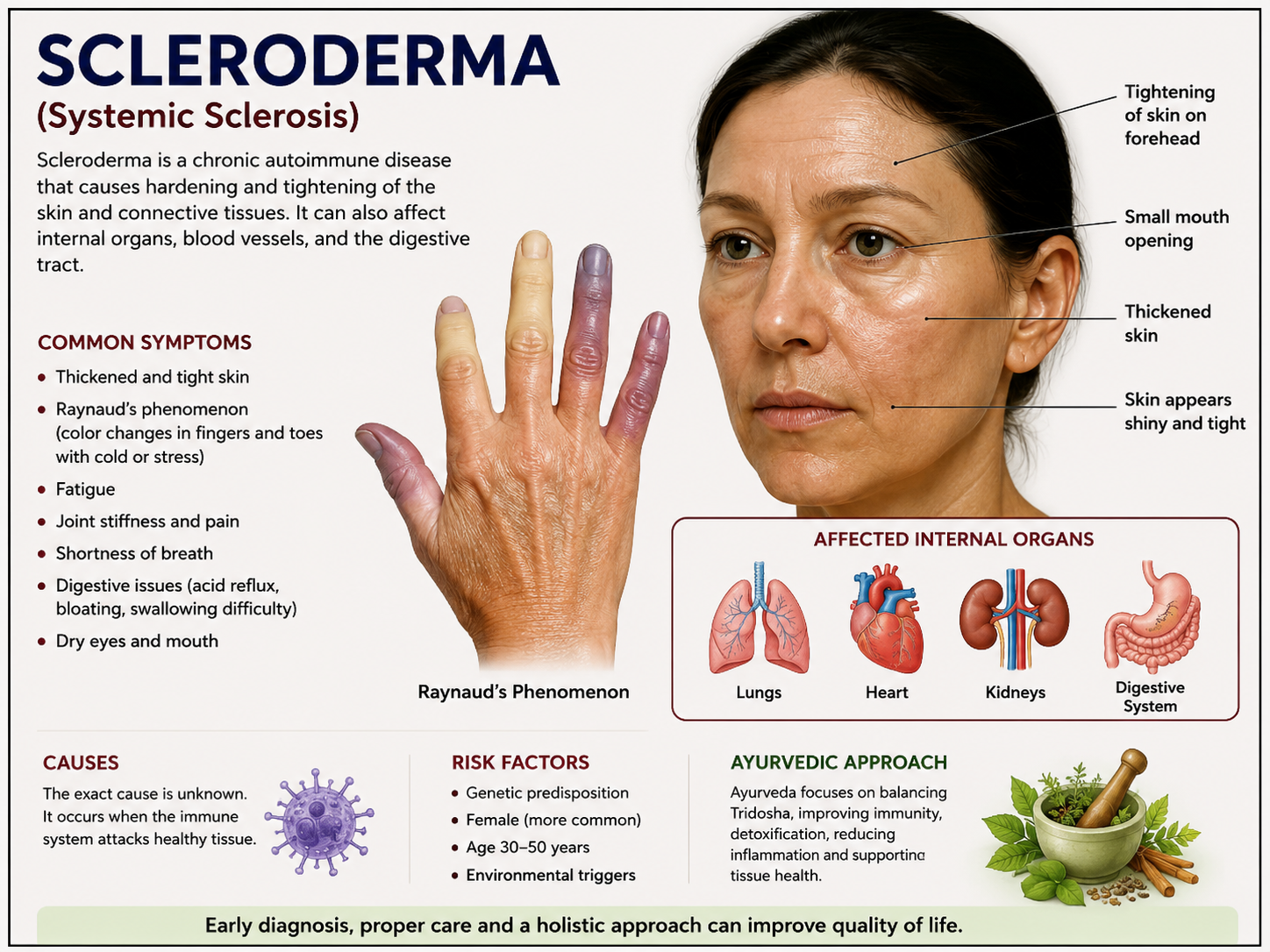
Scleroderma, also known as systemic sclerosis, is a chronic connective tissue disorder characterized by thickening and hardening of the skin due to excessive collagen deposition. The term scleroderma is derived from the Greek words "sclero," meaning hard, and "derma," meaning skin. Depending on the type and severity of the disease, it may affect not only the skin but also the blood vessels and internal organs such as the lungs, heart, kidneys, and gastrointestinal tract.Scleroderma is broadly classified into localized scleroderma, which mainly involves the skin, and systemic sclerosis, which affects both the skin and internal organs. The hallmark of the disease is excessive collagen production, leading to fibrosis, skin tightening, and progressive organ involvement. Although there is currently no definitive cure, treatment focuses on relieving symptoms, slowing disease progression, and preventing complications. This article discusses the disease and provides an overview of its management from an Ayurvedic perspective.
Introduction
Scleroderma, also known as systemic sclerosis, is a rare chronic autoimmune connective tissue disorder characterized by excessive collagen production, leading to fibrosis(scarring) and thickening of the skin and in many cases, internal organs. It occurs when the immune system mistakenly attacks healthy connective tissue resulting in abnormal collagen deposition in the skin, blood vessels, muscles and various organs. The disease is broadly classified into two main types: localized scleroderma, which primarily affects the skin and underlying tissue and systemic sclerosis, which can involve multiple organ systems, including the lungs, heart, kidney and gastrointestinal tract. The extent of organ involvement varies among patients, making the clinical presentation highly variable. Early recognition and appropriate management are essential to control symptoms, slow disease progression and reduce the risk of long term complications. In Ayurveda, Scleroderma does not have a single direct equivalent but is classified as an Anukta Vyadhi (un-described disease).Medical practitioners evaluate its systemic, tissue-hardening symptoms by correlating then with classical condition like Uttana Vatarakta(a vascular-connective tissue disorder),Twakgata Vata(Vata localized in the skin) or Kapala Kushtha(a severe skin condition) Ayurvedic treatment addresses the disease as a multi-system autoimmune pathology by targeting the root metabolic toxin(Ama) and balancing the heavily vitiated vata and kapha doshas.
Causes
The causes of scleroderma is not clear , but likely to involve immune genetic and environmental factors leading to abnormal collagen buildup
- Causes include: Genetic predisposition
- Immune system factor
- Environmental and occupational trigger
Symptoms of Scleroderma
The symptoms of scleroderma depend on which part of the body is affected.
1. Skin Symptoms
The skin is usually the first part of the body to be affected, especially the fingers, hands, feet, and face.
- Swelling and itching of the skin
- Thickening, hardening, and tightening of the skin, especially over the forearms, upper arms, lower legs, and abdomen
- Changes in skin color (lighter or darker patches)
- Shiny appearance of the skin due to tightness
- Small red spots on the face and hands (telangiectasia)
- Small hard bumps under the skin caused by calcium deposits (calcinosis)
2. Digestive System Symptoms
When the digestive tract is involved, patients may experience:
- Heartburn or a burning sensation in the chest
- Difficulty swallowing (dysphagia)
- Bloating after meals
- Diarrhea
- Constipation
- Loss of bowel control (fecal incontinence)
3. Heart Symptoms
If the heart is affected, symptoms may include:
- High blood pressure (hypertension)
- Swelling of the feet and ankles (pedal edema)
- Fluid buildup around the heart
- Irregular heartbeat (arrhythmia)
- Heart failure in severe cases
4. Lung Symptoms
Lung involvement can cause:
- Shortness of breath
- Dizziness
- Reduced ability to perform physical activities or exercise
- If left untreated, scarring of the lungs (pulmonary fibrosis), which can affect breathing
5. Raynaud’s Phenomenon
Raynaud’s phenomenon is very common in people with scleroderma. In this condition, the blood vessels in the fingers and toes become narrow in response to cold temperatures or emotional stress, reducing blood flow.
This may cause:
- Fingers or toes to turn white, blue, or red
- Pain or discomfort
- Numbness
- Tingling or pins-and-needles sensation
Raynaud’s phenomenon is often one of the earliest signs of scleroderma and should be evaluated by a doctor, especially if it occurs repeatedly.
Symptoms According To Ayurveda
- Skin Hardening (Stambha & Kathinya)
- Skin Discoloration (Vaivarnya)
- Severe Dryness (Rykshata)
- Joint and Muscle Pain(Shoola)
- Narrowed Opening (Sankocha)
- Discolored Extremities (Raynaud’s-like)
Diagnosis
Scleroderma diagnosis relies on a combination of a physical exam, medical history blood test and specialized evaluation. Because no single test can confirm the condition
- Physical Exam: Check for skin thickening, swollen fingers and sore on the fingertips.
- Nailfold Capillaroscopy: Magnifies the skin near the fingernail base to check for damaged or abnormal tiny blood vessels.
- Blood Test: Detects antinuclear antibodies(ANA) and specific markers like anti-Sci-70, anticentromere or anti-RNA polymerase III antibodies.
- Skin Biopsy: Removes a tiny skin sample to examine excess collagen fibers under a microscope.
Modern Treatment
Scleroderma is a long term condition that requires a comprehensive treatment plan. The goal of treatment is to control symptoms,slow the progression of the disease, prevent complication, and help patient maintain their quality of life.Treatment usually includes medication, physical therapy and occupational therapy
Medication
Depending on the symptoms and organ affected
- Calcipotriene- Help improve skin discoloration and certain skin changes.
- Imiquimod cream- Used to treat thick,scaly skin lesions in selected case
- Tacrolimus ointment– Help reduce skin inflammation and improve patchy skin discoloration
- Menthol-based cream or lotion – Provide relief from itching
- Corticosteroid- Help reduce inflammation and suppress an overactive Immune system. They are used carefully because long-term use may have side effects.
- Methotrexate- Slow the overactive immune response and may help reduce skin thickening and disease progression.
Supportiv Therapies
- Physical therapy helps maintain joint flexibility, muscle strength and mobility.
- Occupational therapy teaches techniques and provides assistive devices to make daily activities easier and more comfortable.
Ayurvedic Overview
According to Ayurveda, Scleroderma develops due to the accumulation of Ama (metabolic toxin) in the body, which is mainly caused by Mandagni (weak digestive fire). When digestion impaired, toxins accumulate and block the body’s aortas(microchannels), leading to an imbalance of the vata and kapha doshas. Aggravated Vata affects the Mamsa Dhatu(muscle tissue), causing dryness, stiffness, reduced flexibility and hardening of the skin. Therefore, Scleroderma is considered a Vata-Kapha predominant disorder in Ayurveda. Ayurvedic management focuses on balancing the Vata and Kapha doshas, removing accumulated toxins and nourishing the body tissue. Detoxification therapies such as Virechana(therapeutic purgation) and Basti ( medicated enemas) help eliminate toxins and restore dosh balance.
Herbal Formulation For Scleroderma By Planet Ayurveda
Planet Ayurveda is an Indian herbal manufacturing and healthcare enterprise founded by Dr. Vikram Chauhan in Mohali, Punjab. The company specializes in producing 100% natural Ayurvedic herbal supplements made from carefully selected medicinal plants. Its product range includes standardized plant extract capsules, powders, herbal teas, and liquid formulations featuring herbs such as Ashwagandha, Curcumin, and Triphala. All products are manufactured without the use of chemicals, preservatives, artificial colors, or additives, ensuring purity and authenticity. In addition to manufacturing herbal products, the company offers Ayurvedic clinical consultations and exports its products to customers worldwide, promoting traditional Ayurvedic healthcare through natural, high-quality herbal formulations. Ayurvedic medicine for Scleroderma are following :
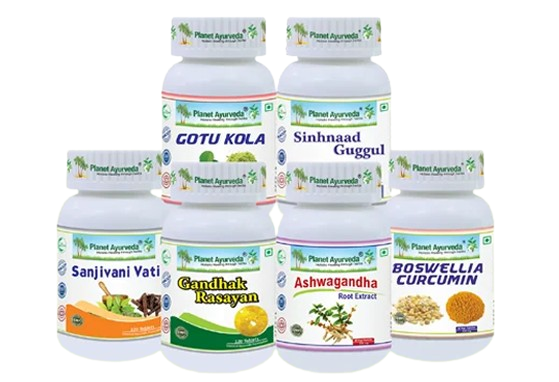
- Ashwagandha Capsules
- Boswellia-Curcumin
- Gotukola Capsules
- Sanjivani Vati
- Gandhak Rasayan
- Sinhnaad Guggul

Product Description
1. Ashwagandha Capsules
Ashwagandha Capsules are a single-herb formulation prepared from Ashwagandha (Withania somnifera). This renowned Ayurvedic herb is traditionally valued for its Rasayana (rejuvenating) and adaptogenic properties. According to Ayurveda, it helps balance Vata and Kapha doshas, supports healthy muscle and connective tissues, and promotes overall strength and vitality. Modern studies also suggest that Ashwagandha possesses antioxidant and anti-inflammatory properties, which may help support overall well-being. It is traditionally used to support a healthy immune response and enhance the body’s natural resilience.
Dose: 1 capsule twice daily with warm water.
2. Boswellia Curcumin Capsules
Boswellia Curcumin Capsules combine the therapeutic benefits of Shallaki (Boswellia serrata) and Curcumin (Curcuma longa). Shallaki is traditionally known for supporting joint comfort and balancing Vata dosha, while curcumin, the active constituent of turmeric, exhibits potent antioxidant and anti-inflammatory properties and helps balance Pitta and Kapha doshas. Together, these herbs support joint mobility, promote a healthy inflammatory response, encourage healthy circulation, and help reduce stiffness and discomfort while supporting overall musculoskeletal health.
Dose: 2 capsules twice daily with warm water.
3. Gotu Kola Capsules
Gotu Kola Capsules contain the standardized herb Gotu Kola (Centella asiatica), which is rich in bioactive compounds such as asiaticoside, asiatic acid, madecassoside, and madecassic acid. According to Ayurveda, Gotu Kola pacifies Pitta and Kapha doshas due to its Tikta (bitter) rasa. It is traditionally used to support healthy skin, connective tissues, and microcirculation. Its antioxidant and anti-inflammatory properties help protect cells from oxidative stress and support tissue repair and regeneration.
Dose: 2 capsules twice daily with warm water.
4. Sanjivani Vati
Sanjivani Vati is a classical Ayurvedic formulation prepared from herbs including Amalaki (Emblica officinalis), Haritaki (Terminalia chebula), Bibhitaki (Terminalia bellirica), Shunthi (Zingiber officinale), Pippali (Piper longum), Guduchi (Tinospora cordifolia), and other beneficial ingredients. In Ayurveda, this formulation is traditionally used to kindle Agni (digestive fire), support healthy digestion, and help eliminate accumulated Ama (metabolic toxins). It also supports liver function, promotes a balanced immune response, and contributes to overall metabolic health.
Dose: 2 tablets twice daily with warm water.
5. Gandhak Rasayan
Gandhak Rasayan is prepared from purified Sulphur (Shuddha Gandhak) using traditional Ayurvedic processing methods. It is considered an excellent Rasayana formulation and is traditionally used to support healthy skin and tissue rejuvenation. Gandhak Rasayan helps maintain skin health, supports natural healing processes, and promotes healthy skin regeneration. Its antioxidant properties further contribute to overall wellness and tissue nourishment.Dose: 2 tablets twice daily with warm water.
6. Singhnaad Guggul
Singhnaad Guggul is a classical Ayurvedic formulation containing Triphala (Amalaki, Haritaki, and Bibhitaki), Shuddha Guggul (Commiphora mukul), Shuddha Gandhak (Purified Sulphur), and Eranda Taila (Ricinus communis oil). According to Ayurveda, it helps pacify Vata dosha, supports healthy joints and muscles, and assists in maintaining flexibility and mobility. The formulation also supports the body’s natural detoxification process by helping eliminate Ama, while its anti-inflammatory properties contribute to improved joint comfort and overall musculoskeletal health.
Dose: 2 tablets twice daily with warm water.
Det in Scleroderma
Avoid
- Canned & Frozen Vegetable
- Raw Vegetable
- Tomatoes
- Brinjil
- Garlic
- Onion
- Ginger
- Frozen Fruits
- Citric Fruits
- All Dairy products
- Pumpkin seeds
- White Refined Floor
- Coconut oil
- Extra Salt
- Green chilli & Red chills
- Non- Veg etc.
To Take
- Sweet Potato
- Carrot
- Turnip
- Banana
- Date
- Watermerlon
- Cow Ghee
- Almonds
- Walnut
- Whole Grain
- Wheat
- Soyabean oil
- Turmeric
- Cumic
- 1-2 Egg White
Conclusion
Scleroderma is a Chronic Autoimmune Connective tissue disorder that causes excessive collagen deposition, leading to skin thickening, hardening and possible involvement of internal organs. Although modern medicine does not provide a complete cure, early diagnosis, proper medical care, lifestyle changes and supportive therapies can help manage symptoms and improve the quality of life of patients From an Ayurvedic perspective, Scleroderma can be understood as a complex disorder involving imbalance of Vata and Kaph dosha, accumulation of Ama(metabolic toxins) and disturbance of tissue nourishment Ayurvedic management focuses on improving digestion, removing toxins, balancing dosha, reducing inflammation and supporting the body natural healing process through herbs, dietary modification and therapeutic approaches. Herbal formulations such as Ashwagandha, Boswellia-Curumin, Gotukola, Sanjivani Vati, Gandhak Rasayan and Sinhnaad Guggul are traditionally used to support immunity, reduce inflammation, maintain skin health and improve overall strength. Along with these, a balanced diet, healthy lifestyle, regular exercise and proper medical supervision play an important role in managing the condition.Scleroderma requires a long term and individualized approach. Combining appropriate modern medical treatment with supportive Ayurvedic practices may help control symptoms, prevent complications and promote better overall well-being. However patients should always consult qualified healthcare professionals before starting any new treatment or herbal formulation.


Dr. Vikram Chauhan
Latest posts by Dr. Vikram Chauhan (see all)
- What is Aroma Therapy? – How is it an important part of Indian and different cultures since long? - September 18, 2026
- Cow Dung & Wood Heat vs Room Heaters – Health Benefits & Risks - September 17, 2026
- Let’s bust some myths about Infertility and Pregnancy? - September 15, 2026
- Zero Volt Therapy – Benefits, Uses & Holistic Wellness Approach - September 10, 2026
- Integrative Oncology – Dendritic Cell Therapy and Ayurveda - September 10, 2026