


Minimal Residual Disease (MRD) Testing – Benefits, Procedure & Results
Abstract
In the theater of modern oncology, macroscopic victory is an illusion. Traditional imaging and standard biopsies celebrate empty battlefields, but Minimal Residual Disease (MRD) and molecular remnants remain hidden from sight. Enter advanced staging paradigms and automated biomarker discovery platforms. By quantifying exact tumor dimensions under rigorous RECIST criteria and mapping trace multi-pathway signatures, clinicians transcend subjective diagnostics. This structural and biochemical scrutiny exposes aggressive, deep-seated malignancies before clinical relapse can manifest. Unifying anatomical mass tracking with cellular precision, MSD profiling transforms blind post-therapeutic observation into a proactive, masterfully targeted strategy for absolute eradication. Let’s Discuss it in detail!
Introduction
After treatment, cancer can become a “stealth” enemy. Even when doctors can’t see anything on a standard scan or under a regular microscope, a few tiny cancer cells might still be hiding in the body. This is the Invisible Battle. MRD testing is like a high-powered radar for these hidden cells. While older tests only look for the “big fire,” MRD testing looks for the “last few sparks.” It can find one single cancer cell hiding among one million healthy ones.
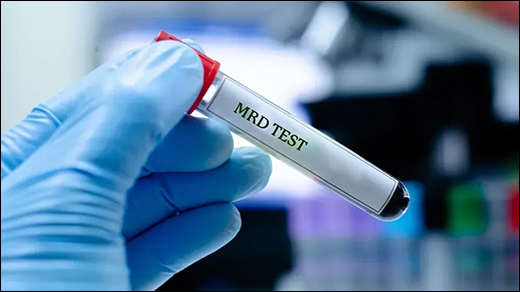
- Why it matters: If the test is “negative,” it means the treatment worked deeply.
- The benefit: If the test finds these hidden cells, doctors can strike back immediately before the cancer has a chance to grow into a “big fire” again.
It turns a period of “waiting and hoping” into a period of scientific certainty.
What exactly is MRD (Minimal Residual Disease)?
MRD is the tiny amount of cancer that stays in the body after treatment, even when you look completely healthy. Think of standard medical tests like looking at a forest from an airplane. If a massive fire is burning, you can easily see it. But once firefighters put it out, the forest looks perfectly green from above. MRD testing is like walking onto the forest floor with a thermal camera to find the last few hidden sparks underground before they can restart the fire.
How It Fits Into the Cancer Journey
To understand exactly what MRD is, it helps to see the different levels of “detecting” cancer:
Diagnosis (The Top Zone)
When a patient is first diagnosed, billions of cancer cells are present. They show up clearly on standard CT scans, routine blood tests, or when a pathologist looks down a regular microscope.
Clinical Remission (The Middle Zone)
After successful chemotherapy, surgery, or immunotherapy, the vast majority of cancer cells are destroyed. On standard tests, the cancer is completely invisible. This is called complete clinical remission. However, as the diagram shows, a person can be in clinical remission but still sit in the yellow “MRD Positive” zone. Up to a few million cancer cells might still be hiding out in the blood, bone marrow, or tissue.
MRD Negativity (The Bottom Zone)
To reach true “MRD Negative” status (the green zone at the bottom), the remaining cancer cells must drop below the detection limit of our most advanced technology—meaning less than one cancer cell in a million healthy ones.
Why Is Finding These Leftover Cells a Game Changer?
Before MRD testing, doctors had to use a “wait and see” approach during remission. They would monitor a patient and hope the cancer didn’t return. Today, tracking MRD changes the strategy entirely:
- An Early Warning System: As shown by the rising lines in the diagram, an increase in MRD level signals a molecular relapse months before a physical tumor reforms or symptoms appear. This gives doctors a massive head start to change treatments.
- Customizing the Cure: If a patient is quickly MRD-negative, doctors may safely choose to stop a harsh drug early to avoid side effects. If a patient stays MRD-positive, it tells the doctor that the current treatment isn’t quite finishing the job, meaning they need to switch to a stronger therapy.
Ultimately, MRD turns “undetectable” into actual, measurable data so doctors can treat cancer with absolute precision.
The Science Behind Detecting Hidden Cancer Cells
Finding a single cancer cell hiding among millions of healthy peers requires moving past what cells look like and decoding their internal blueprints. Modern oncology relies on three distinct scientific technologies to achieve this level of precision:
- Multiparametric Flow Cytometry (The Protein Scanner): Cells are coated with fluorescent dyes that stick only to abnormal, cancer-specific surface proteins. The sample is then shot through a laser beam in a single-file line. If a cell glows with the wrong color signature, the machine instantly flags it as cancer.
- Quantitative PCR (The Genetic Copy Machine): This method targets known, uniform genetic typos (like the fusion genes found in certain leukemias). It uses molecular primers to locate that exact error and duplicate it millions of times. By amplifying this tiny whisper into a massive signal, computers can accurately quantify the remaining disease.
- Next-Generation Sequencing (The Deep Decoder): The most sensitive tool available ($10^{-6}$ sensitivity), NGS sequences millions of DNA fragments simultaneously. In solid tumors, it searches for circulating tumor DNA (ctDNA)—tiny fragments of mutated genetic code shed by dying cancer cells into the bloodstream.
By tracking these unique cellular uniforms and genetic fingerprints, doctors no longer have to wait for a physical tumor to form. They can read the body’s data, catching and intercepting the final remnants of cancer at the molecular level.
What happens during the procedure?
For Solid Tumors (Blood Draw)
- The Process: A standard needle is inserted into an arm vein to collect two to three tubes of blood.
- Duration: Takes less than 5 minutes.
- Recovery: Zero downtime; you can immediately return to normal activities.
For Blood Cancers (Bone Marrow Aspiration):
- Preparation: You lie on your side or stomach. The doctor cleans the skin over the back of your hip bone.
- Numbing: Local anesthesia is injected into the skin and tissue. You will feel a brief sting and burn.
- Extraction: A specialized needle enters the marrow space. A syringe draws out liquid bone marrow. You will feel a deep, brief ache for 5–10 seconds.
- Dressing: The needle is removed, pressure is applied, and a bandage is placed.
Next Steps:
- Soreness: Your hip may feel bruised for 2–3 days.
- Results: The sample goes to a molecular lab; highly precise sequencing results take 7–14 days.
When MRD testing is recommended?
- MRD testing is not a random tracking tool. Leading clinical oncology frameworks (such as the NCCN guidelines) recommend its use at highly specific forks in the road during a patient’s treatment.
- The primary clinical triggers for ordering an MRD test include:
End of Induction Therapy
- When: Right after the first intensive phase of treatment (usually 1 to 3 months of induction chemotherapy).
- Why: To check how profoundly the cancer responded to the initial attack. Achieving MRD negativity at this milestone is a powerful indicator of a long, stable remission.
Prior to a Stem Cell Transplant
- When: Weeks before a patient undergoes an autologous or allogeneic hematopoietic stem cell transplant (HCT).
- Why: Doctors need to know if there is still residual disease left behind. If a patient is still MRD-positive, clinicians may choose to use an additional “salvage” treatment cycle to clear the remaining cells before infusing the new stem cells, drastically improving transplant success rates.
To Confirm Complete Remission
- When: When standard biopsies, blood counts, and imaging look entirely normal.
- Why: Standard criteria say a patient is in a “Complete Response” if standard tests find no cancer. Clinical guidelines recommend an MRD test at this exact moment to verify if it is a true, deep molecular remission or just a surface-level illusion.
During Routine Maintenance & Long-Term Surveillance
- When: Every 6 to 12 months while a patient is on lower-dose maintenance therapy or in full remission.
- Why: As an early warning radar. If a patient who was previously MRD-negative turns MRD-positive, it indicates a molecular relapse. This allows oncologists to change therapies months before physical symptoms or visible tumors return.
Guiding Treatment “De-escalation” (Stopping Therapy)
- When: In specific clinical trials or highly controlled protocols for diseases like Chronic Lymphocytic Leukemia (CLL) or Multiple Myeloma.
- Why: If a patient maintains documented MRD-negative status over multiple consecutive tests, doctors use this data to confidently and safely pause or discontinue continuous chemotherapy, sparing the patient from long-term medication side effects.
Results interpretation
An MRD result tells doctors if tiny traces of cancer remain at a molecular level. Interpreting it comes down to two clear outcomes:
1. MRD-Negative
The test found zero cancer cells within the sample, up to the machine’s limit (often 1 in a million cells). It confirms a deep, highly successful response to treatment. Doctors will usually maintain the current plan or consider safely stopping maintenance therapy to avoid side effects. It does not guarantee a 100% cure; cells could still exist below the machine’s detection threshold.
2. MRD-Positive
Hidden cancer cells were found, and the report will state the exact number (e.g., 5 cancer cells per 100,000). Even if you feel completely healthy, positivity warns that the current treatment didn’t finish the job. Doctors will use this early warning to escalate therapy or switch to a stronger, targeted drug. Catching a “molecular relapse” early allows doctors to strike back months before a physical tumor or major symptoms can return.
Ayurveda’s Insight!
While classical Ayurveda does not have a direct term for “Measurable Residual Disease,” it offers a profound conceptual framework for understanding the Invisible Battle. In Ayurveda, the state where a disease is present but not yet physically visible is known as the Sushma (subtle) or A-vyakta (unmanifest) stage. Here is how Ayurvedic principles align with the science of MRD testing:
The Concept of Khavaigunya (Micro-Space Weakness)
MRD focuses on finding single cells hiding in “sanctuary sites.” Ayurveda describes this as Khavaigunya—localized areas of weakness or “disturbed space” within the tissues (Dhatus) where residual toxins (Ama) or imbalances (Doshas) hide. Even when a person looks healthy, if these micro-weaknesses aren’t “cleared,” the disease eventually returns.
Shat-Kriya-Kala (The Six Stages of Disease)
Modern medicine usually detects cancer at stage 5 or 6 (manifestation). MRD testing aims to catch cancer at the earlier, hidden stages. Sanchaya & Prakopa: These are the sub-clinical stages where imbalance is building but cannot be seen by the naked eye. Just as MRD uses lasers to find hidden cells, Ayurveda uses Pulse Diagnosis (Nadi Pariksha) and subtle clinical signs to detect these early “vibrations” of disease before a physical mass forms.
Punarbhava (The Seeds of Relapse)
Ayurveda views cancer (Arbud) as a failure of cellular intelligence. If the treatment only removes the physical tumor but leaves the “seeds” (Bija) or the “soil” (Dhatu) imbalanced, the disease will recur. The MRD Connection: An “MRD-Positive” result is the modern equivalent of finding Bija-dosha (residual genetic defects) or Shesha-dosha (leftover imbalance) that hasn’t been fully extinguished.
Ayurvedic Herbs Traditionally Used to Support Cellular Health
1. Turmeric (Haridra / Curcumin)
Cancer cells that survive initial therapy often enter a state of dormancy or slow replication, protecting themselves by upregulating survival pathways. A primary shield they use is NF-κB (Nuclear Factor kappa B), a protein complex that acts as a master switch for inflammation, anti-apoptosis (programmed cell death evasion), and angiogenesis (new blood vessel growth). Curcumin downregulates NF-κB activation. By blocking this switch, it strips away the protective, pro-survival signaling of residual cancer cells. It helps lower the cellular threshold for apoptosis, making remaining aberrant cells more susceptible to the body’s natural clearing mechanisms and preventing them from establishing micrometastases.
2. Guduchi (Tinospora cordifolia)
Classically termed Amrita (“Nectar of Immortality”), Guduchi is a premier rejuvenator of Rasa and Rakta Dhatu (plasma and blood tissues). It is highly regarded for its Rasayana properties, which help restore the body’s natural defense systems after depleting therapies. Research indicates that bioactive polysaccharides and alkaloids in Guduchi stimulate Natural Killer (NK) cells and macrophages. NK cells do not require prior antigen exposure; they patrol tissues to recognize and destroy cells that have altered or missing surface proteins (MHC class I markers)—a common trick used by mutated clones to evade T-cells. While flow cytometry uses lasers to scan cell surfaces in a lab, enhanced NK cell activity acts as an internal biological scanner, actively seeking out and eliminating lingering molecular targets.
3. Ashwagandha (Withania somnifera)
Ashwagandha is a primary adaptogen used to balance Vata Dosha, which governs the nervous system and becomes highly destabilized during chronic stress and intensive clinical treatments. Chronic stress elevates systemic cortisol, which suppresses the immune system’s surveillance capabilities, particularly the production of protective interleukins. Ashwagandha modulates the hypothalamic-pituitary-adrenal (HPA) axis, reducing circulating cortisol levels. Additionally, its constituent withanolides have shown direct anti-proliferative properties in preclinical models. Maintaining an optimal immune environment during surveillance is critical. By mitigating the physiological stress response, Ashwagandha prevents the creation of an immunosuppressed micro-environment that dormant, sub-microscopic cells could exploit to multiply.
Conclusion
At last we can say that ultimately, the true measure of oncology’s progress lies in the shift from anatomical observation to molecular precision. Measurable Residual Disease (MRD) testing represents this critical evolution, transforming the ambiguous silence of clinical remission into a clear, data-driven map for survival. By exposing hidden cellular survivors, it empowers clinicians to intercept cancer long before a physical relapse can manifest. When safely paired with traditional principles of tissue purity (Dhatu Shuddhi) and targeted immune support, care becomes truly holistic. Guided by objective genetic data, this integrative surveillance ensures that sub-microscopic threats are not merely obscured, but definitively extinguished.


Dr. Vikram Chauhan
Latest posts by Dr. Vikram Chauhan (see all)
- Hemangiomas(benign vascular tumors) , Causes, Symptoms, Key Facts & Treatment - October 16, 2026
- Top 6 Herbs for stronger bones as per Ayurvedic Texts - October 12, 2026
- Top 4 Herbs for Stronger Liver as per Ayurvedic Texts - October 6, 2026
- Management of Olfactory neuroblastoma (ONB) in Ayurveda - September 28, 2026
- What is Aroma Therapy? – How is it an important part of Indian and different cultures since long? - September 18, 2026