

Ayurvedic Management of Paralysis for Better Nerve and Muscle Support
Abstract
Paralysis is a neurological condition characterized by loss of voluntary muscle movement in one or more parts of the body due to disruption in communication between the brain, spinal cord, and muscles. It may be partial or complete, temporary or permanent, depending on the underlying cause and severity of nerve damage. Common causes include stroke, spinal cord injury, traumatic brain injury, multiple sclerosis, Bell’s palsy, infections, tumors, and certain autoimmune or metabolic disorders. Symptoms may include weakness, inability to move limbs, facial drooping, speech difficulty, swallowing problems, and loss of bladder or bowel control. In Ayurveda, paralysis is commonly correlated with Pakshaghata, a major Vata Vyadhi caused by aggravated Vata dosha affecting the neuromuscular system. Ayurvedic management focuses on balancing Vata through proper diet, lifestyle correction, Panchakarma therapies, herbal support, yoga, and pranayama. In this article, we will study the causes, symptoms, diagnosis, Ayurvedic perspective and holistic management of paralysis in detail.
Facts about Paralysis
- Paralysis is the loss of voluntary muscle movement in one or more parts of the body due to damage or disruption in the nervous system.
- It can affect a single limb, one side of the body, both lower limbs, or all four limbs depending on the site of nerve damage.
- Paralysis may be partial, where some movement is retained, or complete, where voluntary movement is entirely lost.
- It can be temporary or permanent depending on the cause, severity, and extent of neurological injury.
- Common forms of paralysis include monoplegia, hemiplegia, paraplegia, quadriplegia, and facial paralysis.
- Stroke, spinal cord injury, traumatic brain injury, infections, tumors, nerve damage, and neuromuscular disorders are among the major causes of paralysis.
- Paralysis may also be associated with numbness, tingling, muscle stiffness, flaccidity, spasms, or pain.
- Some patients may experience difficulty in speech, swallowing, bladder control, or bowel movements along with motor weakness.
- Sudden paralysis, especially due to stroke or spinal trauma, is considered a medical emergency and requires immediate treatment.
- Early diagnosis, rehabilitation, and supportive therapies play an important role in improving function and quality of life.
Paralysis Statistics
- Paralysis is a major neurological disability affecting millions of people across the world and significantly impacting mobility, independence, and quality of life.
- In the United States, around 5.4 million people have been reported to live with some form of paralysis, which means nearly 1 in every 50 individuals is affected.
- Among the different causes of paralysis, stroke remains one of the most common, followed by spinal cord injury, multiple sclerosis, and cerebral palsy.
- Spinal cord injury is one of the major global causes of paralysis, and international health estimates suggest that more than 15 million people worldwide are living with this condition.
- Stroke continues to be one of the leading causes of long-term disability worldwide and is a major contributor to weakness, loss of movement, and paralysis in adults.
- In poliomyelitis, about 1 in 200 infections may lead to irreversible paralysis, and severe cases can affect the respiratory muscles, making the condition life-threatening.
- Neurological disorders collectively affect billions of people globally, showing the vast burden of diseases that can impair nerve function and lead to paralysis or motor disability.

Introduction
Paralysis is a condition in which a person loses the ability to move a muscle or group of muscles voluntarily. It occurs when the pathways that carry motor signals from the brain to the muscles become damaged or blocked. These pathways involve the brain, spinal cord, peripheral nerves, neuromuscular junctions, and muscles. Any disruption in this network may impair movement. Paralysis can vary greatly in severity. Some individuals may have only mild weakness in one limb, while others may lose movement in an entire side of the body or below the neck. The condition may appear suddenly, as in stroke or trauma, or develop gradually, as in degenerative neurological diseases. In many cases, paralysis is not just a movement disorder; it may also affect sensation, bladder and bowel control, sexual function, speech, swallowing, and emotional well-being. From a clinical perspective, paralysis is not a single disease but a manifestation of underlying neurological damage. Therefore, identifying the root cause is essential for treatment, prognosis, and rehabilitation.
Causes of Paralysis
- Stroke: Stroke is one of the most common causes of paralysis, especially hemiplegia, due to interruption of blood supply to the brain or rupture of a blood vessel, leading to damage in motor control areas.
- Spinal Cord Injury: Trauma from road accidents, falls, sports injuries, violence, tumors, or vertebral damage can interrupt nerve transmission below the level of injury and cause paraplegia or quadriplegia.
- Traumatic Brain Injury: Severe head injury can damage motor regions of the brain and result in weakness or paralysis of different parts of the body.
- Bell’s Palsy: Inflammation or dysfunction of the facial nerve can cause sudden paralysis or weakness of the muscles on one side of the face.
- Multiple Sclerosis: This autoimmune disorder damages the myelin sheath of nerves in the brain and spinal cord, impairing nerve conduction and causing weakness, stiffness, and sometimes paralysis.
- Cerebral Palsy: Brain injury occurring before, during, or shortly after birth can lead to motor impairment, spasticity, and varying degrees of paralysis.
- Guillain-Barré Syndrome: This acute autoimmune disorder attacks peripheral nerves and may cause rapidly progressive weakness that can advance to paralysis.
- Amyotrophic Lateral Sclerosis (ALS): ALS causes progressive degeneration of motor neurons, resulting in worsening weakness, muscle wasting, and eventual paralysis.
- Polio and Other Infections: Poliovirus can damage motor neurons in the spinal cord, while infections such as encephalitis, meningitis, or transverse myelitis may also lead to paralysis.
- Tumors and Space-Occupying Lesions: Brain tumors, spinal tumors, abscesses, cysts, or hematomas can compress motor pathways and produce paralysis depending on their location.
- Nerve Compression or Neuropathy: Severe nerve injury due to trauma, diabetes, prolonged compression, or surgery may impair muscle function and cause localized paralysis.
- Congenital Conditions: Certain birth defects and inherited neuromuscular disorders, such as spina bifida, may result in paralysis or long-term motor disability from birth.
Symptoms of Paralysis
The symptoms of paralysis depend on the site, extent, and cause of nerve damage. Common manifestations include:
Core Symptoms
- Inability to move a body part voluntarily
- Weakness in one or more limbs
- Loss of coordination
- Difficulty standing, walking, or holding objects
- Facial drooping or inability to close one eye in facial paralysis
Associated Neurological Symptoms
- Numbness or reduced sensation
- Tingling, burning, or pins and needles
- Muscle stiffness or spasticity
- Floppiness or reduced muscle tone
- Muscle twitching or cramps
- Exaggerated reflexes or absent reflexes
Severe or Complicated Symptoms
- Difficulty speaking
- Difficulty swallowing
- Drooling
- Shortness of breath if respiratory muscles are affected
- Loss of bladder or bowel control
- Sexual dysfunction
- Pressure sores due to immobility
- Emotional distress, anxiety, or depression
Depending on Distribution
- Hemiplegia: weakness/paralysis of one side of the body
- Paraplegia: lower limbs affected
- Quadriplegia: all limbs affected
- Monoplegia: one limb affected
- Facial paralysis: one side of face affected
Diagnosis of Paralysis
- Diagnosis of paralysis begins with a detailed clinical history, including onset of symptoms, trauma, infection, associated pain, numbness, bladder or bowel issues, and past medical history.
- Physical and neurological examination is performed to assess muscle strength, tone, reflexes, coordination, cranial nerve involvement, gait, posture, and sensory loss.
- Imaging studies such as MRI of the brain or spine, CT scan, and X-ray help identify stroke, spinal cord injury, tumors, demyelination, fractures, or other structural causes.
- Electromyography (EMG) and nerve conduction studies are useful for evaluating nerve and muscle function and detecting peripheral nerve damage.
- Laboratory investigations such as blood sugar, vitamin B12 levels, thyroid profile, inflammatory markers, autoimmune markers, and infection screening may be advised depending on the suspected cause.
- Lumbar puncture may be required in selected cases such as Guillain-Barré syndrome, meningitis, multiple sclerosis, or spinal cord inflammation.
Ayurvedic Overview on Paralysis
Madhav Nidaan Vaatvyadhi Nidanam Verse no 39-41
Verse Interpretation
When the aggravated Vatadosha seizes half of the body (either the right or the left side), dries up the veins/channels (siras) and ligaments/tendons (snayus) of that specific portion, and loosens the joints, it destroys or paralyzes that particular side (right or left). At that time, that entire half of the patient’s body becomes completely devoid of movement (chesta rahita) or loses its ability/power to function. Some scholars call this condition Ekangaroga, while other Acharyas (sages/physicians) refer to it as Pakshavadha or Pakshaghata (Hemiplegia). When the aggravated Vatadosha exerts its influence over the entire body in the manner described above, it is called Sarvangaroga or Sarvangavata (Quadriplegia or Complete Paralysis).
Vata-aggravating factors
(dry food, fasting, stress, ageing, trauma, overexertion)
↓Vata Prakopa (aggravation of Vata Dosha)
↓Avarana (obstruction of the normal movement of Vata) or Dhatukshaya (depletion of body tissues)
↓Vata affects Snayu (ligaments / neuromuscular structures), Sira (channels / vessels / nerves), Mamsa (muscle tissue), and Majja (marrow / nervous tissue)
↓Weakening of neuromuscular function
↓Cheshta Hani (loss of movement), Balakshaya (loss of strength), Stambha (stiffness), Supti (numbness), Vakstambha (speech difficulty)
↓Clinical manifestation of Paralysis / Pakshaghata (hemiplegia or paralysis of one side of the body)
Ayurvedic Clinical Features of Paralysis
From an Ayurvedic perspective, paralysis is primarily correlated with Pakshaghata, one of the important Vata Vyadhi conditions. Its clinical presentation can be understood through the following features:
- Cheshta Nivritti: loss or marked reduction of voluntary movements in the affected limb or body part
- Balakshaya: diminution of muscular strength and functional power
- Stambha: stiffness, rigidity, or restricted movement of the limbs and joints
- Supti: numbness, tingling, or reduced sensory perception in the involved area
- Ruja / Shoola: pain, discomfort, or aching sensation associated with Vata aggravation
- Vakstambha: difficulty in speech, slurring of words, or impaired articulation, especially in cases associated with cerebral involvement
- Mukhavakrata: deviation of the mouth or facial asymmetry, when facial muscles are involved
- Gatra Graha: heaviness, tightness, or inability to move the affected extremities properly
- Gati Vaishamya: altered gait, limping, imbalance, or difficulty in coordinated walking
- Mamsa Kshaya: wasting of muscles in chronic or neglected cases due to prolonged disuse and Vata dominance
- Karma Hani / Kriyahani: impairment in performing routine daily activities such as walking, grasping, sitting, standing, or speaking
- Sparsha Hani: diminished tactile sensation or altered response to touch in the affected region
- Hasta-Pada Akunchana or Prasarana Asamarthata: difficulty in flexion, extension, lifting, or coordinated movement of upper and lower limbs
Involvement of Vata-Pitta-Kapha in Paralysis
Madhav Nidaan Vaatvyadhi Nidanam Verse no 42
Verse Interpretation
When Vata is combined with Pitta, the patient experiences a burning sensation, restlessness, and unconsciousness. Conversely, when the dominant Vata Dosha is associated with Kapha Dosha, it leads to symptoms such as coldness in the body, swelling (edema), and a feeling of heaviness.
Ayurvedic Principles of Management in Paralysis
- Paralysis in Ayurveda is mainly correlated with Pakshaghata (hemiplegia / paralysis of one side of the body), a major Vata Vyadhi (neuromuscular disorder caused by aggravated Vata).
- The line of treatment primarily focuses on Vata shamana (pacification of aggravated Vata).
- Management also aims at removing obstruction to the normal movement of Vata when Avarana (obstruction to the normal movement or function of Vata) is involved.
- Another important goal is nourishment of depleted tissues, especially when the condition is associated with Dhatukshaya (depletion or degeneration of body tissues).
- Treatment is directed toward supporting the functional recovery of Snayu (ligaments / tendons / neuromuscular structures), Sira (channels / vessels / nerves), Mamsa (muscle tissue), and Majja (marrow / nervous tissue), which are considered important in neuromuscular impairment.
- Ayurvedic management aims to reduce stiffness, improve muscle tone, and support nerve function.
- It also focuses on enhancing circulation, restoring flexibility, and improving voluntary movement in the affected part of the body.
- In patients with speech involvement, facial weakness, or upper body dysfunction, treatment may also aim to improve speech, facial control, and coordination.
- The overall objective is to gradually improve mobility, strength, daily functioning, and quality of life.
- Because paralysis is often chronic and functionally disabling, Ayurvedic care is usually multidimensional and rehabilitative in nature.
Panchakarma and Supportive Therapies in Paralysis
- Ayurvedic literature and clinical practice commonly describe the role of Snehana (oleation therapy), Swedana (sudation / fomentation therapy), Basti (medicated enema therapy), and Nasya (nasal administration of medicines) in the management of Pakshaghata.
- Snehana (oleation therapy) is used to counter the dryness and roughness associated with aggravated Vata.
- External oleation may help in reducing rigidity, softening tissues, and improving flexibility of the affected limbs.
- Swedana (sudation / fomentation therapy) is used to relieve stiffness, heaviness, and restricted movement.
- Swedana may also help improve local circulation and support better mobility in the affected region.
- Basti (medicated enema therapy) is considered one of the most important therapies in Vata disorders, because of its central role in Vata regulation.
- In the management of paralysis, Basti is traditionally valued for helping address systemic Vata imbalance and supporting neuromuscular recovery.
- Nasya (nasal administration of medicines) may be considered in selected patients, particularly when there is involvement of the head, neck, face, speech, or upper body.
- Head-directed therapies may be used when symptoms such as facial deviation, speech difficulty, or cranial involvement are present.
- These Panchakarma procedures are generally not used in isolation; they are combined with internal medicines, diet, supportive care, and rehabilitative measures.
Herbal Remedies by Planet Ayurveda for Paralysis
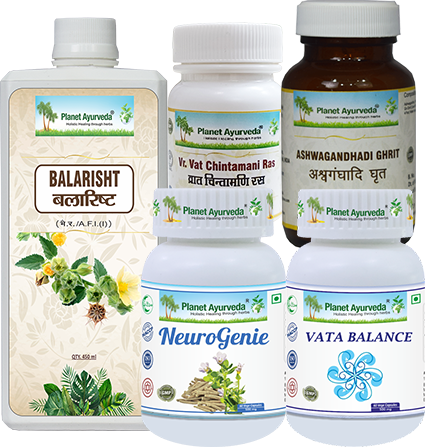

Planet Ayurveda is a well-known Ayurvedic herbal manufacturing company dedicated to promoting authentic Ayurvedic healthcare through natural and standardized herbal formulations. The company prepares its products using carefully selected herbs and classical Ayurvedic principles, without the use of harmful chemicals, synthetic additives, preservatives, or artificial colors. Its formulations are designed to support the body naturally by helping maintain doshic balance, nourishing body tissues, and promoting overall health and wellness. In the management of paralysis, Ayurveda mainly focuses on pacifying aggravated Vata Dosha, supporting weakened nerves, muscles, and neuromuscular tissues, and improving strength, mobility, and functional recovery. To support this Ayurvedic approach, Planet Ayurveda offers certain herbal formulations that may act as supportive remedies in paralysis. In the following section, we will learn about the supportive herbal remedies by Planet Ayurveda that may help in promoting neuromuscular strength, Vata balance, and better rehabilitation in paralysis patients.
- Vata Balance Capsules
- Neurogenie Capsules
- Vrihat Vatchintamani Ras
- Ashwagandha Ghrit
- Balarisht
Product Description
1. Vata Balance Capsules
Vata Balance Capsules are formulated with Ayurvedic herbs such as Bilwa (Aegle marmelos), Shyonak (Oroxylum indicum), Patla (Stereospermum suaveolens), Agnimantha (Clerodendrum phlomidis), Gambhari (Gmelina arborea), etc which are components of the renowned Dashamoola group. In Ayurveda, paralysis is primarily considered a Vata-dominant disorder, making Vata pacification an important aspect of management. These herbs are traditionally valued for their Vata-balancing, anti-inflammatory, and tissue-supportive properties. By helping maintain the normal movement of Vata, reducing stiffness, supporting neuromuscular function, and promoting overall tissue nourishment, Vata Balance Capsules may serve as a beneficial supportive remedy in the comprehensive management and rehabilitation of paralysis patients
Dosage: 1-2 capsules twice daily with plain water after meals.
2. Neurogenie Capsules
Neurogenie Capsules may serve as a supportive formulation in paralysis because they contain Brahmi (Bacopa monnieri) and Ashwagandha (Withania somnifera), two herbs widely valued in Ayurveda for supporting nervous system health and strength. Brahmi is traditionally regarded as a Medhya herb that helps support brain function, mental clarity, and nervous system balance, while Ashwagandha is known for its nourishing, strengthening, and Vata-pacifying properties. In paralysis, where weakness, impaired nerve function, reduced motor control, and neuromuscular debility are common, these herbs may help nourish the nervous system, improve strength, support coordination, and promote better functional recovery. Thus, Neurogenie Capsules may be beneficial as a supportive Ayurvedic remedy for paralysis.
Dosage: 1-2 capsules twice daily with plain water after meals.
3. Vrihat Vatchintamani Ras
Vrihat Vatchintamani Ras is a classical Ayurvedic formulation traditionally used in chronic and severe Vata disorders, particularly those affecting the nervous system. In paralysis, where aggravated Vata leads to weakness, loss of movement, impaired coordination, and speech difficulty, this formulation may offer valuable supportive benefits. It contains Swarna Bhasma (Purified gold calyx), Rajata Bhasma (Silver calyx), Abhraka Bhasma (Mica calyx), Loha Bhasma (Iron calyx), and Pravala Bhasma (Coral Calcium Calyx), which are valued in Ayurveda for their rejuvenating, strengthening, and neuro-supportive properties. These ingredients help nourish depleted tissues, support nerve function, improve vitality, and enhance overall strength. Therefore, Vrihat Vatchintamani Ras may be considered a beneficial supportive remedy in paralysis, especially in chronic Vata-dominant neuromuscular weakness.
Dosage: 1 tablet once or twice daily with ghee.
4. Ashwagandhadi Ghrit
Ashwagandhadi Ghrit may serve as a supportive formulation in paralysis because it contains Ashwagandha (Withania somnifera), Bibhitaki (Terminalia bellirica), and Go Ghrit (cow’s ghee), etc, ingredients that are traditionally valued in Ayurveda for nourishment, strengthening, and Vata pacification. These ingredients are well known for supporting neuromuscular strength, tissue nourishment, and recovery in weakness-related conditions, helps maintain metabolic balance and supports the proper functioning of body channels. They also play an important role as a nourishing base that supports the nervous system, promotes tissue lubrication, and helps pacify aggravated Vata. In paralysis, where dryness, weakness, and impaired neuromuscular function are common, this formulation may help improve strength, tissue nourishment, and overall rehabilitation support.
Dosage: 1 tsp twice daily with lukewarm water after meals.
5. Balarisht
Balarisht may serve as a supportive formulation in paralysis because it contains a combination of strengthening, nourishing, and Vata-pacifying herbs such as Bala (Sida cordifolia), Ashwagandha (Withania somnifera), Dhataki (Woodfordia fruticosa), Ksheer Kakoli (Fritillaria roylei) and other supportive ingredients. Collectively, these ingredients are traditionally valued in Ayurveda for promoting neuromuscular strength, improving tissue nourishment, supporting vitality, and helping in weakness-related conditions. In paralysis, where aggravated Vata, loss of movement, muscle weakness, and tissue depletion are common, Balarisht may help support strength, recovery, and overall rehabilitation. Thus, it may be used as a supportive Ayurvedic remedy in the comprehensive management of paralysis.
Dosage: 2 tsp twice daily with plain water after meals.
Conclusion
Paralysis is a serious neurological condition that can significantly affect movement, strength, speech, and overall quality of life. From an Ayurvedic perspective, it is mainly correlated with Pakshaghata, a major Vata Vyadhi in which aggravated Vata disturbs the normal functioning of nerves, muscles, and motor pathways. Ayurvedic management focuses on Vata pacification, nourishment of weakened tissues, improvement of circulation, and restoration of functional mobility through a holistic approach. This includes appropriate diet, lifestyle regulation, Panchakarma therapies, herbal support, yoga, pranayama, and rehabilitation-based care. With timely attention, consistent supportive management, and proper recovery measures, Ayurveda may help improve strength, flexibility, coordination, and overall well-being in individuals affected by paralysis, while also supporting long-term rehabilitation and quality of life.


Dr. Vikram Chauhan
Latest posts by Dr. Vikram Chauhan (see all)
- Hemangiomas(benign vascular tumors) , Causes, Symptoms, Key Facts & Treatment - October 16, 2026
- Top 6 Herbs for stronger bones as per Ayurvedic Texts - October 12, 2026
- Top 4 Herbs for Stronger Liver as per Ayurvedic Texts - October 6, 2026
- Management of Olfactory neuroblastoma (ONB) in Ayurveda - September 28, 2026
- What is Aroma Therapy? – How is it an important part of Indian and different cultures since long? - September 18, 2026