


Cocoon Syndrome: Symptoms, Causes & Ayurvedic Care
Abstract
Cocoon syndrome, also known as abdominal cocoon or sclerosing encapsulating peritonitis, is an uncommon condition in which the small intestine becomes enclosed within a thick, fibrous membrane, resulting in restricted intestinal movement and varying degrees of bowel obstruction. Patients may present with recurrent abdominal pain, vomiting, abdominal distension, constipation, poor appetite, and weight loss. The condition can develop from several causes, including long-term peritoneal dialysis, previous abdominal surgery,infections, inflammatory conditions, and certain medications. From an Ayurveda perspective, its clinical features can be considered in relation to Agnimandya, Ama formation, Vata aggravation, and obstruction of Annavaha and Purishavaha Srotas, providing a supportive framework for dietary, digestive, and Dosha-based management.
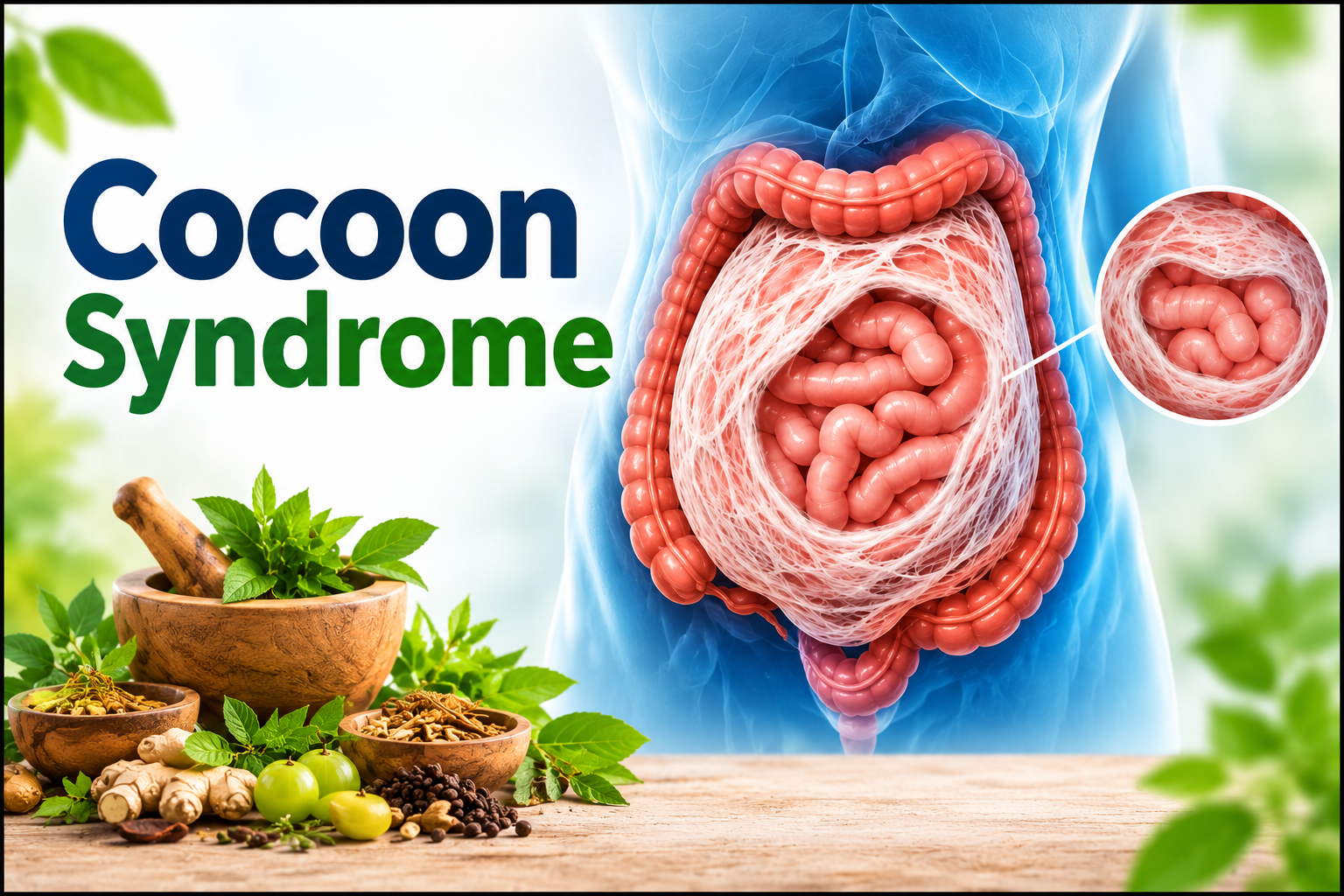
Statistics for Cocoon Syndrome
- Among 240 reviewed cases, males represented 62.9% (151 cases), while females accounted for 37% (89 cases).
- Primary or idiopathic cocoon syndrome is reported most often in adults between 20 and 40 years of age.
- Only about 28.9% of cases are identified before surgery, indicating that many patients receive a definitive diagnosis during operative exploration.
- Abdominal pain is reported in approximately 72% of cases, followed by abdominal distension (44.9%) and a palpable abdominal mass (30.5%).
- Operative treatment, particularly removal of the fibrous sac with adhesiolysis, has been reported in approximately 96.7% of clinical cases.
- Reported mortality varies considerably depending on the underlying cause and severity, ranging from approximately 4% to more than 50% in complicated cases.
Interesting Facts about Cocoon Syndrome
- A “cocoon” inside the abdomen: The name comes from the appearance of the bowel being wrapped in a thick fibrous membrane, resembling an insect enclosed within a cocoon.
- A rare clinical surprise: Cocoon syndrome is uncommon and can remain unrecognized until abdominal surgery reveals the characteristic fibrous covering.
- CT can reveal the hidden picture: Modern imaging can sometimes identify the unusual arrangement of bowel loops within the fibrous membrane before surgery.
- It can mimic other abdominal disorders: Its unusual presentation may resemble more common intestinal conditions, making recognition particularly challenging.
- The “cocoon” is not a tumor: The enclosing structure is mainly made up of dense fibrous tissue rather than a cancerous growth.
- A rare condition with a memorable name: Few abdominal disorders have a name that so directly reflects their characteristic anatomical appearance.
Introduction
Inside the abdomen, the intestines normally move freely as they digest and transport food. In cocoon syndrome, this normal arrangement can become remarkably different. The small bowel becomes surrounded by a dense, fibrous membrane that encloses the intestinal loops, creating an appearance similar to a cocoon. This unusual condition is also described as abdominal cocoon and, in certain clinical settings, sclerosing encapsulating peritonitis. Cocoon syndrome is an uncommon disorder and can be difficult to recognize because its presentation may overlap with several other abdominal conditions. The extent of fibrous encapsulation can vary, ranging from partial involvement of the bowel to extensive enclosure of multiple intestinal loops. As the membrane becomes more established, it can restrict the normal mobility of the intestine and interfere with intestinal passage.
Types of Cocoon Syndrome
It can broadly be classified according to whether a definite underlying cause can be identified.
- Primary Cocoon Syndrome (Idiopathic Form) – It is also called idiopathic abdominal cocoon. It is generally described in otherwise healthy individuals and is characterized by the formation of a fibrous membrane that surrounds and encloses segments of the small intestine.
- Secondary Cocoon Syndrome – It develops in association with an identifiable underlying condition or previous exposure. It has been reported particularly in patients receiving long- term peritoneal dialysis, where progressive peritoneal fibrosis can lead to encapsulation of the bowel.
- Dialysis-Associated Encapsulating Peritoneal Sclerosis – This form represents a particularly important secondary type. It is characterized by progressive thickening and fibrosis of the peritoneum, eventually forming a constricting membrane around the intestines.
Pathophysiology of Cocoon Syndrome
It develops through a progressive process in which the normally delicate peritoneal lining becomes inflamed, thickened, and increasingly fibrotic. Over time, this fibrosis can form a tough membrane around the intestinal loops, restricting their normal movement and creating the characteristic “cocoon” appearance. The process can be understood in several stages:
- Initial Peritoneal Injury or Irritation – The process generally begins with repeated or persistent irritation of the peritoneum. The initial irritation activates inflammatory cells within the peritoneal tissues. These cells release inflammatory mediators that stimulate further tissue injury and repair.
- Persistent Inflammation – When the inflammatory stimulus continues, the peritoneum does not return completely to its normal thin and flexible state. Inflammatory mediators also stimulate fibroblasts, the cells responsible for producing connective tissue.
- Excessive Fibrous Tissue Formation – Activated fibroblasts begin producing increased amounts of collagen and other extracellular matrix components. As these materials accumulate, the peritoneal membrane becomes thicker, tougher, and less elastic.
- Formation of the Encasing Membrane – As fibrosis progresses, the newly formed tissue begins to surround portions of the intestine. Adjacent bowel loops may become adherent to one another and become enclosed within the fibrotic membrane.
- Loss of Normal Bowel Mobility – The intestine normally requires considerable freedom of movement for effective propulsion of its contents. Fibrous encapsulation restricts this mobility.
- Disturbance of Intestinal Passage – As the fibrous membrane becomes tighter,intestinal contents may have increasing difficulty passing through the affected bowel. This mechanical disturbance can also affect the movement of gas and fluids through the bowel, contributing to progressive abdominal distension and discomfort.
Risk Factors of Cocoon Syndrome
- Peritoneal infections – Recurrent or severe infections can promote inflammation and subsequent fibrosis.
- Inflammatory abdominal disorders – Persistent inflammation may encourage fibrotic changes within the peritoneum.
- Repeated peritoneal irritation – Ongoing irritation can trigger fibrosis and membrane formation.
- Idiopathic factors – In primary cocoon syndrome, no definite precipitating factor may be identified.
- Autoimmune or systemic inflammatory conditions – Certain inflammatory disorders may increase the risk of peritoneal fibrosis.
- Long-term peritoneal dialysis – A major recognized association with secondary encapsulating peritoneal sclerosis.
Clinical Presentation of Cocoon Syndrome
The symptoms can vary considerably depending on the extent of bowel encapsulation, degree of intestinal obstruction, and duration of the disease. These include:
- Abdominal distension : Progressive accumulation of intestinal contents and gas can produce visible abdominal bloating. The distension may become more prominent during episodes of obstruction.
- Nausea and vomiting : Partial or complete intestinal obstruction can interfere with the forward movement of gastrointestinal contents, leading to nausea and vomiting. In severe obstruction, vomiting may become persistent.
- Recurrent abdominal pain : Abdominal pain is one of the most frequently reported complaints. It may be intermittent and cramp-like, particularly when intestinal contents encounter resistance while passing through the affected bowel.
- Palpable abdominal mass : A firm or mobile abdominal mass may occasionally be detected during physical examination. This can correspond to the clustered intestinal loops enclosed within the fibrous membrane.
- Reduced appetite : Persistent abdominal discomfort, distension, and impaired intestinal transit can decrease the desire to eat.
- Weight loss : Chronic or recurrent disease may result in inadequate food intake and impaired nutritional status, eventually leading to unintended weight loss.
- Dehydration : Repeated vomiting and reduced oral intake can cause fluid depletion. Electrolyte disturbances may develop in prolonged cases.
- Nutritional deterioration : Long-standing intestinal dysfunction can interfere with adequate nutritional intake and may contribute to weakness and deficiencies.
Diagnostic Evaluation of Cocoon Syndrome
A combination of clinical assessment, laboratory investigations, imaging, and, when required, operative and histopathological findings helps establish the diagnosis. These include:
- Clinical History – The evaluation begins with the pattern and duration of abdominal pain, distension, vomiting, constipation, and recurrent episodes of intestinal obstruction. A history of repeated episodes with symptom-free intervals can provide an important diagnostic clue.
- Physical Examination – The abdomen should be examined for distension, tenderness, abnormal bowel sounds, and palpable masses.
- Laboratory Investigations – Important investigations may include complete blood count, serum electrolytes, renal function tests, liver function tests, inflammatory markers, serum albumin and nutritional parameters.
- Abdominal X-ray – It demonstrates dilated small-bowel loops and multiple air-fluid levels, suggesting intestinal obstruction.
- Contrast Studies of the Small Bowel – Closely packed loops may produce the characteristic “cauliflower sign.”
- Contrast-Enhanced CT Scan – It is the key imaging investigation for suspected cocoon syndrome. It provides detailed information about the bowel, peritoneum, mesentery, fluid collections, and possible complications.
- Magnetic Resonance Imaging – It can demonstrate: fibrotic thickening of the peritoneum, encapsulation of bowel loops, aggregation of intestinal segments, reduced bowel mobility and associated fluid collections.
Management of Cocoon Syndrome
It depends on the severity of intestinal obstruction, extent of bowel encapsulation, nutritional status, underlying cause, and presence of complications. The main goals are to relieve obstruction, maintain hydration and nutrition, treat the underlying condition, and prevent further intestinal damage.
- Initial Stabilization – Patients presenting with acute intestinal obstruction should first undergo appropriate fluid and electrolyte correction. Intravenous fluids may be required when vomiting, poor oral intake, or dehydration is present.
- Nutritional Support – Patients who can tolerate oral feeding may require small, frequent, easily digestible meals according to their clinical condition.
- Treatment of the Underlying Cause – In peritoneal dialysis-associated disease, the dialysis regimen may need to be reassessed by the treating nephrology team. Associated inflammatory or systemic disorders should receive appropriate specialist management.
- Medical Management – Depending on the clinical setting, specialists may use therapies aimed at reducing inflammation and fibrosis. Corticosteroids, tamoxifen, or other immunomodulatory approaches have been used in selected cases.
Ayurveda Insights
Agnimandya may impair normal digestion and contribute to Ama formation, while aggravated Vata, particularly Apana Vata, can disturb the normal movement of intestinal contents. Persistent obstruction may be viewed conceptually as Srotorodha and Sanga, affecting the proper movement through Annavaha and Purishavaha Srotas. Ayurvedic assessment may therefore focus on Agni, Ama, Dosha involvement, bowel function, diet, and overall strength.
Pathogenesis of Cocoon Syndrome
Its pathogenesis can be understood conceptually by correlating its clinical and structural manifestations with Ayurvedic principles, particularly Agni, Ama, Vata, Srotas and Sanga.
- Nidana Sevana – Inappropriate dietary habits, irregular eating patterns, excessive intake of heavy or difficult-to-digest foods, suppression of natural urges, and other factors that disturb Agni may initiate the pathological process.
- Agnimandya – Repeated exposure to causative factors can impair Jatharagni, resulting in Agnimandya. Improper digestion affects the normal processing and transformation of Ahara Rasa and predisposes to the formation of Ama.
- Ama Formation – Due to weakened Agni, incompletely processed metabolic material is described as Ama. Ama is considered heavy, sticky, and obstructive in nature. Its accumulation can interfere with the normal functioning of the gastrointestinal tract and contribute to Srotodushti.
- Vata Prakopa – Continued digestive disturbance and obstruction can aggravate Vata, especially Apana Vata, which governs the downward movement of intestinal contents and elimination of stool and urine. Disturbed Vata may manifest through abdominal pain, altered bowel movement, distension, and difficulty in elimination.
- Srotorodha and Sanga – The combination of Ama and aggravated Vata may contribute conceptually to Srotorodha (obstruction of channels) and Sanga (stagnation).
- Abnormal Tissue Response – Persistent Dosha disturbance and chronic local pathology may progressively affect the tissues surrounding the intestine. Prolonged Vata disturbance with Sanga and chronic inflammation can be correlated with progressive tissue alteration and fibrosis.
Herbal Remedies for Cocoon Syndrome by Planet Ayurveda
Planet Ayurveda is a well-established Ayurvedic healthcare organization that works to promote the ancient knowledge of Ayurveda through natural remedies and holistic health solutions. The company develops a wide range of herbal formulations using pure, high-quality ingredients and standardized herbal extracts, with a focus on maintaining safety, authenticity, and effectiveness. Following the principles of classical Ayurveda, Planet Ayurveda aims to support overall health by addressing the underlying causes of health concerns and encouraging balance in the body, mind, and emotions. With an emphasis on quality, natural ingredients, and traditional approaches supported by modern research, the organization works toward making Ayurvedic wellness solutions available globally. We will explore various herbal approaches used for the management of Cocoon Syndrome according to Ayurvedic principles. The herbal formulations are:
- Triphala Capsules
- Panchsakar Churna
- Digesto Plan Syrup
- Acido Plan Syrup
- Mahashankh Vati
Cocoon Syndrome: Symptoms, Causes & Ayurvedic Care
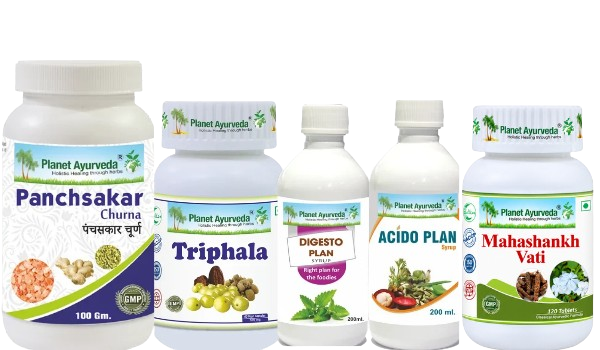

Product description:
1. Triphala Capsules
These contain three classical Ayurvedic fruits: Haritaki (Terminalia chebula), Bibhitaki (Terminalia bellirica), and Amalaki (Phyllanthus emblica). In the supportive management of cocoon syndrome, Triphala may be considered for maintaining healthy bowel function and supporting digestion. Its traditional Ayurvedic role includes supporting Agni and promoting regular bowel evacuation, which may be relevant when constipation and sluggish intestinal movement accompany the condition. The formulation is also traditionally valued for its Rasayana properties and digestive support.
Dosage : 1 capsule twice a day after meals with plain water.
2. Panchsakar Churna
It contains Saunf (Foeniculum vulgare), Sonth (Zingiber officinale), Choti Harad (Terminalia chebula), Saindhav Lavan (Rock salt), and Senai(Senna alexandrina). In the supportive management of cocoon syndrome, it may be considered for promoting Agni and supporting regular bowel evacuation. Saunf and Sonth are traditionally used to support digestion and reduce abdominal discomfort associated with impaired digestion, while Harad supports bowel regularity. Saindhav Lavan is traditionally used to support digestion and facilitate bowel movement. Senai has a laxative action and may help relieve constipation.
Dosage : ½ teaspoonful twice a day.
3. Digestoplan Syrup
It contains Ajwain (Trachyspermum ammi), Sonth (Zingiber officinale), Jeerak (Cuminum cyminum), Amalaki (Phyllanthus emblica), Bibhitaki (Terminalia bellirica), Haritaki (Terminalia chebula), Pippali (Piper longum), Marich (Piper nigrum), Dhanayak (Coriandrum sativum), Pudina (Mentha arvensis), Saunf (Foeniculum vulgare), and Shatapushpa (Anethum graveolens). In cocoon syndrome, it may be used as supportive digestive care, particularly when reduced appetite, indigestion, gas, or sluggish bowel function accompanies the condition. Its ingredients are traditionally used to support Agni and gastrointestinal function.
Dosage; 2 teaspoons twice a day.
4. Acidoplan Syrup
It contains Saunf (Foeniculum vulgare), Ghritkumari (Aloe barbadensis), Patola (Trichosanthes dioica), Sajjikshar (Sodium carbonate), Kokum (Garcinia indica), Shatavari (Asparagus racemosus), Triphala—Amalaki (Phyllanthus emblica), Haritaki (Terminalia chebula), and Bibhitaki (Terminalia bellirica)—and Pittapapada (Fumaria indica). In cocoon syndrome, it may provide supportive gastrointestinal care when acidity, burning, indigestion, or digestive discomfort accompanies the condition. The ingredients are traditionally used to support digestive comfort and maintain normal gastrointestinal function.
Dosage : 2 teaspoons twice a day.
5. Mahashankh Vati
It contains Sea Salt, Black Salt, Shunthi (Zingiber officinale), Pippali (Piper longum), Tamarind Bark (Tamarindus indica), Shankha Bhasma, Shuddha Vatsanabha (Aconitum ferox), and Rock Salt. In the supportive management of cocoon syndrome, it may be considered for digestive support, particularly when abdominal discomfort, indigestion, or impaired appetite accompanies the condition. Shunthi and Pippali are traditionally used to support Agni, while the salt components are traditionally described as supporting digestion and reducing Vata-related abdominal discomfort.
Dosage : 2 tablets twice a day. Chew and eat them 20 minutes before meals.
Diet and Lifestyle Considerations
- Choose light, warm, and easily digestible meals.
- Prefer moong dal khichadi, rice gruel, and well-cooked vegetables.
- Take small, frequent meals instead of large portions.
- Eat freshly prepared food and maintain regular meal timings.
- Drink adequate fluids to maintain proper hydration.
- Avoid fried, oily, very spicy, and heavy foods.
- Avoid overeating and late-night meals.
- Maintain adequate sleep and rest.
- Practice gentle breathing and relaxation techniques to support mental well-being.
- Avoid self-medication with strong laxatives or Panchakarma procedures.
Conclusion
Cocoon syndrome is an uncommon abdominal disorder in which fibrous tissue gradually encloses the intestinal loops, restricting their normal movement and potentially causing intestinal obstruction. Its varied presentation can make timely recognition challenging, while CT imaging and surgical findings play an important role in diagnosis. Management depends on disease severity and may involve nutritional support, correction of fluid and electrolyte disturbances. From an Ayurvedic perspective, its manifestations can be understood through concepts such as Agnimandya, Ama, Vata aggravation, Srotorodha, and Sanga. Ayurvedic measures may provide supportive digestive care.


Dr. Vikram Chauhan
Latest posts by Dr. Vikram Chauhan (see all)
- Cocoon Syndrome: Symptoms, Causes & Ayurvedic Care - October 22, 2026
- Herniated Disc & Ayurveda: Herbs, Diet and Lifestyle Guide - October 21, 2026
- Globus Pharyngeus: Ayurvedic Treatment & Remedies - October 21, 2026
- Urinary Tract Infection (UTI): Causes, Symptoms & Ayurvedic Care - October 21, 2026
- Prostate Cancer: Symptoms, Treatment & Ayurvedic Support - October 20, 2026