


Ayurvedic Alternatives to Aspirin for Heart Health
ABSTRACT
Heart diseases or Cardiovascular diseases (CVDs) are the leading cause of death globally these days. CVD refers to a group of conditions that affect the heart and blood vessels, including coronary artery disease (CAD), heart attacks (myocardial infarction), heart failure, and arrhythmias. One of the key mechanisms leading to many of these conditions is atherosclerosis, where plaque buildup in the arteries can trigger blood clots, reducing blood flow to the heart or brain. Aspirin plays a vital role in the management of heart disease due to its antiplatelet effect. In clinical practice, low-dose aspirin (typically 75–100 mg daily) is commonly prescribed for patients at high risk. While aspirin is powerful, quick, targeted, but with a lot of side effects. So its then the holistic approach of ayurveda comes as a saving hand. Ayurvedic drugs are gentle, holistic, multi-targeted, and suitable for long-term management. So, let’s see the actions of aspirin along with its side effects and how ayurveda helps in its management.

INTRODUCTION
Aspirin is acetylsalicylic acid which is rapidly converted in the body into salicylic acid that is responsible for the actions. It is one of the oldest analgesic-antiinflammatory drugs but still is frequently prescribed. It is available as brand names- Disprin, Ecosprin, Ecotrin.
Its low-dose regimen (usually 75–150 mg/day) effectively helps to prevent clot formation in coronary arteries, thereby maintaining smooth blood flow and reducing the chances of recurrent cardiac episodes.
MODE OF ACTION
- It acts by irreversibly inhibiting the enzyme cyclooxygenase-1 (COX-1) in platelets which reduces the production of thromboxane A2, a molecule that promotes platelet aggregation. This action helps prevent formation of blood clots, making aspirin an essential drug in both the primary and secondary prevention of cardiovascular diseases.
- Aspirin has no direct effect on heart or blood vessels in therapeutic doses. Larger doses increase cardiac output to meet the increased peripheral O2 demand, and cause direct vasodilatation.
INDICATIONS
- Post-Myocardial Infarction (MI)
- After Ischemic Stroke or Transient Ischemic Attack (TIA)
- Post–Coronary Artery Bypass Grafting (CABG) or Angioplasty / Stent Placement
- In Stable or Unstable Angina
- High cardiovascular risk ( DM, HTN, Hyperlipidemia, smoking, etc.)
- Peripheral Artery Disease (PAD)
CONTRAINDICATIONS
- Hypersensitivity or Allergy
- Peptic ulcer disease, gastritis, or gastrointestinal bleeding
- Bleeding disorders
- Viral infections
- Asthma
- Chronic Gout
- Chronic renal or hepatic impairment
- Pregnancy and lactation
- Uncontrolled hypertension
- Before surgery
ADVERSE EFFECTS
- Hyperglycemia
- Gastrointestinal bleeding and hemorrhagic shock
- Hyperventilation
- Disturb the acid base balance
- Dehydration
- Nausea and vomiting
- Bleeding tendencies
In Ayurveda our heart is known as Hridya and is considered as the centre of Oja (immunity or vital energy), Pran Vayu (life force). The Hridya (heart) Vikara (diseases) are a result of imbalance and vitiation of three Doshas, Rakta Dhatu (blood tissue) and the oja (vital energy). So, Ayurveda approaches heart health (Hridya Vikara) holistically, focusing not just on treating disease but on preventing cardiac diseases and maintaining overall cardiovascular balance.
Acharya Charak has mentioned 10 herbs specifically indicated in Hridya Roga (Heart Diseases). These are Amra (Mangifera indica), Amratak (Spondias mangifera), Lakucha (Artocarpus lakoocha), Karamarda ( Carissa carandus), Vrikshamla (Garcinia indica), Amlavetas (Garcinia pedunculata), Kola (Ziziphus jujuba), Badar (Ziziphus sativa), Dadim (Punica granatum), Matulunga (Citrus medica). Ayurveda uses herbs, diet, and lifestyle to restore Dosha balance, thereby preventing cardiac dysfunction. Some of the drugs widely used are:
1. Arjuna
- Arjuna (Terminalia arjuna) is a potent herb in Ayurveda which is considered as cardiac tonic and is used to strengthen the heart muscle, improve circulation, and maintain healthy cholesterol levels.
- Its bark is rich in antioxidants, flavonoids, and minerals like calcium, magnesium, and zinc, which contribute to its heart-protective properties. The β-sitosterol in arjuna helps in cholesterol modulation. Its bark also contains Coenzyme Q10 which helps to reduce blood pressure.
- अर्जुनस्य त्वचा सिद्धं क्षीरं योज्यं हृद्यामये। (चक्रदत्त)
It means milk that is medicated with its bark is very beneficial in heart diseases.
- Its Asava-Arishta (alcoholic decoction) is beneficial for stable cases of ischaemic heart disease.
2. Hritpatri
- Hritpatri or Digitalis purpurea is known for its significant effect in cardiac diseases due to presence of cardiac glycosides like digitoxin, digoxin.
- It is Hridya (heart-tonic) with a Tikta Rasa (bitter taste) and Sheeta Virya (cooling potency) thus balancing Pitta Dosha and supporting Vata-related palpitations.
- It also increases blood flow to the coronary arteries thus helps to regulate heart health.
3. Dadim
- Dadim (Punica granatum) commonly known as pomegranate is regarded as a cardio tonic and has beneficial effects on the cardiovascular system.
- Its juice is rich in Vitamin C, flavonoids like Punicalgin, tannins, possesses anti-atherosclerotic action, and has an anti-aging effect and potent antioxidant properties.
- It is tridosha shamak (pacifies all the three doshas), hridya (cardiac tonic), raktaprasadana (blood purifier) and rasayana (rejuvenating properties) for cardiovascular well being.
4. Pushkarmool
- Pushkarmool (Inula racemosa) is cardioprotective and is an anti-ischemic herb.
- Research indicates that extracts of Inula racemosa and its isolated constituents, such as alantolactone, possess cardioprotective properties. These compounds help reduce oxidative stress and prevent lipid peroxidation, thereby safeguarding the heart against damage caused by ischemia (restricted blood flow). Some studies have also shown anti-anginal activities of pushkarmool.
5. Rason
- Allium sativum or garlic is used for prevention of cardiovascular diseases and its treatment.
- The alkaloids present in garlic are Allicin, ajoene, diallyl sulfides, S-allylcysteine, flavonoids, sulfur-containing compounds. It reduces total cholesterol, LDL (bad cholesterol), and triglycerides, while sometimes slightly raising HDL (good cholesterol). This helps in preventing atherosclerosis.
- Garlic inhibits platelet aggregation, reducing the risk of thrombus formation and potentially preventing heart attacks and strokes.
6. Rudraksh
- Rudraksh or Elaeocarpus ganitrus is used in various heart conditions and especially in high blood pressure.
- The cardioprotective properties of Rudraksha prevent high blood pressure by affecting vascular nitric oxide and calcium channels
- Intake of water in which rudraksh is soaked in a copper vessel is beneficial for heart health. Or it can be used as powder or decoction form.
7. Amra
- Amra (Mangifera indica) commonly known as mango are a good source of antioxidants in the human diet and are beneficial for the heart.
- Its major chemical constituents are Mangiferin, Mangiferolic acid and indicenol. Mangiferin, being a polyphenolic antioxidant and a glucosyl xanthone, is a strong antioxidant, anti lipid peroxidator, immunomodulator, cardiotonic and hypotensive.
Some of the formulations that are commonly used in heart diseases are:
- Arjunarishta
- Hridyarnava Ras
- Punarnavarishta
- Prabhakar Vati
- Pushkara Churna
- Yakuti Ras
PLANET AYUREVDA’S ARJUNA CAPSULES
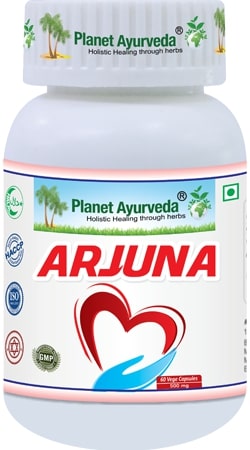
Plant Ayurveda’s Arjuna Capsules are being widely used for heart diseases. They are herbal capsules made from standardized extract of Terminalia arjuna. Capsules are made under the expert supervision of MD Doctors and are free from any kind of colour, additives, binders, starch, preservatives and are 100% natural and vegetarian. The presence of Arjunic acid, Gallic acid and Ellagic acid is used to support overall heart health. Its bark is used which is rich in many antioxidants and the valuable Coenzyme Q10. It is a natural cardiac tonic and strengthens the heart muscle and is useful in angina and high blood pressure.
Dosage: is 1-2 capsules twice a day with plain water after meals.
ARJUNA CAPSULES

CONCLUSION
Allopathic medicine primarily focuses on managing symptoms, controlling risk factors, and performing surgical interventions. Aspirin is used as a preventive measure. Procedures such as angioplasty or bypass surgery address structural or acute cardiac issues. While highly effective in emergency and critical care, long-term reliance may lead to side effects and does not always restore cardiac tissue vitality. Ayurveda, on the other hand, emphasizes a holistic, preventive, and restorative approach. Herbs like Arjuna (Terminalia arjuna), Hritpatri (Digitalis purpurea), Pushkarmool (Inula racemosa) act as cardiotonic Rasayanas (Rejuvenator), balancing Doshas, nourishing Dhatus (tissues), improving Ojas (immunity) and enhancing overall heart strength. Lifestyle interventions including Sattvic diet, yoga and pranayama reduce stress, improve circulation and prevent the onset of cardiac diseases. Ayurvedic therapy focuses on root cause correction, tissue rejuvenation, and long-term heart health.


Dr. Vikram Chauhan
Latest posts by Dr. Vikram Chauhan (see all)
- Anti-CCP Test – Normal Range, Positive Results, and Role in Rheumatoid Arthritis Diagnosis - February 24, 2026
- Archana Puran Singh Diagnosed with CRPS – Chronic Pain Condition Awareness, its Impact, Symptoms, Causes & Ayurveda View - January 29, 2026
- Vikramprash & Shilajit Resin for Winter Energy, Immunity and Vitality - December 26, 2025
- Winter Health Tips for Kids: Ayurvedic Diet, Immunity & Lifestyle Care - December 16, 2025
- Ayurvedic Alternative of Sertraline (Zoloft) for Stress, Anxiety & Depression - December 15, 2025