


Chronic Kidney Disease (CKD): Ayurvedic Treatment & Management
Abstract
Chronic Kidney Disease (CKD) is a progressive condition characterised by persistent abnormalities in kidney structure or function, with consequences for fluid balance, waste removal, electrolyte regulation, and overall metabolic health. Common contributing factors include diabetes, hypertension, cardiovascular disease, recurrent kidney injury, and certain hereditary or inflammatory disorders. CKD represents a substantial and growing global health burden, affecting hundreds of millions of people worldwide. Its increasing prevalence is closely associated with ageing populations, diabetes, hypertension, obesity, and cardiovascular disease. The prognosis varies considerably among patients; some remain stable for years, whereas others experience progressive loss of renal function leading to kidney failure and the need for dialysis or kidney transplantation. Importantly, the risk of progression is not determined by eGFR alone, as albuminuria, rate of eGFR decline, underlying cause, cardiovascular comorbidities, and recurrent episodes of acute kidney injury also influence long-term outcomes.

Introduction
The kidneys perform essential functions such as removing metabolic waste, maintaining fluid and electrolyte balance, regulating blood pressure, and contributing to red blood cell production. In CKD, kidney function gradually declines and may eventually lead to complications such as anaemia, mineral and bone abnormalities, fluid retention, cardiovascular disease, and kidney failure. Modern management focuses on identifying the underlying cause, controlling blood pressure and blood glucose, reducing cardiovascular risk, preventing further kidney damage, and using kidney-protective medicines when indicated. Advanced disease may require dialysis or kidney transplantation. Ayurveda approaches chronic disorders through an individualised assessment of Dosha (functional regulatory principles), Dushya (affected body tissues and pathological factors), Agni (digestive and metabolic capacity), Srotas (body channels and pathways), Prakriti (individual constitutional type), Bala (strength or physiological resilience), and disease stage. Rather than treating only a laboratory value such as serum creatinine, the Ayurvedic approach traditionally considers the broader pattern of digestion, metabolism, urinary function, diet, lifestyle, and constitutional factors.
Causes of Chronic Kidney Disease
Several conditions can damage the kidneys over a prolonged period.
- Diabetes Mellitus: Diabetes is one of the major causes of CKD. Persistently elevated blood glucose can damage the small blood vessels and filtering units of the kidneys. Over time, this may result in albumin/protein appearing in the urine and progressive reduction in kidney function.
- Hypertension: Long-standing high blood pressure can damage renal blood vessels and the filtering structures of the kidneys. At the same time, declining kidney function can worsen blood pressure, creating a cycle that may accelerate CKD progression.
- Glomerular Diseases: Diseases affecting the kidney’s filtering units, known as glomeruli, can cause persistent proteinuria, blood in the urine, inflammation, and progressive renal impairment. Examples include different forms of glomerulonephritis.
- Polycystic Kidney Disease: Polycystic kidney disease is an inherited condition in which multiple cysts develop in the kidneys. Progressive enlargement and damage to renal tissue can eventually impair kidney function.
- Recurrent Kidney Infections: Repeated or severe kidney infections may cause scarring of renal tissue. When significant damage accumulates over time, kidney function may decline.
- Kidney Stones and Urinary Obstruction: Repeated kidney stones or prolonged obstruction of urinary flow can interfere with normal kidney function. Conditions such as prostate enlargement and structural abnormalities of the urinary tract can also contribute to obstruction.
- Autoimmune and Systemic Diseases: Conditions such as systemic lupus erythematosus (SLE) and other autoimmune disorders may affect the kidneys and produce chronic renal damage.
- Cardiovascular Disease: Heart and vascular disorders are closely associated with CKD. Reduced cardiovascular health can affect kidney blood flow, while CKD itself increases cardiovascular risk.
- Obesity and Metabolic Disorders: Obesity and associated metabolic abnormalities can increase the workload on the kidneys and are associated with an increased risk of CKD.
- Long-Term Drug or Toxin Exposure: Repeated or inappropriate exposure to certain nephrotoxic medicines or substances can cause kidney injury. Some pain-relieving medicines, for example, can contribute to kidney damage in susceptible individuals, particularly with prolonged use or in people who already have kidney impairment.
Risk Factors for CKD
- Older age
- Family history of kidney disease
- Previous acute kidney injury (AKI)
- Low birth weight or premature birth
- Sedentary lifestyle
- Poor dietary habits and high salt intake
- Recurrent dehydration
- Sleep disorders such as sleep apnoea
- Chronic periodontal disease
- Occupational heat exposure
- Pregnancy-related complications such as pre-eclampsia
Common Signs and symptoms
- Fatigue and weakness due to anaemia and accumulation of waste products.
- Swelling (oedema), particularly around the ankles, feet, legs, or sometimes around the eyes, due to fluid retention.
- Changes in urination, including increased or decreased urine output.
- Foamy or frothy urine, which may indicate increased protein excretion.
- Blood in the urine (hematuria) in some kidney diseases.
- Loss of appetite and reduced interest in food.
- Nausea or vomiting, especially in advanced disease.
- Itching (pruritus) associated with advanced kidney dysfunction.
- Muscle cramps or weakness due to fluid and electrolyte disturbances.
- Sleep disturbances and difficulty concentrating.
- Shortness of breath, particularly when fluid accumulates, or anaemia and cardiovascular complications are present.
- High blood pressure, which can both contribute to and result from CKD.
Stages of Chronic Kidney Disease (CKD)
CKD is commonly classified according to estimated glomerular filtration rate (eGFR). The G categories are based on eGFR, while albuminuria is assessed separately using the urine albumin-to-creatinine ratio (ACR).
- G1: eGFR ≥90 mL/min/1.73 m² — Normal or high kidney function, but evidence of kidney damage is present.
- G2: eGFR 60–89 mL/min/1.73 m² — Mildly decreased kidney function.
- G3a: eGFR 45–59 mL/min/1.73 m² — Mild to moderately decreased kidney function.
- G3b: eGFR 30–44 mL/min/1.73 m² — Moderately to severely decreased kidney function.
- G4: eGFR 15–29 mL/min/1.73 m² — Severely decreased kidney function.
- G5: eGFR <15 mL/min/1.73 m² — Kidney failure.
Diagnosis of CKD
Diagnosis generally involves a combination of blood tests, urine tests, medical history, physical examination, and imaging when required. Important investigations may include:
- Serum creatinine
- Estimated Glomerular Filtration Rate (eGFR)
- Urine albumin-to-creatinine ratio (UACR)
- Routine urine examination
- Blood urea
- Electrolytes
- Blood glucose and HbA1c when indicated
- Complete blood count
- Kidney ultrasound or other imaging when clinically required
The combination of eGFR and urine albumin levels is particularly important for assessing kidney disease and its progression.
Complications of CKD
As kidney function progressively decreases, CKD can affect multiple body systems. Possible complications include:
- Anemia
- Fluid retention and oedema
- Electrolyte abnormalities
- Metabolic acidosis
- Mineral and bone disorders
- Cardiovascular disease
- Persistent hypertension
- Nutritional problems
- Uremic symptoms
- Increased risk of acute kidney injury
- Kidney failure requiring renal replacement therapy in advanced cases
Modern Management for CKD
Modern CKD management may include ACE inhibitors/ARBs such as Enalapril or Losartan, and SGLT2 inhibitors such as Dapagliflozin or Empagliflozin to help protect kidney function when indicated. Statins such as Atorvastatin may be used for cardiovascular risk reduction, while Furosemide or Torsemide may help manage fluid overload. CKD-related anaemia may be treated with iron preparations and erythropoiesis-stimulating agents such as Epoetin alfa, depending on laboratory findings. In advanced kidney failure, dialysis or kidney transplantation may be required.
Ayurvedic Perspective of CKD
In Ayurveda, Chronic Kidney Disease (CKD) is viewed as damage to Vrikka (kidneys) caused by Srotorodha (obstruction of micro-channels) in the Mutravaha Srotas (urinary excretion system), where accumulated metabolic toxins (Ama) impair filtration, leading to aggravated Vata (causing progressive tissue degeneration or Dhatu Kshaya) and imbalanced Kapha/Pitta (causing tubule blockage and tissue inflammation). Management focuses on clearing these channel blockages (Srotoshodhana), restoring digestive fire (Agni) to stop toxin production, and protecting remaining renal tissue using nephroprotective and diuretic herbs (Mutrajanana and Rasayana).
Ayurvedic Samprapti of CKD
मूत्रवहानां स्रोतसां बस्तिर्मूलं वङ्क्षणौ च,
प्रदुष्टानां तु खल्वेषामिदं विशेषविज्ञानं भवति;
तद्यथा-अतिसृष्टमतिबद्धं प्रकुपितमल्पाल्पमभीक्ष्णं वा
बहलं सशूलं मूत्रयन्तं दृष्ट्वा मूत्रवहान्यस्य स्रोतांसि प्रदुष्टानीति विद्यात्।
— चरक संहिता, विमान स्थान 5/8
From an Ayurvedic perspective, repeated exposure to Nidana (causative factors) may disturb Agni and normal metabolic processes. This may contribute to the formation of improperly processed metabolic material, conceptually described as Ama, along with Dosha imbalance. Disturbed Doshas may affect the relevant Srotas, particularly the Mutravaha Srotas, interfering with normal urinary and fluid-regulatory functions. With continued disease progression, tissue nourishment and Dhatu Bala may become affected, contributing to weakness and systemic manifestations. This represents an Ayurvedic conceptual interpretation and should not be considered identical to the biomedical pathophysiology of CKD.
Ayurvedic sign and symptoms
- Mutra Alpata (reduced urine output)
- Mutra Adhikya (increased urination)
- Mutra Krichhrata (difficulty in urination)
- Mutra Daha (burning urination)
- Mutra Avilata (cloudy urine)
- Mutra Vega Vaishamya (altered urinary pattern)
- Shotha (edema/swelling)
- Daurbalya (weakness)
Herbal Remedies for CKD by Planet Ayurveda
Planet Ayurveda offers a wide range of herbal and Ayurvedic medicines formulated to support overall health and well-being. Its range includes herbal products designed to support kidney health, urinary function, digestion, metabolism, immunity, and other health concerns. The formulations are prepared using traditionally valued herbs and Ayurvedic ingredients. Planet Ayurveda focuses on maintaining natural body balance through diet, lifestyle, and herbal support. Its products are available in convenient forms such as tablets, capsules, syrups, powders, and herbal formulations, making Ayurvedic healthcare accessible to people worldwide. Here, in this article, we will discuss some formulations for the management of CKD. Let’s Start!
- Mutrakrichantak Churna
- Rencure Formula
- Punarnava Mandur
- Varunadi Vati
- Chandanadi Vati
REVIVE KIDNEYS PACK (RKP)
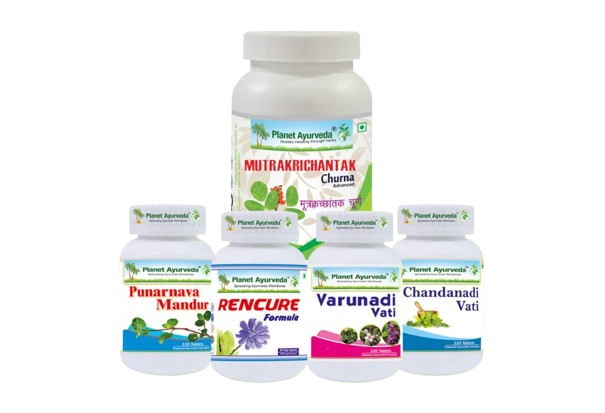

Product Description:
1. Mutrakrichantak Churna
Mutrakrichantak Churna, containing Varun (Crateva nurvala), Bhumi Amla (Phyllanthus niruri), Gokshur (Tribulus terrestris), and Kalmegh (Andrographis paniculata), is traditionally used to support kidney and urinary functions relevant to CKD. Varun helps maintain healthy urinary flow and supports the normal functioning of the urinary system. Gokshur is traditionally valued for Mutravaha Srotas (urinary channels) and healthy urine elimination, which is important when renal function is compromised. Bhumi Amla provides antioxidant and metabolic support, while Kalmegh contributes bitter principles traditionally associated with detoxification and metabolic balance. Together, these herbs may support urinary clearance, fluid regulation, renal tissue protection, and maintenance of normal metabolic processes in CKD.
Dosage: Take 1 teaspoonful twice daily with warm water. For enhanced preparation, boil 1 teaspoonful of the powder in 400 mL of water until approximately 50–60 mL remains. Strain the preparation using a regular tea strainer and consume it in the morning, 45 minutes after breakfast, and in the evening, 45 minutes after dinner. Prepare a fresh decoction each time before consumption.
2. Rencure Formula
Rencure Formula, containing Punarnava (Boerhavia diffusa), Varun (Crateva nurvala), Gokshur (Tribulus terrestris), Palaash (Butea monosperma), and Kasni (Cichorium intybus), is formulated to support renal and urinary function in CKD. Punarnava is traditionally valued for supporting healthy fluid balance and maintaining normal urinary elimination, which is particularly relevant when fluid handling becomes impaired. Varun and Gokshur support the Mutravaha Srotas (urinary channels) and healthy urinary flow. Palaash contributes traditional cleansing and metabolic-supportive properties, while Kasni provides additional support for metabolic functions. The combined herbal profile is intended to support fluid regulation, urinary function, metabolic balance, and overall renal health in individuals with CKD.
Dosage: 2 Capsules twice daily with lukewarm water after meals.
3. Punarnava Mandur
Punarnava Mandur is traditionally used in CKD to support renal function, urinary elimination, fluid balance, and metabolic health. Punarnava (Boerhaavia diffusa) is valued for its role in maintaining healthy fluid regulation and supporting the Mutravaha Srotas (urinary channels). Mandura Bhasma (processed iron preparation) provides traditional support for maintaining healthy blood formation, which is relevant because anaemia commonly accompanies advanced kidney dysfunction. The formulation also contains digestive and metabolic herbs that support Agni (digestive and metabolic function) and proper nutrient utilisation. Its combined action is traditionally considered useful for addressing fluid accumulation, weakness, impaired urinary function, and metabolic disturbances associated with CKD.
Dosage: 2 tablets thrice daily with lukewarm water after meals.
4. Varunadi Vati
Varunadi Vati, containing Varun (Crataeva nurvala), Punarnava (Boerhaavia diffusa), Gokshur (Tribulus terrestris), and Shuddha Guggulu (Commiphora mukul), provides a complementary Ayurvedic approach for supporting kidney function in CKD. Varun and Gokshur are traditionally associated with maintaining the normal function of Mutravaha Srotas (urinary channels) and supporting healthy urinary flow. Punarnava is valued for maintaining Kleda (excess body fluid) balance and supporting normal fluid movement, which is relevant to the tendency toward fluid retention in CKD. Shuddha Guggulu adds traditionally recognised Lekhana (Scrapping properties) and Srotoshodhana (supporting healthy channel function) properties. Together, these ingredients support urinary function, fluid regulation, and metabolic balance while addressing multiple Ayurvedic aspects associated with impaired renal function.
Dosage: 2 tablets thrice daily with lukewarm water after meals.
5. Chandanadi Vati
Chandanadi Vati, containing Safed Chandan (Santalum album), Kababchini (Piper cubeba), Safed Ral, Gandhabiroja, Kattha, Amalaki (Phyllanthus emblica), Kapur (Cinnamomum camphora), and other herbs, can provide supportive benefits in the Ayurvedic management of CKD. Safed Chandan is traditionally valued for its Mutrala (supporting healthy urine formation) and cooling properties, while Amalaki contributes antioxidant and metabolic support. Kababchini and other aromatic ingredients traditionally support the urinary tract and help maintain comfortable urinary function. The formulation’s Shita (cooling), Mutrala (urinary-supportive), and Pitta-balancing characteristics make it particularly relevant when CKD is accompanied by urinary discomfort or heat-related urinary symptoms. Its broader herbal profile also supports Kleda (fluid) regulation and healthy urinary-channel function, contributing to a balanced approach to renal health.
Dosage: 2 tablets twice daily with lukewarm water after meals.
Ayurvedic Diet and Lifestyle for CKD
Pathya – Foods to Include
- Grains: Aged red rice (Shashtika Shali), barley (Yava), and wheat in moderation; barley water helps soothe the channels.
- Pulses: Yellow split green gram (Moong dal) prepared light and thin.
- Vegetables: Bottle gourd (Lauki), ridge gourd (Turai), ash gourd (Pethak), pointed gourd (Parwal), and cooked cucumber.
- Spices: Coriander (Dhanyaka), cumin (Jiraka), fennel (Shatapushpa), small amounts of dry ginger (Shunti), and turmeric (Haridra).
- Fluids: Warm or pre-boiled and cooled water, strictly aligned with recommended clinical fluid limits.
Apathya – Foods to Avoid
- Heavy & Dense Foods (Guru): Red meat, seafood, cottage cheese (Paneer), cheese, yoghurt (Dahi), and refined wheat flour (Maida).
- Channel-Blocking Foods (Abhishyandi): Black gram (Urad dal), sesame seeds, canned goods, and fermented items.
- Excess Tastes: Excessive salt, pickles, tamarind, vinegar, and hot chillies that aggravate Pitta and Vata.
- High-Potassium/Protein Overload: Avoid raw salads and un-leached high-potassium produce per nephrology advice.
Lifestyle Guidelines (Vihara)
- Never Suppress Urges (Vegadharana): Avoid holding back urination (Mutravega) or bowel movements (Purishavega).
- Proper Sleep (Nidra): Get 7–8 hours of night sleep; strictly avoid daytime sleeping (Diva Swapna), which blocks channels (Srotorodha).
- Physical Exertion: Avoid heavy lifting, vigorous workouts, and exhausting physical work that causes tissue depletion (Dhatu Kshaya). Stick to gentle walks.
- Stress Management: Practice gentle breathing exercises like Anulom Vilom and Bhramari pranayama to keep Vata balanced and manage systemic blood pressure.
- Weather Protection: Protect against severe heat, cold, and harsh winds.
Conclusion
Chronic Kidney Disease is a progressive condition with diabetes and hypertension among its major causes, while glomerular diseases, hereditary disorders, infections, obstruction, autoimmune conditions, cardiovascular disease, obesity, and certain nephrotoxic exposures may also contribute. Since early CKD can remain asymptomatic, timely screening and monitoring of kidney function are important. Ayurveda offers a holistic framework involving Nidana Parivarjana (avoidance of causative factors), Ahara (dietary management), Vihara (lifestyle practices), Agni management (support of digestive and metabolic function), Dosha assessment (assessment of the functional regulatory principles), and individualised supportive therapy. Ayurvedic concepts such as Mutravaha Srotas Dushti (impairment of the urinary channels), Agni Dushti (disturbance of digestive and metabolic function), Dosha imbalance (disturbance of the functional regulatory principles), and impaired Dhatu nourishment (inadequate nourishment of body tissues) can be used to discuss CKD from a traditional perspective. However, Ayurvedic care should complement appropriate nephrological management rather than replace proven medical treatment, particularly in moderate to advanced CKD.


Dr. Vikram Chauhan
Latest posts by Dr. Vikram Chauhan (see all)
- Chronic Kidney Disease (CKD): Ayurvedic Treatment & Management - November 13, 2026
- Ulcerative Colitis: Causes, Symptoms & Ayurvedic Treatment - November 13, 2026
- Urinary Tract Infection (UTI): Causes, Symptoms & Ayurvedic Treatment - November 11, 2026
- Rheumatoid Arthritis: Ayurvedic Treatment, Herbs & RA Care Pack - November 10, 2026
- Ketogenic Diet: Benefits, Foods, Weight Loss & Health Risks - November 6, 2026