


Encapsulating Peritoneal Sclerosis: Causes & Treatment
Abstract
Encapsulating peritoneal sclerosis (EPS) is a rare but serious complication in which the peritoneum becomes thickened, fibrotic, and less flexible, gradually forming a capsule around the intestines. This can interfere with normal intestinal movement and may lead to recurrent abdominal discomfort, nausea, vomiting, poor appetite, weight loss, and symptoms of intestinal obstruction. The condition may develop gradually, sometimes even after peritoneal dialysis has been discontinued, making early recognition important. Diagnosis generally involves clinical assessment supported by imaging, particularly CT scanning, which can demonstrate bowel tethering, peritoneal thickening, calcification, and fluid collections. Management depends on severity and may include nutritional support, control of inflammation, medical therapy, and, in advanced intestinal obstruction, surgical intervention. From an Ayurvedic perspective, EPS can be understood through the involvement of Vata, Kapha, and impaired Agni, with emphasis on supporting digestion, nourishment, and maintaining healthy gastrointestinal function.

Statistics for Encapsulating Peritoneal Sclerosis
- Encapsulating peritoneal sclerosis (EPS) occurs in approximately 0.3%–3.3% of patients receiving long-term peritoneal dialysis (PD).
- Reported mortality varies considerably between studies and patient groups, with rates ranging from approximately 60% to 93% depending on the stage and timing of diagnosis.
- EPS carries a substantial mortality risk, with one-year mortality approaching 50% after diagnosis in some reports.
- A marked decline in serum albumin is associated with poorer outcomes and has been linked with an approximately 2.79-fold higher risk of EPS-related mortality.
Interesting Facts about Encapsulating Peritoneal Sclerosis
- The “cocoon” effect: EPS can gradually create a dense fibrous covering around the intestines, giving the condition its characteristic “abdominal cocoon” description.
- The “silent transformation”: EPS can develop through progressive structural changes before it becomes clinically obvious, making its evolution different from many acute abdominal disorders.
- A disease with a memorable name: The term encapsulating reflects the striking phenomenon of fibrous tissue progressively surrounding the bowel like a protective shell that becomes harmful.
- It can outlast dialysis: One of the intriguing features of EPS is that its clinical presentation can occur after peritoneal dialysis has already ended.
- It is not a simple “scar”: EPS involves complex changes in the peritoneal membrane, including fibrosis, thickening, vascular alterations, and calcification in advanced disease.
- A nutritional paradox: Despite the bodys increased need for adequate nutrition during serious illness, gastrointestinal involvement in advanced EPS can make maintaining nutritional intake particularly challenging.
Introduction
Encapsulating Peritoneal Sclerosis (EPS) is an uncommon but potentially serious disorder involving progressive fibrotic changes in the peritoneal membrane. What makes this condition particularly intriguing is the way a normally thin and flexible lining of the abdominal cavity can gradually become thick, rigid, and capable of forming a dense capsule around the intestinal loops. This unusual process can eventually interfere with the normal movement and function of the bowel, turning a microscopic membrane change into a significant gastrointestinal problem. The condition is characterized by a complex combination of peritoneal thickening, fibrosis, inflammation, vascular changes, and, in advanced stages, calcification. As these changes progress, intestinal loops may become clustered and restricted within the fibrotic capsule, producing the characteristic appearance sometimes described as an “abdominal cocoon.”
Etiological Factors for Encapsulating Peritoneal Sclerosis
The exact cause of EPS is multifactorial. In patients receiving peritoneal dialysis, the disease is commonly explained by a “two-hit” mechanism: chronic peritoneal injury creates a vulnerable membrane, followed by an additional inflammatory or fibrotic insult that promotes progression to EPS. The main causes include:
- Long-term peritoneal dialysis: Risk increases with increasing duration of PD, although most patients on long-term PD do not develop EPS.
- Bioincompatible dialysis solutions: Repeated exposure to dialysis fluids containing high glucose concentrations, glucose degradation products, acidic pH, or certain buffers can progressively injure the peritoneal membrane and promote fibrosis.
- Recurrent or severe peritonitis: Repeated episodes of peritoneal infection can intensify inflammation and accelerate membrane damage.
- High-glucose exposure: Patients requiring higher glucose concentrations in dialysate, particularly those with high peritoneal transport characteristics, may experience greater long-term peritoneal stress.
- Genetic susceptibility: Variations in genes involved in inflammation, angiogenesis, fibrosis, and advanced glycation pathways may influence an individuals susceptibility to developing EPS.
- Chronic intra-abdominal inflammation: Conditions producing persistent peritoneal inflammation can contribute to progressive fibrosis and, in some cases, EPS.
- Chemical or foreign-body exposure: Intraperitoneal iodine, disinfectants such as chlorhexidine, talc, asbestos, silica, and other particulate materials have been reported as potential contributors.
- Cirrhosis and chronic ascites: Chronic accumulation of peritoneal fluid, particularly in association with advanced liver disease, has also been reported among secondary associations.
- Endometriosis and gynecological disorders: Endometriosis, rupture of a dermoid cyst, and certain ovarian neoplasms have been described as possible triggers of peritoneal inflammation and fibrosis.
Signs and Symptoms of Encapsulating Peritoneal Sclerosis
It often develops gradually, and its clinical picture can vary according to the stage and severity of intestinal involvement. The symptoms are as follows:
- Recurrent abdominal pain: Patients may experience persistent or intermittent abdominal discomfort. The pain can become more prominent as intestinal movement becomes restricted.
- Abdominal distension: Progressive accumulation of intestinal contents and altered bowel motility can produce noticeable bloating or abdominal enlargement.
- Altered bowel habits: Constipation, reduced stool frequency, or difficulty passing stools may occur. Some patients can experience alternating bowel patterns.
- Hypoalbuminemia: Low serum albumin may accompany nutritional deterioration and systemic inflammation and is particularly important when assessing disease severity and prognosis.
- Palpable abdominal mass: In some cases, clustered bowel loops enclosed within fibrotic tissue may produce a palpable abdominal mass.
- Weight loss: Progressive gastrointestinal dysfunction and inadequate nutritional intake can lead to unintended loss of body weight.
- Fever: Low-grade or persistent fever may occur, particularly when there is associated inflammation or infection.
Diagnosis of Encapsulating Peritoneal Sclerosis
It is established by bringing together the clinical picture and characteristic radiological findings, particularly evidence of intestinal obstruction accompanied by bowel encapsulation. The diagnostic criteria is as follows:
- Detailed history: Duration of peritoneal dialysis, previous episodes of peritonitis, dialysis discontinuation, kidney transplantation, previous abdominal procedures, and the progression of gastrointestinal symptoms should be carefully assessed.
- Physical examination: Abdominal distension, tenderness, altered bowel sounds, palpable abdominal mass, ascites, and evidence of intestinal obstruction may provide important clinical clues.
- Contrast-enhanced CT abdomen: It can demonstrate both peritoneal abnormalities and the mechanical consequences of intestinal encapsulation.
- Ultrasonography: May show dilated and clustered bowel loops, restricted intestinal movement, ascites, or a surrounding fibrous membrane.
- Laboratory investigations: CBC, CRP, serum albumin, electrolytes, renal profile, and nutritional parameters help assess inflammation, nutritional deterioration, and complications.
- Laparoscopy or laparotomy: Direct visualization can demonstrate a thick fibrotic membrane encapsulating the bowel.
- Histopathology: Biopsy may demonstrate features such as peritoneal fibrosis, mesothelial denudation, fibrin deposition, calcification, vascular changes, and fibroblast proliferation.
Management of Encapsulating Peritoneal Sclerosis
It requires an individualized approach based on disease stage, nutritional status, bowel involvement, and the presence of obstruction. The management approaches include:
- Identify and remove the underlying trigger: Any treatable cause should be addressed.
- Early nutritional support: A renal dietitian should assess calorie, protein, fluid, electrolyte, and micronutrient requirements. Oral or enteral nutrition is preferred whenever tolerated.
- Parenteral nutrition when necessary: Severe intestinal dysfunction or obstruction may make oral and enteral feeding difficult.
- Corticosteroid therapy: Corticosteroids are sometimes used when there is evidence of an active inflammatory phase, particularly in early EPS.
- Tamoxifen as an antifibrotic option: It has been used because of its potential antifibrotic effects. Its use requires assessment of contraindications and thromboembolic risk.
- Control gastrointestinal symptoms: Nausea, vomiting, abdominal pain, constipation, and other gastrointestinal problems should be managed according to the patients presentation.
- Enterolysis and peritonectomy: Advanced fibrotic EPS with persistent or recurrent intestinal obstruction may require surgery. Procedures generally involve careful release of bowel adhesions (enterolysis) and removal or separation of the constricting fibrotic membrane.
- Long-term follow-up: Continued clinical assessment, nutritional monitoring, and imaging when clinically indicated are therefore important.
Ayurveda Insights
From an Ayurvedic perspective, Encapsulating Peritoneal Sclerosis can be viewed through the concepts of Agni, Vata, Kapha, Ama, and Srotas dysfunction. Prolonged illness, impaired digestion, altered metabolism, and chronic tissue stress may be considered in understanding the development of Ama and disturbance of Vata, particularly its role in regulating intestinal movement. Progressive fibrotic and restrictive changes may be conceptually related to increased Kapha and Meda-related stability and obstruction, along with impaired movement of Vata through the gastrointestinal channels. Ayurvedic assessment would therefore focus on Agni status, bowel function, nutritional strength (Bala), Dosha involvement, and Srotas condition. Supportive measures may include appropriately selected dietary practices, Deepana-Pachana approaches, gentle bowel regulation, and Rasayana-oriented nourishment according to the individuals condition.
Pathogenesis of Encapsulating Peritoneal Sclerosis
Its pathogenesis can be conceptually understood through Dosha, Dushya, Srotas, and Agni disturbances. Persistent disease, prolonged therapeutic interventions, and repeated abdominal stress may impair Jatharagni, leading to improper digestion and formation of Ama. With continued disturbance, Ama together with aggravated Vata can obstruct and disturb the normal functioning of Annavaha and Purishavaha Srotas, producing abnormal intestinal movement and impaired elimination. Vata, particularly its Apana component, plays an important role in the regulation of bowel movement; its derangement may contribute to irregular intestinal motility and abdominal discomfort. Simultaneously, Kapha and Meda involvement may promote heaviness, stagnation, and obstructive changes, while chronic Dosha-Dushya interaction can progressively impair the integrity and functioning of abdominal tissues. Ayurvedic conceptual sequence may be expressed as Agni dushti → Ama formation → Dosha aggravation → Srotas dysfunction → progressive tissue alteration → impaired bowel movement and obstruction.
Herbal Remedies for Encapsulating Peritoneal Sclerosis by Planet Ayurveda
Planet Ayurveda is a well-established Ayurvedic healthcare organization that works to promote the ancient knowledge of Ayurveda through natural remedies and holistic health solutions. The company develops a wide range of herbal formulations using pure, high-quality ingredients and standardized herbal extracts, with a focus on maintaining safety,authenticity, and effectiveness. Following the principles of classical Ayurveda, Planet Ayurveda aims to support overall health by addressing the underlying causes of health concerns and encouraging balance in the body, mind, and emotions. With an emphasis on quality, natural ingredients, and traditional approaches supported by modern research, the organization works toward making Ayurvedic wellness solutions available globally. We will explore various herbal approaches used for the management of Encapsulating Peritoneal Sclerosis according to Ayurvedic principles. The herbal formulations are:
- Mutrakrichantak Churna
- Nephralka Capsules
- Saralghan Vati
- Triphala Capsules
- Avipattikar Churna
Herbal Remedies For Encapsulating Peritoneal Sclerosis
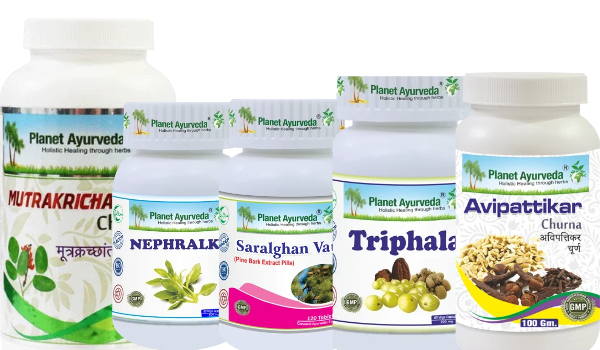

Product description
1. Mutrakrichantak Churna
It contains Varun (Crataeva nurvala), Bhumi Amla (Phyllanthus amarus), Gokshur (Tribulus terrestris), and Kalmegh (Andrographis paniculata). In the Ayurvedic approach to Encapsulating Peritoneal Sclerosis, it may be considered as a supportive formulation, particularly when urinary function and fluid-handling concerns coexist. Varun is traditionally valued for supporting urinary tract function, while Gokshur is used for Mutravaha Srotas support. Bhumi Amla and Kalmegh are traditionally regarded for their digestive and metabolic-supporting properties.
Dosage: 1 teaspoonful twice a day after meals.
2. Nephralka Capsules
These contain Kalmegh (Andrographis paniculata), Punarnava (Boerhavia diffusa), Bhumi Amla (Phyllanthus amarus), Mooli Satva (Raphanus sativus), and Revandchini (Rheum emodi). In an Ayurvedic supportive approach to Encapsulating Peritoneal Sclerosis, the formulation may be considered for supporting Mutravaha Srotas and digestive-eliminative functions. Punarnava and Mooli are traditionally used to support urinary function and fluid regulation, while Kalmegh and Bhumi Amla are valued for supporting digestion and metabolic processes. Revandchini is traditionally associated with bowel regulation.
Dosage: 1 capsule twice a day after meals with plain water.
3. Saralghan Vati
It contains Saral (Pinus roxburghii). In an Ayurvedic supportive approach to Encapsulating Peritoneal Sclerosis, Saral is traditionally valued for its Vata-Kapha pacifying and Lekhana properties, which may support the management of heaviness, stiffness, and obstructive tendencies associated with impaired Dosha function. Its aromatic and penetrating qualities are considered supportive of proper movement through the body and maintenance of healthy Srotas. In the context of EPS, it may therefore be used as a complementary formulation based on individual Ayurvedic assessment.
Dosage: 2 tablets twice a day after meals with warm water.
4. Triphala Capsules
These contain Haritaki (Terminalia chebula), Bibhitaki (Terminalia bellirica), and Amalaki (Phyllanthus emblica). In an Ayurvedic supportive approach to Encapsulating Peritoneal Sclerosis, Triphala is traditionally used to support healthy digestion, bowel regulation, and proper elimination. Haritaki is valued for supporting regular bowel movement, while Bibhitaki and Amalaki contribute to digestive and rejuvenative support. By promoting efficient gastrointestinal function and maintaining regular elimination, Triphala may be considered as a supportive component when constipation or sluggish bowel function is present.
Dosage: 1 capsule twice a day after meals with plain water.
5. Avipattikar Churna
It contains Pippali (Piper longum), Sonth (Zingiber officinale), Marich (Piper nigrum), Amla (Emblica officinalis), Haritaki (Terminalia chebula),Bibhitaki (Terminalia bellirica), Nagarmotha (Cyperus scariosus), Vida Lavana, Vaividang (Embelia ribes), Choti Elaichi (Elettaria cardamomum), Tejpatra (Cinnamomum tamala), Lavang (Syzygium aromaticum), Nishoth (Operculina turpethum), and Sharkra. In EPS, it may be considered as supportive Ayurvedic care for Agni and bowel function. Its Deepana-Pachana and mild bowel-regulating properties may help maintain digestion and regular elimination.
Dosage: ½ teaspoonful twice a day after meals with warm water.
Conclusion
Encapsulating Peritoneal Sclerosis is a complex and potentially severe disorder in which progressive changes within the peritoneal membrane can compromise normal intestinal function and nutritional status. Timely recognition through clinical assessment and appropriate imaging can help guide management before serious complications develop. From an Ayurvedic perspective, supportive care may focus on maintaining Agni, proper bowel function, nourishment, and overall strength alongside conventional medical management.


Dr. Vikram Chauhan
Latest posts by Dr. Vikram Chauhan (see all)
- Immune Thrombocytopenia (ITP): Symptoms, Causes & Treatment - October 23, 2026
- Atopic Dermatitis Treatment: Symptoms, Causes & Ayurveda - October 23, 2026
- Encapsulating Peritoneal Sclerosis: Causes & Treatment - October 22, 2026
- Cocoon Syndrome: Symptoms, Causes & Ayurvedic Care - October 22, 2026
- Herniated Disc & Ayurveda: Herbs, Diet and Lifestyle Guide - October 21, 2026