


Ulcerative Colitis: Symptoms, Causes With Ayurvedic Treatment
ABSTRACT
Ulcerative colitis is a long-term inflammatory disease of the large intestine in which the inner lining of the colon becomes inflamed and develops ulcers. According to Ayurveda, improper digestion and disturbed Agni play an important role in the development of gastrointestinal disorders. Vitiated Doshas, especially Pitta, can affect the intestine and lead to symptoms such as loose stools, burning, inflammation, and blood in the stool. The Ayurvedic approach focuses on correcting Agni, balancing the involved Doshas, improving digestion, controlling excessive bowel movements, and maintaining strength. Let’s discuss it in detail!
INTRODUCTION
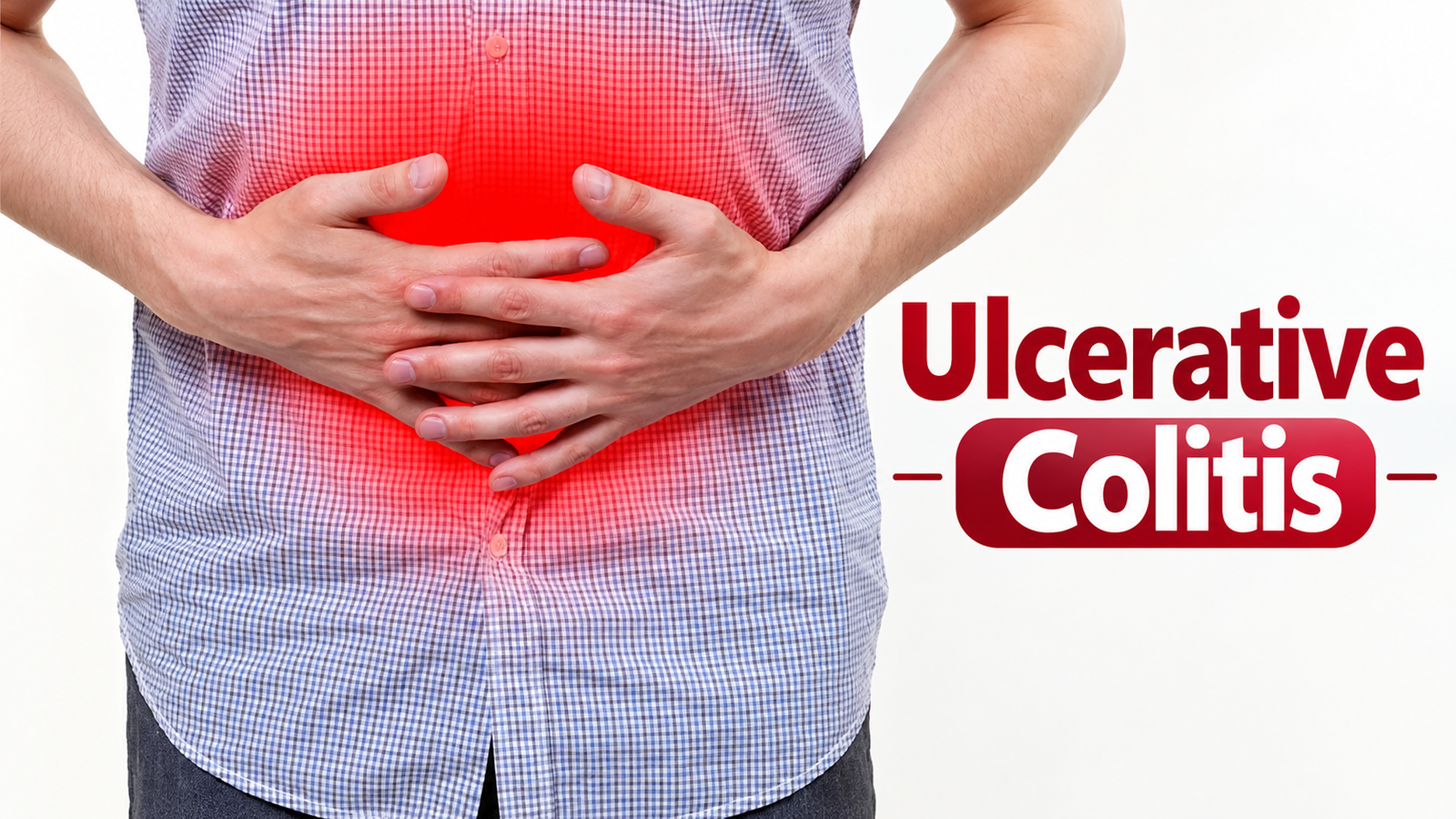
Ulcerative colitis can occur at any age, although it commonly begins in young adulthood, with another smaller peak occurring in later life. It is a chronic inflammatory disease of the large intestine and is one of the two major forms of inflammatory bowel disease, the other being Crohn disease. It mainly affects the mucosal lining of the rectum and colon and usually follows a relapsing and remitting course. The inflammation may begin in the rectum and extend proximally through part or all of the colon.The disease commonly presents with recurrent bloody diarrhea, increased frequency of stools, abdominal cramps, urgency, and tenesmus.
DEFINITION
Ulcerative colitis is a chronic, relapsing inflammatory disease of the colon that primarily affects the mucosal lining and usually begins in the rectum, extending proximally in a continuous manner.It is characterized by continuous inflammation, ulceration, and recurrent episodes of symptoms. The disease commonly presents with frequent loose stools, blood and mucus in the stool, abdominal pain, urgency, and tenesmus. Ulcerative colitis may be understood as a multifactorial disorder involving Agni dushti, Dosha imbalance, Rakta involvement and disturbance of intestinal function. From the Ayurvedic perspective, ulcerative colitis is not described as a separate disease entity in the classical Samhitas. However, its clinical features can be correlated with conditions described under Atisara and Raktatisara. In particular, the presence of frequent loose stools associated with blood, abdominal pain and burning sensation shows similarity with the classical description of Raktatisara.
Acharya Charaka states:
कुर्याद्रक्तातिसारं तु रक्तमाशु प्रदूषयेत् ।
तृष्णां शूलं विदाहं च गुदपाकं च दारुणम् ॥
Charaka Samhita, Chikitsa Sthana, Atisara Chikitsa, 19/70
Vitiated Pitta can vitiate Rakta and produce Raktatisara, which is associated with symptoms such as blood in stool, thirst, abdominal pain, burning sensation and severe anal discomfort.Thus, ulcerative colitis may be studied from an Ayurvedic perspective through the clinical and pathological principles of Atisara, Raktatisara and Grahani, with particular consideration of Agni dushti, Pitta and Vata involvement, Rakta dushti and Purishavaha Srotas dushti.
Causes of Ulcerative Colitis
- Genetic susceptibility- Harrison describes a genetic component in IBD. The increased occurrence among first-degree relatives and twin studies support a genetic predisposition. However, genetics alone does not explain the development of UC.
- Abnormal immune response- An inappropriate immune response within the intestine is an important part of IBD pathogenesis. Activation of immune cells results in the release of cytokines and other inflammatory mediators, producing chronic intestinal inflammation.
- Intestinal microbiota- The interaction between the intestinal microbiota and the intestinal immune system is important in IBD. Alterations in the microbial environment may contribute to an abnormal inflammatory response in genetically susceptible individuals.
- Environmental factors Harrison emphasizes the role of environmental factors, particularly with the increasing incidence of IBD in countries undergoing urbanization and Westernization. Changes in diet, socioeconomic conditions, hygiene, and other environmental exposures may influence disease development.
- Dietary factors-Dietary patterns characterized by high consumption of processed foods, saturated fats, refined carbohydrates and other components of a Western-style diet may influence susceptibility to inflammatory bowel disease by affecting the intestinal microbiota and mucosal immune response. Excessive consumption of very spicy, sour, salty, fermented, hot and irritating foods can aggravate Pitta Dosha. This becomes particularly relevant in patients with burning sensation, loose stools and blood in the stool. Pitta aggravation may also contribute to Rakta Dushti when bleeding is present.
- Smoking-related association- An important and somewhat unusual finding is that smoking has been associated with a lower risk of UC, whereas it increases the risk of Crohn disease. UC can also appear after smoking cessation. This should be presented as an epidemiological association, not as a cause or recommendation to smoke.
- Psychological factors- Chronic mental stress and emotional disturbances such as Chinta (worry), Shoka (grief), Bhaya (fear) and Krodha (anger) may disturb Agni and Dosha equilibrium. These factors can influence gastrointestinal function and may contribute to worsening of symptoms.
- Impaired digestion – Agni Dushti– Irregular food habits, overeating, inappropriate food combinations, frequent consumption of heavy or difficult-to-digest foods, and irregular meal timings can disturb Jatharagni. Impaired Agni results in improper digestion and may contribute to the development of Ama and disturbance of normal intestinal function.
Pathophysiology
↓
Agni Dushti (impaired digestive and intestinal homeostasis)
↓
Ama formation (altered metabolic/gut environment)
↓
Dosha Prakopa (Pitta-Vata predominance)
↓
Pitta-Rakta involvement (pro-inflammatory mucosal changes and rectal bleeding)
↓
Grahani & Purishavaha Srotas Dushti (intestinal and colonic dysfunction)
↓
Chronic mucosal inflammation and ulceration
↓
Diarrhea + blood/mucus + abdominal pain + urgency + tenesmus
SIGNS AND SYMPTOMS
- Bloody diarrhea- This is the characteristic symptom of UC. Patients may pass loose or poorly formed stools containing fresh blood, often mixed with mucus.
- Increased stool frequency- Patients may have repeated bowel movements, particularly during active disease. The frequency depends on the severity and extent of colitis.
- Urgency- There may be a sudden and difficult-to-control desire to pass stool because of inflammation of the rectum and colon.
- Tenesmus- The patient may feel an incomplete evacuation and have a persistent urge to defecate even after passing stool. It is particularly common when the rectum is involved.
- Abdominal pain and cramping- Colonic inflammation can produce abdominal discomfort or cramping, often associated with the urge to defecate.
- Mucus in stool- Inflamed colonic mucosa can produce increased mucus, which may be passed along with stool and blood.
- Rectal bleeding- Bleeding occurs because of ulceration and friability of the inflamed colonic mucosa. The amount of bleeding varies from patient to patient.
- Fatigue and weakness- Chronic inflammation, reduced food intake, nutritional deficiencies and blood loss can contribute to fatigue and weakness.
- Loss of appetite and weight loss- Patients with active or extensive disease may experience reduced appetite and weight loss, particularly when inflammation is severe or prolonged.
- Fever- Fever is more likely in patients with moderate-to-severe active disease and reflects systemic inflammatory activity.
- Anemia- Chronic intestinal blood loss and inflammation can lead to anemia, which may present with fatigue, weakness, pallor and reduced exercise tolerance.
- Extraintestinal manifestations- UC may also affect organs outside the gastrointestinal tract. These can include arthritis or arthralgia, skin manifestations such as erythema nodosum and pyoderma gangrenosum, eye inflammation such as uveitis or episcleritis, and hepatobiliary complications such as primary sclerosing cholangitis.
Diagnosis
Medical history
- Frequent loose stools
- Blood or mucus in stool
- Abdominal pain or cramps
- Urgency to pass stool
- Feeling that the bowel has not completely emptied (Tenesmus)
- Weight loss, weakness, or fever in severe cases
Blood tests
Blood tests help identify inflammation and its effects on the body.Blood tests help identify inflammation and its effects on the body. CBC, CRP, ESR, hemoglobin, albumin, and electrolytes may be checked. Anemia and raised inflammatory markers can occur in active UC .
Stool tests
Stool tests are done mainly to rule out infections that can cause symptoms similar to UC. Fecal calprotectin can also be used to detect inflammation in the intestine.
Fecal Calprotectin |
General interpretation |
<50 µg/g |
Usually normal; active intestinal inflammation is unlikely |
50–150 µg/g |
Borderline/mild elevation; interpret with symptoms and repeat if needed |
150–250 µg/g |
Intermediate elevation; active inflammation becomes more likely |
>250 µg/g |
Active intestinal inflammation is likely, especially in known UC |
>500–1000+ µg/g |
Usually indicates substantial inflammatory activity and warrants clinical assessment |
Colonoscopy
Colonoscopy is one of the most important tests for UC. The doctor examines the large intestine for redness, swelling, easy bleeding, ulcers, and other signs of inflammation. In UC, inflammation commonly starts from the rectum and extends continuously into the colon
Biopsy
During colonoscopy, small pieces of intestinal tissue are taken and examined under a microscope. The biopsy can show chronic inflammation, cryptitis, crypt abscesses, and changes in the normal structure of the intestinal glands.
Imaging tests
CT or MRI may be advised when the doctor suspects severe disease or complications, such as toxic megacolon or perforation.
TREATMENT
5-ASA Drugs
These are commonly used for mild to moderate UC
- Mesalamine
- Sulfasalazine
- Olsalazine
Corticosteroids
These are mainly used for active disease or acute flare-ups.
- Prednisolone
- Budesonide
- Hydrocortisone
- Methylprednisolone
They help control inflammation quickly but are generally not used for long-term maintenance.
Immunomodulators
These medicines suppress excessive immune activity and may be used in selected patients.
- Azathioprine
- 6-Mercaptopurine (6-MP)
JAK Inhibitors
These are oral targeted medicines used in appropriate patients with moderate to severe UC.
- Tofacitinib
- Upadacitinib
They work by blocking Janus kinase (JAK) pathways, which are involved in inflammatory signalling.
BIOLOGICS
Class |
Examples |
Main target |
Anti-TNF |
Infliximab, Adalimumab, Golimumab |
TNF-alpha |
Anti-integrin |
Vedolizumab |
Alpha-4 beta-7 integrin |
Anti-IL-12/23 |
Ustekinumab |
IL-12/23 p40 |
Anti-IL-23 |
Guselkumab, Mirikizumab, Risankizumab |
IL-23 pathway |
Drugs Used for Acute Severe UC
In acute severe UC, patients generally require hospital treatment. Medicines may include:
- Intravenous hydrocortisone or methylprednisolone
- Infliximab or cyclosporine as rescue therapy when steroid treatment is unsuccessful.
AYURVEDIC MANAGEMENT
Deepana and Pachana
When Agni Mandya and Ama are present, treatment should initially focus on improving digestion and reducing Ama rather than immediately using strong astringent or Grahi medicines.Suitable medicines like Musta (Cyperus rotundus) ,Shunthi (Zingiber officinale) , Dhanyaka (Coriandrum sativum) are selected according to Dosha and clinical condition.
Management of Pitta and Rakta
In UC with blood in stool, burning sensation, thirst and inflammatory symptoms, Pitta and Rakta involvement becomes an important consideration.Charaka describes Raktatisara as developing when aggravated Pitta vitiates Rakta, producing blood discharge along with thirst, abdominal pain, burning and anal discomfort. Pitta-shamana management may therefore include:
- Cooling and easily digestible foods (s rice water (Manda), thin rice gruel (Peya), soft-cooked rice, moong dal soup (Mudga Yusha), mild moong dal khichdi, pomegranate and well-cooked bottle gourd )
- Avoidance of very spicy, sour, hot and irritating foods
- Appropriate use of Pitta-shamana medicines
- Maintaining adequate hydration
- Avoiding unnecessary fasting in weak or depleted patients
Classical references describe preparations containing drugs such as Shatavari, Madhuka, Yashtimadhu, Chandana and Udumbarain appropriate gastrointestinal and bleeding conditions.
Grahi and Stambhana Therapy
Grahi therapy should be used carefully. In the early Ama stage, strong Stambhana or Grahi treatment may retain improperly digested material and may aggravate the underlying pathology. After Ama has reduced and the disease has entered an appropriate stage, selected Grahi drugs may be considered. Important classical drugs include:
- Kutaja (Holarrhena pubescens)
- Bilva (Aegle marmelos)
- Musta (Cyperus rotundus)
- Lodhra (Symplocos racemosa)
- Dhataki (Woodfordia fruticosa)
Kutaja (Holarrhena pubescens) is one of the important classical drugs used in Atisara.Sushruta describes the use of Kutaja bark in long-standing diarrhea associated with blood in stool and also describes Kutaja-containing preparations for Atisara with blood and abdominal pain. Bilva (Aegle marmelos) is another important drug in classical Atisara management. Charaka describes Bilva among the drugs used in dietary and medicinal preparations for Atisara, while Sushruta also includes Bilva in different preparations for diarrhea. Bilva is traditionally selected for its Grahi, Deepana and Dosha-balancing properties, particularly when loose stools are associated with weak digestion.
Takra
Takra (buttermilk) has an important place in the classical management of Grahani. Sushruta specifically mentions the use of Takra in the management of Grahani.
Piccha Basti
Piccha Basti may be considered in selected chronic cases, particularly when there is persistent loose stool, mucus and bleeding after appropriate assessment of the disease stage. The concept is based on using mucilaginous, soothing and tissue-supportive substances through Basti therapy.
Rasayana Therapy
After the active symptoms have settled, Rasayana therapy may be considered to support Bala, Agni and tissue nourishment. Depending on the patient’s condition, medicines such as:
- Guduchi (Tinospora cordifolia)
- Shatavari (Asparagus racemosus)
- Yashtimadhu (Glycyrrhiza glabra)
- Amalaki (Phyllanthus emblica)
Ayurvedic Treatment Flow Chart for Ulcerative Colitis
Ulcerative Colitis
↓
Assess the patient
Agni + Ama + Dosha + Bala + diarrhea + bleeding
↓
Ama / weak digestion
→ Deepana + Pachana + light diet
↓
Pitta-Rakta symptoms
Blood in stool + burning + thirst
→ Pitta-Rakta Shamana + cooling diet
↓
Loose stools continue
→ Grahi treatment
Kutaja + Bilva + Musta
↓
Mucus / chronic diarrhea / selected bleeding cases
→ Piccha Basti or suitable Basti
↓
Vata symptoms
Abdominal pain + weakness + irregular bowel movement
→ Vata Shamana + Basti
↓
Symptoms improve
→ Improve Agni + gradually normalize diet
↓
Disease controlled
→ Rasayana + Bala support
↓
Regular follow-up
HERBS USED IN ULCERATIVE COLITIS
Herb |
Botanical name |
Important constituents |
Main action |
Kutaja |
Holarrhena pubescens |
Conessine, kurchicine, holarrhenine |
Grahi, Atisara-hara, anti-inflammatory and antimicrobial actions; useful particularly when diarrhea and intestinal inflammation predominate |
Bilva |
Aegle marmelos |
Aegeline, marmelosin, tannins, flavonoids |
Grahi and Deepana; helps regulate loose stools and supports intestinal function; experimental studies suggest anti-inflammatory and antioxidant effects |
Musta |
Cyperus rotundus |
Cyperene, cyperotundone, flavonoids, phenolic compounds |
Deepana-Pachana, Grahi; may help reduce diarrhea and intestinal inflammatory activity |
Guduchi |
Tinospora cordifolia |
Tinosporaside, cordifolioside, diterpenoids, alkaloids |
Rasayana and anti-inflammatory/immune-modulating action; useful as supportive therapy when chronic inflammation and weakness are present |
Yashtimadhu |
Glycyrrhiza glabra |
Glycyrrhizin, glycyrrhetinic acid, flavonoids |
Pitta-shamana, Vrana-ropana and Shothahara; mucosal protective and anti-inflammatory properties may be relevant to colonic mucosal injury |
Shatavari |
Asparagus racemosus |
Shatavarins, steroidal saponins, flavonoids |
Rasayana, Pitta-shamana and mucosal supportive action; experimental evidence suggests anti-inflammatory and antioxidant effects |
Amalaki |
Phyllanthus emblica |
Emblicanin A & B, gallic acid, ellagic acid, vitamin C |
Rasayana and antioxidant; may help counter oxidative stress associated with chronic inflammation |
Dadima |
Punica granatum |
Punicalagins, ellagic acid, tannins, anthocyanins |
Grahi and Deepana; tannins can support reduction of excessive intestinal secretions, while polyphenols have antioxidant and anti-inflammatory activity |
Lodhra |
Symplocos racemosa |
Tannins, flavonoids, alkaloids |
Grahi and Pitta-shamana; astringent properties may help excessive intestinal secretions and mucosal irritation |
Vasa |
Adhatoda vasica |
Vasicine, vasicinone |
Mainly Pitta-Rakta supportive and anti-inflammatory in Ayurvedic use; should be selected carefully according to the clinical presentation |
Herbal remedies for Ulcerative Colitis by Planet Ayurveda!
Planet Ayurveda is a global Ayurvedic wellness brand dedicated to bringing the wisdom of traditional Ayurveda into modern life. Based in Chandigarh, India, the brand offers a diverse range of herbal formulations prepared using carefully selected Ayurvedic herbs, classical ingredients, and standardized manufacturing practices. With a strong focus on quality, authenticity, purity, and consistency, Planet Ayurveda serves customers across India and worldwide. Its product range covers various aspects of everyday wellness and traditional health care. Along with herbal formulations, Planet Ayurveda provides personalized Ayurvedic consultations, combining classical Ayurvedic principles with individualized guidance to support informed and holistic wellness choices. For managing UC , Planet Ayurveda has UC care pack which are as follows :-
Herbal Remedies for Ulcerative Colitis
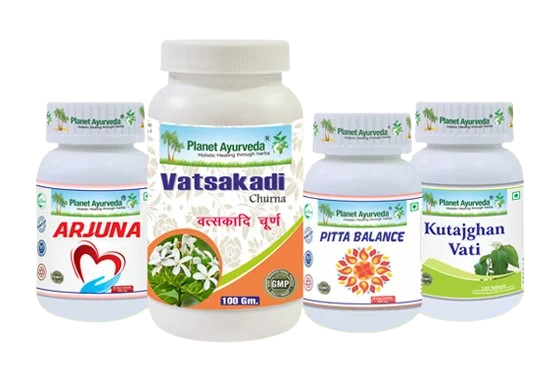

1. Arjuna Capsules
Arjuna Capsules contain standardized extract of Arjuna (Terminalia arjuna) bark, a traditionally valued Ayurvedic herb with Kashaya Rasa (astringent taste) and properties traditionally associated with Rakta Dhatu and tissue support. In Ayurvedic practice, Arjuna is considered particularly relevant where Pitta-Rakta involvement, tissue irritation, or excessive discharge is present. From a modern perspective, Arjuna bark contains tannins, flavonoids, triterpenoids, and other polyphenolic compounds that have demonstrated antioxidant and anti-inflammatory activities in experimental studies. These findings support its traditional significance but should not be interpreted as evidence of a treatment or cure for ulcerative colitis.
Dosage: 2 capsules twice daily after meals with plain water.
2. Vatsakadi Churna
Vatsakadi Churna is a traditional Ayurvedic digestive and Grahi-oriented formulation containing Saunf (Foeniculum vulgare), Dhania (Coriandrum sativum), Jaiphal (Myristica fragrans), Kutaj (Holarrhena pubescens), Bilva (Aegle marmelos), Chhoti Elaichi (Elettaria cardamomum) and Anar (Punica granatum). Its ingredients are traditionally associated with Grahi, Deepana and Pachana actions and are used in Ayurvedic contexts involving Atisara, Grahani, loose stools, excessive intestinal fluidity, and impaired digestion. Several constituent herbs contain tannins, flavonoids, and aromatic compounds that have been investigated for digestive, antioxidant, and gastrointestinal activities.
Dosage: 1 teaspoon twice daily after meals with plain water.
3. Pitta Balance
Pitta Balance is an Ayurvedic formulation containing Praval Pishti, Mukta Pishti, Akik Pishti, Jawar Mohra Pishti, Kamdudha Ras, and Giloy Satva. The formulation is traditionally centered around Pitta Shamana and is considered in Ayurvedic practice when Pitta-associated features such as Daha (burning sensation), Amla Pitta, and Rakta-Pitta manifestations are prominent. Praval Pishti, Mukta Pishti, Akik Pishti, and Kamdudha Ras are traditionally described for their cooling and Pitta-oriented properties, while Giloy contributes a bitter herbal component.
Dosage: 1 capsule twice daily after meals with plain water.
4. Kutajghan Vati
Kutajghan Vati is a traditional Ayurvedic formulation primarily based on Kutaj (Holarrhena pubescens), a herb widely described in Ayurveda for Atisara, Pravahika, and Grahani. Kutaj is traditionally recognized for its Kashaya-dominant taste and Grahi, Deepana, and Pachana properties, making it particularly relevant to Ayurvedic digestive conditions characterized by frequent or loose stools and excessive intestinal fluidity. Modern research has investigated Kutaj constituents, including alkaloids such as conessine, for antimicrobial and gastrointestinal activities. However, such evidence does not establish Kutajghan Vati as a treatment or cure for ulcerative colitis.
Dosage: 2 tablets twice daily after meals with plain water.
Recommended Diet
- Small and frequent meals can be taken instead of large meals.
- Choose soft, well-cooked and easily digestible foods.
- Rice, rice gruel (Peya), rice water (Manda), moong dal soup (Mudga Yusha), and light moong dal khichdi are suitable options when tolerated.
- Well-cooked vegetables such as bottle gourd (Lauki), ridge gourd (Tori), and pumpkin may be preferred.
- Adequate water and fluids should be taken, especially during frequent diarrhea.
Foods to Limit During Active Symptoms
- Very spicy foods
- Fried and oily foods
- Excessively sour foods
- Alcohol
- Highly processed and ultra-processed foods
- Excessive caffeine
- Large amounts of raw vegetables or high-fiber foods when they worsen diarrhea or abdominal discomfort
- Milk and dairy products
Conclusion
At last it can be concluded that Ulcerative Colitis is a long-term disease that causes inflammation and ulcers in the large intestine. It can cause loose stools, abdominal pain, urgency and blood in stools. Ayurveda focuses on improving digestion, balancing Pitta, controlling excessive bowel movements and supporting intestinal healing. A combination of proper medicines, a suitable diet, healthy lifestyle and regular monitoring can help control symptoms and maintain remission.


Dr. Vikram Chauhan
Latest posts by Dr. Vikram Chauhan (see all)
- Ulcerative Colitis: Symptoms, Causes With Ayurvedic Treatment - September 21, 2026
- Immune Thrombocytopenia (ITP): Causes, Symptoms, Diagnosis & Treatment - September 19, 2026
- Immune Thrombocytopenia (ITP): Causes, Symptoms & Ayurvedic Support - September 18, 2026
- Ulcerative Colitis: Causes, Symptoms & Treatment with Ayurveda - September 17, 2026
- Holistic PCOD Management: Modern Science Meets Ayurvedic Healing - September 16, 2026