


Dry Mouth (Xerostomia) – Causes, Symptoms & Natural Ways to Relieve It
Abstract
Xerostomia, or dry mouth, happens when we are dehydrated or anxious. However, if it is persistent, it may indicate an underlying health condition or may occur as a side effect of certain medications. It can also lead to gum disease, dental caries, or ulcerations on the tongue and cheeks if left untreated. Drinking plenty of water to stay hydrated is recommended. Alcohol and smoking should be avoided. Sialogogues can be used to increase salivary flow in the oral cavity. Usually, this condition improves with proper medication and oral care. However, in some cases, surgical intervention may be required. Early intervention can help reduce symptoms before they worsen.
Statistics for Xerostomia
- About 22–27% of the adult population is affected by dry mouth.
- People aged 18–35 years are 9.5% more prone to xerostomia.
- Dry mouth is more common in females, accounting for 66–73% of diagnosed cases.
- About 14–62% of people with diabetes experience symptoms of dry mouth.
- Dry mouth is observed in nearly 100% of patients who have undergone radiotherapy for head and neck cancers or who have Sjögren’s syndrome.
- Taking multiple medications can increase the risk of xerostomia by up to 10 times.
Some Facts about Xerostomia
- Xerostomia is a symptom rather than a disease.
- Xerostomia is also referred to as the "Glue Effect" because the saliva becomes thick and sticky, adhering to the oral tissues like glue.
- Women with xerostomia may experience lipstick sticking to their front teeth due to oral dryness.
- A healthy person produces approximately 1.5 litres of saliva every day.
- Dry mouth has a link to the nervous system. Stress or fear can reduce salivary flow due to activation of the sympathetic nervous system.
Introduction
Xerostomia, or dry mouth, is a condition characterized by reduced saliva production in the oral cavity. The activity of the salivary glands decreases, and saliva is not produced efficiently enough to keep the mouth moist. It is a subjective symptom and is often associated with hyposalivation. Without adequate saliva, the mouth becomes dry and uncomfortable, leading to several other symptoms. Occasional xerostomia is considered normal, but persistent or chronic dry mouth may indicate an underlying health condition. A characteristic sign of xerostomia is a sticky feeling in the mouth, with the tongue sticking to the roof of the mouth while speaking.
Saliva and Its Composition
Saliva is a clear, viscous fluid secreted by the salivary glands. It contains two main secretions: serous secretions and mucous secretions. Serous secretions contain ptyalin, a digestive enzyme, while mucous secretions contain mucin, which helps lubricate the oral cavity. The pH of saliva ranges between 6.0 and 7.4. Other constituents of saliva include bicarbonate, calcium ions, chloride, sodium ions, thiocyanate, lysozyme, lactoferrin, transferrin, and immunoglobulins.
Functions of Saliva
Saliva performs several important functions in the oral cavity, including:
- Antimicrobial action
- Maintaining oral pH
- Mechanical cleansing
- Lubrication
- Remineralization of teeth
- Maintaining the integrity of the oral mucosa
- Washing away food debris
Symptoms of Xerostomia
Xerostomia may cause mild to severe symptoms that can eventually lead to oral complications. Early diagnosis and management can help prevent these complications.
- Increased Thirst: Persistent dry mouth may cause excessive thirst throughout the day and night.
- Persistent Stickiness in the Mouth: There is a constant sensation of dryness or stickiness in the oral cavity throughout the day.
- Bad Breath (Halitosis): A lack of saliva allows odour-producing bacteria to multiply, leading to bad breath.
- Difficulty Chewing or Speaking: Chewing, swallowing, and speaking become difficult because saliva is essential for lubrication during mastication.
- Altered Taste Sensation: Food may taste different or bland because reduced saliva affects taste perception.
- Ulcers and Cracks on the Tongue and Lips: Dry mouth can lead to chapped lips, cracks at the corners of the mouth, painful tongue ulcers, fissures, and an increased risk of oral infections.
- Dental Caries: Reduced saliva allows food particles to remain on the teeth, encouraging bacterial growth and acid production, which increases the risk of dental caries.
Causes of Xerostomia
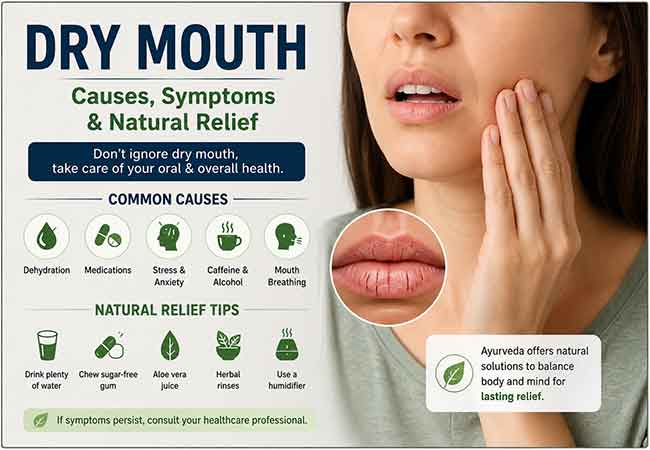
- Dehydration: Not drinking enough water can temporarily reduce saliva production and cause dry mouth.
- Mouth Breathing: Continuous mouth breathing can cause saliva to evaporate, resulting in oral dryness and discomfort.
- Medications: Several medications may reduce salivary flow, including antidepressants, anti-anxiety medications, antihistamines, decongestants, anticholinergics, certain painkillers, antihypertensive drugs, and medications used for Parkinson’s disease.
- Radiotherapy in Cancer Patients: Radiotherapy for head and neck cancers can damage the salivary glands, reducing both the quantity and quality of saliva produced.
- Health Conditions: Health conditions associated with xerostomia include Sialolithiasis (salivary gland stones), Sialadenitis (inflammation of the salivary glands), Sjogren’s syndrome, Diabetes, Stroke, Alzheimer’s disease, etc.
- Lifestyle Factors associated with Xerostomia: Smoking and tobacco use reduce salivary flow and dry the oral tissues. Excessive alcohol intake may also contribute to dry mouth. Tea, coffee, and energy drinks contain caffeine, which may worsen symptoms in some individuals.
- Age: Saliva production tends to decrease with age. Older adults are more likely to experience xerostomia, particularly if they take multiple medications.
Natural Ways to Relieve Xerostomia
- Drink Plenty of Water: Drink water regularly throughout the day to stay hydrated and help keep the mouth moist. Coconut water may also help maintain hydration.
- Chew Sugar-Free Gum?: The Indian Dental Association (IDA) recommends chewing sugar-free gum for about 15 minutes to stimulate saliva production and help remove food debris and plaque.
- Practice Nose Breathing: Breathing through the nose instead of the mouth can help prevent dry mouth. Seek medical advice if nasal congestion, allergies, or sinus problems interfere with normal breathing.
- Use a Humidifier: Using a humidifier can help maintain moisture in the air, especially in dry environments or during sleep.
- Quit Smoking: Quitting smoking can significantly improve oral health and help reduce dry mouth symptoms.
- Salivary Stimulants: Salivary stimulants (sialogogues) and saliva substitutes are available as rinses, sprays, gels, and toothpastes to help relieve dryness. Natural saliva stimulants include crunchy fruits and vegetables, lemon, and sugar-free sour candies.
- Oil Pulling: Oil pulling with coconut oil, peppermint oil, or tea tree oil may help lubricate oral tissues and improve oral hygiene. Swish the oil gently for about 10–15 minutes before spitting it out.
- Chamomile Tea: Caffeine-free chamomile tea contains antioxidants and soothing compounds that may help provide temporary relief from dry mouth.
Conclusion
Living with xerostomia can be challenging and uncomfortable. It is often a symptom of an underlying medical condition, medication use, or unhealthy lifestyle habits. Proper management focuses on identifying and treating the underlying cause while promoting healthy saliva production. Early diagnosis, good oral hygiene, adequate hydration, and healthy lifestyle changes can help relieve symptoms, prevent complications, and improve overall oral health.


Dr. Vikram Chauhan
Latest posts by Dr. Vikram Chauhan (see all)
- Top 6 Herbs for stronger bones as per Ayurvedic Texts - October 12, 2026
- Top 4 Herbs for Stronger Liver as per Ayurvedic Texts - October 6, 2026
- Management of Olfactory neuroblastoma (ONB) in Ayurveda - September 28, 2026
- What is Aroma Therapy? – How is it an important part of Indian and different cultures since long? - September 18, 2026
- Cow Dung & Wood Heat vs Room Heaters – Health Benefits & Risks - September 17, 2026