


Root Canal Treatment – When Is It Really Needed? Myths vs Facts
Abstract
Root canal treatment is one of the best procedures for managing and restoring a tooth’s natural structure and function. It is required when there is an infection, severe pain, trauma, deep decay, or persistent tooth sensitivity. The chances of root canal failure have been reduced with advancements in modern technology and equipment. In many cases, root canal treatment can now be completed in a single visit, except when there is significant infection or abscess formation. Post-procedure instructions are important and must be followed carefully by the patient. Regular dental check-ups should be done as advised by the dentist to prevent reinfection and maintain oral health. Proper oral hygiene practices should also be followed consistently.
Statistics for Root Canal Treatment
- The success rate of root canal treatment is between 85–95% of cases.
- Globally, around 25 million people undergo root canal therapy each year.
- About 50% of adults have at least one root canal-treated tooth globally.
- The survival rate of properly treated teeth that remain functional even after 10 years is about 97%.
- The most commonly affected tooth is the mandibular first molar.
Introduction
Root canal treatment, also known as endodontic therapy, is a procedure that involves cleaning, shaping, disinfecting, and filling the root canal system to restore the health of the tooth. The pulp cavity is divided into two parts: the pulp chamber, located in the crown of the tooth, and the root canal, located in the radicular portion of the tooth. The root canal system may contain pulp horns, lateral canals, accessory canals, and the apical foramen. The root canal extends from the cervical line to the apical foramen and is funnel-shaped, narrowing toward the apex. Accessory and lateral canals can sometimes make the procedure more complex. During root canal treatment, the canals are biomechanically prepared and disinfected to remove dead and necrotic tissue. Intracanal medicaments such as calcium hydroxide may be used. Disinfection is commonly performed using irrigating solutions like chlorhexidine and sodium hypochlorite. After cleaning and disinfecting the canals, obturation (filling) is carried out. Gutta-percha is a commonly used obturating material and is used along with endodontic sealers to seal the canal effectively. The dental pulp is a living soft tissue containing blood vessels and nerve fibers. It helps maintain blood supply and sensation in the tooth. When dentin is damaged, odontoblastic cells in the pulp can help repair the dentin layer. Inflammation of the pulp is known as pulpitis. In its early stage, it may be reversible, but if it persists for a long time, it can progress to irreversible pulpitis, where the pulp tissue cannot be restored.
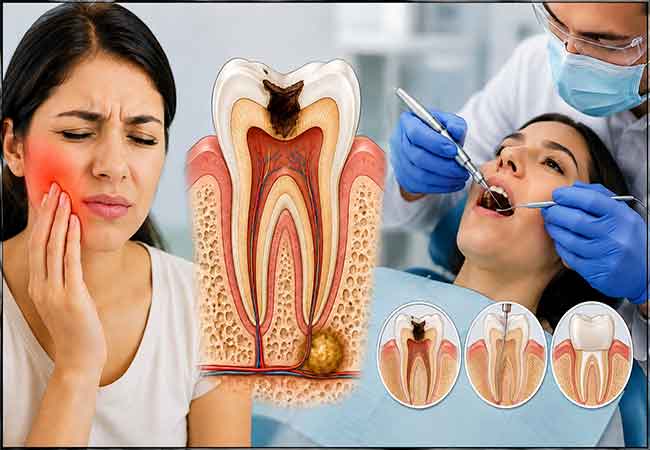
Early signs of pulp infection that should not be ignored
- Swelling of the gums
- Pain while chewing or biting
- Tooth sensitivity to cold or hot foods and drinks
- Tooth discoloration, making the tooth appear darker
These are warning signs that the pulp tissue may be becoming infected. In some cases, early intervention with restorations or pulp-capping procedures can prevent the need for a root canal. However, if ignored, the risk of infection increases.
Advantages of Root Canal Treatment
- Relieves severe pain caused by infection and inflammation of the pulp tissue.
- Preserves the natural tooth structure and helps maintain jawbone density.
- Prevents adjacent teeth from shifting and helps maintain proper bite alignment.
- Maintains the natural smile line and is aesthetically appealing.
- Is a cost-effective and long-lasting treatment compared to extraction and dental implants.
- Prevents the spread of infection and reduces the risk of abscess or cyst formation.
- Usually causes less discomfort than tooth extraction when performed under proper anesthesia.
Disadvantages of Root Canal Treatment
- May require multiple visits in cases of severe infection.
- The treated tooth can become more prone to fracture if not properly restored or cared for.
- Temporary tooth sensitivity or discomfort may occur after the procedure.
- Procedural errors may occur if all canals are not detected and treated due to complex root anatomy.
When Is Root Canal Treatment Needed?
Root canal therapy is performed to remove infected or necrotic pulp tissue and restore the structural integrity of the tooth. A dentist may recommend root canal treatment if the following symptoms are present:
- Prolonged sensitivity to cold or hot stimuli: The patient experiences sharp, shooting, or lingering pain after exposure to cold or hot foods and drinks. The pain may last for several seconds or minutes even after the stimulus is removed, indicating irreversible pulp inflammation.
- Throbbing and severe toothache: The pain may become so intense that it is difficult to manage with medications alone. It often worsens while biting or chewing food.
- Nocturnal pain: The pain may increase at night while sleeping or lying down. Patients may feel relief by elevating their head.
- Tooth discoloration: A tooth turning gray, black, or pinkish-red may indicate internal injury or trauma, leading to nerve damage and pulp necrosis.
- Swelling or pus-filled bumps on the gums: Tender, painful swelling or pus-filled bumps on the gums may indicate a dental abscess beneath the tooth. The abscess may require drainage along with appropriate treatment to control the infection.
- Grossly decayed tooth: Sometimes, a tooth may be severely decayed without causing pain. In such cases, the pulp tissue may already be dead or necrotic, and root canal treatment followed by crown placement can help preserve the tooth.
- Cracked or fractured tooth: Dental trauma, such as chipping, cracking, or fracturing of a tooth, may expose the pulp to infection. Root canal therapy can help save the tooth and prevent further complications.
Factors That Affect the Survival of a Root Canal-Treated Tooth
- Extent of infection: Localized infections heal faster, while infections spreading beyond the root apex or surrounding bone may take longer to heal.
- Location of the tooth: Molars have multiple roots and bear greater chewing forces, making them more prone to fractures. Anterior teeth generally have a better prognosis.
- Quality of materials and equipment: Modern techniques and precise instruments improve the success and longevity of root canal treatment.
- Timing of crown placement: Delaying crown placement for too long may compromise the treated tooth. Ideally, the crown should be placed within the time recommended by the dentist.
- Post-treatment care: Proper oral hygiene and regular dental follow-ups help prevent reinfection and protect the treated tooth.
Seven Common Myths and Facts About Root Canal Treatmen
Myth 1 – Root canal treatment is very painful
Fact: With modern advancements, root canal treatment is usually not very painful. Local anesthesia is used to numb the area, and most patients feel only slight pressure during the procedure.
Myth 2: Root canal treatment causes illness.
Fact: There is no scientific evidence that root canal treatment causes illness. Sterilized instruments and proper disinfection make it a safe and effective procedure.Myth 3: Root canal treatment takes many hours in each sitting.
Fact: Root canal treatment is not always time-consuming. Many cases can be completed in a single visit, while infected or abscessed teeth may require two or three visits.
Myth 4: Root canal treatment is not long-lasting.
Fact: Root canal treatment can last for many years when proper oral hygiene is maintained and post-treatment instructions are followed.
Myth 5: Tooth extraction is better than a root canal.
Fact: Preserving a natural tooth is generally better than extracting it whenever possible. After extraction, tooth replacement options such as implants or bridges may be more expensive and may not feel as natural as the original tooth.
Myth 6: Root canal treatment is not required for tooth infection.
Fact: Infected teeth often require root canal treatment to remove the infected pulp tissue and prevent serious complications.
Myth 7: Dental visits are not required after root canal therapy.
Fact: Regular dental follow-ups are important after root canal therapy. The dentist will monitor healing, check the restoration, and provide oral hygiene instructions to prevent future dental problems.
Conclusion
Root canal treatment is a common and successful procedure for treating infected or severely decayed teeth. If you experience persistent tooth pain, prolonged sensitivity, swelling, or discoloration, it is important to consult a dentist promptly. The dentist will diagnose the severity of the infection through clinical examination and radiographs. With modern anesthesia and advanced techniques, root canal treatment has become much more comfortable than many people believe. The right dental care starts with the right information—do not let myths prevent you from saving your natural tooth.


Dr. Vikram Chauhan
Latest posts by Dr. Vikram Chauhan (see all)
- Management of Olfactory neuroblastoma (ONB) in Ayurveda - September 28, 2026
- What is Aroma Therapy? – How is it an important part of Indian and different cultures since long? - September 18, 2026
- Cow Dung & Wood Heat vs Room Heaters – Health Benefits & Risks - September 17, 2026
- Let’s bust some myths about Infertility and Pregnancy? - September 15, 2026
- Zero Volt Therapy – Benefits, Uses & Holistic Wellness Approach - September 10, 2026