


How to Manage Chronic Kidney Disease with Ayurveda
ABSTRACT
Chronic Kidney Disease (CKD) is a major health concern that is marked by an irreversible and gradual loss of kidney function, which leads to the accumulation of nitrogenous wastes and electrolyte imbalance. From a modern clinical viewpoint, CKD commonly results from glomerulonephritis, diabetes mellitus, hypertension, or long-term use of nephrotoxic drugs. It deteriorates through five stages, ultimately leading to end-stage renal disease (ESRD), which requires renal transplantation or dialysis. In Ayurveda, CKD can be correlated with Mutravaha Srotas Dushti (vitiation of urinary channels), primarily due to Tridosha imbalance. The Ayurvedic treatment primarily focuses on balancing the doshas, Panchakarma (detoxification procedures), and Rasayana Chikitsa (rejuvenation therapy), which helps to promote renal health and prevent further progression of the disease. Herbs such as Varun (Crataeva nurvala), Punarnava (Boerhavia diffusa), Shilajit (Asphaltum punjabianum), and Gokshura (Tribulus terrestris) possess kidney-protecting, anti-inflammatory, and diuretic properties. This article mainly focuses on causes, symptoms, diagnosis, treatment (according to modern terminology), and ayurvedic review of Chronic kidney diseases and herbal remedies, and also the ayurvedic treatment for this disease.
Introduction to Chronic Kidney Disease
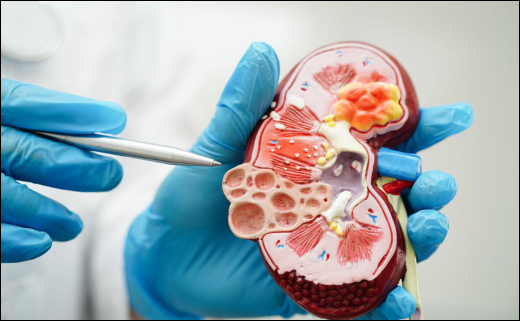
Chronic Kidney Disease (CKD) is a long-term condition that is recognized when the kidneys slowly lose their ability to perform some important functions, such as filtration of waste products, maintenance of fluid balance, and regulating blood pressure and electrolytes. This gradual loss of kidney function progresses slowly over time and is often unnoticed in its initial phase. The most common causes of CKD include high blood pressure, diabetes, and chronic inflammation or infections of the kidneys. As the disease further proceeds, waste materials and excess fluids start to accumulate in the body, which leads to symptoms like fatigue, loss of appetite, swelling, and changes in urine output. CKD also increases the risk of anemia, bone disorders, heart disease, and other metabolic diseases. Diagnosis of CKD is usually made through blood tests, urine analysis, and imaging studies, which are used to assess the structure and function of the kidney. Early detection and proper management are important to manage disease advancement and reduce the risk of kidney failure, which may require dialysis or transplantation. A healthy and balanced diet, controlled blood sugar levels, and regular medical checkups play a vital role in safeguarding kidney health and enhancing the standard of living in patients who are suffering from CKD.
Causes of Chronic Kidney Disease
- Autoimmune kidney diseases
- Dehydration
- Glomerulonephritis
- Hypertension
- Diabetes
- Genetic diseases (polycystic kidney disease)
- Some medicines or other drugs
- Tuberculosis of the kidney
Stages of Chronic Kidney Disease
Kidney failure advances in distinct stages, which are usually determined by assessing the glomerular filtration rate (GFR), a key indicator of kidney function. Stages of CKD are as follows:-
Stage 1 – Normal Kidney Function
- Kidney damage may be present.
- It is often asymptomatic.
- GFR ≥ 90
Stage 2 – Mild CKD
- There is a decrease in kidney function.
- Early signs may be present.
- GFR 60–89
Stage 3 – Moderate CKD
- There is a moderate loss of kidney function.
- Symptoms may often appear.
- GFR 30–59
Stage 4 – Severe CKD
- Moderate to Severe reduction in kidney function.
- Last stage before kidney damage
- GFR 15–29
Stage 5 – End-Stage Renal Disease (ESRD)
- Kidneys are severely damaged and are on the verge of failure
- Requires dialysis or kidney transplantation
- GFR < 15
Symptoms of Chronic Kidney Disease
- Loss of appetite
- Tiredness
- Nausea and vomiting
- Blood in urine
- Itching
- Swelling
- Drowsiness
- Numbness
- Darkened skin
- Muscle cramp
- Pulmonary edema (Accumulation of fluid in the lungs)
Diagnosis of CKD: Modern Diagnostic Methods
- Medical history of the patient
- Physical examination of the patient
- Blood and urine tests, such as
- eGFR (estimated glomerular filtration rate)
- Urine examination
- UACR ( urine albumin to creatinine ratio)
- Imaging techniques such as
- ultrasound
- CT-scan
- MRI
Modern Treatment Options for Chronic Kidney Disease
According to modern medicine, Chronic kidney diseases can be treated as follows:
1. Treatment of the underlying causes using
- Diuretics
- Antihypertensives
- Statins
2. By taking Iron supplements and multivitamins.
3. In advanced stages or end stages, a kidney transplantation or dialysis can be done.
Ayurvedic Correlation of Chronic Kidney Disease
In Ayurveda, Chronic Kidney Disease (CKD) comes under the Vrikka Vikara (Vrikka:- kidney; vikara:- disease). It is a disorder of the mutravaha strotas (excretory system). In this, all the doshas (trienergy) and dhatus (body tissues) are involved; vata is the predominant dosha involved, affecting mainly rakta (blood) and meda (fat) dhatu (body tissue). Vata dosha causes degenerative changes in the structure, and kapha dosha is responsible for obstruction in the micro channels, which leads to further renal dysfunction. Ayurveda mainly aims to reduce symptoms, slow their progression, and reduce the dependency on kidney dialysis. Ayurveda works on the root cause by balancing the vitiated Doshas and strengthening the Dhatus, thereby enhancing kidney vitality and overall renal health. Some of the herbal drugs which are used in the treatment are Gokshura (Tribulus terrestris), Punarnava (Boerhavia diffusa), Shilajit (Asphaltum punjabinum), Varun (Crataeva nurvala), Pashanabheda (Bergenia ligulata), Daruharidra (Berberis aristata), etc. Some classical formulations used are Gokshuradi guggulu, Chandraprabha vati, Punarnavadi mandoor, Varunadi kwatha, Lauhasava, Shothari mandoor, Shilajit Rasayana, etc. Shodhana therapy (detoxification procedures), such as virechana (purgation) and basti (enema therapy), can be used for the elimination of vitiated doshas.
Ayurvedic Nidana (Causes) of Chronic Kidney Disease
- Excessive intake of Lavana rasa (salty), Amla rasa (sour), and Katu rasa (pungent) foods.
- Excessive alcohol intake(Madya sevana).
- Heavy and greasy food (Guru, Snigdha ahara) leads to Kapha vriddhi.
- Excessive intake of fried and spicy foods that aggravate Pitta dosha.
- Suppression of natural urges (Vega dharana), such as urine and stool.
- Sedentary lifestyle habits cause Medo dhatu dushti (vitiation of fat tissue)
Ayurvedic Roopa (Symptoms) of Chronic Kidney Disease
- Mutra krichata (Painful urination)
- Mutra alpata (Reduced urination)
- Shotha (Generalized swelling)
- Klama (Fatigue)
- Pandu (Anemia)
- Shvasa (Breathlessness)
- Udara Roga (Ascites/abdominal distension)
- Hridaya Spandana (Palpitations)
Samprapti (Pathogenesis) of CKD
Various causative factors, such as Nidanarthakara Roga, excessive nourishment (Ati-bhojana), insufficient nourishment (Alpa-poshana), and persistent indigestion (Ajirna), disturb the Agni and disturb normal metabolic regulation. This leads to dysfunction of Samana Vayu, Pachaka Pitta, and Ranjaka Pitta, along with a pathological rise in Kledaka Kapha. The increased Doshas move through the body with Vyana Vayu and get deposited in the kidneys and urinary tract. The deposition causes Srotodushti (Obstruction or vitiation of body channels), affecting tissue metabolism (Dhatu), waste processing (Mala), and vitality (Ojas), ultimately disturbing Apana Vayu, which regulates waste elimination. This sequence of metabolic disturbance, Dosha aggravation, and structural–functional impairment leads to the development of Vrikka Roga, clinically corresponding to kidney disorders such as CKD.
Herbal Remedies for Chronic Kidney Disease by Planet Ayurveda
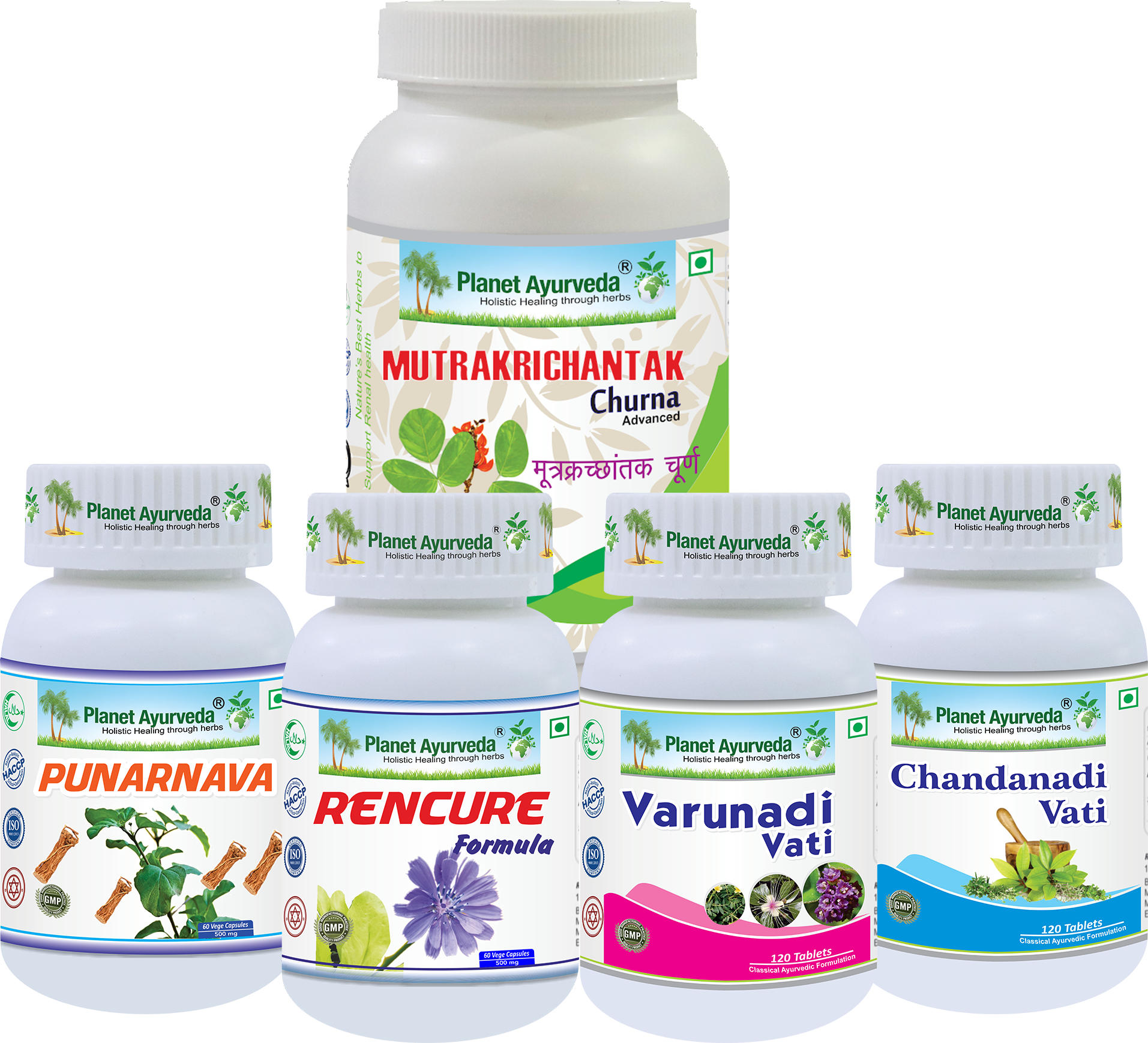
Planet Ayurveda is a globally recognized Ayurvedic company founded by Dr. Vikram Chauhan (MD – Ayurveda) with the vision of promoting holistic healing through the ancient science of Ayurveda. The company is renowned for its 100% pure, natural, and vegetarian herbal formulations, crafted under strict quality control in a GMP-certified manufacturing unit. Every product at Planet Ayurveda is prepared from standardized extracts of potent herbs, ensuring therapeutic efficacy, purity, and safety. Unlike synthetic medicines, Planet Ayurveda focuses on addressing the root cause of disease by balancing the body’s Doshas (Vata, Pitta, and Kapha) and restoring harmony among the Dhatus (tissues) and Srotas (channels). The formulations are free from chemicals, preservatives, and artificial additives, making them safe for long-term use. With its strong global presence in over 60 countries, Planet Ayurveda continues to inspire trust among patients and practitioners worldwide. Guided by authentic Ayurvedic wisdom and supported by modern research, the brand represents the perfect blend of tradition, purity, and scientific excellence in natural healthcare.For the treatment of Chronic Kidney Diseases, Planet Ayurveda has REVIVE KIDNEYS PACK (RKP). It includes:-
- Mutrakrichantak Churna
- Rencure Formula
- Varunadi Vati
- Punarnava Mandur
- Chandanadi Vati
REVIVE KIDNEYS PACK (RKP)

Product Description
1. Mutrakrichantak Churna
It is a powder formulation which contains Varun (Crataeva nurvala), Bhumi amla (Phyllanthus niruri), Gokshur (Tribulus terrestris), and Kalmegh (Andrographis paniculata) as its prime ingredients. It helps to enhance filtration and reduce inflammation in the urinary tract. It is an ayurvedic formulation that consists of kidney-supportive herbs that aid healthy urine flow and regenerate renal tissues. It helps to manage urinary tract infections by maintaining the equilibrium of Vata and Pitta doshas.
Dosage: 1 tsp twice daily with water after meals.
2. Rencure Formula
It is a capsule formulation that consists of various herbs such as Varun (Crataeva nurvala), Punarnava (Boerhavia diffusa), Palaash (Butea monosperma), Gokshur (Tribulus terrestris), Kasni (Cichorium intybus). It is a medicinal herbal formulation that is used to nourish kidney health and function naturally. It helps in maintaining fluid balance. This formulation facilitates promoting healthy urine output and preventing toxin accumulation that enhances renal function. It is shothghana (anti-inflammatory), rakta shodhak (blood purifier), and nephroprotective.
Dosage: 1-2 capsules twice a day after meals.
3. Varunadi Vati
It is a tablet formulation which consists of Varun (Cretaeva nurvala), Guggulu (Commiphora mukul), Gokshur (Tribulus terrestris), Punarnava (Boerhavia diffusa), etc. Its constituents, such as punarnavine and boeravinones, increase glomerular filtration rate (GFR) and cleanse Mutravaha Srotas and revitalize Rasa (nutritious fluid) and Meda Dhatu (fat body tissue), ensuring proper tissue nutrition and detoxification. It is mainly used to support urinary tract health and promote smooth urine flow.
4. Punarnava Mandur
It is a tablet formulation which consists of Punarnava (Boerhavia diffusa), Shunthi (Zingiber officinale), Pippali (Piper longum), Maricha (Piper nigrum), Amalaki (Emblica officinalis), Haritaki (Terminalia chebula), Chavya (Piper chaba), Mandur bhasma (Ferric Oxide calx), etc. It is used to maintain healthy liver and kidney function, aid in managing anemia, and reduce water retention. It helps to rejuvenate tissues, promotes optimal metabolism, detoxifies the body, and supports overall strength.
Dosage: 1-2 tablets twice or thrice daily with lukewarm water.
5. Chandanadi Vati
It is a tablet formulation of Safed Chandan (Santalum album), Gandhabiroja (gum resin of Pinus longifolia), Rasaut (Berberis aristata), Kapur (Cinnamomum camphora), Gairik (Red oxide of iron), Pashanbheda (Bergenia ligulata), choti elaichi (Elettaria cardamomum), etc. It pacifies pitta and kapha dosha and is beneficial for overall metabolism. It is used to manage urinary tract discomfort. It maintains balanced urinary function and reduces inflammation. It enhances overall urinary wellness and is helpful in cooling the body.
Dosage: 1-2 tablets twice or thrice a day with lukewarm water.
CONCLUSION
Chronic kidney disease is a progressive disease of the excretory system that affects the functions of the kidneys and is potentially life-threatening in the advanced stages. In Ayurveda, it is considered a disease of mutravaha strotas (excretory system). Ayurveda recognizes chronic kidney diseases not as a structural disorder but as a systemic imbalance that highlights detoxification, tissue rejuvenation, dietary discipline (Pathya-Apathya), and lifestyle correction for long-term renal preservation. With proper management under classical principles, Ayurveda offers a wide range, preventive and regenerative approaches toward maintaining renal health and improving the quality of life of patients who are suffering from chronic kidney diseases. Following the principles of Ayurveda, the root cause of any disease is treated by balancing the vitiated doshas, shodhana (detoxification), and shaman (pacifying) therapies, and by following proper lifestyle changes and dietary habits.


Dr. Vikram Chauhan
Latest posts by Dr. Vikram Chauhan (see all)
- Anti-CCP Test – Normal Range, Positive Results, and Role in Rheumatoid Arthritis Diagnosis - February 24, 2026
- Archana Puran Singh Diagnosed with CRPS – Chronic Pain Condition Awareness, its Impact, Symptoms, Causes & Ayurveda View - January 29, 2026
- Vikramprash & Shilajit Resin for Winter Energy, Immunity and Vitality - December 26, 2025
- Winter Health Tips for Kids: Ayurvedic Diet, Immunity & Lifestyle Care - December 16, 2025
- Ayurvedic Alternative of Sertraline (Zoloft) for Stress, Anxiety & Depression - December 15, 2025