

Estrogen Metabolism: Understanding Estrogen Detox, Gut Health and Ayurveda
Estrogen metabolism is a normal physiological process through which the body transforms and eliminates estrogen hormones and their metabolites. The term “estrogen detox” is commonly used in wellness discussions to describe the body’s natural processes of estrogen metabolism, modification, and elimination. Estrogen metabolism involves several interconnected pathways, including Phase I biotransformation, Phase II conjugation, and elimination through urine and bile. The liver plays an important role in these processes, while the gastrointestinal tract and gut microbiota can also influence how estrogen metabolites are processed and eliminated. Diet, liver function, gut microbiota, genetics, medications, body composition, age, reproductive status, and hormonal conditions may all influence estrogen metabolism. From an Ayurvedic perspective, herbs and dietary practices have traditionally been used to support Agni (digestive function), Yakrit (liver), metabolism, elimination, and overall women’s health. These traditional uses can be considered alongside our current understanding of estrogen physiology.
What Is Estrogen?
Estrogen refers to a group of steroid hormones that perform important functions throughout the body. The three major naturally occurring forms are:
- Estradiol (E2)- Estradiol is the predominant and most biologically potent estrogen during the reproductive years.
- Estrone (E1)- Estrone becomes relatively more prominent after menopause.
- Estriol (E3)- Estriol is particularly abundant during pregnancy.
Before menopause, estrogen is produced primarily by the ovaries. Smaller amounts can also be produced by the adrenal glands, adipose tissue, testes, and other tissues. Estrogen has important roles in:
- Menstrual-cycle regulation
- Ovulation and reproductive function
- Bone maintenance
- Brain function and mood
- Cardiovascular and metabolic processes
- Skin and connective tissue
- Sexual and reproductive health
Maintaining appropriate estrogen levels is therefore an important part of normal physiology.
What Does “Estrogen Detox” Mean?
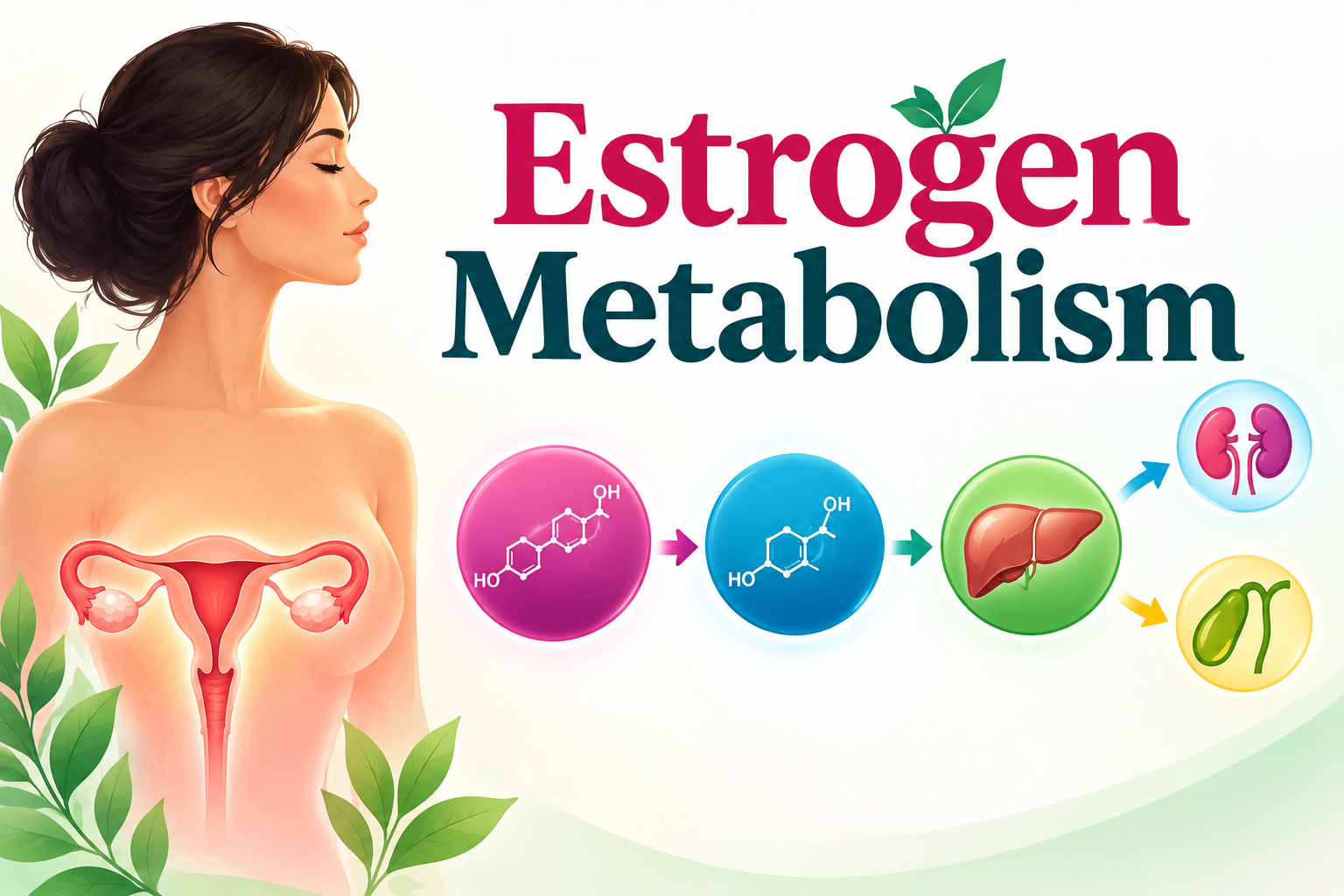
“Estrogen detox” is a wellness term generally used to describe the body’s natural processes for metabolizing and eliminating estrogen and its metabolites. The body does not simply need to “remove estrogen.” Estrogen is an essential hormone, and normal estrogen levels are required for many physiological functions. After estrogen has performed its biological functions, the body modifies it through metabolic pathways. These modifications generally make estrogen metabolites more suitable for elimination through urine or bile and feces. A simplified overview is:
Estrogen → Metabolism → Conjugation → Bile/Urine → Elimination
The liver is particularly important in estrogen metabolism, although the process is not limited to the liver. The gastrointestinal tract and gut microbiota may also influence estrogen recycling and elimination.
Why Does Estrogen Need to Be Metabolized?
Hormones must be continuously regulated by the body. After estrogen has carried out its physiological functions, it undergoes metabolic transformation. The purpose of these processes is to modify estrogen and its metabolites so that they can generally become less biologically active and more water-soluble, facilitating their elimination. Several organs and biological systems participate in this process, with the liver playing a central role.
Understanding Estrogen Metabolism
Estrogen metabolism can be broadly understood through several stages-
Step 1: Estrogen Enters Metabolic Pathways
Estradiol and estrone can undergo metabolic transformation through enzymes belonging to the cytochrome P450 (CYP) enzyme family. One important part of this process is hydroxylation, which can result in the formation of different estrogen metabolites, including:
- 2-hydroxy metabolites
- 4-hydroxy metabolites
- 16α-hydroxy metabolites
These metabolites may subsequently undergo additional biochemical modifications before elimination. A simplified pathway is:
Estrogen production
↓
Hydroxylation
↓
Conjugation
↓
Bile / Urine
↓
Intestinal elimination or possible reabsorption
↓
Feces / Urine
Gut microbiota can influence some of these processes, particularly the deconjugation and potential reabsorption of estrogen metabolites.
Step 2: Conjugation
Following hydroxylation, estrogen metabolites can undergo conjugation. Conjugation generally makes these compounds more water-soluble and facilitates their elimination. Two important conjugation pathways include:
Glucuronidation- Enzymes known as UDP-glucuronosyltransferases (UGTs) attach glucuronic acid to estrogen metabolites. The resulting conjugated compounds can then be eliminated through:
- Urine
- Bile
Sulfation- Enzymes known as sulfotransferases (SULTs) attach sulfate groups to estrogen metabolites. This process can also increase water solubility and facilitate elimination.
The Estrobolome and Estrogen Metabolism
The term estrobolome refers to the collection of gut microorganisms and their genetic functions that may influence estrogen metabolism. One important mechanism involves bacterial enzymes such as β-glucuronidase. Some estrogen metabolites are transported from the liver into bile and subsequently enter the intestine. Certain intestinal bacteria can produce β-glucuronidase, which may remove glucuronic acid from some conjugated estrogen metabolites. This can make certain estrogen compounds available for potential reabsorption. The process is known as enterohepatic circulation. A simplified pathway is:
Liver → Bile → Intestine → Bacterial metabolism → Possible reabsorption → Liver
Not all estrogen follows this cycle. Some metabolites are eliminated directly through feces or urine.
Enterohepatic Circulation of Estrogen
Enterohepatic circulation describes the movement of certain compounds between the liver, bile, intestine, and circulation. In relation to estrogen metabolism, the pathway can be represented as:
Liver → Conjugation → Bile → Intestine → Gut bacteria → Deconjugation → Possible reabsorption → Circulation → Liver
Alternatively:
Liver → Conjugation → Bile → Intestine → Remains conjugated → Feces → Elimination
Gut microbial activity can therefore influence whether some estrogen metabolites remain conjugated and are eliminated or become available for potential reabsorption. This demonstrates why estrogen metabolism involves more than the liver alone.
Step 3: Estrogen Elimination
Estrogen metabolites can ultimately be eliminated through the urinary and gastrointestinal routes.
- Urinary elimination- Some conjugated estrogen metabolites are transported to the kidneys and eliminated through urine.
- Biliary and fecal elimination- Other metabolites are transported from the liver into bile, enter the intestine, and may ultimately be eliminated through feces. Therefore, a simplified overview is:
Liver → Metabolism → Conjugation → Urine and/or Bile → Elimination
Healthy liver function, intestinal function, adequate nutrition, and normal bowel habits all form part of the broader physiological environment in which these processes occur.
Factors That Support Normal Estrogen Metabolism
Rather than focusing on aggressive “detox” programs, attention can be directed toward general lifestyle factors that support normal metabolic and digestive function.
-
Adequate Dietary Fiber- Dietary fiber can influence intestinal transit and fecal elimination of compounds that are excreted into the intestine. Good dietary sources of fiber include
- Vegetables
- Fruits
- Beans
- Lentils
- Whole grains
- Nuts and seeds
Adequate fiber intake also supports normal digestive function.
- Regular Physical Activity- Regular physical activity supports overall metabolic health and helps maintain healthy body composition. Exercise also forms an important part of general lifestyle management for hormonal and metabolic health.
- Healthy Body Composition- Adipose tissue is not simply a storage site for energy. It contains aromatase, an enzyme involved in the conversion of androgens into estrogens. Consequently, changes in adipose tissue can influence estrogen exposure, particularly after menopause. Maintaining a healthy body composition through balanced nutrition and regular physical activity can therefore be relevant to overall metabolic health.
- Moderate Alcohol Consumption- Alcohol can influence estrogen metabolism and circulating estrogen concentrations. Excessive alcohol consumption can also negatively affect liver health. Limiting alcohol intake is therefore an important consideration for overall liver and metabolic health.
- Adequate Nutrition- Normal enzymatic processes involved in metabolism require adequate overall nutrition. A balanced diet providing sufficient protein, fiber, vitamins, minerals, and other essential nutrients supports normal physiological functions, including liver and digestive processes.
- Adequate Sleep and General Lifestyle Balance- Sleep and general lifestyle habits contribute to overall metabolic and hormonal health. A consistent sleep schedule, regular physical activity, balanced nutrition, and avoidance of tobacco can form part of a healthy lifestyle.
Cruciferous Vegetables and DIM
Cruciferous vegetables include:
- Cauliflower
- Cabbage
- Brussels sprouts
- Kale
- Broccoli
These vegetables contain compounds such as indole-3-carbinol (I3C). I3C can undergo further transformation in the digestive tract, including the formation of diindolylmethane (DIM). Research into I3C, DIM, and estrogen metabolism has generated interest in how dietary compounds may interact with estrogen metabolic pathways. However, dietary intake should not be equated with a need for an “estrogen detox” program.
Ayurvedic Perspective on Estrogen and Hormonal Metabolism
Ayurveda approaches women’s health through a broader understanding of Agni (digestive and metabolic function), Dosha balance, Dhatus, Srotas, and elimination. Traditional Ayurvedic practice uses a variety of herbs for digestive health, liver support, reproductive health, menstrual health, and general well-being. It is important to distinguish these traditional uses from modern claims about directly “detoxifying estrogen.” Evidence for specific effects on estrogen metabolism varies considerably among individual herbs. The following herbs are traditionally associated with areas relevant to women’s health, digestion, liver function, or general metabolic support.
Ayurvedic Herbs Traditionally Used in Women’s and Metabolic Health
- Bhumyamalaki (Phyllanthus amarus)- Bhumyamalaki is traditionally used in Ayurveda to support Yakrit (liver) health and balanced Pitta. Modern research has investigated Phyllanthus species for antioxidant and hepatoprotective properties. Since the liver is a major site of estrogen metabolism, maintaining normal hepatic function is relevant to healthy hormone metabolism. It should be described as liver-supportive, rather than as directly detoxifying estrogen.
- Kalmegh (Andrographis paniculata)- Kalmegh is traditionally recognized in Ayurveda for supporting Yakrit and Pitta balance and is commonly included in formulations for liver wellness. Its active constituent andrographolide has been studied for antioxidant and hepatoprotective activities. Because hepatic enzymes participate in estrogen metabolism and elimination, Kalmegh may be discussed as part of a broader approach to maintaining healthy liver function.
- Bhringraj (Eclipta alba)- Bhringraj is traditionally regarded as a Rasayana herb and is widely used in Ayurveda for supporting Yakrit function. Experimental studies have investigated its hepatoprotective and antioxidant properties. A healthy liver is essential for normal metabolism and elimination of various hormones, including estrogen. Therefore, Bhringraj can be presented as a traditional liver-supportive herb, rather than a direct estrogen-detoxification agent.
- Kutki (Picrorhiza kurroa)- Kutki is a classical Ayurvedic herb traditionally associated with Yakrit support and Pitta balance. Its major constituents, including picrosides, have been studied for hepatoprotective and antioxidant effects. Because the liver performs important phases of estrogen metabolism, supporting normal hepatic function may indirectly contribute to healthy hormone processing. It should not, however, be presented as clinically proven to remove excess estrogen.
- Haridra (Curcuma longa) is traditionally valued in Ayurveda for supporting Agni, Rakta and healthy metabolic processes. Its curcuminoids have been studied for antioxidant and anti-inflammatory activities. Since the liver plays an important role in estrogen metabolism, Haridra may be discussed as part of overall liver and metabolic support rather than as a direct estrogen-detoxifying herb.
- Manjistha (Rubia cordifolia) is traditionally described in Ayurveda as supportive of Rakta Shodhana and healthy skin and tissue metabolism. Its phytochemicals, including anthraquinones, have been investigated for antioxidant and anti-inflammatory properties. Although direct evidence for lowering estrogen is limited, Manjistha can be included as a traditional herb supporting healthy metabolic and elimination processes.
- Punarnava (Boerhaavia diffusa) is traditionally used in Ayurveda to support healthy fluid balance and Mutravaha Srotas (urinary system). Modern research has investigated its antioxidant and anti-inflammatory properties. Because estrogen metabolites can be eliminated through urine and bile, Punarnava may be discussed in relation to normal elimination, but it should not be described as directly removing excess estrogen.
- Amalaki (Phyllanthus emblica) is a classical Ayurvedic Rasayana valued for supporting digestion, nourishment and overall vitality. It contains vitamin C, polyphenols and other antioxidant compounds. Healthy liver and metabolic function are important for normal hormone metabolism, making Amalaki relevant to a holistic approach.
Estrogen Metabolism: A Simple Overview
The Entire Process Can Be Summarized As Follows:
Estrogen
↓
Phase I metabolism / Hydroxylation
↓
Estrogen metabolites
↓
Phase II conjugation
↓
Glucuronidation / Sulfation
↓
Bile or urine
↓
Intestinal elimination
↓
Feces or urine
At The Intestinal Level:
Conjugated estrogen metabolites → Intestine → Gut bacterial enzymes → Possible deconjugation → Possible reabsorption → Liver
This interaction between the liver, intestine, and gut microbiota demonstrates the interconnected nature of estrogen metabolism.
Does Everyone Need an “Estrogen Detox”?
No routine estrogen detoxification program is established as necessary for healthy individuals simply because they have estrogen. Estrogen is a normal and essential hormone. The body has its own sophisticated systems for metabolizing and eliminating estrogen and its metabolites. The phrase “estrogen detox” is therefore better understood as a wellness term describing interest in the body’s natural estrogen metabolic and elimination pathways rather than as a requirement for a special detoxification treatment. A balanced diet, adequate fiber, regular physical activity, healthy body composition, adequate sleep, moderation of alcohol, avoidance of tobacco, and appropriate medical care are more appropriate foundations for supporting overall metabolic and hormonal health.
Conclusion
Estrogen metabolism is a normal and complex biological process involving the liver, gastrointestinal tract, kidneys, bile, and gut microbiota. Estrogen undergoes metabolic transformation, conjugation, and elimination through urine and feces, while enterohepatic circulation may allow some metabolites to be reabsorbed and returned to the liver. The term “estrogen detox” is widely used in wellness discussions, but the body already possesses natural mechanisms for estrogen metabolism and elimination. Supporting these normal processes is better approached through healthy dietary patterns, adequate fiber, regular physical activity, healthy body composition, adequate nutrition, sufficient sleep, moderation of alcohol, and appropriate healthcare. From an Ayurvedic perspective, traditional herbs such as Shatavari, Ashoka, Lodhra, Guduchi, Turmeric, Triphala, Amalaki, Bhumiamalaki, Punarnava, Musta, Katuki, and Bhringraj have long been used for different aspects of digestive, metabolic, liver, urinary, reproductive, and general health. However, individual herbs should not automatically be described as direct “estrogen detoxifiers.” Their traditional applications, modern evidence, individual suitability, dosage, and potential interactions should all be considered. Understanding estrogen metabolism through both modern physiology and the traditional Ayurvedic framework can provide a more balanced perspective on hormonal health—one that focuses on supporting the body’s normal physiological processes rather than relying on aggressive or unproven detoxification approaches.


Dr. Vikram Chauhan
Latest posts by Dr. Vikram Chauhan (see all)
- Metachromatic Leukodystrophy: Symptoms & Ayurvedic Care - October 19, 2026
- Estrogen Metabolism: Understanding Estrogen Detox, Gut Health and Ayurveda - October 19, 2026
- Lynch Syndrome: Symptoms, Causes & Ayurvedic Care - October 17, 2026
- Keto Diet: Benefits, Side Effects & Ayurvedic View - October 17, 2026
- PCOS in Bollywood Actresses: Ayurveda, Remedies & Diet - October 16, 2026