


MIDAS Score for Migraine: Symptoms, Treatment & Ayurveda
Abstract
Headache is one of the most common neurological complaints and can range from occasional mild discomfort to recurrent episodes that interfere substantially with everyday life. While many headaches resolve without significant disruption, recurrent headaches can affect concentration, productivity, sleep, family activities, social participation, and overall quality of life. Migraine is a neurological disorder characterized by recurrent attacks of moderate to severe headache, often accompanied by nausea, vomiting, sensitivity to light or sound, and sometimes visual or sensory disturbances. The burden of migraine is not determined only by how painful the headache feels. The number of days lost from work, school, household responsibilities, and leisure activities provides important information about how deeply migraine affects a person’s life. The Migraine Disability Assessment (MIDAS) questionnaire was developed specifically to quantify this functional burden. It asks about migraine-related limitations during the previous three months and converts the responses into a score that helps classify the degree of disability. The tool has demonstrated good reliability and validity and has been associated with physicians’ assessments of migraine-related disability and treatment needs. In this article, we shall discuss MIDAS in detail, including its purpose, questionnaire structure, scoring system, interpretation, relationship with migraine severity, clinical assessment, management, and the Ayurvedic perspective.
What is MIDAS?
MIDAS stands for Migraine Disability Assessment. It is a short, self-administered questionnaire designed to measure headache-related disability over the previous three months. The primary MIDAS score is calculated from five questions addressing the number of days during which headaches affected:
- Paid work or school attendance
- Productivity at work or school
- Household work
- Productivity in household activities
- Family, social, or leisure activities
The first five responses are added together to produce the MIDAS score. Two additional questions ask about the number of headache days and the average pain intensity, but these are not included in the disability score itself. The questionnaire was developed to make migraine disability easier to quantify and to improve communication between patients and healthcare professionals.
Why is MIDAS Important?
Migraine can be underestimated when assessment focuses only on pain intensity. For example, two people can both report severe headache pain but experience very different consequences. One person could continue working with some difficulty, while another could miss work, remain in bed, cancel social plans, and struggle to perform household responsibilities. MIDAS captures this functional impact. It helps healthcare professionals understand:
- How many days migraine has interfered with normal activities
- Whether work or education has been affected
- Whether household responsibilities have been disrupted
- How migraine affects family and social life
- The overall disability associated with headache
- Changes in disability over time
The original validation work found a meaningful relationship between MIDAS scores and physician assessments of pain, disability, and need for medical care.
MIDAS Questionnaire
The five scored questions focus on the previous three months.
Question 1: Work or School Absence
How many days were completely missed from work or school because of headaches?
Question 2: Reduced Productivity at Work or School
How many additional days was productivity at work or school reduced by at least half because of headaches?
Question 3: Household Work Absence
How many days were completely missed from household work because of headaches?
Question 4: Reduced Household Productivity
How many additional days was productivity in household work reduced by at least half?
Question 5: Family, Social, or Leisure Activities
How many days were missed from family, social, or leisure activities because of headaches?
The numbers from these five questions are added together to obtain the MIDAS score.
MIDAS Scoring
The MIDAS score is divided into four disability grades. A higher score indicates a greater impact of migraine on daily activities.
Grade I: 0–5 — Little or No Disability
This score indicates that migraine has caused little or no disruption to normal activities during the previous three months.
Grade II: 6–10 — Mild Disability
This range indicates that migraine has started to interfere with work, household responsibilities, or social and leisure activities.
Grade III: 11–20 — Moderate Disability
This score reflects a more significant impact on daily functioning. Migraine can interfere noticeably with professional, academic, household, family, and social activities.
Grade IV: 21 or More — Severe Disability
A score of 21 or higher indicates substantial migraine-related disability. Frequent or disabling attacks can significantly affect productivity, responsibilities, social participation, and overall quality of life. The MIDAS score is calculated by adding the number of days reported across the five scored questions. The two additional questions regarding headache frequency and average pain intensity provide supplementary information but are not included in the total MIDAS score.
MIDAS and Migraine Severity
MIDAS and migraine severity are related but are not identical. Pain intensity describes how painful the migraine is, whereas MIDAS describes how much the migraine disrupts life. A person can experience frequent but relatively manageable attacks and have a lower disability score. Another individual can experience fewer attacks that are sufficiently severe to cause significant disruption. For this reason, MIDAS works best as part of a broader migraine assessment rather than as a standalone diagnostic test.
A headache diary can complement MIDAS by recording:
- Date of each attack
- Duration
- Pain intensity
- Location
- Associated symptoms
- Possible triggers
- Medication taken
- Response to treatment
- Menstrual association where relevant
- Work or activity disruption
Causes and Triggers of Migraine
The exact cause of migraine is complex and involves genetic susceptibility and abnormal processing within the nervous system. A variety of factors can trigger attacks in susceptible individuals.
Common Triggers Include
- Sleep deprivation
- Excessive sleep or irregular sleep schedules
- Skipping meals
- Dehydration
- Psychological stress
- Sudden changes in routine
- Bright or flashing light
- Strong smells
- Excessive screen exposure
- Hormonal fluctuations
- Alcohol
- Certain foods
- Excessive caffeine or sudden caffeine withdrawal
- Weather or environmental changes
- Physical exhaustion
Triggers differ considerably between individuals. Identifying personal triggers through a headache diary is more useful than following a universal list of foods or activities.
Specific Clinical Signs and Symptoms
Migraine commonly presents with recurrent attacks of moderate to severe headache. The pain can be unilateral or bilateral and is frequently pulsating or throbbing. Common symptoms include:
- Moderate to severe headache
- Pulsating or throbbing pain
- Nausea
- Vomiting
- Sensitivity to light
- Sensitivity to sound
- Increased sensitivity to smells
- Worsening with routine physical activity
- Difficulty concentrating
- Dizziness
Some people experience migraines with aura. Aura consists of reversible neurological symptoms that commonly develop before or during the headache.
Visual Aura
- Flashing lights
- Zigzag patterns
- Blind spots
- Shimmering or flickering visual phenomena
Speech-Related Aura
Temporary difficulty expressing or understanding language can occur in some individuals. Migraine attacks commonly last several hours and can continue for up to three days when untreated or inadequately treated.
Investigations
Migraine is primarily a clinical diagnosis.
A physician evaluates:
- Headache characteristics
- Frequency
- Duration
- Associated symptoms
- Trigger pattern
- Family history
- Medication use
- Neurological examination
There is no routine blood test that confirms migraine.
When Imaging is Needed
Brain imaging is not routinely required in individuals with a typical recurrent migraine pattern, a normal neurological examination, and no warning signs. MRI or CT imaging becomes relevant when symptoms suggest another neurological condition.
Warning Signs Requiring Further Evaluation
- Sudden, extremely severe headache
- New headache after significant head trauma
- New headache during pregnancy or the postpartum period
- Fever with neurological symptoms
- New neurological weakness or persistent sensory loss
- Seizures
- Confusion or altered consciousness
- Significant changes in an established headache pattern
- New headache at an unusual age
- Headache associated with cancer or significant immune suppression
These presentations require appropriate medical assessment to exclude secondary causes.
Management of Migraine
Migraine management generally combines acute treatment, prevention, lifestyle measures, and trigger management.
Acute Management
Acute medicines are taken during an attack and include:
- Paracetamol
- Non-steroidal anti-inflammatory medicines
- Triptans
- CGRP-targeting acute medicines
- Other migraine-specific medicines
The appropriate medicine depends on the individual’s medical history, migraine characteristics, and other medications.
Preventive Management
Preventive treatment is considered when attacks are frequent, prolonged, disabling, or inadequately controlled. Options include:
- Beta-blockers
- Antiseizure medicines
- Certain antidepressants
- CGRP-targeting preventive medicines
- OnabotulinumtoxinA for appropriate chronic migraine patients
Current migraine management also emphasizes healthy lifestyle habits, trigger identification, acute treatment plans, preventive therapy when appropriate, and self-management strategies.
Lifestyle Management
A consistent daily routine can be extremely valuable.
- Follow regular sleep
- Avoid long gaps between meals
- Stay hydrated
- Manage stress
- Limit medication overuse
Ayurvedic Aspect and Management
The Ayurvedic condition most closely associated with migraine is Ardhavabhedaka. Ardhavabhedaka is described among the disorders of the head and is characterized by severe pain affecting one side of the head. Ayurvedic literature describes the involvement of areas such as the temple, forehead, eye, ear, and surrounding regions. Modern Ayurvedic literature has correlated this presentation with migraine based on similarities in headache pattern and associated symptoms. From an Ayurvedic perspective, Ardhavabhedaka is approached according to the Dosha pattern and the individual’s causative factors. Vata and Pitta are particularly important when sharp, throbbing, burning, unilateral, or sensory-sensitive headache features dominate.The management begins with Nidana Parivarjana, meaning identification and avoidance of factors that provoke attacks. Irregular sleep, fasting, excessive mental strain, excessive exposure to heat or bright light, unsuitable foods, and suppression of natural urges are considered relevant factors within Ayurvedic management. Brahmi (Bacopa monnieri), Ashwagandha (Withania somnifera), Shankhpushpi (Convolvulus pluricaulis), Guduchi (Tinospora cordifolia), and Vacha (Acorus calamus) are used in Ayurvedic practice. Ayurvedic management can also include physician-directed procedures such as Nasya (nasal administration), Shirodhara, Abhyanga (medicated massage), and other therapies selected according to the Dosha presentation. Nasya has a specific place in Ayurvedic management of disorders involving the head.
Herbal Remedies by Planet Ayurveda
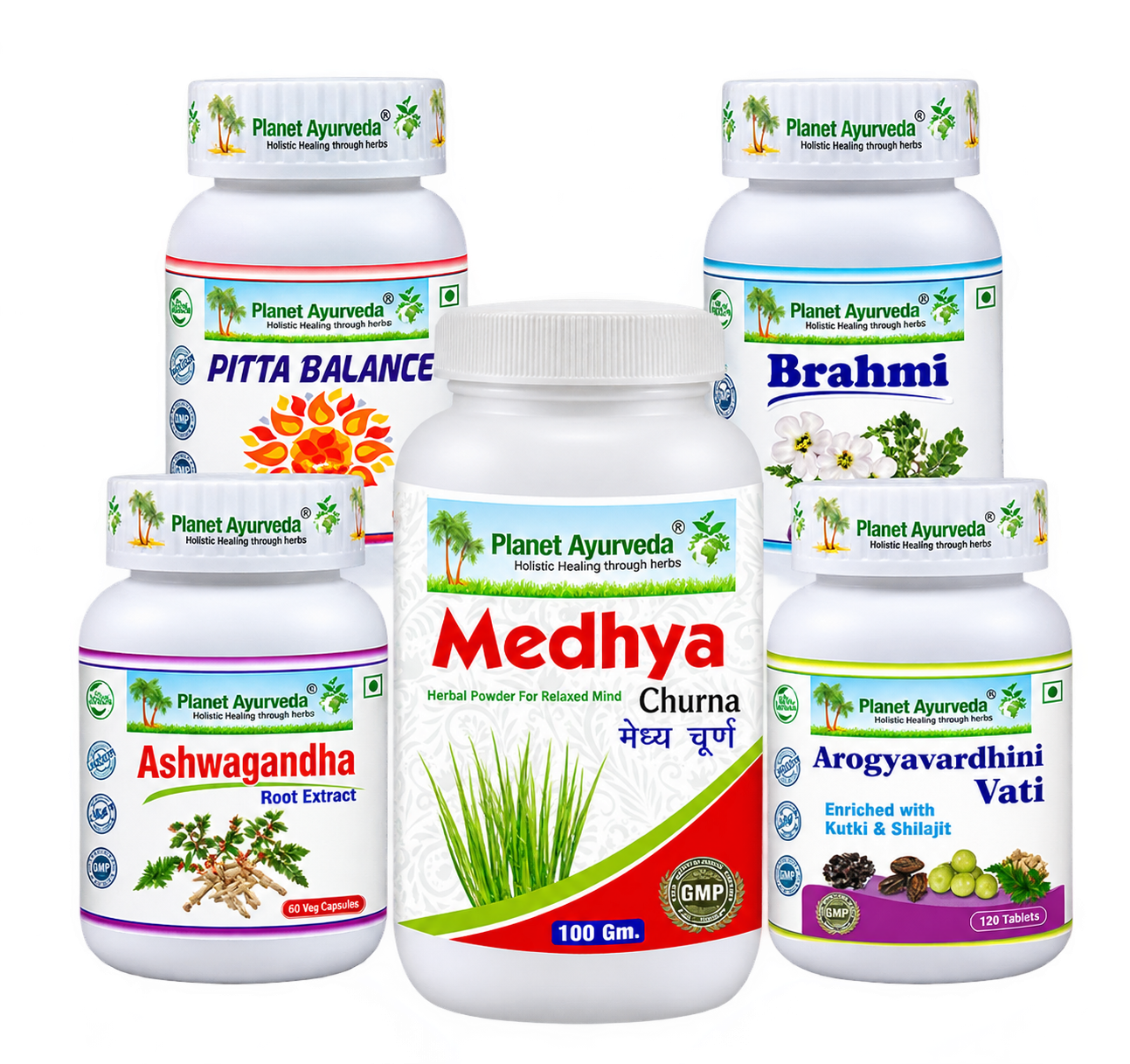
Planet Ayurveda brings Ayurvedic knowledge into convenient herbal formulations prepared from carefully selected ingredients. Its range includes single-herb extracts, polyherbal formulations, classical Ayurvedic preparations, powders, and specialized care packs. For individuals looking for a comprehensive Ayurvedic approach to migraine care, Planet Ayurveda presents its Migraine Care Pack. The pack combines five formulations addressing different aspects relevant to migraine wellness, including neurological support, mental balance, Pitta management, digestive and metabolic health, and cognitive wellness.
Product List
- Brahmi Capsules
- Ashwagandha Capsules
- Pitta Balance
- Arogyavardhini Vati
- Medhya Churna
MIDAS Score for Migraine

Product Description
Brahmi Capsules
Planet Ayurveda Brahmi Capsules contain standardized extract of Brahmi (Bacopa monnieri). Brahmi is associated with mental clarity, concentration, memory, and nervous-system wellness. The principal bioactive compounds of Brahmi include bacosides, especially bacoside A. These compounds are associated with antioxidant activity and neuronal signaling pathways. For individuals experiencing migraine alongside mental fatigue, poor concentration, stress, or cognitive tiredness, Brahmi is presented as a component of an Ayurvedic neurological-care strategy.
Dosage: 2 capsules twice daily with warm water.
Ashwagandha Capsules
Planet Ayurveda Ashwagandha Capsules contain standardized extract of Ashwagandha (Withania somnifera). Ashwagandha is an Ayurvedic herb used to support physical strength, nervous-system health, mental resilience, and overall well-being. Its major bioactive constituents include withanolides, a group of naturally occurring steroidal lactones. Ashwagandha is often discussed when migraine episodes are associated with stress, fatigue, disturbed sleep, or physical and mental exhaustion. Maintaining a balanced stress response and healthy sleep pattern is an important component of comprehensive migraine management.
Dosage: 1 capsule twice daily with warm water after meals.
Pitta Balance
Planet Ayurveda’s Pitta Balance is designed around the Ayurvedic concept of balancing aggravated Pitta Dosha, which is considered relevant when headaches are accompanied by sensations of heat, burning, acidity, irritability, or digestive discomfort. The formulation described in the source contains Jahar Mohra Pishti, Kaharawa Pishti, Akik Pishti, Mukta Pishti, and Giloy Satva (Tinospora cordifolia). Giloy contains compounds including diterpenoid lactones, alkaloids, and polysaccharides. The formulation is presented as part of an Ayurvedic approach where Pitta-related features are prominent.
Dosage: 1 capsule twice daily with warm water after meals.
Arogyavardhini Vati
Arogyavardhini Vati is a classical Ayurvedic formulation used in a number of health concerns. The formulation described in the source includes Haritaki (Terminalia chebula), Bibhitaki (Terminalia bellirica), Amalaki (Emblica officinalis), purified Shilajit, purified Guggulu, Chitrak Mool (Plumbago zeylanica), and Kutki (Picrorhiza kurroa) among its principal ingredients. Haritaki contains tannins and phenolic compounds and is valued in Ayurveda for digestive and systemic balance. The formulation is described in the context of traditional Ayurvedic practices.
Dosage: 2 tablets twice daily with warm water after meals.
Medhya Churna
Medhya Churna is a herbal powder blend based on Medhya Rasayana, the Ayurvedic concept of supporting cognitive function, mental clarity, memory, and nervous-system health. The formulation described in the source contains Vacha (Acorus calamus), Ashwagandha (Withania somnifera), Ajmoda (Carum roxburghianum), Shwet Jeerak (Cuminum cyminum), Krishna Jeerak (Carum carvi), Sonth (Zingiber officinale), Marich (Piper nigrum), Pippali (Piper longum), Patha (Cissampelos pareira), Shankhpushpi (Convolvulus pluricaulis), and Brahmi (Bacopa monnieri). It is presented as a traditional formulation for cognitive wellness and stress management.
Dosage: 1/4 teaspoon once daily with one spoon of cow ghee.
Conclusion
MIDAS, or the Migraine Disability Assessment, provides a simple and structured way to understand how profoundly migraine affects everyday life. By assessing lost or impaired days across work, household responsibilities, and social or leisure activities over three months, it transforms the subjective burden of migraine into a measurable score. The four MIDAS grades help communicate the degree of disability and provide a useful framework for monitoring changes over time.Ayurveda approaches the migraine condition as Ardhavabhedaka through a broader understanding of Dosha imbalance, digestive health, lifestyle, mental strain, and neurological wellness. Attention to Vata-Pitta balance, regular meals, healthy sleep, stress management, appropriate diet, and individualized Ayurvedic therapies such as Nasya forms part of this traditional framework. Planet Ayurveda’s Migraine Care Pack addresses different dimensions of Ayurvedic care, from nervous-system and cognitive wellness to Pitta balance, digestion, metabolism, and mental resilience.For anyone living with recurrent migraine, the goal should extend beyond simply getting through the next attack. Understanding the disability caused by migraine, identifying personal triggers, improving daily routines, and adopting a comprehensive care strategy can help move toward better control and a more active, productive life.


Dr. Vikram Chauhan
Latest posts by Dr. Vikram Chauhan (see all)
- Banyan Tree: Medicinal Benefits, Uses & Importance - October 9, 2026
- PCOS Treatment in Ayurveda: Causes, Symptoms & Management - October 9, 2026
- MIDAS Score for Migraine: Symptoms, Treatment & Ayurveda - October 9, 2026
- Estrogen Detox: Ayurvedic Herbs, Diet & Natural Tips - October 9, 2026
- PCOD: Causes, Symptoms, Diagnosis & Ayurvedic Management - October 9, 2026