


Ayurvedic Alternative of Sertraline (Zoloft) for Stress, Anxiety & Depression
Abstract
Modern life has intensified exposure to stress leading to a surge in stress related psychological conditions. Stress, anxiety and depression are highly prevalent mental health conditions worldwide. Chronic stress can trigger anxiety disorders, which in turn may precipitate depression. These conditions can significantly affect quality of life, productivity, and physical health. These conditions not only reduce quality of life but also contribute to chronic physical illnesses. Pharmacological interventions such as Sertraline, a selective serotonin reuptake inhibitor, have shown significant efficacy in managing these disorders. In this article let’s learn about the use of sertraline, its mode of action and other safer options that can be used in these health conditions.

Introduction
Sertraline is a widely used antidepressant belonging to the class of Selective Serotonin Reuptake Inhibitors (SSRIs). It is commonly prescribed for various psychiatric conditions. It helps to enhance serotonin levels in the brain which helps in improving mood, stabilising emotions and alleviating symptoms associated with mood and anxiety disorders. It is considered a first-line pharmacological treatment in many clinical guidelines for depression and anxiety related conditions. It is available in the market under the brand name zoloft.
Mode Of Action
- Sertraline selectively blocks the serotonin transporter (SERT) located on presynaptic neurons.
- This prevents the reuptake of serotonin back into the presynaptic cell.
- As a result serotonin remains longer in the synaptic cleft and can continuously stimulate postsynaptic serotonin receptors.
- Increased serotonergic activity leads to improvement in mood, anxiety symptoms, impulse control and emotional regulation.
Indications
- Major Depressive Disorder
- Generalized Anxiety Disorder
- Panic Disorder
- Social Anxiety Disorder (Social Phobia)
- Obsessive Compulsive Disorder (OCD)
- Post Traumatic Stress Disorder (PTSD)
- Premenstrual Dysphoric Disorder (PMDD)
Contraindications
- Hypersensitivity
- If Using MAO Inhibitors
- If using Pimozide
- Severe Liver Impairment
- If using Disulfiram
Adverse Effects
- Drowsiness
- Sweating
- Fatigue
- Anorexia and indigestion
- Restlessness
- Anxiety
- Agitation
- Suicidal thoughts
- Manic episodes
Ayurvedic Perspective And Safer Alternatives
In Ayurveda, mental health disorders like stress, anxiety, depression originate primarily due to disturbances in Manas Doshas that are Rajas (Property that define activity and desire) and Tamas (property that define darkness and inertia) along with imbalance in bodily Doshas (especially Vata Dosha). Since long term use of Sertraline is often limited by side effects like sexual dysfunction, insomnia, weight changes, emotional blunting, withdrawal symptoms, etc. So Ayurveda treats the root cause of stress, anxiety and depression and avoids the side effects by the use of safe, non addictive rasayana herbs like Ashwagandha, Brahmi, Jatamansi, etc. So here is the details about these alternatives:
1. Brahmi (Bacopa monnieri)
It has tikta and kashaya rasa (bitter and astringent taste) and sheeta virya (cold potency) thus helps to pacify Vata and Pitta Dosha and is thus helpful in excessive overthinking, mental fatigue, restlessness, irritability and poor memory. It is regarded as a Cognitive enhancer herb that enhances memory, focus and clarity. Research indicates that it helps alleviate stress and anxiety by lowering cortisol levels and boosting serotonin levels, thereby improving mood. It is best for anxiety with overthinking, mental fatigue, brain fog and concentration issues because it is a Medhya Rasayana (mind rejuvenator) that cools the mind, enhances memory, stabilizes serotonin and increases Sattva without causing sedation.
2. Tagara (Valeriana wallichi)
It helps to pacify all the three Dosha but especially Vata Dosha which is a key Dosha involved in anxiety, restlessness, insomnia, etc. The roots of Tagara promote better sleep by calming the central nervous system through their sedative properties. They enhance levels of GABA (gamma aminobutyric acid), which regulates nerve activity and provides a soothing effect on anxiety. It is most effective for acute anxiety, restlessness, panic attacks, palpitations and especially in insomnia.
3. Ashwagandha (Withania somnifera)
It helps to balance Vata and Kapha Doshas. Vata Dosha imbalance often results in anxiety, restlessness and insomnia, while Kapha Dosha imbalance can be associated with lethargy and profound sadness. It exerts a stabilizing effect on the HPA (hypothalamic pituitary adrenal) axis, making it less reactive to stress. It is ideal for chronic stress, burnout, fatigue, low mood and Vata-related depression, as it acts as a powerful adaptogen that reduces cortisol, strengthens the nervous system and restores energy, confidence and emotional stability.
4. Shankhapushpi (Convolvulus pluricaulis)
It helps balance neurotransmitters and enhances dopamine secretion, which in turn regulates serotonin levels, contributing to the reduction of anxiety symptoms. Research shows that it has strong anxiolytic and antidepressant actions. Its bioactive compounds like scopoletin, kaempferol, convolamine and convolvine help reduce restlessness, improve sleep, enhance memory and stabilize mood.
5. Mandukparni (Centella asiatica)
It contains asiaticoside, madecassoside, asiatic acid, which reduce overactivity in the amygdala which is the fear center. It interacts with cholecystokinin receptors, a type of G protein coupled receptor and by modulating these receptors, it plays a significant role in reducing anxiety. It is very effective for generalized anxiety, panic tendencies and stress-induced restlessness.
6. Jatamansi (Nardostachys jatamansi)
It is rich in jatamansone, nardostachone, valeranone, etc. which increases GABA thus reducing brain hyperactivity. Its antidepressant activity is attributed to its ability to elevate levels of monoamines and inhibitory amino acids. As a Medhya Rasayana, it supports sharper memory and improved cognitive performance by minimizing oxidative stress and enhancing neuronal communication. Its soothing influence on the nervous system further promotes deeper, more restful and rejuvenating sleep.
Planet Ayurveda’s Alternatives
Planet Ayurveda is a well known Ayurvedic company dedicated to producing 100% pure, natural and standardized herbal products based on classical Ayurvedic principles. It offers a wide range of formulations including herbal capsules, powders, oils, juices, etc. for managing various health conditions. Their formulations are based on classical Ayurveda and are clinically tested for safety and effectiveness, supporting overall health and wellness naturally. Some of the formulations used in stress, anxiety and depression are:
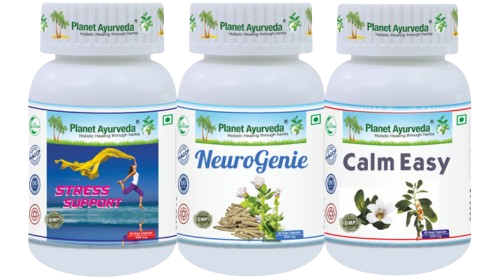

1. Stress Support Capsules
It is a capsule formulation of Planet Ayurveda which contains mainly ashwagandha (Withania somnifera), tagar (Valeriana wallichii) and also brahmi (Bacopa monnieri). These are especially indicated in chronic stress and exhaustion. It is used in cases with low immunity, weakness, fatigue, etc. It regulates the HPA axis and exerts anxiolytic, antidepressant and neuroprotective effects by improving GABAergic signalling, enhancing resilience to stress.
Dosage: 1-2 capsules twice a day with plain water after meals.
2. Calm Easy Capsules
It is a capsule formulation of Planet Ayurveda consisting mainly of brahmi (Bacopa monnieri) and also ashwagandha (Withania somnifera) and tagar (Valeriana wallichii). It contains bacosides A & B, bacopasaponins, alkaloids like brahmine and herpestine which enhance synaptic communication, promote neuroplasticity, and reduce neuroinflammation. It helps to strengthen memory pathways, improve concentration and calm the mind.
Dosage: 1 – 2 capsules once or twice daily with plain water after meals.
3. Neurogenie Capsules
It is a capsule formulation of Planet Ayurveda. It contains Brahmi (Bacopa monnieri) and ashwagandha (Withania somnifera). It helps to reduce hyperactivity of the HPA axis which balances the body and mind stress and helps in deep relaxation. It pacifies the Vata and Pitta Dosha thus cools the mind and reduces irritability, emotional restlessness, nervousness, overthinking, tremors and insomnia.
Dosage: 1 – 2 capsules once or twice daily with plain water after meals.
Conclusion
Sertraline is an effective modern antidepressant widely used for stress, anxiety and depression because it improves serotonin levels and offers quick symptomatic relief. However many patients experience side effects such as nausea, insomnia, suicidal thought, manic episodes, etc. which limits its long term use and overall quality of life. Ayurveda offers gentle, holistic and sustainable alternatives like Ashwagandha (Withania somnifera), Brahmi (Bacopa monnieri), Shankhpushpi (Convolvulus pluricaulis), Tagar (Valeriana wallichii), Mandukaparni (Centella asiatica), which work by balancing the Dosha, strengthening the nervous system, reducing Rajas and Tamas Guna and nourishing Ojas (immunity). These natural herbs do not cause dependency, enhance sleep, stabilize mood and improve mental strength. Therefore, while Sertraline remains useful for moderate to severe cases, Ayurvedic therapies provide a safer, long term and root cause to managing stress, anxiety and depression, making them an important and effective alternative for many patients seeking natural healing.


Dr. Vikram Chauhan
Latest posts by Dr. Vikram Chauhan (see all)
- Anti-CCP Test – Normal Range, Positive Results, and Role in Rheumatoid Arthritis Diagnosis - February 24, 2026
- Archana Puran Singh Diagnosed with CRPS – Chronic Pain Condition Awareness, its Impact, Symptoms, Causes & Ayurveda View - January 29, 2026
- Vikramprash & Shilajit Resin for Winter Energy, Immunity and Vitality - December 26, 2025
- Winter Health Tips for Kids: Ayurvedic Diet, Immunity & Lifestyle Care - December 16, 2025
- Ayurvedic Alternative of Sertraline (Zoloft) for Stress, Anxiety & Depression - December 15, 2025