


Rheumatoid Arthritis: Ayurvedic Treatment, Herbs & RA Care
Introduction
When the immune system loses its balance, the joints can become the target of a persistent inflammatory attack. Rheumatoid arthritis (RA) is a chronic systemic autoimmune disorder affecting millions of people worldwide; the WHO estimated that 18 million people were living with RA in 2019, with women accounting for about 70% of cases. Persistent inflammation can progressively damage cartilage, bone and joint function. Modern therapy includes Upadacitinib (Upadoz), which primarily inhibits JAK1, an important inflammatory signalling pathway. Ayurveda views this condition through Amavata, emphasizing Agni (metabolic function), Ama (incompletely processed metabolic material) and Vata. RA Care Pack represents a multi-herbal Ayurvedic approach based on this broader perspective.Lets learn this topic in detail .
What is RA ?
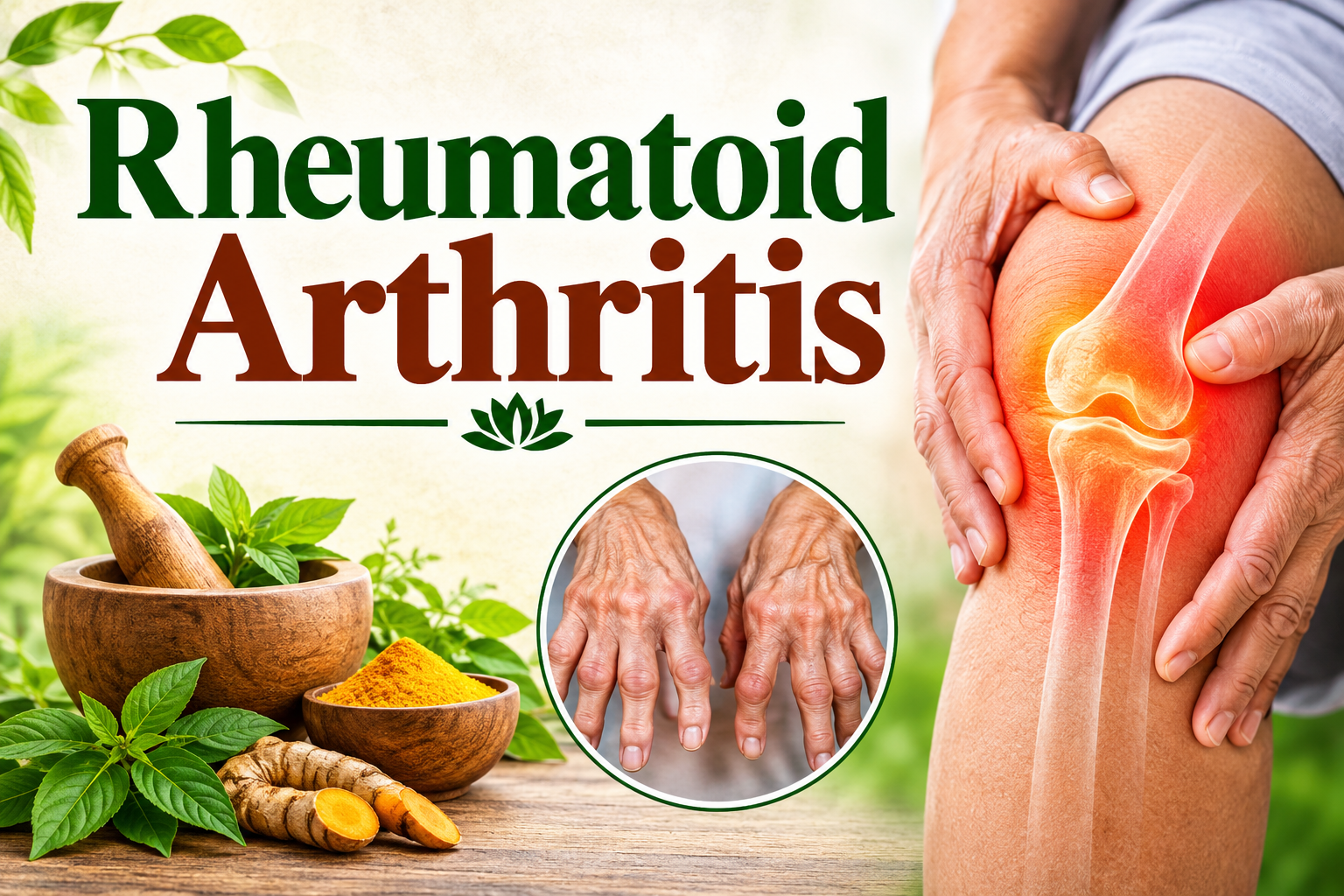
Rheumatoid arthritis (RA) is a condition in which the immune system mistakenly attacks the lining of the joints, leading to inflammation and gradual joint damage. The exact cause of RA is not completely understood, but genetics, smoking, environmental factors, hormonal influences and certain infections may play a role. RA commonly affects the small joints of the hands, wrists and feet, and often involves similar joints on both sides of the body. The main symptoms include joint pain, swelling, tenderness, warmth and stiffness, particularly after waking up or after a period of inactivity. Morning stiffness that lasts for more than 30 minutes is a common feature. Some people may also experience tiredness, weakness, mild fever, reduced appetite and difficulty performing daily activities such as gripping objects or walking. If inflammation continues for a long time, joint movement may become restricted and deformities also can develop. Diagnosis does not depend on a single test. Doctors consider the symptoms and physical examination along with blood tests such as Rheumatoid Factor (RF), Anti-CCP antibodies, ESR and CRP. X-rays, ultrasound or MRI may also help detect inflammation and joint damage.
Management of rheumatoid arthritis (RA) aims to control inflammation, relieve pain, protect the joints, and maintain mobility of joints. Modern treatment commonly begins with disease-modifying antirheumatic drugs (DMARDs), especially methotrexate, while other options include leflunomide, sulfasalazine, and hydroxychloroquine. Depending on disease activity and treatment response, treatment may include biologic medicines such as TNF inhibitors or IL-6 inhibitors, or targeted medicines such as JAK inhibitors, including tofacitinib, baricitinib, and upadacitinib. Short-term corticosteroids or pain-relieving medicines may be used when needed, but long-term steroid use is generally avoided because of side effects. Physiotherapy, regular gentle exercise, healthy weight, balanced nutrition, adequate rest, and avoiding smoking can support joint function and overall health. Regular monitoring helps doctors adjust treatment according to disease activity and response.
What Is Upadacitinib? — The JAK1 Brake
Imagine the inflammatory system in rheumatoid arthritis as a car moving with the accelerator constantly pressed. Even when inflammation is no longer helpful, immune signals continue to circulate and keep the inflammatory process active. Upadacitinib (Upadoz) works like a brake on one important part of this signalling network.Upadacitinib is an oral targeted synthetic disease-modifying antirheumatic drug (tsDMARD) belonging to the JAK (Janus Kinase) inhibitor group. It primarily blocks JAK1, an enzyme that helps carry inflammatory messages from cytokine receptors into immune cells. The basic action is:
- Cytokine signal → JAK1 (Janus Kinase 1) → STAT (Signal Transducer and Activator of Transcription) activation → Inflammatory response
- Upadacitinib → JAK1 inhibition → Reduced signalling → Reduced inflammation
It modifies the inflammatory process rather than simply relieving pain, it is used to control RA disease activity. However , upadacitinib is a disease-modifying therapy, meaning its purpose is to control the underlying inflammatory activity of RA rather than merely provide temporary pain relief. Because it affects immune signalling, it requires appropriate medical supervision and monitoring.
Understanding the JAK1 Switch in Rheumatoid Arthritis
Think of JAK1 as an internal switchboard that helps inflammatory messages to travel inside immune cells. In rheumatoid arthritis (RA), the immune system becomes overactive and releases several cytokines (inflammatory signalling molecules). When these cytokines attach to their receptors, they activate the JAK-STAT( Janus Kinase–Signal Transducer and Activator of Transcription ) pathway, passing signals into the cell and encouraging the production of inflammatory responses. This can contribute to persistent inflammation of the joint lining and progressive joint damage.This is where Upadacitinib (Upadoz) works. It primarily inhibits JAK1, acting like a brake on this intracellular signalling system.By interrupting several inflammatory signals at the cellular level, Upadacitinib can help control disease activity in appropriately selected patients with RA.
Understanding RA Through the Ayurvedic Concept of Amavata
According to Ayurveda , Agni Dushti (impaired digestive and metabolic function) plays an important role in the initial stage. When Agni becomes weak or irregular, the proper transformation of food and metabolic substances is disturbed, leading to the formation of Ama. In Ayurveda, Ama is described as a poorly processed, heavy and obstructive material that can circulate through the body. When a person has Manda Agni (low digestive/metabolic activity) and continues to consume inappropriate food or follows an unsuitable lifestyle, Ama may increase. At the same time, Vata can become aggravated. The interaction between Ama and Vata is considered central to the pathogenesis of Amavata.
Pathogenesis
Mithya Ahara-Vihara (inappropriate diet and lifestyle)
↓
Agni Dushti (impaired Agni)
↓
Ama formation
↓
Vata Prakopa (Vata aggravation)
↓
Ama + Vata interaction
↓
Srotorodha (obstruction or disturbance of body channels)
↓
Ama circulates and localizes in susceptible sites
↓
Sandhi Ashraya (localization in joints)
↓
Sandhi Shotha + Shoola + Stambha
(joint inflammation + pain + stiffness)
HERBAL REMEDIES FOR RA IN PLANET AYURVEDA
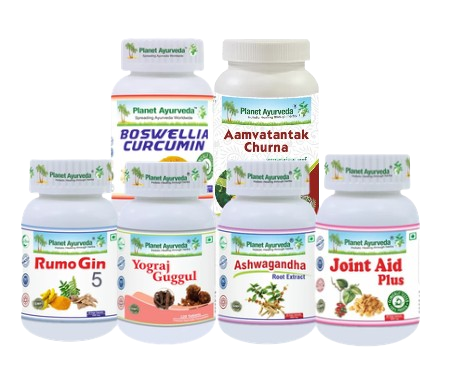
Planet Ayurveda is an Ayurveda-focused healthcare organization offering classical Ayurvedic formulations, wellness products, and personalized consultations. Based in India, it combines traditional Ayurvedic principles with modern quality standards. Its range includes herbal formulations, oils, supplements, and Panchakarma-related wellness services, supporting holistic health through Ayurveda, lifestyle guidance, and individualized care. Planet Ayurveda’s RA Care Pack combines carefully selected Ayurvedic herbs traditionally used to support joint comfort, mobility, and a balanced inflammatory response. It is designed as a holistic approach to rheumatoid arthritis care, focusing on overall joint health and helping maintain everyday movement.
Herbal Remedies for Rheumatoid Arthritis

1. Boswellia Curcumin
Boswellia Curcumin Capsules contain Shallaki (Boswellia serrata) and Haridra (Curcuma longa) as the principal ingredients. Shallaki is a source of boswellic acids, particularly acetyl-11-keto-beta-boswellic acid (AKBA), while Haridra contains curcuminoids, mainly curcumin. These constituents are studied for their role in regulating inflammatory pathways and supporting joint comfort. From an Ayurvedic perspective, Shallaki and Haridra are used in conditions involving inflammation, pain and impaired joint function, with Haridra also supporting Ama management. The formulation may therefore provide support for joint stiffness, discomfort and inflammatory balance in RA.
Dosage: 2 capsules twice daily with warm water after meals.
2. Aamvatantak Churna
Aamvatantak Churna is a multi-herbal powder containing Ashwagandha (Withania somnifera), Suranjan (Colchicum autumnale), Methi (Trigonella foenum-graecum), Haridra (Curcuma longa), Gorakhmundi (Sphaeranthus indicus) and Sonth (Zingiber officinale). Important constituents include withanolides from Ashwagandha, colchicine from Suranjan, curcuminoids from Haridra, gingerols and shogaols from Sonth, and fenugreek saponins and polyphenols. Its overall rationale is directed toward Deepana-Pachana (supporting digestion), Ama management and musculoskeletal comfort.
Dosage: 1 teaspoon twice daily with warm water before meals.
3. Ashwagandha Capsules
Ashwagandha Capsules contain Ashwagandha (Withania somnifera) as the principal ingredient. Its major bioactive constituents include withanolides, withaferin A, alkaloids and sitoindosides. Ashwagandha is traditionally classified as Balya (strength-promoting) and Rasayana (rejuvenative) and is particularly relevant when Vata predominance, weakness and reduced musculoskeletal resilience are considered.
Dosage: 2 capsules twice daily with warm water after meals.
4. Joint Aid Plus
Joint Aid Plus Capsules contain a combination of herbs including Nirgundi (Vitex negundo), Shallaki (Boswellia serrata), Guggulu (Commiphora mukul), Ginger (Zingiber officinale) and Ashwagandha (Withania somnifera). Their important constituents include flavonoids and iridoids from Nirgundi, boswellic acids from Shallaki, guggulsterones from Guggulu, gingerols and shogaols from Ginger, and withanolides from Ashwagandha. Collectively, these constituents are traditionally used to support joint comfort, mobility, Vata balance and inflammatory regulation.
Dosage: 2 capsules twice daily with warm water after meals.
5. RumoGin 5 Capsules
RumoGin 5 Capsules contain Haridra/Curcumin (Curcuma longa), Sonth (Zingiber officinale), Shallaki (Boswellia serrata), Maricha (Piper nigrum) and Pippali (Piper longum). Key constituents include curcuminoids from Haridra, gingerols and shogaols from Sonth, boswellic acids from Shallaki, piperine from Maricha and piperlongumine along with other alkaloids from Pippali. The combination is designed around complementary actions: curcuminoids and boswellic acids are investigated for inflammatory-pathway modulation, while the pungent herbs traditionally support Deepana and Pachana and may help address Ama-related factors. Piperine may also influence the absorption and bioavailability of certain compounds.
Dosage: 1 capsule twice daily with warm water after meals.
6. Yograj Guggul
Yograj Guggul Tablets are a classical multi-ingredient Ayurvedic formulation containing Guggulu (Commiphora mukul) along with herbs such as Pippali (Piper longum), Chitrak (Plumbago zeylanica), Musta (Cyperus rotundus) etc. Guggulu provides guggulsterones and related resin constituents, while Pippali contains piperine and Chitrak contains plumbagin. Traditionally, Yograj Guggul is used in Vata-related musculoskeletal disorders, particularly where stiffness, discomfort and impaired movement are prominent. Its Deepana-Pachana and Vata-supportive properties provide an Ayurvedic rationale for its use in Amavata-type presentations.
Dosage: 2 tablets twice daily with warm water after meals.
Diet and lifestyle in RA
In Amavata, Ayurvedic dietary and lifestyle measures are traditionally aimed at supporting Agni (digestive and metabolic function), reducing Ama, maintaining Vata balance, and preventing further aggravation of joint discomfort and stiffness. Food choices should be light, warm and freshly prepared and appropriate to the individual’s digestive capacity.
Dietary Guidelines
- Prefer warm, freshly cooked meals: Light and easily digestible foods such as moong dal, vegetable soups, khichadi, cooked vegetables and warm cereals can be preferred.
- Use digestive spices appropriately: Sonth (dry ginger), Jeera (cumin), Ajwain (carom), Methi (fenugreek) and Haridra (turmeric) may be incorporated into meals according to individual tolerance.
- Choose adequate protein: Moong dal, other suitable pulses and individualized protein sources can help maintain muscle strength and nutritional status.
- Maintain adequate hydration: Prefer warm or room-temperature water and avoid excessive intake of very cold beverages.
- Limit heavy and difficult-to-digest foods: Excessively oily, deep-fried, highly processed and very heavy meals may be minimized when digestion is poor.
- Reduce excessive sugar and refined foods: Frequent intake of sweets, sugary beverages and highly refined carbohydrates should be avoided .
- Avoid overeating: Eating beyond one’s digestive capacity is traditionally considered unfavorable for Agni(digestive fire) and Ama management. Maintain regular meal timing: Long irregular gaps followed by heavy meals may disturb digestive function in susceptible individuals
Lifestyle Measures
- Regular physical activity: Gentle movement helps to maintain joint mobility and muscle strength. Walking, stretching, range-of-motion exercises and appropriately supervised yoga can be incorporated according to pain and disease activity.
- Avoid prolonged inactivity: Excessive rest may contribute to stiffness and reduced physical conditioning. During active inflammatory episodes, however, strenuous exercise should be avoided and activity should be adjusted according to clinical status.
- Adequate sleep: Maintaining a consistent sleep schedule supports general recovery and helps maintain physical and mental wellbeing.
- Stress management: Breathing exercises, meditation and relaxation practices may be useful as supportive measures for coping with chronic disease and maintaining a balanced routine.
- Protect the joints: Avoid repetitive overloading, prolonged uncomfortable postures and activities that consistently increase joint pain or swelling.
- Warmth and comfort: In Ayurvedic practice, appropriate warming measures may be considered for Vata-related stiffness, but excessive heat should be avoided when there is marked acute inflammation or swelling.
CONCLUSION
At last we can say that Rheumatoid arthritis is a long-term inflammatory condition that needs timely diagnosis, proper treatment, and regular monitoring. Modern medicines such as upadacitinib work through specific pathways to control inflammation, while Ayurveda approaches RA through concepts such as Amavata, Ama, Agni, and Vata imbalance. Ayurvedic formulations such as RA Care Pack may be discussed as a supportive approach for joint comfort and overall well-being.


Dr. Vikram Chauhan
Latest posts by Dr. Vikram Chauhan (see all)
- Rheumatoid Arthritis: Ayurvedic Treatment, Herbs & RA Care - November 10, 2026
- Ketogenic Diet: Benefits, Foods, Weight Loss & Health Risks - November 6, 2026
- Herbal Remedies For Upadacitinib for IBD – Symptoms, Causes & Treatment in Ayurveda - November 5, 2026
- Autoimmune Disorders: Causes, Symptoms & Ayurvedic Management - November 4, 2026
- Chronic Kidney Disease (CKD): Causes, Symptoms & Ayurvedic Treatment - November 4, 2026