


Herbal Remedies for PCOD/PCOS: Symptoms, Causes, with Ayurvedic Treatment
Abstract
PCOD, is one of the most common reproductive and metabolic disorders seen in women of reproductive age. It can disturb the normal hormonal cycle and may present with irregular periods, delayed or absent ovulation, acne, excessive hair growth, weight gain, and difficulty in conception. Metabolic disturbances such as insulin resistance may further contribute to the progression of the condition Although PCOS is not described as a separate disease entity in classical Ayurvedic texts, its clinical features can be interpreted through various Ayurvedic concepts. Kapha Dosha, Meda Dushti, Agnimandya, Ama, Apana Vayu Dushti, Artava Dushti, and Srotorodha may be considered important factors in understanding its pathogenesis. Ayurvedic management Works on Nidana Parivarjana (avoiding causative factors), Agni Deepana (supporting digestive and metabolic function), Ama Pachana, and appropriate management of Kapha and Meda. Attention is also given to Apana Vayu and Artava, along with diet, exercise, sleep, and stress management.

Introduction
PCOS (Polycystic Ovary Syndrome) is one of the most common hormonal disorders in women of reproductive age. It is a complex condition that can affect:
- Menstrual cycle
- Ovulation and fertility
- Skin and hair
- Body weight
Common features include irregular periods, infertility, acne, excess hair growth, hair thinning, and weight gain. PCOS is commonly associated with:
- Hormonal imbalance
- Increased androgen levels
- Insulin resistance
- Low-grade inflammation
- Disturbed ovarian function
The exact cause is not fully known, but genetic, lifestyle, dietary, metabolic, and environmental factors may contribute. Recent research suggests a possible connection between PCOS and gut health. An imbalance in gut microorganisms, called gut dysbiosis, may influence hormonal, metabolic, and inflammatory changes.
Causes
PCOD/PCOS does not arise from a single cause. It usually develops due to a combination of hormonal, metabolic, genetic, and lifestyle-related factors.
- Insulin resistance: Reduced insulin sensitivity can increase insulin levels and stimulate excess androgen production.
- Hormonal imbalance: Increased androgens and altered reproductive hormones can disturb normal ovulation.
- Genetic tendency: Women with a family history of PCOS may have a greater susceptibility.
- Overweight and obesity: Excess body fat can worsen insulin resistance and hormonal disturbances.
- Ovarian dysfunction: Abnormal androgen production can interfere with normal follicle development and egg release.
- Lifestyle factors: Physical inactivity, unhealthy eating patterns, poor sleep, and chronic stress may aggravate metabolic and hormonal problems.
- Adrenal androgen excess: In some women, increased androgen production from the adrenal glands may contribute to PCOS features.
- Environmental and developmental factors: Prenatal hormone exposure and certain environmental influence.
Clinical Feature
- Irregular menstruation: Periods may be infrequent, unpredictable, or absent because of disturbed ovulation.
- Ovulation problems: Irregular or absent ovulation can make conception difficult.
- Excess androgen symptoms: Increased facial or body hair, acne, oily skin, and sometimes scalp hair thinning may occur.
- Weight gain: Many women develop overweight or obesity, particularly increased abdominal fat.
- Insulin resistance: May be associated with increased body weight, darkened skin folds (acanthosis nigricans), and a higher risk of metabolic abnormalities.
- Fertility problems: Difficulty becoming pregnant may result from irregular ovulation.
- Polycystic ovarian appearance: Ultrasound may show increased follicle number and/or ovarian enlargement, although this finding alone does not establish PCOS.
- Metabolic complications: Some women have dyslipidaemia, impaired glucose tolerance, or increased risk of type 2 diabetes.
- Psychological symptoms: Anxiety, depression, reduced self-esteem, and body-image concerns can occur more frequently.
Pathophysiology
Genetic + Environmental + Lifestyle Factors
⬇️
Insulin Resistance
⬇️
Insulin levels (Hyperinsulinemia)
⬇️
Ovarian androgen production
⬇️
Androgens (Testosterone, etc.)
⬇️
Follicular development becomes disturbed
⬇️
Follicles do not mature normally
⬇️
Ovulation becomes irregular or absent
⬇️
Irregular Menstrual Cycle + Infertility
Another Important Pathway
Abnormal hypothalamic–pituitary–ovarian
⬇️
Increased LH stimulation in some women
⬇️
Ovarian theca cells produce more androgens
⬇️
Hyperandrogenism
⬇️
Hirsutism + Acne + Hair thinning
⬇️
Impaired follicle maturation
⬇️
Anovulation
Diagnosis
In adults, the commonly used Rotterdam-based approach considers PCOS when at least 2 of 3 features are present, after excluding other conditions:
- Ovulatory dysfunction – irregular or absent menstrual cycles.
- Hyperandrogenism – clinical signs such as hirsutism or biochemical evidence of increased androgens.
- Polycystic ovarian morphology – characteristic ovarian findings on ultrasound; AMH may be used as an alternative to ultrasound in adults under current international guidance.
Other causes must be excluded, like thyroid disorders, hyperprolactinemia, non-classic congenital adrenal hyperplasia, and other androgen-excess disorders. Blood investigations may include:
- Total/free testosterone or other androgen assessment
- PROLACTINE
- TSH
- 17-hydroxyprogesterone when indicated
- Glucose/HbA1c and lipid profile to assess metabolic risk
Pelvic ultrasound may be used to assess ovarian morphology when appropriate.In adolescents, diagnosis is more cautious because irregular cycles and multifollicular ovaries can be normal during puberty.
Modern Treatment of PCOS
PCOD/PCOS
↓
Lifestyle Management
Balanced diet + regular exercise + healthy weight management
↓
Menstrual Irregularity / Androgen Excess
Combined oral contraceptive pills
↓
Insulin Resistance / Metabolic Problems
Metformin when clinically appropriate
↓
Acne / Excess Hair Growth
Anti-androgen medicines + cosmetic hair-removal methods
↓
Desire for Pregnancy
Letrozole for ovulation induction
↓
If Ovulation Induction Fails
Gonadotropins / other fertility treatments
↓
Persistent Infertility
Assisted reproductive techniques such as IVF
↓
Long-Term Monitoring
Blood glucose + blood pressure + lipid profile + menstrual health
Ayurveda Aspects
Ayurveda does not describe PCOD/PCOS as a separate classical disease. Its features can be understood through concepts such as Mithya Ahara-Vihara, Agnimandya, Kapha Dosha, Meda Dhatu, Apana Vayu, Artava Dushti, and Srotodushti.
- Mithya Ahara (improper diet): Excessive intake of heavy, oily, sweet, processed, or incompatible foods may disturb Dosha balance and metabolism.
- Avyayama (lack of physical activity): Insufficient exercise may promote Kapha and Meda accumulation and reduce metabolic efficiency.
- Agnimandya (weakened digestive/metabolic function): Impaired Agni may lead to improper digestion and abnormal tissue metabolism.
- Kapha Prakopa (aggravation of Kapha): Excess Kapha may be associated with heaviness, sluggishness, increased Meda, and metabolic disturbance.
- Meda Dushti (disturbance of fat tissue metabolism): Abnormal Meda metabolism may contribute to excess weight and metabolic imbalance.
- Ama formation: Improper digestion may result in Ama, which Ayurveda considers capable of interfering with normal physiological functions.
- Vata Dushti: Disturbed Vata, particularly Apana Vayu, may affect the normal movement and timing of menstruation.
- Artava Dushti: Disturbance in the formation or proper functioning of Artava may manifest as irregular or scanty menstruation.
- Srotodushti: Disturbance in channels associated with Artavavaha Srotas and Medovaha Srotas may affect reproductive and metabolic functions.
- Chronic stress and disturbed routine: Irregular sleep, excessive mental stress, and an unhealthy daily routine may contribute to Dosha imbalance and disturbed physiological functions.
Poorvarupa (Early/Prodromal Features)
PCOD/PCOS is not described as a separate classical disease in Ayurveda, so it does not have a specific classical list of Poorvarupa. However, early features can be conceptually understood through the Ayurvedic principles of Dosha, Agni, Meda, Artava, and Apana Vayu.
Possible Poorvarupa
- Agni Mandya – reduced digestive and metabolic activity.
- Gaurava – feeling of heaviness in the body.
- Alasya – increased lethargy or lack of energy.
- Meda Vriddhi – gradual increase in body fat or weight.
- Kapha Vriddhi Lakshana – increased heaviness, sluggishness, and excessive sleepiness.
- Anartava tendency – increasing irregularity or delay in menstruation.
- Artava Kshaya tendency – reduced menstrual quantity or altered menstrual pattern.
- Kesha Patana – increased hair fall or scalp-hair thinning may be considered as an associated feature.
- Mukhadushika – acne or pimple formation, particularly when Pitta involvement is prominent.
- Romashatva – increased unwanted body or facial hair may appear with androgenic features.
- Manasika Aswasthata – mood changes, irritability, or emotional disturbance may accompany the condition.
Lakshana of PCOD from an Ayurvedic Perspective
PCOD/PCOS is not described as a separate disease entity in the classical Ayurvedic texts.
- Apana Vayu Dushti – disturbance in the normal functions associated with menstruation and reproduction.
- Meda Vriddhi – increased body fat and weight gain.
- Sthaulya – excessive body weight or obesity.
- Agnimandya – impaired digestion and metabolism.
- Gaurava – heaviness of the body.
- Alasya – lethargy and reduced activity.
- Mukhadushika – acne or pimple formation.
- Kesha Patana – increased hair fall or scalp-hair thinning.
- Atilomata / Romashatva – excessive or unwanted hair growth.
- Manasika Vikara – mood changes, irritability, anxiety, or emotional disturbance may be associated with the condition.
- Vandhyatva tendency – difficulty in conception may occur when ovulation is persistently disturbed.
- Artava Kshaya – reduced menstrual flow or scanty periods.
- Anartava – absence of menstruation for prolonged periods.
Samprapati (Pathophysiology)
Mithya Ahara-Vihara
(Improper diet and lifestyle)
↓
Agnimandya
(Impaired digestion and metabolism)
↓
Ama formation + Meda Dushti
(Improperly processed metabolic products and disturbed fat metabolism)
↓
Kapha Prakopa
(Increased heaviness, sluggishness and metabolic disturbance)
↓
Srotodushti / Srotorodha
(Impaired functioning of physiological channels)
↓
Apana Vayu Vaigunya
(Disturbance in the normal function of Apana Vayu)
↓
Artava Dushti
(Disturbance in normal menstrual/reproductive function)
↓
Artava Kshaya / Anartava
(Scanty or absent menstruation)
↓
Ovulatory and menstrual disturbances associated with PCOD
Ayurvedic Management of PCOD/PCOS
From an Ayurvedic perspective, PCOD/PCOS can be conceptually understood through the involvement of Dosha, Agni, Meda, Artava, Apana Vayu and Srotas. Since PCOS is not described as a separate classical disease, management is individualized according to the patient’s symptoms and underlying imbalance.
Nidana Parivarjana – Remove the Triggers
- Avoid excessive Madhura, Guru and Snigdha Ahara (very sweet, heavy and oily foods).
- Reduce sedentary habits and prolonged sitting.
- Follow a regular Dinacharya (daily routine).
- Maintain appropriate sleep and meal timings.
Agni Deepana – Support Healthy Metabolism
- Address Agnimandya (weak digestive/metabolic function).
- Encourage appropriate dietary habits to maintain proper digestion.
- Deepana-Pachana measures may be considered when clinically indicated.
Kapha–Meda Management
Kapha imbalance + Meda Dushti may be considered particularly when excess weight and metabolic problems are present.
- Regular physical activity
- Appropriate calorie-controlled diet
- Weight management
- Individualized Langhana measures when suitable
Artava Support
The menstrual cycle can be assessed from the perspective of Artava Dushti.
- Evaluate the menstrual pattern.
- Address the underlying Dosha imbalance.
- Use individualized Ayurvedic measures aimed at supporting normal menstrual function.
Apana Vayu Management
Apana Vayu has an important role in menstruation and reproductive functions.
- Maintain regular daily habits.
- Avoid excessive suppression of natural urges.
- Incorporate suitable exercise and stress-management practices.
- Use Vata-supportive measures when clinically appropriate.
Yoga & Lifestyle Modification
Yoga and physical activity can complement dietary and Ayurvedic management.
Yoga + Exercise + Balanced Diet + Healthy Sleep
⬇️
Better metabolic health and overall wellbeing
Shodhana – Detoxification Approach
In selected individuals, an Ayurvedic physician may consider appropriate Panchakarma procedures after proper assessment.
- Vamana
- Virechana
- Basti
These procedures should not be self-administered and are not required for every PCOS patient.
Rasayana – Long-Term Support
After addressing the major imbalance, suitable Rasayana measures may be considered to support strength, nourishment and general wellbeing.
Herbal remedies for PCOD by Planet Ayurveda!
Planet Ayurveda is an Ayurvedic healthcare brand focused on providing products based on the principles of traditional Ayurveda. The brand offers a range of herbal and classical Ayurvedic formulations prepared using carefully selected herbs and ingredients. Its product range includes formulations designed to support different aspects of digestive health, metabolic wellness, women’s health, liver care, joint health, immunity, and overall well-being. Planet Ayurveda combines traditional Ayurvedic knowledge with attention to quality, formulation, and modern convenience, making Ayurvedic products accessible for everyday wellness needs.In this section, some selected Planet Ayurveda products are described :-
ANTI-OVARIAN CYST PACK
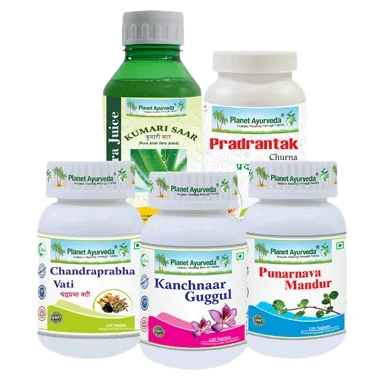

1. CHANDRAPRABHA VATI
Chandraprabha Vati is a traditional Ayurvedic formulation prepared from a combination of several herbal and other classical ingredients. Some of its commonly listed ingredients include Guggulu (Commiphora Mukul) Shilajit(Asphaltum), Vacha,(Acorus calamus) ,Mustak(Cyperus rotundus), Haridra (Curcuma longa), Amalaki(Emblica officinalis. From an Ayurvedic perspective, Chandraprabha Vati is traditionally used in conditions involving Kapha and Vata imbalance and is also used to support urinary, metabolic, and reproductive health.
Dosage- 1 tab twice daily with plain water after meals.
2. PRADRANTAK CHURNA
This churna is prepared using herbs such as Lodhra (Symplocos racemosa), Ashoka (Saraca indica), Udumbara (Ficus glomerata) and Arjuna (Terminalia arjuna) and is traditionally valued for supporting the normal functioning of the female reproductive system. Pradrantak Churna may be considered in Ayurvedic management where concerns such as menstrual discomfort, premenstrual symptoms, ovarian cyst-related complaints, or uterine fibroid-related symptoms are present. Ashoka is traditionally regarded as an important herb for supporting healthy menstrual and uterine function. The combination is intended to provide supportive care for maintaining female reproductive wellness and balanced menstrual health.
Dosage- 1 tsp twice daily with plain water after meals.
3. KANCHNAR GUGGUL
Kanchanar Guggul is a traditional Ayurvedic formulation made from herbs such as Kanchanar (Bauhinia variegata), Amalaki (Emblica officinalis), Haritaki (Terminalia chebula), Bibhitaki (Terminalia bellirica), Shunthi or dry ginger (Zingiber officinale), Maricha or black pepper (Piper nigrum), Pippali (Piper longum), and Varuna (Crataeva religiosa). From an Ayurvedic perspective, it is traditionally used for conditions associated with Kapha imbalance, Meda accumulation, and Srotas blockage. It is commonly considered for supporting healthy metabolism and the normal functioning of tissues. In women, it may be used as part of individualized Ayurvedic care for certain cyst- or fibroid-related complaints.
Dosage- 2 tabs twice daily with plain water after meals.
4. PUNARNAVA MANDUR
Punarnava Mandur is a classical Ayurvedic formulation traditionally used in conditions such as Pandu (anemia), Pliha-related disorders, and Arsha (piles). It contains ingredients such as Punarnava (Boerhavia diffusa), Triphala, and Trikatu, along with other classical ingredients. These components are traditionally used to support digestion, metabolism, and healthy blood formation. In women with heavy menstrual bleeding, proper medical evaluation is important. Punarnava Mandur may be considered by an Ayurvedic physician when there is a need to support hemoglobin and overall strength. It should not be presented as a treatment that directly reduces ovarian cyst size or stops excessive bleeding without medical assessment.
5. KUMARI SAAR
Kumari Saar is a traditional Ayurvedic preparation in liquid form made from Ghrit Kumari (Aloe vera). Aloe vera is traditionally associated with Vata and Pitta balance and is commonly used in Ayurveda to support digestion and women’s reproductive health. Kumari Saar may be considered as supportive Ayurvedic care for certain menstrual and gynecological concerns. Its use should be based on the individual’s condition, symptoms, and Ayurvedic assessment. For PCOD/PCOS, it is better to describe Kumari Saar as supportive care rather than a guaranteed treatment for ovarian cysts or hormonal imbalance.
Dosage- 1 tab twice daily with plain water after meals.
Conclusion
At last we can say that PCOD/PCOS is a common condition that can affect hormones, periods, ovulation, weight, and metabolism. Its causes and symptoms can be different in each woman, so treatment should be planned according to individual needs. From the Ayurvedic point of view, PCOD can be understood through concepts such as Dosha imbalance, Agni, Meda Dhatu, Artava, Apana Vayu, and Srotas. A healthy diet, regular exercise, proper sleep, stress control, and suitable Ayurvedic management may help support overall health. A combined understanding of modern medicine and Ayurvedic principles can provide a broader approach to PCOD management and improve the focus on long-term reproductive and metabolic health.


Dr. Vikram Chauhan
Latest posts by Dr. Vikram Chauhan (see all)
- Dog Ear Hematoma: Symptoms, Treatment & Ayurveda - October 26, 2026
- Herbal Remedies for PCOD/PCOS: Symptoms, Causes, with Ayurvedic Treatment - October 26, 2026
- Depleted Mother Syndrome: Symptoms & Ayurvedic Care - October 24, 2026
- Ketogenic Diet Guide: Benefits, Foods and Risks - October 24, 2026
- Immune Thrombocytopenia (ITP): Symptoms, Causes & Treatment - October 23, 2026