


PCOS in Bollywood Actresses: Ayurveda, Remedies & Diet
Abstract
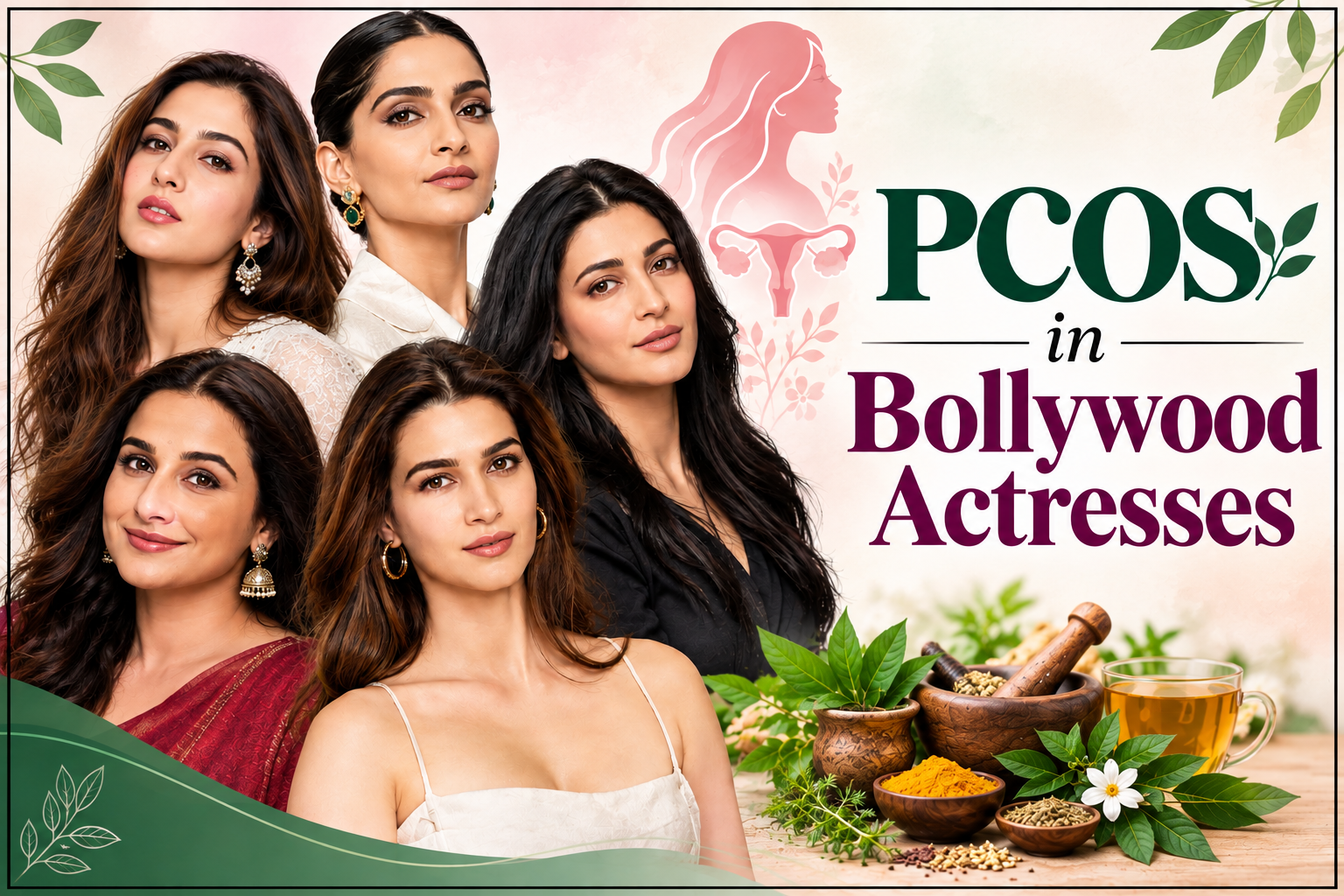
Polycystic Ovary Syndrome (PCOS) is a common hormonal and metabolic disorder affecting women during the reproductive years. It can cause irregular periods, excess androgen activity, acne, unwanted hair growth, difficulty with ovulation, and challenges with weight management. Several Bollywood actresses, including Sara Ali Khan, Sonam Kapoor, Shruti Haasan, Vidya Balan, and Kriti Sanon, have spoken publicly about experiencing PCOS or related hormonal and metabolic concerns, helping bring greater awareness to the condition. PCOS can affect women across different lifestyles and professions, making awareness, timely evaluation, and consistent lifestyle management important. Factors such as stress, disturbed sleep, dietary habits, and physical inactivity can influence metabolic and hormonal health. From an Ayurveda perspective, PCOS can be understood through disturbances involving Kapha, Vata, Meda Dhatu, Agni, and Artava. Let’s discuss!
Statistics for PCOS
- PCOS affects approximately 10–13% of women of reproductive age worldwide.
- Nearly 70% of women with PCOS may remain unaware of their condition because symptoms can vary and are sometimes overlooked.
- PCOS is the most common cause of anovulation, where ovulation does not occur regularly,making it a major contributor to female infertility.
- A pooled analysis of Indian studies estimated PCOS prevalence at around 11.33%, while some studies in younger and urban populations have reported substantially higher rates.
- Approximately 80% of women experiencing anovulatory infertility have PCOS, making it amajor contributor to infertility.
Interesting Facts about PCOS
- PCOS is not just about ovarian cysts: Despite its name, the condition does not require cysts to be present on the ovaries for diagnosis.
- The name can be misleading: The “polycystic” appearance refers to multiple small follicles that can be visible on ultrasound; these are not the same as ovarian cysts.
- PCOS has a wide spectrum: Two women can both meet the criteria for PCOS while having very different health profiles and experiences.
- It can change over time: The way PCOS presents can evolve with age, lifestyle, pregnancy, and hormonal changes.
- PCOS is not a modern-day disorder: Descriptions resembling PCOS appeared in medicalliterature long before the condition received its present name.
- There is no single “PCOS look”: PCOS cannot be identified simply by appearance. A woman can have the condition without fitting common stereotypes associated with it.
Introduction
Polycystic Ovary Syndrome (PCOS) is one of the most widely discussed hormonal conditions affecting women during their reproductive years. Yet behind the statistics are women from every profession, age group, and lifestyle. The world of Bollywood is no exception. Several well-known actresses have spoken publicly about their experiences with PCOS, bringing greater visibility to a condition that is often surrounded by misconceptions. PCOS can become a challenging part of everyday life, particularly in an industry where appearance, fitness, demanding schedules, travel, and constant public attention are closely connected with professional life. The experiences shared by Bollywood actresses have also made PCOS more visible among younger women and the wider public. Their openness can encourage women to pay attention to changes in their health, seek appropriate professional evaluation, and adopt sustainable lifestyle habits.
What Celebrity PCOS Stories Teach Us?
PCOS can influence several aspects of a woman’s health and everyday life, and its impact can differ significantly from one person to another. Public discussions by Bollywood actresses have helped bring greater attention to this often misunderstood condition. Their openness highlights that PCOS can affect women across different body types, careers, and lifestyles. Celebrity experiences should not be treated as a representation of every woman with PCOS, but their stories can encourage greater awareness and motivate women to seek appropriate evaluation instead of ignoring persistent health concerns. Let’s take a look at the stories of the actresses dealing with this condition.
Sara Ali Khan and Her Experience With PCOS
- Sara Ali Khan has spoken publicly about living with PCOD/PCOS, helping bring attention to a condition that many women hesitate to discuss.
- During her college years, she has described dealing with PCOS alongside significant weight-related challenges. She has also spoken about how the condition affected her emotionally and mentally.
- Sara has emphasized that PCOS is not simply about weight gain, bloating, or acne. For her,the hormonal changes associated with the condition also had an effect on her mood and overall well-being.
- Sara has discussed how these changes added an emotional dimension to her experience.
- Her journey involved major changes in food habits and regular physical activity. She has described her transformation as a health-related decision rather than something driven solely by her acting career.
Sonam Kapoor: Opening Up About PCOS
- Sonam Kapoor has openly shared that she has dealt with PCOS since her teenage years, describing it as a challenging part of her life.
- She has spoken about experiencing hormonal changes, weight gain, acne, and facial hair during her teenage years. These changes also affected her confidence and self-image.
- Sonam has discussed how comments about her appearance and body made her teenage years particularly difficult, showing that PCOS can have an emotional and psychological dimension beyond physical changes.
- After trying different diets, exercise routines, and professional guidance, she said she eventually identified lifestyle practices that suited her individual needs.
- Sonam has highlighted exercise and yoga as important parts of her personal approach to managing PCOS. She has also discussed cardio as helpful for maintaining her weight.
- One of the strongest points from her experience is that PCOS does not affect every woman in the same way. She has encouraged women to understand their individual needs rather than blindly following someone elses routine.
Shruti Haasan and Her Journey With PCOS
- Shruti Haasan has spoken publicly about living with PCOS and endometriosis, helping make conversations around women’s hormonal health more visible.
- She has described experiencing significant hormonal difficulties and explained that the condition affected her both physically and emotionally.
- In a social media post, Shruti specifically discussed bloating and metabolic challenges associated with her experience, showing that PCOS can extend beyond menstrual concerns.
- Shruti has shared workout sessions publicly and highlighted regular exercise, nutritious eating, and adequate sleep as parts of the lifestyle she follows to support her well-being.
- Shruti has also addressed public comments about fluctuations in her appearance, emphasizing that womens bodies can change and should not be judged solely by how they look.
- Her journey also reinforces that PCOS is a health condition, not a measure of beauty, fitness, or self-worth.
Vidya Balan: Addressing PCOS and Body Image
- Vidya Balan has spoken openly about experiencing PCOD and hormonal issues, connecting her experience with the long-standing challenges she faced around body image.
- Her relationship with her body was shaped by years of public comments about her weight.She has described how repeated criticism made her question her appearance and affected her confidence.
- Vidya has discussed experiencing periods of weight gain and loss and how hormonal concerns made managing her weight particularly frustrating at times.
- She has spoken about being judged for her body and clothing, especially during the early part of her career.
- Over time, Vidya shifted away from constantly trying to change her body through restrictive eating or excessive exercise. She has emphasized a more compassionate relationship with herself.
- Vidyas experience highlights how PCOD and body-image concerns can overlap with emotional well-being. Her openness encourages women to avoid defining their worth through appearance and to approach their health with greater self-compassion.
Kriti Sanon and Her Perspective on PCOS
- Kriti Sanon has been included among Bollywood personalities who have publicly discussed their experience with PCOS, helping bring greater visibility to women’s hormonal health.
- Her public discussions around health have emphasized the importance of regular exercise, mindful eating, and maintaining a consistent routine rather than relying on quick fixes.
- Kriti’s experiences also highlight how hormonal health can intersect with changes in weight, bloating, mood, and overall physical well-being.
- Her decision to freeze her eggs while preparing for Mimi also opened a wider conversation about fertility preservation and reproductive planning. She explained that she chose the procedure during a period when she was already gaining weight for the film.
- Kriti described egg freezing as a personal decision that gave her greater peace of mind and reduced the pressure she associated with the idea of a biological timeline.
- Her openness contributes to a larger conversation about taking womens health seriously,making informed reproductive choices, and understanding that hormonal health is about much more than appearance or body weight.
How PCOS Can Influence Daily Life and Well-Being
PCOS can extend beyond hormonal and reproductive health, influencing several aspects of everyday living. Its effect varies from woman to woman, with some experiencing greater challenges with body image, emotional health, daily routines, or reproductive planning. Understanding these broader effects helps create a more compassionate and realistic view of life with PCOS.
- Body Image: Changes in weight, skin, hair, or body shape can affect self-confidence, especially when social beauty standards create additional pressure.
- Emotional Well-Being: Living with an ongoing health condition can sometimes bring frustration, worry, or emotional stress, particularly when changes are difficult to predict.
- Daily Planning: Irregular menstrual patterns can make planning travel, work commitments, social activities, or important occasions less predictable.
- Food Choices: Paying attention to meal quality, portion sizes, refined carbohydrate intake, and overall dietary patterns can become part of a health-conscious routine.
- Reproductive Planning: PCOS can interfere with regular ovulation in some women, potentially making conception more difficult. However, having PCOS does not automatically mean infertility.
- Sleep and Routine: Maintaining consistent sleep and daily schedules can support physical and emotional well-being.
- Mental Health: Emotional concerns such as anxiety or low mood can accompany PCOS, making psychological well-being an important component of overall care.
- Social Confidence: Concerns related to appearance, fertility, or health can sometimes influence social interactions and personal confidence.
Ayurveda Insights
From an Ayurveda perspective, PCOS can be viewed through disturbances involving Kapha and Vata Dosha, Meda Dhatu, Agni, and Artava Dhatu. Excessive Kapha and Meda can be associated with heaviness and impaired metabolic activity, while disturbed Vata can influence the regularity of the menstrual cycle and reproductive functions. Ayurveda gives importance to assessing Prakriti, Agni, Ahara, lifestyle, stress, sleep, and menstrual patterns before planning an individualized approach. Dietary discipline, regular physical activity, adequate sleep, stress reduction, and suitable Ayurvedic therapies can form part of a holistic wellness plan. Herbs and formulations are selected according to the individuals Dosha status and overall health rather than following a single formula for every woman.
Pathophysiology of PCOS
Its features can be interpreted through the principles of Artava Dushti, Agnimandya, Ama formation, Meda Dushti, and disturbance of Apana Vata.
- Agnimandya – Impaired Digestive and Metabolic Function: Irregular diet, sedentary habits, excessive intake of heavy and sweet foods, and disturbed daily routines can contribute to Agnimandya. Impaired Agni can affect proper digestion and metabolism, creating a tendency toward accumulation of unwanted metabolic products.
- Ama Formation – When Agni becomes weak, incompletely processed food material can be described in Ayurveda as Ama. Ama is considered heavy and obstructive and can interfere with the normal functioning of bodily channels when it accumulates.
- Kapha and Meda Dushti – Excessive Kapha Dosha along with disturbance of Meda Dhatu(adipose tissue and lipid metabolism) can contribute to heaviness, increased adiposity,sluggish metabolism, and a tendency toward Srotorodha (channel obstruction).
- Srotorodha – Obstruction of Channels: Accumulation of Kapha, Meda, and Ama is described as contributing to obstruction in the normal movement of Doshas and Dhatus.
- Artava Dushti – Ayurveda describes Artava in relation to female reproductive and menstrual functions. In PCOS, this Ayurvedic concept can be used to understand menstrual irregularity and ovulatory disturbances.
- Medovaha and Artavavaha Srotas Involvement – Medovaha Srotas is associated with the formation and distribution of Meda, while Artavavaha Srotas is associated with female reproductive functions. Disturbance in these systems can be considered part of the Ayurvedic disease process.
- Vata-Kapha Interaction – Kapha may contribute to heaviness, Meda accumulation, and sluggishness, whereas disturbed Vata can affect the regular movement and timing of menstruation. Thus, Kapha-Meda involvement with Apana Vata dysfunction provides a useful Ayurvedic framework for understanding different manifestations of PCOS.
Herbal Remedies for PCOS by Planet Ayurveda
Planet Ayurveda is a well-established Ayurvedic healthcare organization that works to promote the ancient knowledge of Ayurveda through natural remedies and holistic health solutions. The company develops a wide range of herbal formulations using pure, high-quality ingredients and standardized herbal extracts, with a focus on maintaining safety, authenticity, and effectiveness. Following the principles of classical Ayurveda, Planet Ayurveda aims to support overall health by addressing the underlying causes of health concerns and encouraging balance in the body, mind, and emotions. With an emphasis on quality, natural ingredients, and traditional approaches supported by modern research,the organization works toward making Ayurvedic wellness solutions available globally. We willexplore various herbal approaches used for the management of PCOS according to Ayurvedic principles. The herbal formulations are:
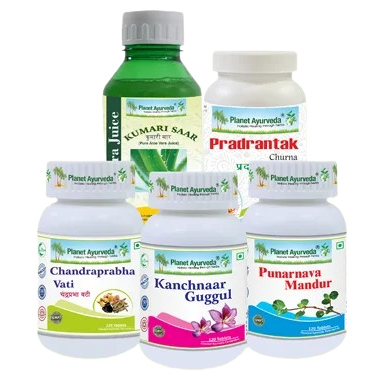
- Pradrantak Churna
- Chandraprabha Vati
- Kanchnaar Guggul
- Punarnava Mandur
- Kumari Saar
ANTI-OVARIAN CYST PACK

Product description:
1. Pradrantak Churna
It is included in an Ayurvedic approach to PCOS, particularly whenmenstrual irregularity and excessive menstrual bleeding are present. It contains Ashok(Saraca asoca), Lodhra (Symplocos racemosa), Arjuna (Terminalia arjuna), and Udumbar(Ficus racemosa). These herbs are traditionally valued for supporting healthy uterine function and maintaining normal menstrual patterns. Ashok and Lodhra support uterine tone, while Arjuna and Udumbar contribute astringent properties that are traditionally used for excessive bleeding. In PCOS, supporting regular menstrual function can be an important part of overall management.
Dosage: 1 teaspoon twice a day after meals with warm water.
2. Chandraprabha Vati
It helps in menstrual irregularity, sluggish metabolism, and associated Kapha-Meda aggravation. Its ingredients include Shilajit (Asphaltum), Guggul(Commiphora mukul), Karpoor (Cinnamomum camphora), Vacha (Acorus calamus), Mustak(Cyperus rotundus), Haridra (Curcuma longa), Amalaki (Emblica officinalis), Chavya (Piper chaba), Vidanga (Embelia ribes), and Guduchi (Tinospora cordifolia), along with other herbs. These ingredients are traditionally used to support digestion, metabolism, urinary function, and healthy menstrual processes. By supporting Agni and addressing Kapha-Meda involvement, Chandraprabha Vati can complement diet, exercise, weight management, and individualized PCOS care.
Dosage: 2 tablets twice a day after meals with warm water.
3. Kanchnaar Guggul
– It contains Kachnar Bark (Bauhinia variegata), Amalaki (Emblica officinalis), Haritaki (Terminalia chebula), Bibhitaki (Terminalia bellerica), Trikatu comprising Ginger (Zingiber officinale), Black Pepper (Piper nigrum) and Pippali (Piper longum), Varuna Bark (Crataeva religiosa), Cardamom (Elettaria cardamomum), Cinnamon (Cinnamomum verum), Tejapatra (Cinnamomum tamala) and Guggul (Commiphora mukul).Traditionally, these ingredients support Agni, digestion, metabolism, and healthy tissue function. Kanchnaar Guggul may therefore complement lifestyle measures aimed at maintaining healthy weight, menstrual regularity, and metabolic well-being in women with PCOS.
Dosage: 2 tablets twice a day after meals with warm water.
4. Punarnava Mandur
It contains Punarnava (Boerhavia diffusa), Shunti (Zingiber officinale), Maricha (Piper nigrum), Chavya (Piper retrofractum), Pippali (Piper longum),Mandur Bhasma, Vidanga (Embelia ribes), Haridra (Curcuma longa), Amalaki (Emblica officinalis), Chitrak Mool (Plumbago zeylanica), and Haritaki (Terminalia chebula). The formulation traditionally supports Agni, digestion, metabolism, and healthy blood tissue formation. Punarnava also supports fluid balance, while the digestive herbs help address sluggish metabolism.
Dosage: 2 tablets twice a day after meals with warm water.
5. Kumari Saar
Kumari (Aloe Vera) is traditionally valued for supporting Agni, Artava, and Apana Vata, making it useful for maintaining healthy menstrual function. Its digestive and metabolic properties can complement dietary and lifestyle measures used in PCOS management. Kumari Saar may support regular menstrual patterns and healthy reproductive function while also promoting digestive comfort. It can be incorporated into an individualized Ayurvedic plan based on the womans Dosha status, menstrual pattern, digestion, and overall health.
Dosage: 2 teaspoons twice a day after meals with plain water.
Diet and Lifestyle for PCOS
- Prefer fresh, warm, and easily digestible meals to support healthy digestion.
- Include plenty of vegetables, leafy greens, whole grains, and pulses in the daily diet.
- Limit sweets, sugary drinks, refined carbohydrates, and excessive sweet foods.
- Avoid frequent consumption of oily, fried, processed, and excessively heavy foods.
- Maintain regular meal timings and avoid overeating or unnecessary snacking.
- Include suitable digestive spices such as ginger, cumin, turmeric, and black pepper in meals.
- Engage in regular physical activity such as walking, yoga, strength training, or exercise.
- Follow a consistent sleep schedule and ensure adequate restorative sleep.
- Drink adequate water throughout the day according to individual requirements.
- Avoid crash diets, extreme fasting, and highly restrictive eating patterns.
Conclusion
PCOS is a complex condition that can affect women regardless of their appearance, profession, or lifestyle. The experiences shared by Bollywood actresses have helped make conversations around hormonal health, menstrual irregularities, body image, fitness, and reproductive well-being more visible. The key takeaway is that PCOS is not a temporary cosmetic concern or simply a weight- related problem—it is a long-term health condition that requires awareness, timely evaluation, and consistent management. With appropriate medical care, balanced nutrition, regular physical activity, adequate sleep, and emotional support, PCOS can be managed effectively. From an Ayurvedic perspective, understanding Dosha, Agni, Meda, Artava, diet, and lifestyle provides a holistic framework.


Dr. Vikram Chauhan
Latest posts by Dr. Vikram Chauhan (see all)
- PCOS in Bollywood Actresses: Ayurveda, Remedies & Diet - October 16, 2026
- Nidana Panchaka in Ayurveda: 5 Diagnostic Principles - October 16, 2026
- Tonsillitis: Causes, Symptoms & Ayurvedic Treatment - October 15, 2026
- Atopic Dermatitis: Symptoms, Treatment & Ayurvedic Care - October 15, 2026
- Chronic Kidney Disease (CKD): Symptoms & Ayurvedic Management - October 14, 2026