


Atopic Dermatitis: Symptoms, Treatment & Ayurvedic Care
Abstract
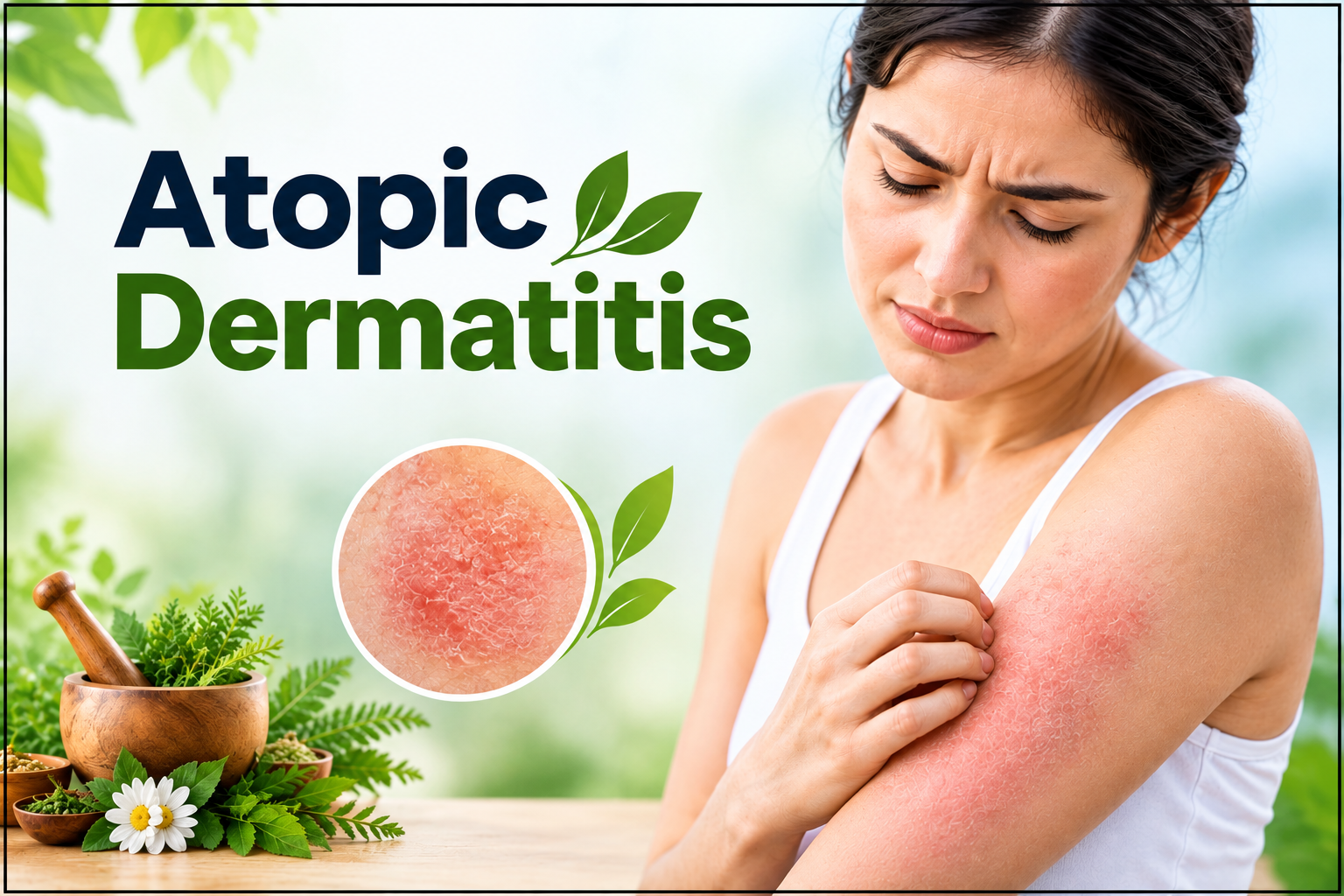
Imagine living with persistent itching, dryness, redness, and recurring skin irritation that can disturb sleep and affect everyday comfort. Atopic Dermatitis is a chronic inflammatory skin condition in which an overactive immune response contributes to repeated flare-ups and skin barrier disruption. Modern advances in dermatology have expanded treatment options beyond conventional symptom management, offering therapies that target specific mechanisms involved in inflammation. These approaches aim to reduce itching, control inflammatory lesions, improve skin appearance, and support better quality of life. This article explores the evolving management of Atopic Dermatitis, focusing on modern therapeutic approaches, their potential benefits, safety considerations, and important clinical monitoring.
Introduction
Atopic Dermatitis (AD) is much more than an ordinary skin rash. For a person living with this condition, persistent itching, dryness, redness, and recurrent flare-ups can become a daily challenge.The intense urge to scratch can further damage the skin, creating a frustrating cycle of irritation,inflammation, and discomfort. Beyond visible skin changes, Atopic Dermatitis can interfere with sleep, concentration, social interactions, and overall quality of life. The disease develops through a complex interaction between immune dysregulation, skin-barrier dysfunction, genetic factors, and environmental triggers. While topical moisturizers, corticosteroids, and other conventional treatments remain important, patients with moderate-to-severe disease may require systemic therapeutic options.Advances in understanding the inflammatory mechanisms of Atopic Dermatitis hav opened the door to targeted therapies that act on specific immune pathways. These developments represent an important shift in dermatological care and provide new possibilities for achieving better disease control and improving the everyday lives of affected individuals.
Causes of Atopic Dermatitis
- Genetic factors – Family history and gene changes affecting skin-barrier proteins such as filaggrin.
- Weak skin barrier – Increased water loss and greater penetration of irritants and allergens.
- Immune dysregulation – Overactive type-2 inflammatory pathways involving cytokines such as IL-4 and IL-1
- Environmental triggers – Dust, pollution, soaps, detergents, fragrances, heat and weather changes.
- Microbial imbalance – Increased colonisation by organisms such as Staphylococcus aureus.
- Stress – May aggravate itching and trigger or worsen flares.
- Itch–scratch cycle – Itching leads to scratching, which damages the barrier and further increases inflammation.
Signs & Symptoms of Atopic Dermatitis
- Intense itching (pruritus) – Often the most prominent symptom.
- Dry, rough skin – Skin may become flaky, cracked or scaly.
- Red or inflamed patches – Areas may appear erythematous and irritated.
- Rashes – Often occur on the face, neck, hands and skin folds.
- Oozing or crusting – May occur during acute flares.
- Thickened skin – Chronic scratching can cause lichenification.
- Skin cracks and fissures – Particularly in severely dry areas.
- Swelling and tenderness – Can accompany active inflammation.
- Sleep disturbance – Persistent itching may interfere with sleep.
- Recurrent flare-ups – Symptoms often improve and then return with triggers.
Role of the JAK–STAT Pathway in Atopic Dermatitis
The JAK–STAT pathway acts as an intracellular signalling bridge between inflammatory cytokines and the skin cell nucleus. In atopic dermatitis, cytokines such as IL-4 and IL-13 bind to their receptors and activate Janus kinases (JAKs), particularly JAK1. This triggers phosphorylation and activation of STAT proteins, which then move into the nucleus and regulate the expression of genes involved in type-2 inflammation, immune activation, epidermal barrier dysfunction, and pruritus.
Inflammatory cytokine → Cytokine receptor → JAK1 activation → STAT phosphorylation →Nuclear signalling → Inflammatory gene expression → Itch + barrier disruption + skin inflammation
This pathway helps explain why targeting JAK1 can influence multiple inflammatory signals simultaneously. Upadacitinib, a selective JAK1 inhibitor, acts at this signalling level to reduce downstream cytokine-mediated inflammation, providing a targeted approach to controlling the inflammatory component of atopic dermatitis.
Beyond the Rash: Targeting Itch and Inflammation
The future of atopic dermatitis management is increasingly moving from broad suppression of symptoms toward precise modulation of disease-driving pathways. Advances in understanding type-2 inflammation, cytokine networks, and JAK–STAT signalling have opened new possibilities for targeted treatment.
JAK inhibitors like upadacitinib are an important development as they act within intracellular signaling pathways involved in inflammatory responses and pruritus. Meanwhile, ongoing work on cytokine-specific therapies, emerging molecular targets, biomarkers, and personalized treatment strategies may allow clinicians to better match therapy to the biological characteristics and severity of each patiens disease. The next generation of therapy may move beyond simply asking,How do we control the rash? to asking, What inflammatory signals are driving this patients disease?The move to mechanism-based and personalized therapy could improve disease control and allow for more individualized therapeutic choices. But the long-term safety, choice of treatment, patient characteristics, and monitoring are still important issues in the use of systemic targeted treatments. The evolution of atopic dermatitis therapy from visible rash treatment to understanding the molecular signal. Thus, the path from molecular signaling to clinical relief exemplifies a core tenet of targeted therapy: rather than treating only the outward manifestations of disease, therapy can act at the level of the signaling pathways that help maintain the inflammatory process.
Diagnosis of Atopic Dermatitis
- Clinical diagnosis: Primarily diagnosed through history and physical examination.
- Characteristic itching: Persistent or recurrent pruritus is a key clinical feature.
- Skin lesions: Assessment of erythema, papules, plaques, scaling, dryness, excoriations, and lichenification.
- Distribution: Lesion location varies with age and disease pattern and helps distinguish atopic dermatitis from other dermatoses.
- Chronic or relapsing course: Recurrent episodes of flares and remission support the diagnosis.
- Atopic history: Personal or family history of asthma, allergic rhinitis, or atopic dermatitis may provide additional clinical support.
- Skin-barrier assessment: Marked dryness (xerosis) and evidence of barrier disruption are commonly observed.
- Laboratory tests: Serum IgE and eosinophil levels may be elevated in some patients but are not diagnostic.
- Allergy testing: May be considered when a specific allergic trigger is suspected; results should be interpreted in the clinical context.
- Differential diagnosis: Conditions such as contact dermatitis, psoriasis, scabies, seborrheic dermatitis, and certain infections may need to be excluded.
- Skin biopsy: Usually not required, but may be considered when the diagnosis is uncertain or an alternative condition needs evaluation.
Medications Used in Atopic Dermatitis
- Topical corticosteroids: First-line anti-inflammatory medicines for many acuteflares; potency and duration should be individualised.
- Topical calcineurin inhibitors: Tacrolimus and pimecrolimus are steroid-sparing options, particularly useful on the face, eyelids, and skin folds.
- Topical PDE-4 inhibitors: Crisaborole can be used in appropriate patients to reduce inflammatory activity.
- Topical JAK inhibitors: Agents such as ruxolitinib provide targeted inhibition of JAK signalling for selected patients.
- Systemic corticosteroids: Generally avoided for routine long-term management because of rebound flares and systemic adverse effects; specialist-directed use may occasionally be considered.
- Conventional systemic immunosuppressants: Cyclosporine, methotrexate,azathioprine, and mycophenolate mofetil may be considered for selected patients withsevere disease under specialist supervision.
- Biologic therapies: Dupilumab and tralokinumab target type-2 inflammatory signalling and are options for appropriate moderate-to-severe disease.
- Oral JAK inhibitors: Upadacitinib and abrocitinib target intracellular JAK signalling and may provide substantial improvement in pruritus and skin inflammation in appropriately selected patients.
- Anti-infective treatment: If bacterial, viral, or fungal infection complicates atopic dermatitis, appropriate antimicrobial treatment may be required.
- Antihistamines: These are not primary treatments for the underlying inflammation; selected sedating antihistamines may sometimes be used at night when sleep is significantly disturbed by itching.
Side Effects of Upadacitinib
Common side effects may include upper respiratory infections, acne, headache, nausea, abdominal discomfort, herpes infections, and increased creatine kinase levels. Important but less common risks include serious infections, herpes zoster (shingles), blood clots, major cardiovascular events, and certain cancers. Upadacitinib should therefore be used under appropriate medical supervision with risk assessment and monitoring.
Ayurvedic Insight into Atopic Dermatitis
Atopic dermatitis can be understood through two complementary perspectives: modern dermatology emphasises skin-barrier dysfunction and immune-mediated inflammation, while Ayurveda approaches the condition through Dosha (functional regulatory principles), Dushya (affected tissues), Nidana (etiological factors), and Samprapti (pathogenesis). From an Ayurvedic perspective, Tridosha Dushti (multifactorial physiological imbalance), particularly Vata–Pitta predominance (dryness/barrier disturbance and inflammatory manifestations), may be considered according to the patients clinical presentation. Vata Prakopa (dryness, roughness, scaling, and pruritus) may correspond with xerosis and impaired skin-barrier function, while Pitta Prakopa (erythema, burning, warmth, and inflammation) may correspond with cutaneous inflammatory activity; Kapha Dushti (oozing,thickening, heaviness, and persistent lesions) may be considered in presentations with increased moisture or lichenification. The principal Dushya (affected tissues) may include Twak (skin), Rakta Dhatu (cutaneous inflammatory/tissue component), Mamsa Dhatu (deeper tissue involvement), Lasika (lymphatic/interstitial component), and Kleda (excess tissue moisture) according to the clinical pattern. Nidana (etiological and aggravating factors) may include unsuitable Ahara (dietary factors),Vihara (lifestyle factors), environmental exposure, excessive heat, stress, irregular routines, and individual triggers.
The Samprapti (disease pathogenesis) may be described as Nidana Sevana (exposure to causative factors) → Dosha Prakopa (functional imbalance) → Agni Dushti (disturbed digestion and metabolism) → Ama (Ayurvedic concept of incompletely processed metabolic products) → Rakta–Twak involvement (cutaneous tissue involvement) → inflammatory disturbance → Kandu (pruritus), Daha (burning), Raga (erythema), and Rukshata (dryness), resulting in recurrent skin manifestations.
Chikitsa Siddhanta (therapeutic principles) is individualised according to Dosha (functional imbalance), Dushya (affected tissues), Agni (digestive and metabolic function), Bala (patient strength and treatment tolerance), and Roga Bala (disease severity). Treatment principles may include Nidana Parivarjana (trigger avoidance), Agni Deepana (supporting digestive function), Ama Pachana (Ayurvedic measures directed toward Ama), Dosha Shamana (individualised reduction of aggravated Doshas), Ahara Chikitsa (dietary management), Vihara Chikitsa (lifestyle management), Rakta-Prasadana (traditional approaches aimed at supporting healthy Rakta), and Bahya Chikitsa (external skin care).
Herbal Remedies for Atopic dermatitis by Planet Ayurveda
Planet Ayurveda is an Ayurveda-focused wellness brand that brings traditional Ayurvedic principles into a contemporary product and healthcare framework. Its portfolio includes a range of Ayurvedic herbal formulations, single herbs, classical preparations, nutraceuticals, oils, juices, and personal-care products, developed around different areas of health and wellness. The brand’s approach is rooted in the traditional concepts of Prakriti (individual constitution), Dosha (functional principles), Agni (digestive and metabolic function), Ahara (diet), Vihara (lifestyle), and Nidana (causative factors).Depending on the formulation, products may contain traditionally used herbs and classical Ayurvedic ingredients selected for specific wellness objectives. In the context of skin health and atopic dermatitis, such products may be discussed as supportive components of an individualised Ayurvedic lifestyle and skin-care approach, rather than as replacements for evidence-based dermatological treatment. The broader philosophy is to combine classical Ayurvedic knowledge, herbal formulations, quality-focused product development, and personalised wellness guidance within a modern healthcare setting. Let’s discuss some of them!
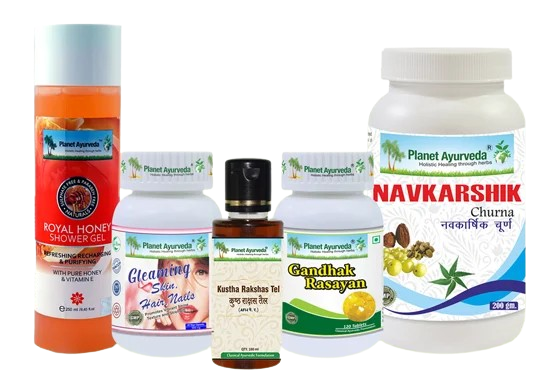
- Gleaming Skin, Hair, Nails Formula
- Navkarshik Churna
- Gandhak Rasayan
- Kustha Rakshas Tel
- Royal Honey Shower Gel
ATOPIC DERMATITIS CARE PACK

Product Description
1. Gleaming Skin, Hair, Nails Formula
Gleaming Skin, Hair, Nails Formula is an Ayurvedic herbal formulation that may be considered as a supportive wellness option for individuals with Atopic Dermatitis . It contains standardized extracts of Manjistha (Rubia cordifolia), Ghrit Kumari (Aloe barbadensis), Pitta papda (Fumaria officinalis), etc. These herbs are traditionally used to support healthy skin and overall physiological functions. In the Ayurvedic perspective, supporting skin health involves attention to factors such as Dosha (biological regulatory principles), Agni (digestive and metabolic function), and Ahara (diet).
Dosage: Take 1 capsule twice daily with warm water after meals
2. Navkarshik Churna
Navkarshik Churna is an Ayurvedic herbal blend containing Triphala, Vacha (Acorus calamus),Manjistha (Rubia cordifolia), etc. In the Ayurvedic perspective, these herbs are traditionally used to support healthy skin, digestion, and internal cleansing, which may be considered supportive when managing individuals with Atopic Dermatitis. The formulation can be discussed in relation to Rakta Dhatu (blood tissue), Pitta Dosha (metabolic and inflammatory principle), and Agni (digestive and metabolic function).
Dosage: Take 1 tsp. full twice daily with warm water after meals
3. Gandhak Rasayan
Gandhak Rasayan is an Ayurvedic tablet formulation from Planet Ayurveda containing purified sulfur (Gandhak), traditionally used in Ayurveda to support skin health. In the context of Atopic Dermatitis, it may be discussed as a supportive formulation for maintaining healthy skin and overall skin wellness. From an Ayurvedic perspective, Gandhak is traditionally associated with skin disorders and is used within individualized formulations based on Dosha (biological regulatory principles) and the patients presentation.
Dosage: Take 2 tablets twice daily with warm water after meals
4. Kustha Rakshas Tel
Kustha Rakshas Tel by Planet Ayurveda is an Ayurvedic topical oil formulation traditionally used to support skin health and comfort. It contains parada(mercury), gandhak(purified sulfur), saptaparna(Alstonia scholaris), etc. It can be an external-care option for dry, irritated, and uncomfortable skin. Its topical application may complement basic skin-care measures such as regular moisturization and avoidance of known irritants. From an Ayurvedic perspective, external oil application is selected according to the individuals Dosha (biological regulatory principles), skin condition, and tolerance.
Dosage: 3 ml twice daily for local application.
5. Royal Honey Shower Gel
Royal Honey Shower Gel by Planet Ayurveda can be used as a bathing cleanser as part of supportive skin care in Atopic Dermatitis. Gentle cleansing is important because harsh soaps and excessive washing can further dry and irritate the skin. The shower gel contains Vitamin E, Aloe Vera Extract (Aloe barbadensis), and Tea Tree Extract (Melaleuca alternifolia), which are included for skin- conditioning and cleansing purposes. Use a small amount with lukewarm water, avoid vigorous rubbing, and gently pat the skin dry afterward. Apply a suitable fragrance-free moisturizer immediately after bathing. Patch testing is advisable, and the product should be discontinued if it causes burning, redness, or increased itching.
Dosage: Used for bathing
Diet and Regimen to Follow
- Moisturize regularly: Apply a thick, fragrance-free emollient several times daily, especially immediately after bathing.
- Use lukewarm water: Keep baths/showers short and avoid hot water.
- Choose gentle cleansers: Use fragrance-free, mild products and avoid harsh soaps.
- Avoid scratching: Keep nails short and use cool compresses when itching increases.
- Wear suitable clothing: Prefer soft, breathable fabrics and avoid rough or irritating materials.
- Control triggers: Identify personal triggers such as heat, sweating, fragrances, or specific skincare products.
- Avoid unnecessary food restrictions: Eliminate foods only when a confirmed allergy or clear individual trigger is established.
- Maintain a comfortable environment: Avoid excessive heat and very dry indoor air.
- Manage stress and sleep: Adequate sleep and stress-reduction practices can support overall symptom management.
Conclusion
Atopic Dermatitis is not merely a skin problem; it calls for a holistic approach that considers skin health, digestion, diet, lifestyle, and individual constitution. Ayurveda offers a personalized framework through Dosha (biological regulatory principles), Agni (digestive and metabolic function),Ahara (diet), and Vihara (lifestyle), along with carefully selected herbal and external therapies. Formulations such as Manjistha (Rubia cordifolia), Neem (Azadirachta indica), and Gandhak (purified sulfur) are traditionally used to support skin health. These approaches can complement appropriate dermatological care when selected by qualified professionals. With consistent skincare, trigger avoidance, individualized Ayurvedic support, and proper medical supervision, the goal is healthier skin and better long-term well-being.


Dr. Vikram Chauhan
Latest posts by Dr. Vikram Chauhan (see all)
- Tonsillitis: Causes, Symptoms & Ayurvedic Treatment - October 15, 2026
- Atopic Dermatitis: Symptoms, Treatment & Ayurvedic Care - October 15, 2026
- Chronic Kidney Disease (CKD): Symptoms & Ayurvedic Management - October 14, 2026
- Tonsillitis: Symptoms, Treatment & Ayurvedic Remedies - October 14, 2026
- Banyan Tree: Medicinal Benefits, Uses & Importance - October 9, 2026